Since I stepped into the world of art, culture and museums, and more specifically - Cultre, I feel like the art, culture and museum sector is going through a very positive, hopeful and forward looking phase. While still rooted in traditions and heritage at its core, there is a slow shift in the way interactions are being curated. There was a time when museums in India were often imagined as silent spaces: places of preservation, memory, and authority. They were institutions one visited (rarely at that) to observe history carefully arranged behind glass, where knowledge moved in a single direction: from the institution to the visitor.
That image, however, is slowly and steadily changing.
Across the country today, museums are becoming more experimental, more accessible, more immersive, and, perhaps most importantly, more human. There is a visible shift underway in how cultural institutions are imagining themselves and their audiences. Museums are no longer functioning only as spaces of preservation, but increasingly as spaces of conversation, participation, curiosity, and even play.
Over the last few years, one can sense a new energy entering the sector. New museums are emerging across vastly different subjects and regions. Existing institutions are rethinking display methods, experimenting with digital technologies, collaborating with artists and designers, and exploring more layered ways of storytelling. Exhibitions are becoming increasingly immersive and multidisciplinary. Community-led initiatives are gaining visibility. Archives are entering public conversations. Even museum gift shops (long neglected creatures of the cultural ecosystem) are slowly becoming interesting.
Most importantly, new kinds of people are entering the museum world. Today, museums are no longer shaped only by historians and archaeologists, although they remain central to the field. Increasingly, the sector is being enriched by graphic designers, architects, animators, game designers, educators, filmmakers, technologists, experience designers, accessibility consultants, sound artists, researchers, digital storytellers, and “managers” who somehow know how to make these varied sets of people work together without losing their minds.
This cross-pollination is changing the way museums think.
The conversations now extend beyond collections and chronology. Museums are engaging with questions around accessibility, sustainability, identity, memory, ecology, participation, technology, and public engagement. The boundaries between museums, public art, cultural festivals, archives, libraries, research institutions, and immersive experiences are becoming increasingly fluid. In many ways, museums are beginning to behave less like isolated institutions and more like active cultural ecosystems.
This issue of Museum Mosaic emerges within this moment of transition. Through sections such as Museum Watch 2025, New Museums, Spotlighted, Museum Trails, Museum Matters: In Their Words, and Museum Exhibitions We Loved, the publication attempts to capture the changing landscape around museums in India. Across these pages are stories of experiments and initiatives carried out by various institutions and practitioners rethinking what museums can become.
Perhaps the most significant shift is this: museums are increasingly being understood as spaces through which societies negotiate memory, identity, conflict, aspiration, and imagination. They are becoming places where difficult conversations can happen alongside wonder, where scholarship can coexist with emotion, and where audiences are invited not only to observe history, but to engage with it.
This issue does not attempt to present a complete overview of India’s museum landscape. That would be impossible, and also probably require several additional volumes and a highly stressed editorial team. Instead, it offers fragments, observations, trails, reflections, and experiments that together point toward a sector that is actively evolving.
And perhaps that is the most exciting part. If there is one thing this publication hopes to capture, it is this sense of movement. A movement toward institutions that are willing to question inherited formats and embrace new ways of being. And perhaps most importantly, a movement towards recognising culture not as something distant or static or pickled, but as something living, something that continues to evolve through people, participation, and shared experience.
We hope this issue encourages curiosity, dialogue, and new ways of looking at museums, not simply as spaces one visits, but as spaces that continue to shape how we understand ourselves, our histories, and our collective futures. And ideally, also as spaces where nobody should feel embarrassed for spending too much time staring at one extremely specific bronze figurine for reasons they themselves cannot fully explain.
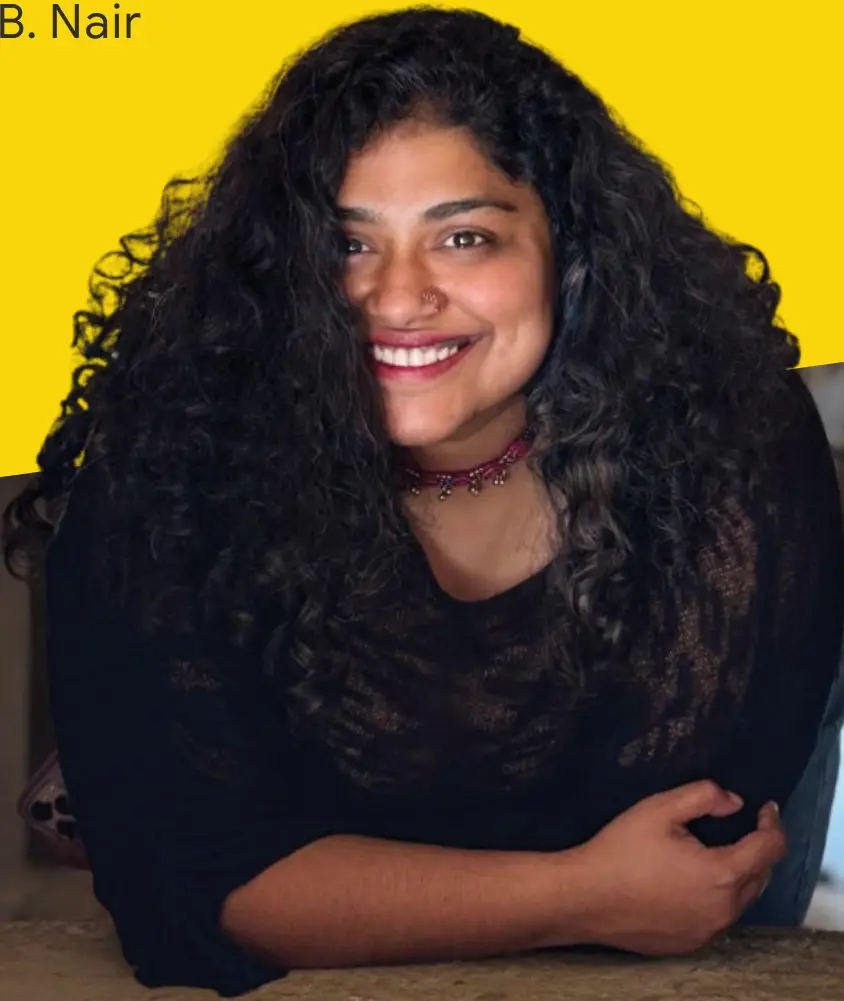
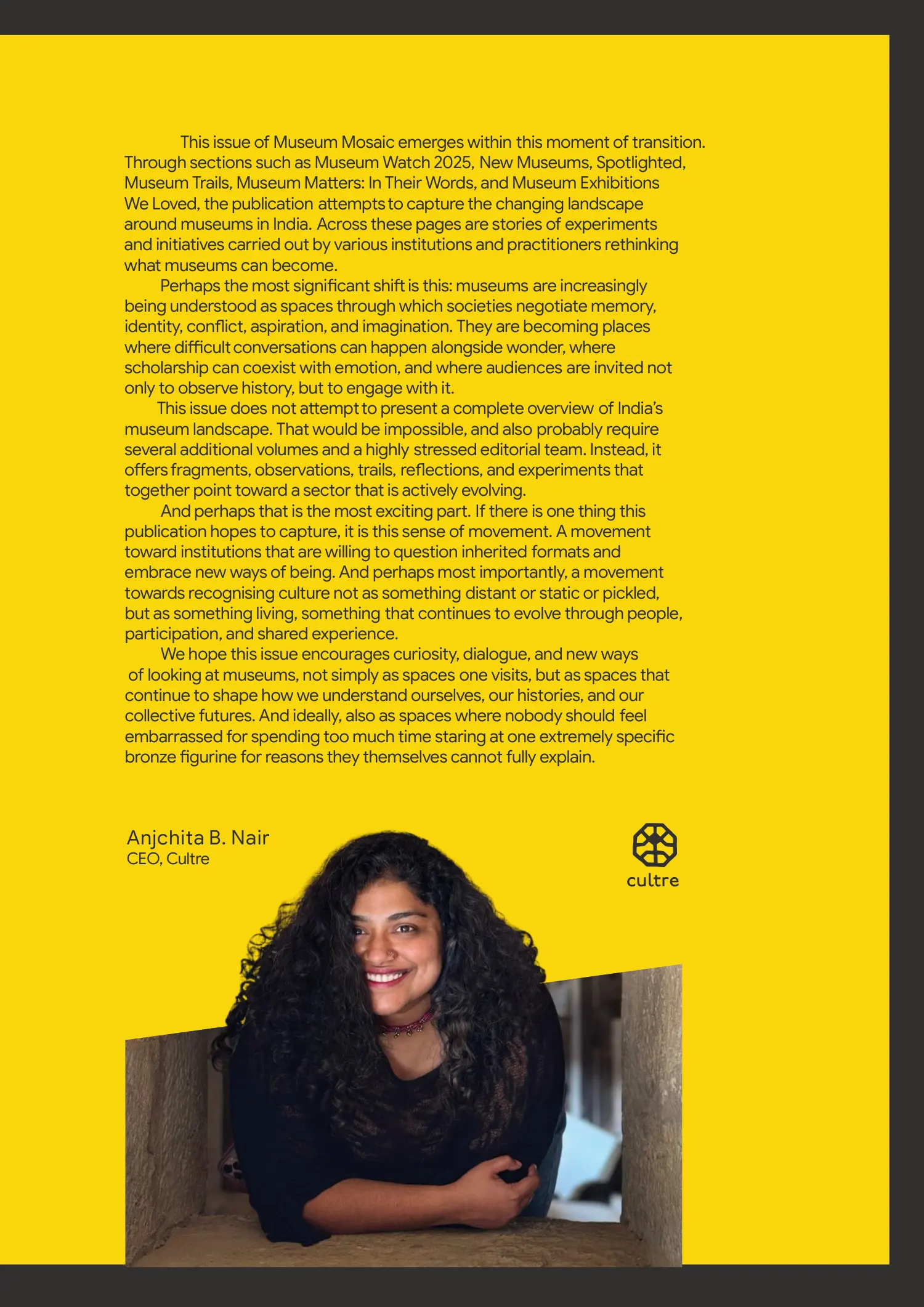
Anjchita B. Nair CEO, Cultre
View original pages, photographs & credits
Originally published in Museum Mosaic 2025, published May 2026.
Part of our annual review. Descriptions reflect the publication’s reporting period.