What does research look like when it is embedded in the making of museum exhibits today? It is easy to imagine it as a quiet, contained activity: a scholar seated at a desk, turning pages, taking notes, moving steadily from one source to another. In many ways, it still begins like this. Though the desk now, is just as likely to hold a screen crowded with open tabs as stacks of books and notebooks filled with hurried annotations. But within museum work, research rarely unfolds in such a linear way.
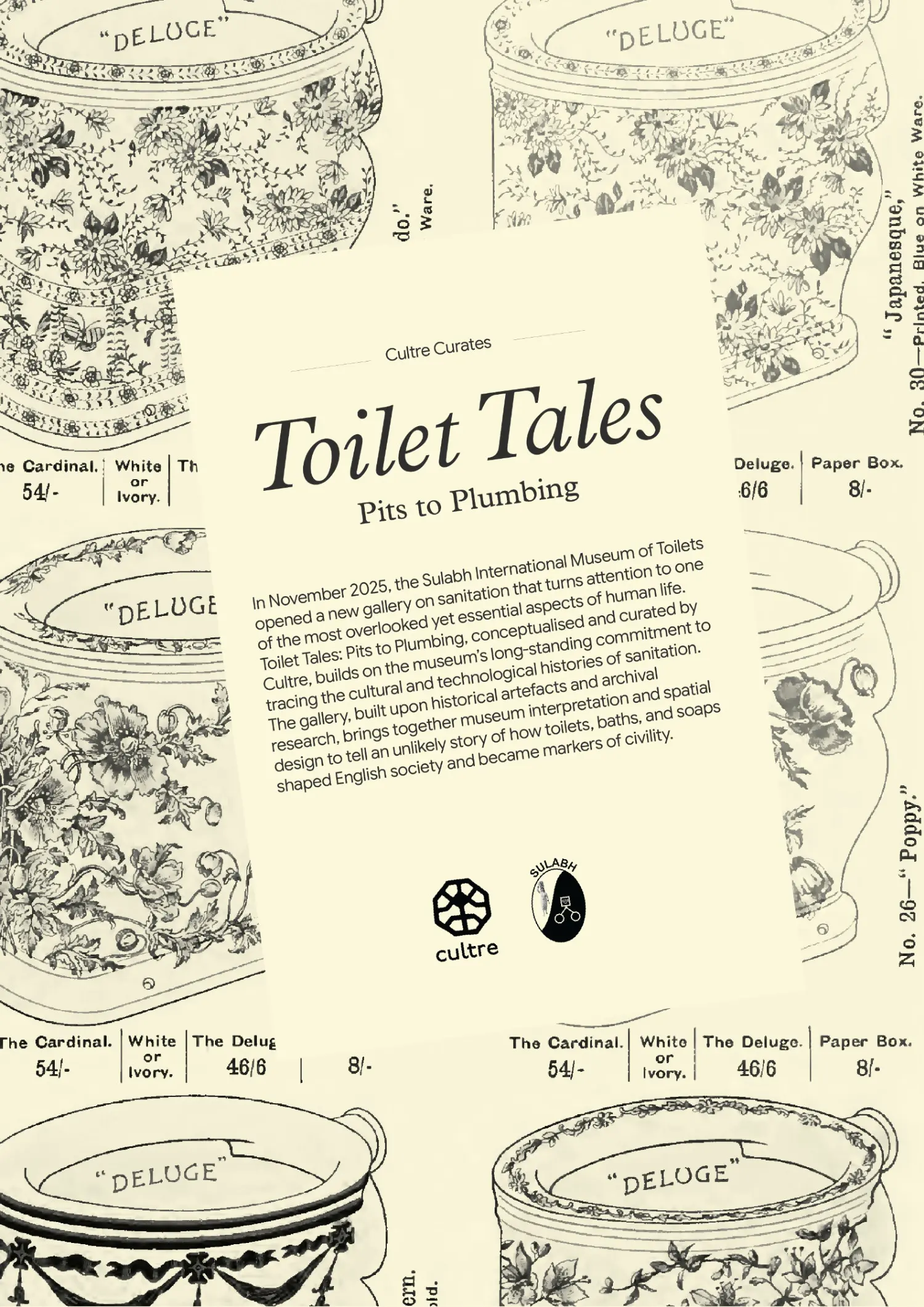
Working as part of the research team at Cultre across projects, such as The Constitution Museum and the Rights and Freedoms Academy at O.P. Jindal Global University, as well as the Toilet Tales Gallery at the Sulabh International Museum of Toilets, one begins to notice how quickly the practice moves beyond this familiar image. It shifts constantly between reading, discussion, revision, and translation into forms that can exist within a physical exhibition space. Rather than functioning separately from curatorial vision, research develops alongside it, gradually becoming an exercise in understanding how ideas take shape within a museum environment.
To research for a museum is to work with the expectation that most of what one finds will not be shown. Material is gathered not to be presented in full, but to be selected, condensed, and often discarded. A paragraph becomes a sentence; a sentence becomes a caption. This reduction can feel uneasy at first. It raises difficult questions about what is essential and what is chosen to be left behind. These decisions are shaped not only by the material itself, but also by the format it will take, the space available, and the amount of time a visitor is likely to spend with it.
In this context, the question of the audience becomes especially immediate. An exhibition does not speak to a single viewer, but to people with different levels of familiarity, interest, and time. Studies on museum fatigue, first observed in 1928, suggest that attention declines over the course of a visit. John Berger’s observation that ways of seeing are shaped by what one already knows and believes becomes especially visible here, where the same exhibition may be read in markedly different ways. One is constantly recalibrating how much text is too much, and when detail begins to tip into excess rather than clarity.
These questions are shaped not only by how visitors read exhibitions, but also by how they move through them. Visitors rarely follow the sequence imagined during the writing process; they pause, skip ahead, return, or encounter sections in isolation. As a result, a panel or caption often has to remain meaningful even when separated from the larger narrative surrounding it. Research in a museum is therefore shaped not only by what is being communicated, but also by the unpredictable ways in which visitors physically navigate space.
At the same time, writing is only one part of how research appears in a museum. At Cultre, the process often continues through its translation into other forms. A legal concept may become an animation, a historical sequence may be restructured into a navigable timeline, or a complex debate may be distilled into a short video where sound and image carry what text alone cannot. In the Constitution Museum and the Rights and Freedoms Academy, this resulted in a layered approach: short explainer videos on fundamental rights sit alongside recorded interviews with legal scholars, allowing visitors to move between concise overviews and more detailed accounts.
These translations are rarely straightforward. Something that appears clear in text may become difficult to visualise, or may need to be entirely restructured to function in another medium. At times, a concept that seemed impossible to simplify on paper became unexpectedly clear once discussed visually with designers, animators, or editors. In that sense, interpretation remains ongoing even after the writing is complete.
The Toilet Tales Gallery, set up afresh at the Sulabh International Museum of Toilets, required a different approach altogether. Here, the objects themselves were central. Victorian and Edwardian water closets, chamber pots and bathtubs carried their own histories. The focus became less about translating information across formats and more about situating these objects within broader social and material contexts. It also involved close engagement with the objects themselves, often through conversations with collectors or previous owners. Method adjusted to the material, rather than the other way around.
Working across these projects made one thing clear: there is no fixed method in museum research. Some subjects arrive with an overwhelming abundance of scholarship, archival records, interviews, and commentary, requiring weeks of distillation simply to determine what can meaningfully enter the exhibition space. Others emerge from near absence, where information is scattered across fragmented references, oral accounts, regional archives, or materials that have rarely been documented together. The process shifts constantly between archival data collection, visual analysis, translation, and collaborative interpretation, with each project demanding its own method of inquiry.
At times, the work also produces moments of unexpected intimacy with history. While gathering material related to the Constitution and the making of modern India, one particularly memorable experience was visiting the archives of Prasar Bharati in Delhi. I still remember sitting in the listening room with a pair of headphones on, hearing the faint crackle of archival audio before the voices of the Constituent Assembly slowly came through. Until then, many of these figures had existed primarily through transcripts, photographs, and quotations encountered on paper. Hearing them linger over certain words, emphasise particular ideas, interrupt one another, or shift in tone made the debates feel unexpectedly present and human. The material no longer felt distant or purely textual; it felt immediate and alive in a way that changed the texture of the research process entirely.
Equally revealing were encounters with regional-language materials, where pamphlets, newspapers, and archival documents in Bengali, Assamese, Tamil, Malayalam, and other languages opened up histories and perspectives that would have remained inaccessible otherwise. In these instances, multilingual researchers within the team became indispensable, not only for translation, but also for interpreting nuance, context, and regional specificity. Often, a conversation around a single word, phrase, or visual reference would shift the direction of inquiry altogether. A designer would notice a detail overlooked in the text, or someone working across languages drew connections that altered how the material was eventually understood and presented. Rather than unfolding in isolation, it emerged gradually through discussion, revision, and shared interpretation.
There are also moments when the work feels less defined, when a line of inquiry does not lead anywhere clear, or when the available material feels incomplete. These pauses are not always comfortable, but they are a part of the process. Not everything resolves neatly, and not everything finds a place within the final exhibition.
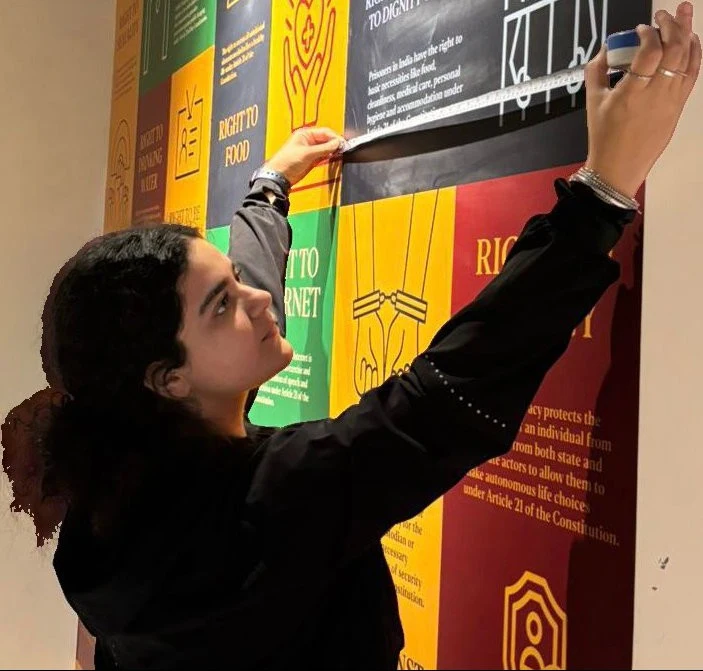
Installation is often the point at which research shifts from process to exhibition form. Drafts, notes, and conversations begin to take physical shape. Text moves onto walls, objects find their positions, screens are tested and retested. Details that once felt minor — the height of a panel, the sequence of movement, the distance between elements — begin to shape how the space is actually encountered. It is in these moments that research feels inseparable from design, and more closely tied to how a museum is experienced.
Rather than existing solely as a prelude to an exhibition, research continues within it, moulding itself to space, image, and experience. Perhaps that is what has stayed with me most across these projects: the understanding that research in museums is never entirely fixed or complete, but something that remains continually in motion.
Originally published in Museum Mosaic 2025, published May 2026.
Part of our annual review. Descriptions reflect the publication’s reporting period.