ANICA MANN
LEAD ICONIC SITES , CULTURAL ADVISOR , CURATOR , FOUNDER
Delhi Houses
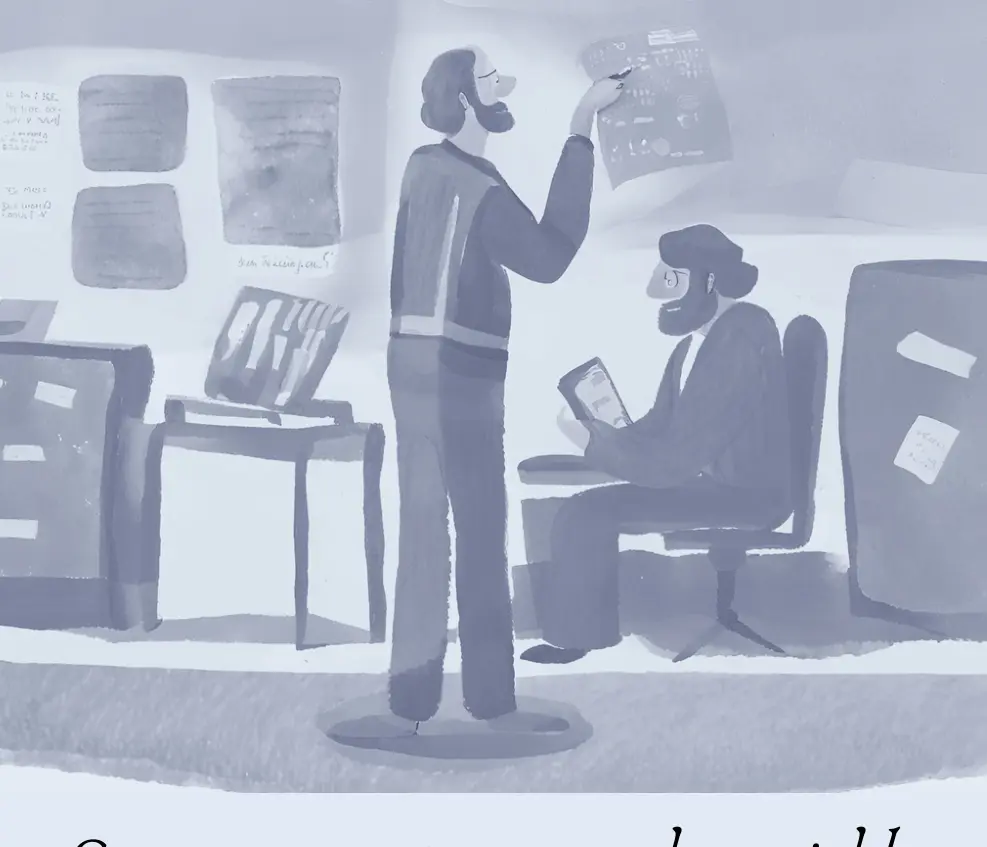
Museums in India house some of the most intricate artefacts from different sites that hold within them a deep iconographical code for Indian philosophies. If one were to decode each object, the intense intellectual tradition guiding its traits would be rather overwhelming for the general audiences. Despite the wealth of objects and the security threat of a deeply sophisticated antiquity looting network, the government museum bodies in India suffer from the absolute lack in manpower that can academically engage the visitor with the object or the collections as a whole. Why is that? Museums are managed by the central government, state governments, district governments, autonomous bodies, private foundations and trusts. While the government understands the need for a museum and the importance of story telling there is an absolute gap in academic and curatorial manpower in the machinery of the museum. Is it because we lack the right manpower in the country? Are parents still telling their children humanities are for failures? Who is running our museums today? What is their background? All museums have a Museum Director or Director General, they have curatorial positions and other pertinent jobs, yet the museum remains an unengaging and defunct space almost mimicking a repository and not the lucid arena of academic and visual engagement one would expect in this throbbing economy. One must ponder as to why this may be because the landscape for museums still seems to be growing. Several new museums continue to come up. Museums are seen as an intrinsic part of each big establishment. The Rashtrapati Bhawan has a museum, the Supreme Court has a museum, even the UPSC examination building has a museum. Recently the Bihar Museum became one of the more modern state government aided museums. Its architecture and collections are unparalleled. They showcase some of the absolute beacons of Indian art such as the Didarganj Yakshi, the collection of objects found in Patliputra, Jain sandstone sculpture – a rarity among most collections, among other things.
This museum built itself to international standards when it invited international architects to participate in the planning of the museum. Curated programmes and the Bihar Museum Biennale puts a fresh focus on the programming of the museum. Yet the museum seems to be ageing before its time.
The Smritivan museum in Bhuj is India’s first of its kind earthquake museum. It simulates the earthquake experience and breaks down the science in a hyper contemporary space that is in a city where the building now serves as one of the most important tourist amenities. These two museums do showcase that India is looking forward in terms of its museum infrastructure. It is looking at international standards and the role museums can play in not only educating its communities but also becoming invigorating spaces that can be the beacon of history writing and showcase of Indian culture. Why are museums not yet actively encouraging academic engagement, patronage, connoisseurship and engagement of a larger arts community? As new museums are coming up, older museums are completely behind on upgradation, staffing and in general keeping with their times. And this may all be rooted in one problem. Manpower. India has several universities teaching art history and archaeology, more students every year go to study abroad where they become specialists in art history and museum studies. Indian curators are performing and building important shows internationally and in South Asia in some of the largest arts programming events, yet the government bodies do not benefit from this fresh and dynamic pool of experts and specialists. Big museums are being built all over India by business families such as the Nita Mukesh Ambani Cultural Centre, The Kiran Nadar Museum of Art, the Museum of Art and Photography, Bengaluru among several other cultural spaces like the Hampi Arts Lab. Why are government bodies still not hiring area specialists in the museums, galleries, libraries and archives. For example if the Bihar Museum has to hire a curator it may only do so by putting up an advertisement for such talent that has prior experience in other government run museums. It is a well known fact that most of the government museums lack curatorial inspiration and still align with chronological exhibitions that do not highlight the importance of story telling and interpretation.
Thus, hiring from a pool of curators that have previous work experience in a governmental museum is unfortunately the reason why curatorial discourse does not move forward in the museums of Indian antiquity.
While independent academia has moved forward in the sphere of culture, it does appear that the culture still remains a diplomatic tool for the government where museums are simply showing event based knee jerk curations, instead of becoming beacons of academic, aesthetic and cerebral engagement. Besides curators the government machinery does not take into account programme curators, that build a larger vision for the museum for the year where sustained efforts are seen in a more holistic way making the museum the epicentre of Indian culture. A ray of hope is seen in the recent programming efforts of the Ministry of Culture with the India Art, Architecture and Design Biennale 2023 held at the Red Fort and the International Museum Expo 2023. While these are critical in putting forward the importance of cultural programming for the country, these large format events seem to be championed by a passionate few and not as part of the country’s programming on a sustainable basis. The establishment of the Ministry of Culture’s GLAM division in 2024 (Galleries, Libraries, Archives and Museum Division) is a forward step in acknowledging the lack of skilled man-power in most of the country's museums. This division is looking at the talent of the future. But what about the talent India has right now?
The critical need to open up more positions to existing specialists in the field with rigorous academic training in liberal arts, curation, museum studies, art history, archaeology, languages is required to start building the story of India from the time of pre-history to showcase the antiquarian might of the country. With the rise of the Global South the Museums serve as the agency that can invigorate the soft power tools of the country by placing its history and legacy front and centre of global discourse. Till now some of the most important scholarship is still referencing colonial research without much access to the country’s cultural assets.
Perhaps this may be the reason a lot of students studying culture in the country continue to look for employment abroad and do not engage in technical courses in culture such as languages, translation of manuscripts, conservation, indology, and art history because despite the dire need to digitise, upgrade and curate, the country’s public museums are not accessible to area specialists in a competitive way offering a sustainable career option.
The future is always bright should the work be put in now by this generation of bureaucrats who understand the need for the country’s brightest minds to serve in their own museums. The policy for cultural engagement and employment still remains at a nascent stage which may not be the worst thing, instead an opportunity to build something strong for the future.
View original pages, photographs & credits

Originally published in Museum Mosaic 2023, published 2024.
Part of our annual review. Descriptions reflect the publication’s reporting period.