MUGDHA SINHA
JOINT SECRETARY (GLAM)
Ministry of Culture Government of India
As we gear up to celebrate the second edition of the International Museum Expo (IME), at the Science City, Kolkata it is worth exploring this year’s ICOM theme focused on ‘MUSEUMS FOR EDUCATION AND RESEARCH’. Bringing the IME to the city of Kolkata, that gave India its first sangrahalaya-the Indian Museum in 1814- from out of a collection of gifts and donations of the Asiatic Society of Bengal, will allow us a longitudinal perspective on the role, museums have played since theirestablishment. While the museum movement in India may have had colonial genesis, the kaleidoscopic richness and diversity of its material artifacts is genetically Indian and genealogically as old as its five thousand plus years old civilizational culture. The first Directory of Indian Museums with details of 39 museums was published in 1911. The Census held in the same year, pegged India’s population at 31.56 crore, which translated into one museum per eighty lakh people. In 1959, the then Ministry of Scientific Research and Cultural Affairs, responsible for museums, published a Directory of Museums of independent India. Last year, at the inauguration of the first IME, the Hon Prime Minister launched the latest Directory of Museums in India with approximately 1200 museums, one-fourth of which have come up in the last decade alone as a result of central government grants for development of museums. A Museum Map of India has just been released by the GLAM Division of the Ministry of Culture. In the last hundred years, while our population has increased four times (121 crore as per Census 2011), the number of museums hasgrown by nine percent and museum per density of population has significantly improved from one museum per eighty lakhs to one per ten lakhs, yet remains insufficient given the size of the landmass and its population. Etymologically, ‘Sangrahalaya’ for Museums, from the vernacular sangreh or collection of objects, is associated with the curation of the world’s first public museum in Oxford University out of a private ‘collection of curious- objects’. Unlike the ancient Greek understanding of museums which were considered to be the seat of muses, the daughters of memory.
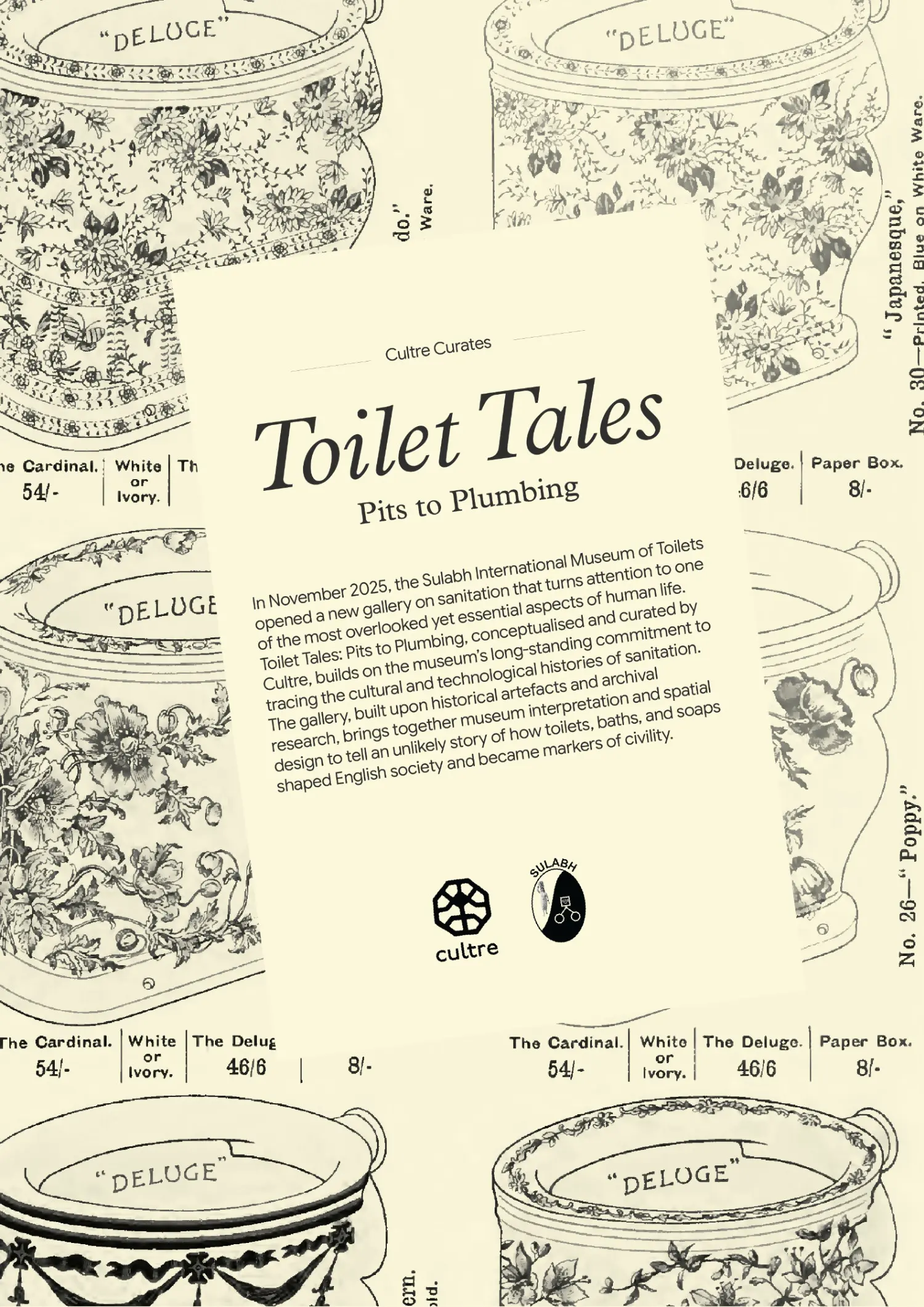
The Allahabad Museum in Prayagraj grew out of Shri Brij Mohan Vyas aggressive collection drive over a decade starting in 1921, which he termed as an Ajaibghar. Similarly, the Salar Jung Museum in Hyderabad owes its being to Nawab Salar Jung III, a bachelor who devoted his entire life in crazy pursuit of objects from all over the world. The human urge of hoarding for the benefit of public display has also given us the-Museo Camera, Transport Museum in Gurugram, Mysuru, Sulabh Toilet Museum in Delhi, Aarna Jharna in Jodhpur, Kite and Utensil Museum in Gujarat as some examples of museums on everyday objects. The rich collection of a museum is most often than not a matter of inheritance, but what we do with that treasure is what counts in the museum experience. Having a huge, rich collection alone, translates into nothing. As Orhan Pamuk says, “Real Museums are places where Time is transformed into Space”, India is a land of smriti. Our ancient Indian traditions have been kept alive through story-telling and oral transmissions, where the intangible memory or remembering takes precedence over material evidence. Therefore, as breweries of memory, museums negotiate the past for its posterity and act as authentic, anecdotal repositories of tangible history and intangible heritage of a time, place and its people. This very intangible diversity of India’s demographic dividend enabled historian VA Smith to call India an ethnographical museum in itself. The Hon Prime Minister alluded to this during his address at the IME 2023, when he urged every citizen in the country to archive and preserve their own personal histories to create museums out of family memorabilia and memory. Moreover, our richly engraved monuments with their sculptures, murals and fresco paintings, rock caves with paleo art, architecturally stylized step wells, even the naturally landscaped topographies, fossilized flora and fauna as also the entire intangible gamut of fairs, festivals, traditional, tribal and folk visual, performance and culinary arts makes not just India but every home and hearth in the country an open museum. No wonder then that the traditionalists question the proliferation of museums and call for de-museumization in appreciation of our indigenous philosophical understanding of museums as transformational spaces where truth and beauty aligned for an aesthetic experience distinct from the colonial box they have got time wrapped in.
The concept of museums is constantly evolving with every innovative iteration from being a ‘seat of the muses’ to a ‘cabinet of curiosity’ to -the NCSM and CSMVS that provide access to Museum on Wheels, MAP does a Museum in a Box, the Kiran Nadar Art Museum is a Museum in a Mall, Museums on a franchise model like the Wax Museums and Museum of Illusions down to the latest technology driven Virtual Experiential Museums available on a URL, or as a 360 degree Van Gogh show and even better Museums in Metaverse with in-built smart contracts to encash vanity through Non-fungible Tokens (NFTs). Besides, changing audience profile, visitor expectations, and the emergence of new age media, 7D, artificial intelligence driven technologies has shifted the gaze from the artifact being at its center, to the audience and its allied concentric circle of engagement through museum programming, publications, merchandising and gastronomy, that allows museums to emerge as cultural spaces with enhanced footfalls, repeat visits and prolonged stay. This holds especially true for persona-based memorial museums. Mediated by technology, the trajectory of how a museum is holistically experienced is becoming more layered and inclusive with emphasis on immersion through a sensorial beyond just the visual. Louvre, Paris a two-hundred years old Museum with approximately 72000 square meters of display area is the largest Museum by size, that despite its access control manages to get the largest annual footfalls of 90 lakh (9 million) visitors. Victoria Memorial Hall, Kolkata in public and CSMVS, Mumbai in private domain are roughly one hundred-years old with 35 lakh and 15 lakh annual visitors, respectively. The Kevadiya Memorial with 3700 square meters, is barely five years old and has annual footfalls upwards of 46 lakhs. The Louvre, Abu Dhabi which opened in 2007 and the Museum of the Future, Dubai which opened in 2023 have managed to touch one million visitors in a short span of time, Dubai in just 3 months of its opening. The Hermitage in Saint Petersberg and The National Museum of China in Beijing are the second and third largest museums in terms of size, but in terms of visitor footfalls nowhere in the top ten museums worldwide. The Vatican Museum in Italy, with barely 70,000 artifacts draws the second largest footfalls after Louvre Paris. What draws public to a museum is dependent on a whole host of factors in how the audience consume or experience a museum which involves a trifecta of artifacts, mentifacts and sociofacts, setting an age, technology and audience appropriate context for the museums.
In other words, a quadrant of 4As of arts, artists, audiences and administration enables a museum to research and interpret the past for the present, to archive the present for its future and to anticipate the future by negotiating the challenges of the present traversing through antiquity, continuity and creativity to allow for both diversity, inclusivity and innovation. In 2015, UNESCO for the first time recognized the role of Museums in achievement of Sustainable Development Goals. Interestingly, as more and more countries grapple with the need for repatriation of artifacts that originally belonged to them, it begets how we will choose to address the colonial-decolonization legacy. The Louvre Abu Dhabi is carved out of long-term loans, the strategy China is hoping to use to populate its many large size Museums. The other equally important questions of how we choose and through our ‘way of seeing’ to borrow John Berger’s phraseology to understand and experience art, its aura, aesthetics in an age where the consumer values are in conflict with out citizen values. We live in an age today where ‘I’ is the first commodity, very different from the times where the genius as Anand Coomaraswamy says was not in the individual ‘I’ but in the collaborative outcomes of ateliers, hence paintings or sculptures or monuments did not bear names of individual artists or architects. And as Walter Benjamin says about ‘art bereft of its aura in an age of mechanical production’, or what Guy Debord calls a ‘society reduced to spectacle’, with the fetishization of commodity. Whether the cold rationality of Apollo or the libidinal emotions of Dionysus will win, or whether immersive will mean one of the other or both- sensorial or intellectual experience or whether language and semiotics of curation and narrative content will triumph over technology or vice versa in an age of over-stimulation, attention deficit and infocalypse causing fatigue, will need to be well understood and negotiated, especially as museums compete with one another as also with other forms of infotainment with futuristic appeal. An age where the visual is preferred over verbal, and medium (often of technology) is the message, how do we beget quality to the moment of experiencing, is a question that begs answers.
These questions become important as we embark on an aspirational and challenging project of setting up of not just India’s, albeit the world’s largest Museum -the Yuga Yugeen Bharat Museum, by an adaptive re-use of a hundred years old heritage building that was designed to house the echelons of our bureaucracy at the North and South Bloc, New Delhi. The Museum will serve as a collective memory of our rich and varied five thousand plus years old civilizational history and heritage, through artifacts, anecdotes, oral histories and community archives.
Much will depend on how we conceive the museum ecosystem and how well our museum professionals are trained to understand and negotiate this space, using Einstein framework where, ‘imagination will be more important than knowledge’, especially as we prepare to usher in the creative economy and move beyond the age of technology to the age of imagination. We hope May will enable us to ask questions, evolve answers through collaborative brainstorming about the ever changing role of Museums in our lives as also of their future in the country and for the world.
View original pages, photographs & credits
Originally published in Museum Mosaic 2023, published 2024.
Part of our annual review. Descriptions reflect the publication’s reporting period.