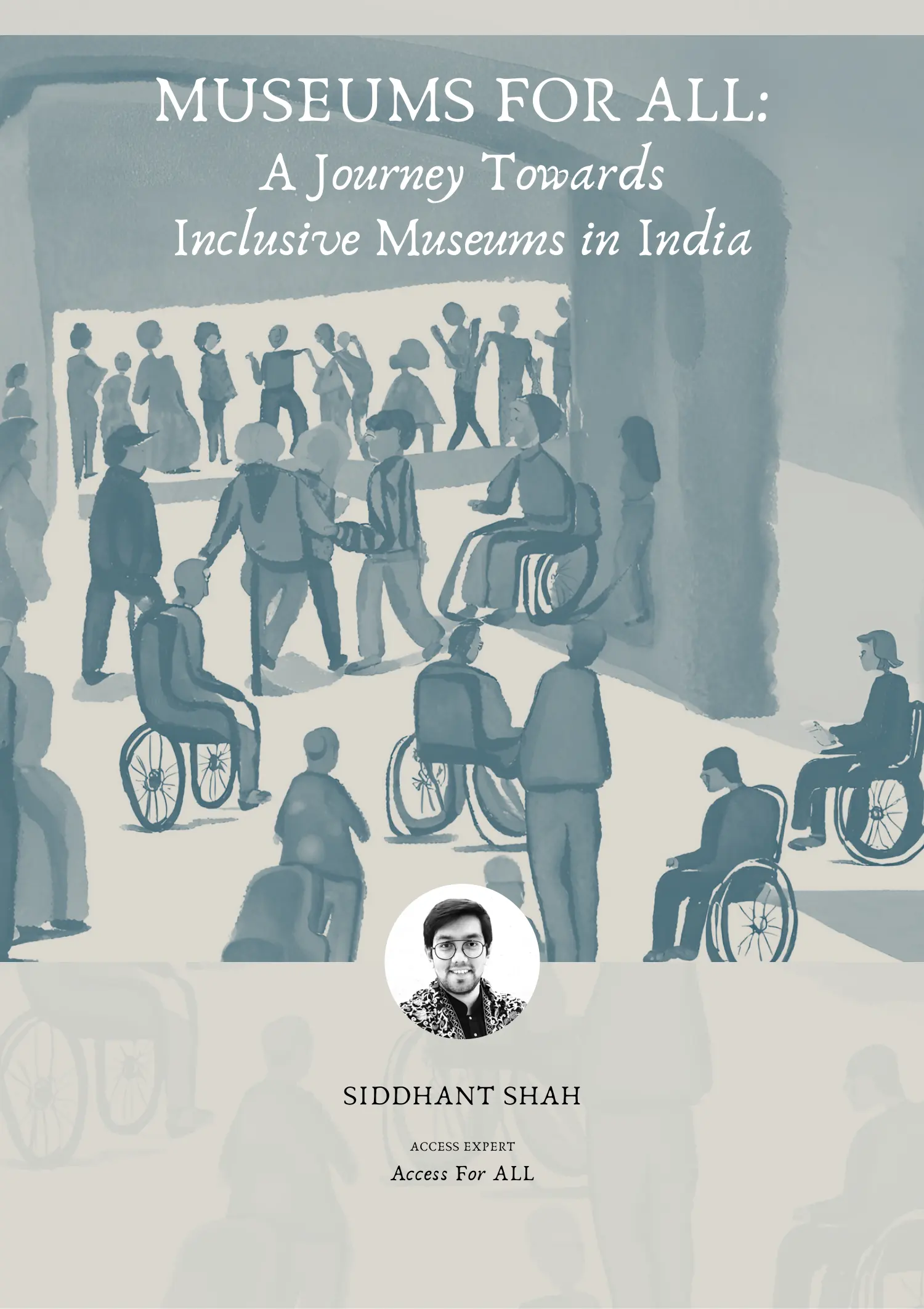
SIDDHANT SHAH
ACCESS EXPERT Access For ALL
THE CURRENT STATE OF DISABILITY ACCESS AND INCLUSION IN MUSEUMS IN INDIA:
In recent years, there has been a growing recognition of the importance of accessibility and inclusion in museums across India. While progress has been made, significant challenges remain in ensuring that museums are truly welcoming spaces for people of all abilities. Many museums in India still lack basic accommodations such as wheelchair ramps, neuro-access, sensory access with tactile exhibits, and sign language interpretation, making it difficult for people with disabilities to fully engage with their collections and exhibitions.However, amidst these challenges, there are notable initiatives and organisations working tirelessly to improve accessibility in museums. One such organisation is Access For ALL, which is dedicated to advocating for accessibility and providing resources and guidance to museums across the country.
OUR JOURNEY TO MAKE MUSEUMS ACCESS FOR ALL
Access For ALL has been at the forefront of promoting accessibility in Indian museums, collaborating with institutions to implement innovative solutions. One prominent example is the Anubhav Gallery, India's first tactile gallery located in the National Museum in New Delhi. This gallery features tactile replicas of artifacts, allowing visitors with visual impairments to experience the museum's collection through touch. In addition to the Anubhav Gallery, Access ForALL has worked with museums like the City Palace Museum in Jaipur to develop Braille museum guidebooks, ensuring that visitors with visual impairments can access information about the exhibits. They have also conducted access audits and provided recommendations for improvements at institutions like the Museum of Prime Ministers of India - Pradhan Mantri Sanghralay, to make them more inclusive.
Furthermore, Access For ALL has spearheaded initiatives to create tactile and blind-friendly exhibitions, such as the one commemorating the 150th birthday of Mahatma Gandhi at the Indira Gandhi National Centre for the Arts (IGNCA). They have also launched ABHAS, India's first tactile art program for the visually impaired in collaboration with DAG, enabling individuals with visual impairments to engage with art in a meaningful way.
Beyond their work in India, Access For ALL has also partnered with international museums like The British Museum, the State Bank Museum in Karachi, Pakistan, and the Archaeology Museum in Beirut, Lebanon, to promote accessibility and inclusion on a global scale.
THE IMPORTANCE OF MAKING MUSEUMS ACCESSIBLE AND INCLUSIVE FOR ALL:
The efforts of organizations like Access For ALL underscore the importance of making museums accessible and inclusive for all visitors. Museums play a crucial role in preserving cultural heritage and fostering learning and creativity, and it is essential that they be accessible to everyone, regardless of their abilities. By implementing accommodations such as tactile exhibits, Braille guidebooks, and inclusive programming, museums can create welcoming environments where people of all abilities can participate fully in cultural experiences. Moreover, promoting accessibility not only benefits individuals with disabilities but enriches the museum experience for all visitors by fostering empathy, understanding, and diversity. In conclusion, enhancing accessibility in museums is not just a matter of compliance; it is a fundamental aspect of ensuring equal access to cultural heritage and promoting social inclusion. As we continue to work towards a more inclusive society, it is imperative that museums lead by example and strive to make their collections and exhibitions accessible to everyone. Only then can we truly achieve the vision of museums as spaces for all.
View original pages, photographs & credits
Originally published in Museum Mosaic 2023, published 2024.
Part of our annual review. Descriptions reflect the publication’s reporting period.