DR. SHIKHA JAIN
DIRECTOR & CHAIRPERSON DRONAH Foundation
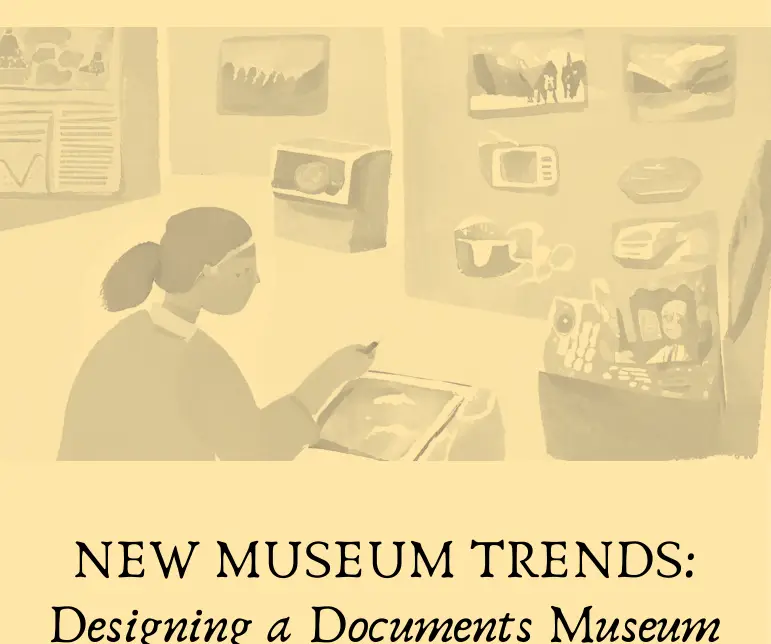
The museums in India are taking a quantum leap with more expansions, innovative new ideas for displays and an increasing footfall across the country. The earlier ‘touch me not artefacts’- oriented museums are now evolving into more interactive community spaces with regular outreach programs, digital displays and a robust social media to engage one and all. However, the museums in India have yet to become the true resources for ‘research and education’ which is the theme of this International Museum Day 2024. At present, probably just 10 percent of Indian museums focus on these two critical aspects that should actually be the foundation stone for any museum. While it is easier to display aesthetically pleasing historic artworks and antiquities, one of the most challenging designs is to display archival documents and historic maps in an engaging manner. Recently, a number of museums in India are making efforts to display original documents with research and interpretation. Here are few examples that indicate the ways and means to communicate their meanings to the larger public.
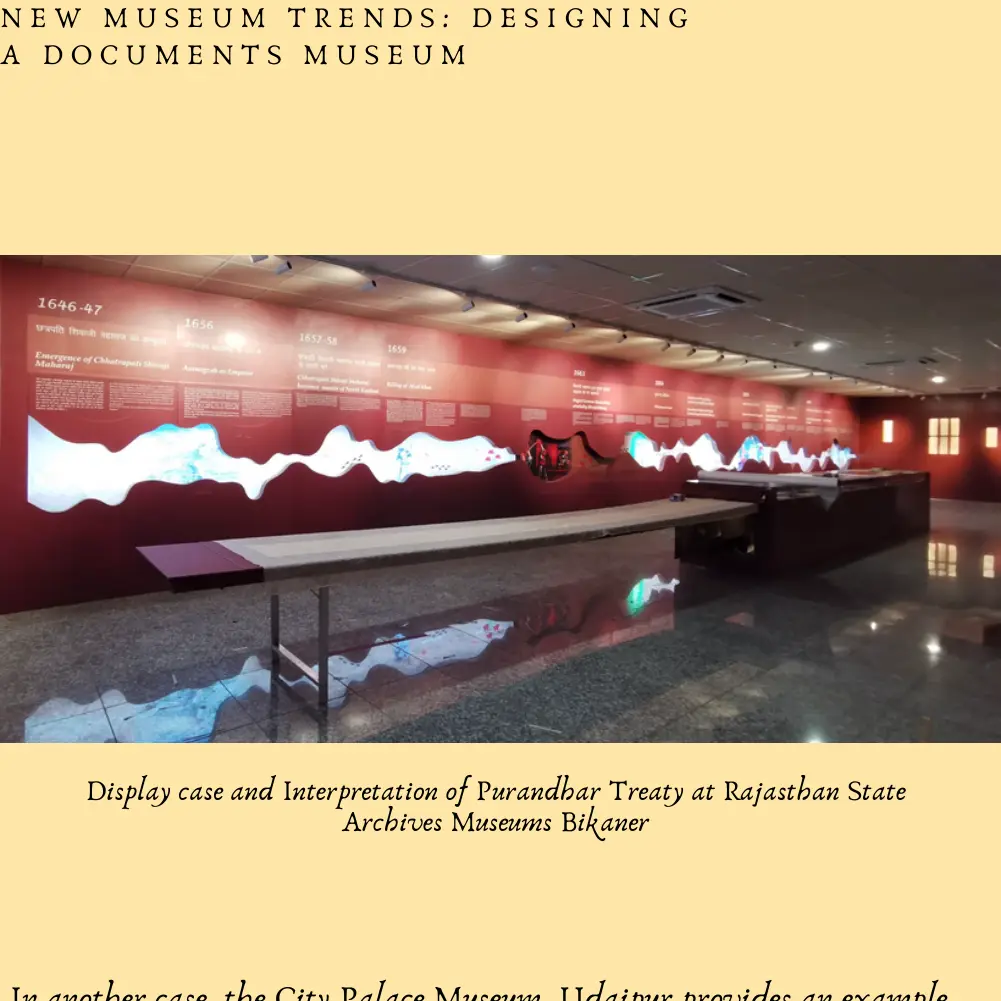
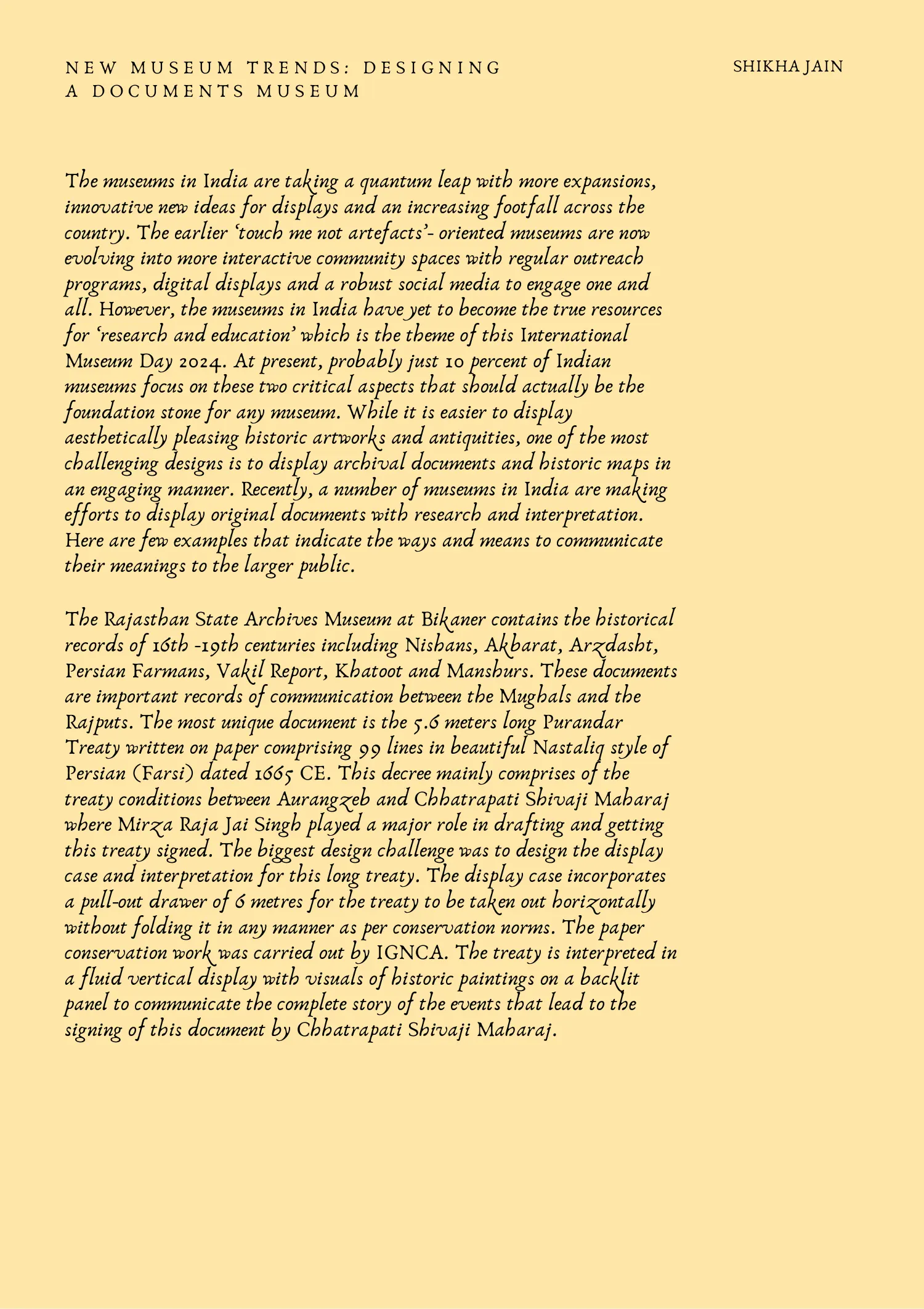
The Rajasthan State Archives Museum at Bikaner contains the historical records of 16th -19th centuries including Nishans, Akbarat, Arzdasht, Persian Farmans, Vakil Report, Khatoot and Manshurs. These documents are important records of communication between the Mughals and the Rajputs. The most unique document is the 5.6 meters long Purandar Treaty written on paper comprising 99 lines in beautiful Nastaliq style of Persian (Farsi) dated 1665 CE. This decree mainly comprises of the treaty conditions between Aurangzeb and Chhatrapati Shivaji Maharaj where Mirza Raja Jai Singh played a major role in drafting and getting this treaty signed. The biggest design challenge was to design the display case and interpretation for this long treaty. The display case incorporates a pull-out drawer of 6 metres for the treaty to be taken out horizontally without folding it in any manner as per conservation norms. The paper conservation work was carried out by IGNCA. The treaty is interpreted in a fluid vertical display with visuals of historic paintings on a backlit panel to communicate the complete story of the events that lead to the signing of this document by Chhatrapati Shivaji Maharaj.
Display case and Interpretation of Purandhar Treaty at Rajasthan State
Archives Museums Bikaner
In another case, the City Palace Museum, Udaipur provides an example of an internationally funded exhibition of its old maps as an outcome of the Paper Project grant awarded by The Getty Foundation in 2021. The initiative helped to fund print and drawing projects and make collections more accessible to 21st century audiences. The grant allowed to showcase works from the City Palace Museum's never-before-exhibited collection of 2,000 maps, architectural drawings, and landscape views, as observed in the ongoing exhibition in Udaipur and forthcoming catalogue that will examine artistic representations of the "City of Lakes" alongside topographical maps and plans. Besides this, it provided an opportunity for their guest curator Shailka Mishra to study and present shifts in the visualization of architecture and landscape over more than two centuries, tracing how Udaipur artists responded to transformations in cartographic practice. It is an excellent example of capacity building of young curators for more extensive research while conserving and showcasing the lesser- known documents from the reserve collection.
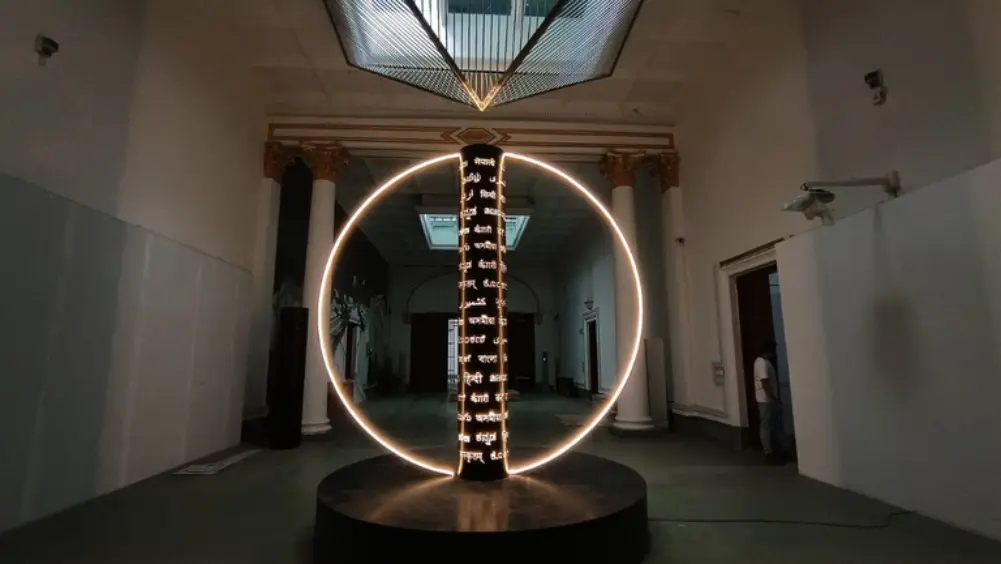
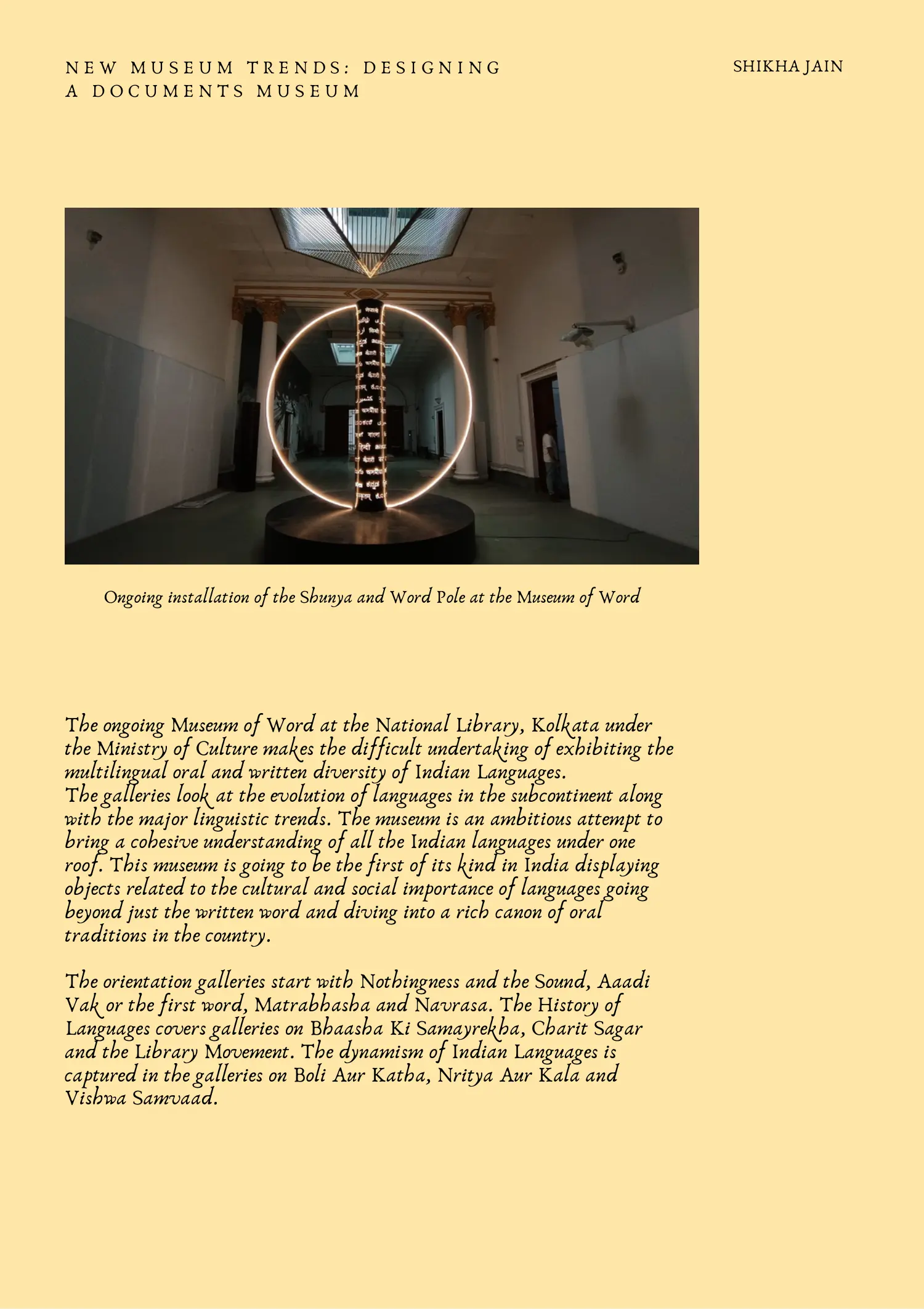
Ongoing installation of the Shunya and Word Pole at the Museum of Word
The ongoing Museum of Word at the National Library, Kolkata under the Ministry of Culture makes the difficult undertaking of exhibiting the multilingual oral and written diversity of Indian Languages. The galleries look at the evolution of languages in the subcontinent along with the major linguistic trends. The museum is an ambitious attempt to bring a cohesive understanding of all the Indian languages under one roof. This museum is going to be the first of its kind in India displaying objects related to the cultural and social importance of languages going beyond just the written word and diving into a rich canon of oral traditions in the country.
The orientation galleries start with Nothingness and the Sound, Aaadi Vak or the first word, Matrabhasha and Navrasa. The History of Languages covers galleries on Bhaasha Ki Samayrekha, Charit Sagar and the Library Movement. The dynamism of Indian Languages is captured in the galleries on Boli Aur Katha, Nritya Aur Kala and Vishwa Samvaad.
The museum integrates artefacts and interactives to create dynamic activity centres. The museum visit is based on curating knowledge in addition to the already retained language skills inherent to visitors. The resultant outputs form an interactive based activity centre cum cultural museum space are the hands-on learning experience, which creates a longer and lasting impression on the minds of the visitor. The museum hence transforms from a space that only informs the visitor to a space that rouses creativity and curiosity through active exploration.
Each museum type has its own challenges but hosting a documents museum definitely requires a special focus in terms of curation and display, management, collections care, marketing and acquisitions and, engaging the audience at large.
View original pages, photographs & credits
Originally published in Museum Mosaic 2023, published 2024.
Part of our annual review. Descriptions reflect the publication’s reporting period.