AKSHARAM MUSEUM
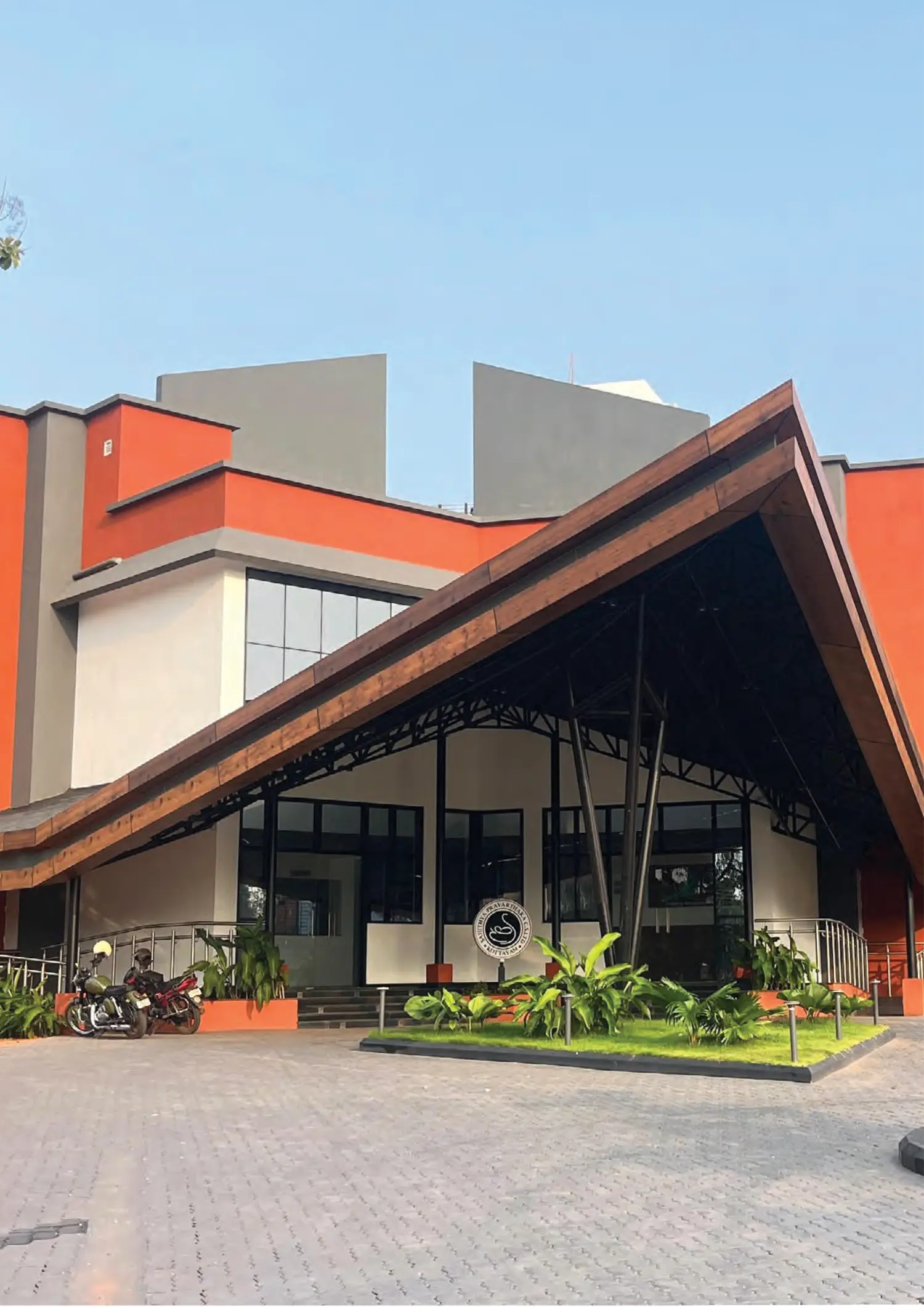
In the heart of Kerala’s literary capital, Kottayam, a pioneering institution has
celebrates the enduring power of words and India’s linguistic diversity.
the nation. Supported by the Government of Kerala, it was established under the Department of Co-operation to protect intangible heritage.
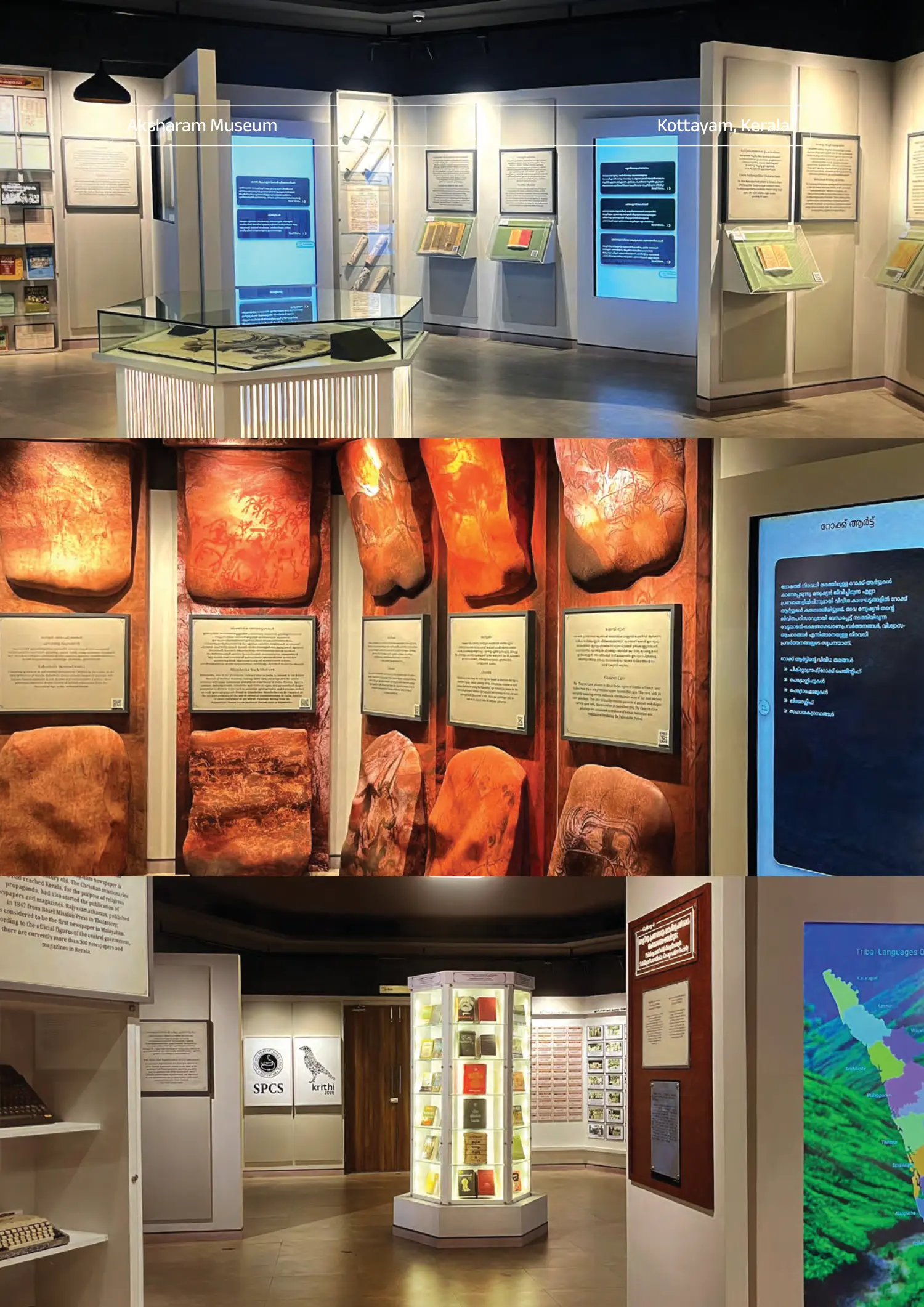
communication and the development of Malayalam. The galleries trace the origins of language from the earliest oral traditions and cave paintings to the development of
and beyond.
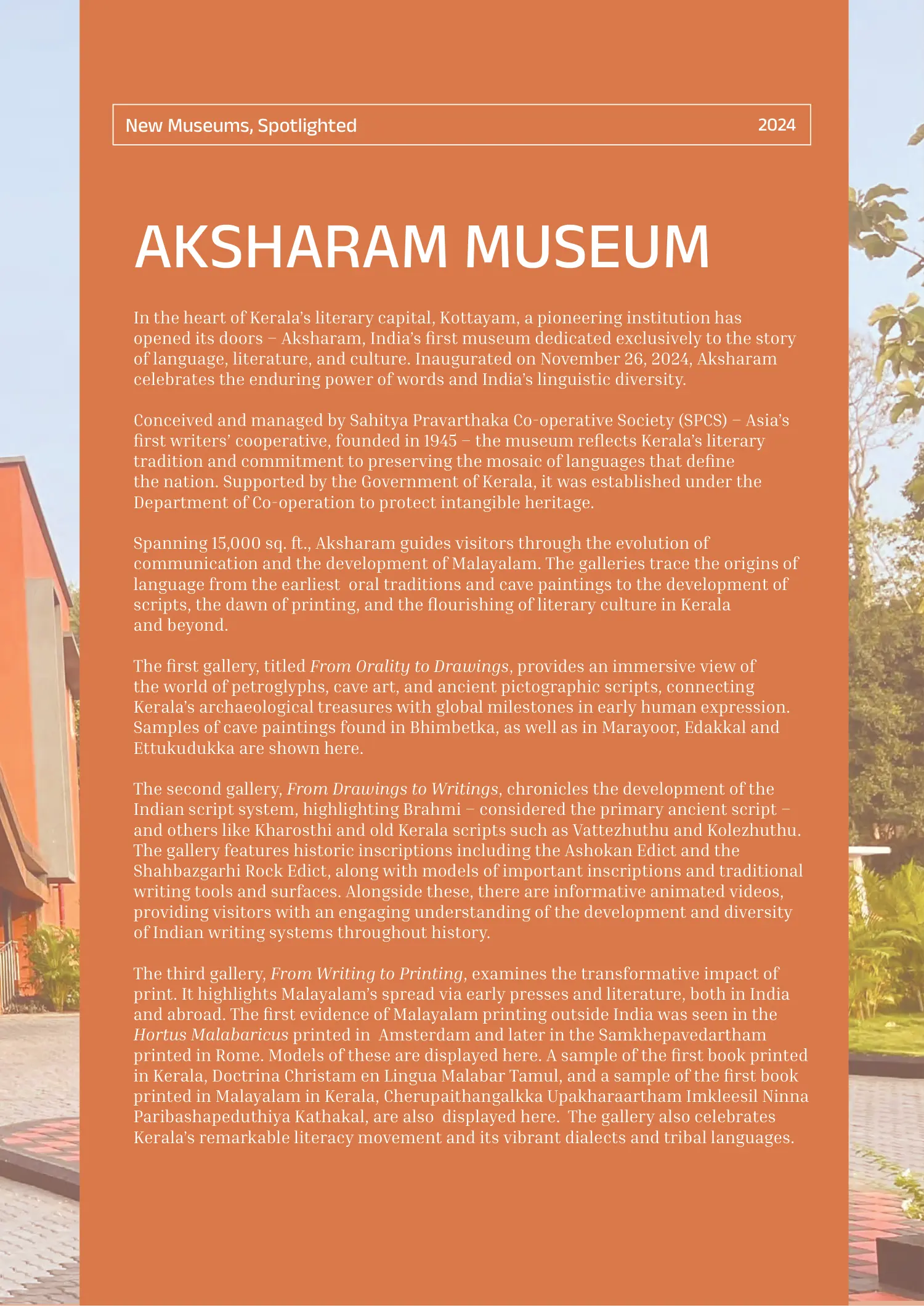
From Orality to Drawings, provides an immersive view of the world of petroglyphs, cave art, and ancient pictographic scripts, connecting Kerala’s archaeological treasures with global milestones in early human expression. Samples of cave paintings found in Bhimbetka, as well as in Marayoor, Edakkal and Ettukudukka are shown here.
The second gallery, From Drawings to Writings, chronicles the development of the Indian script system, highlighting Brahmi – considered the primary ancient script – and others like Kharosthi and old Kerala scripts such as Vattezhuthu and Kolezhuthu.
Shahbazgarhi Rock Edict, along with models of important inscriptions and traditional
providing visitors with an engaging understanding of the development and diversity of Indian writing systems throughout history.
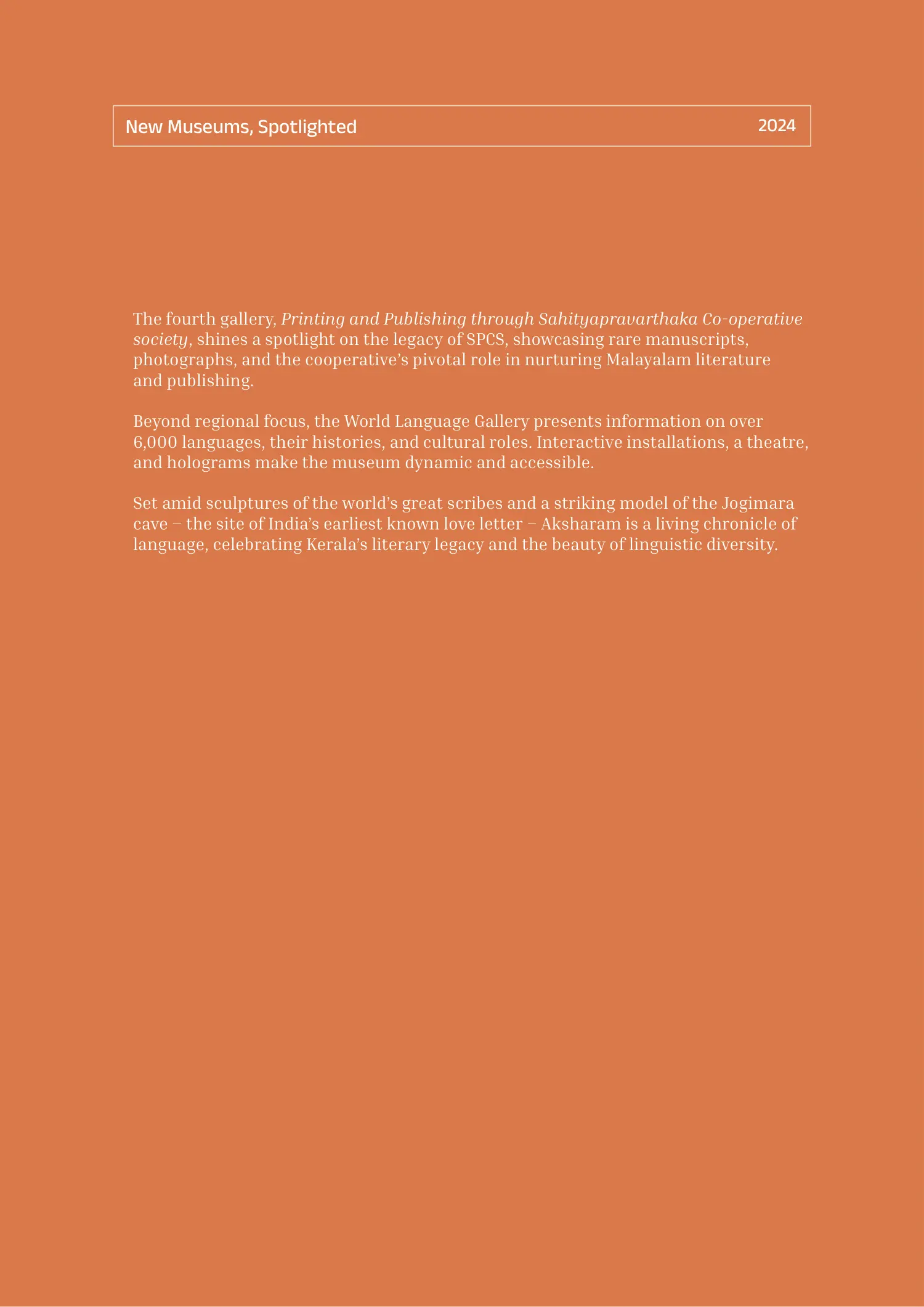
The third gallery, From Writing to Printing, examines the transformative impact of print. It highlights Malayalam’s spread via early presses and literature, both in India
Hortus Malabaricus
printed in Malayalam in Kerala, Cherupaithangalkka Upakharaartham Imkleesil Ninna Paribashapeduthiya Kathakal, are also displayed here. The gallery also celebrates Kerala’s remarkable literacy movement and its vibrant dialects and tribal languages.

The fourth gallery, Printing and Publishing through Sahityapravarthaka Co-operative society, shines a spotlight on the legacy of SPCS, showcasing rare manuscripts, photographs, and the cooperative’s pivotal role in nurturing Malayalam literature and publishing.
Beyond regional focus, the World Language Gallery presents information on over 6,000 languages, their histories, and cultural roles. Interactive installations, a theatre, and holograms make the museum dynamic and accessible.
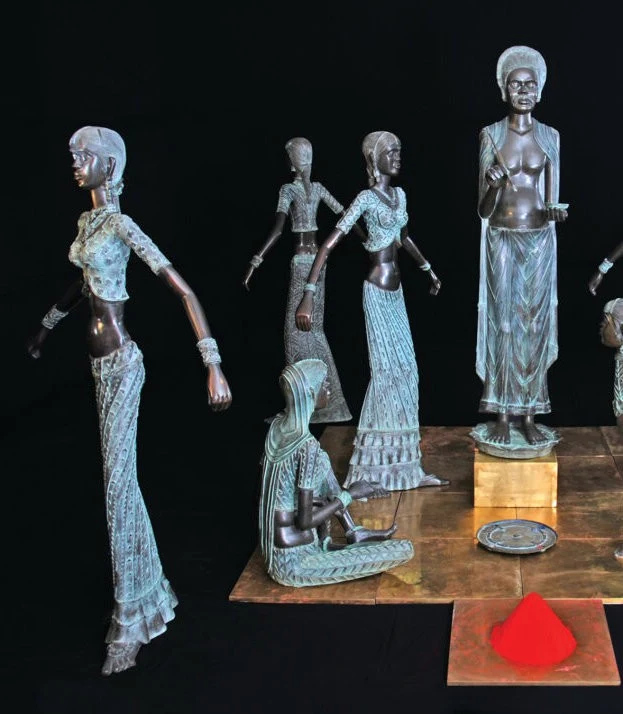
Set amid sculptures of the world’s great scribes and a striking model of the Jogimara
language, celebrating Kerala’s literary legacy and the beauty of linguistic diversity.



View original pages, photographs & credits
Originally published in Museum Mosaic 2024, published May 2025.
Part of our annual review. Descriptions reflect the publication’s reporting period.