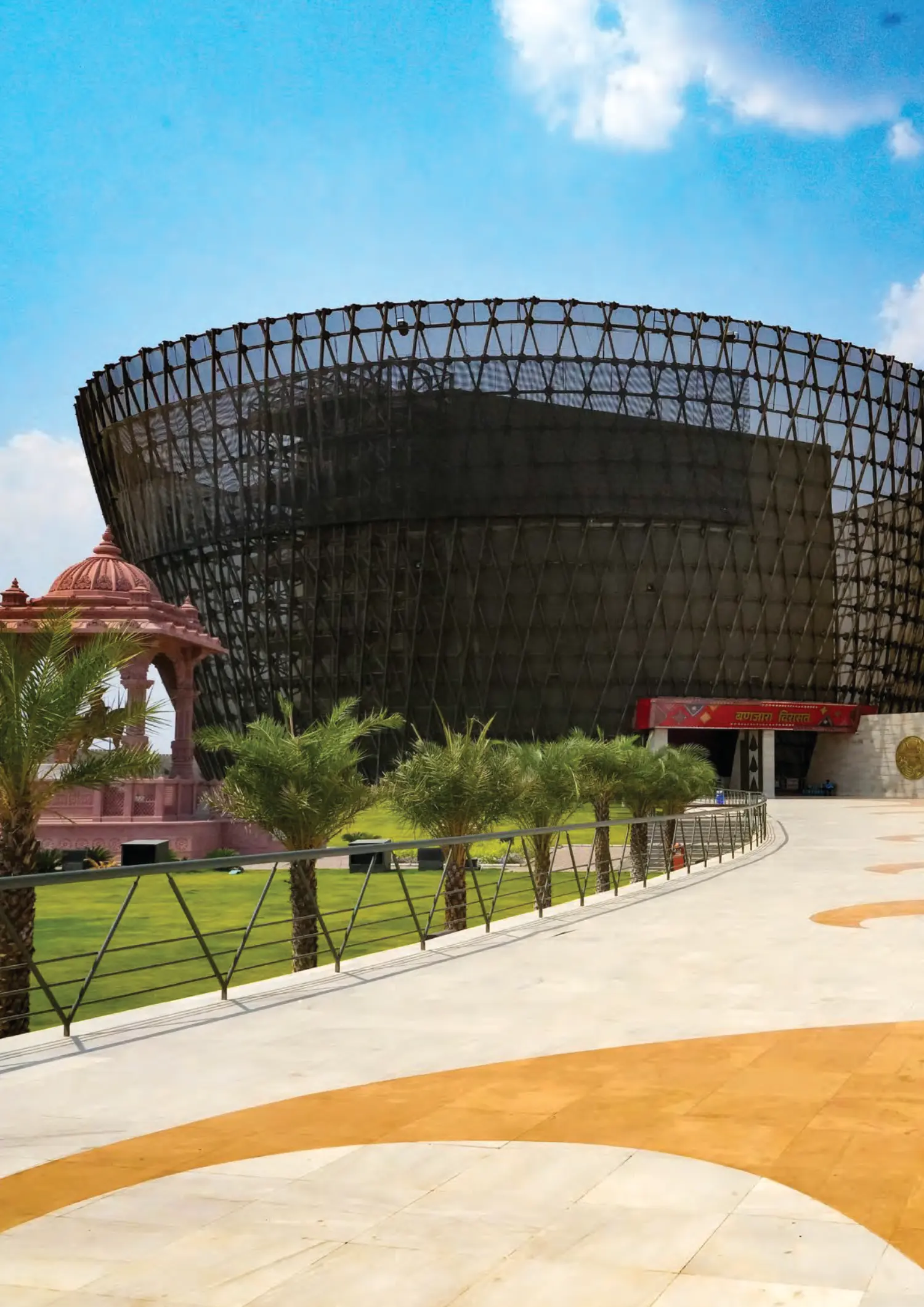
BANJARA VIRASAT
A MUSEUM ON THE NOMADIC BANJARAS
The Banjara Virasat Museum, located on a twelve-acre site in Pohardevi, Washim, Maharashtra, is dedicated to preserving and celebrating the heritage of the Banjara community. The Banjaras, known for their diversity and spread across India –
Pradesh – are united by a vibrant language and shared cultural traditions. They are also referred to as Gor, Baladiya, Bamaniya, Ladeniya, Labana, and Lambani in
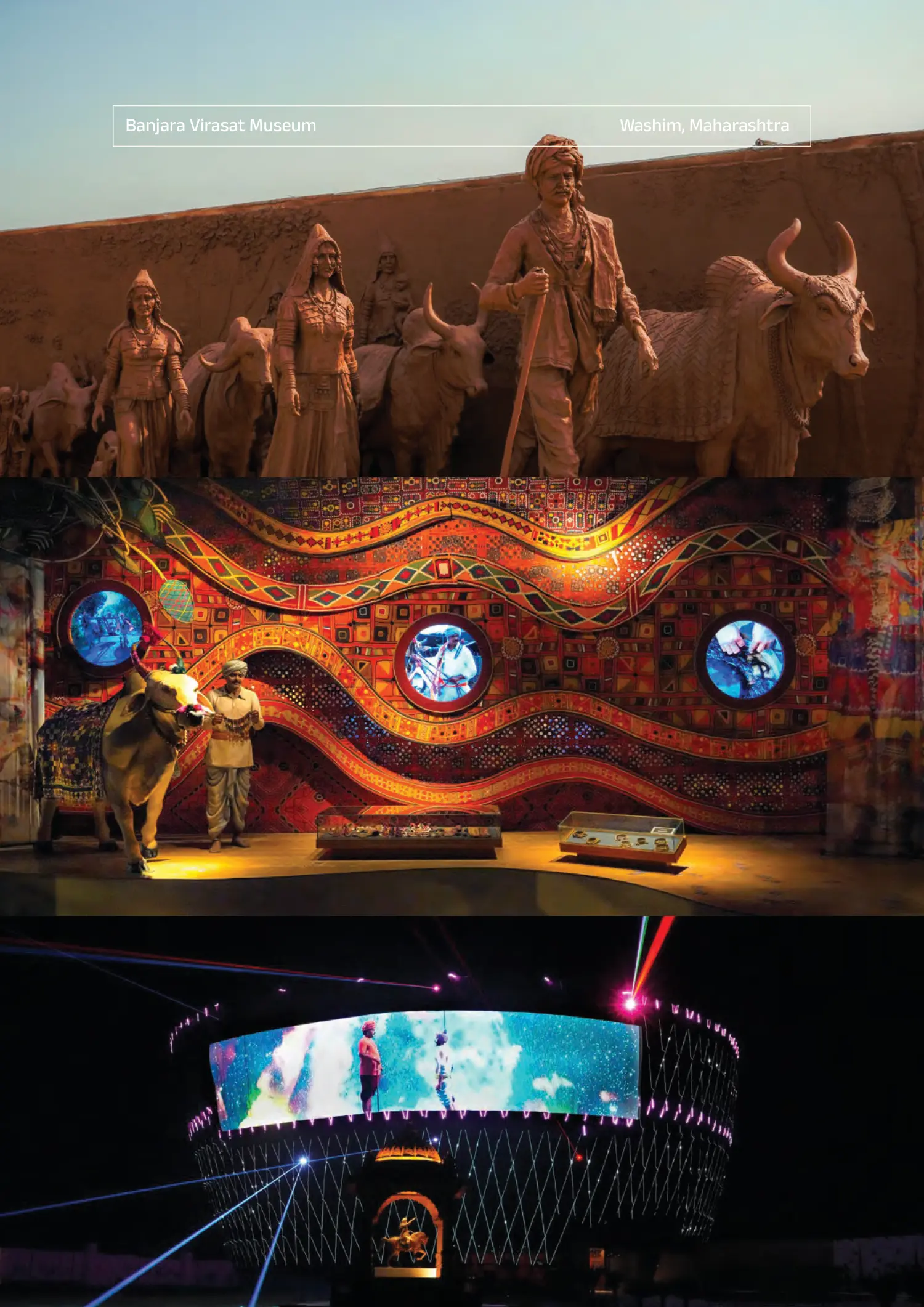
Nangaara drum, serves as both an architectural landmark and a cultural symbol. Designed by
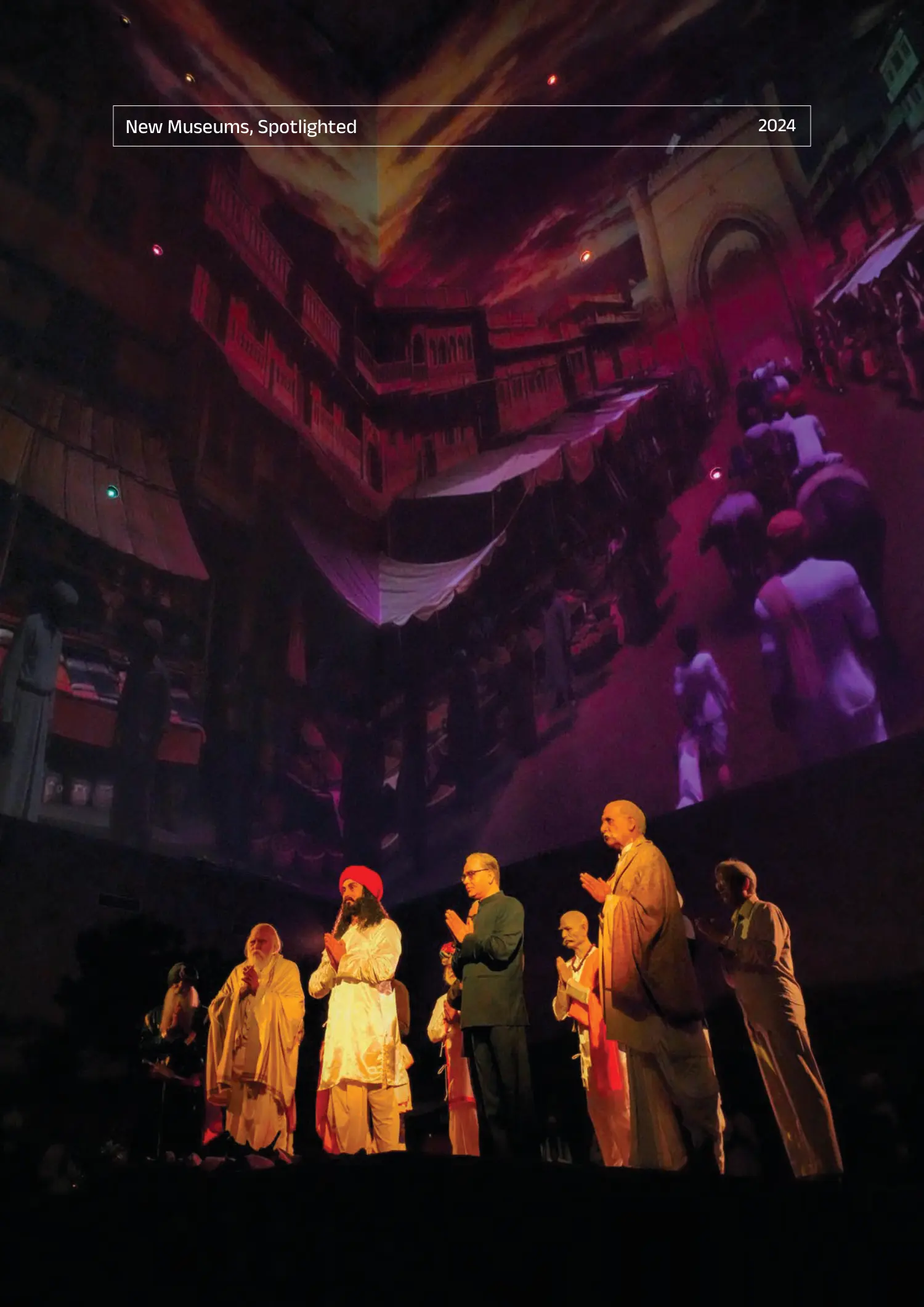
Banjara Virasat Museum features thirteen immersive galleries. These galleries guide visitors through the history and culture of the Banjaras, highlighting their unique role in the broader story of the Indian subcontinent.
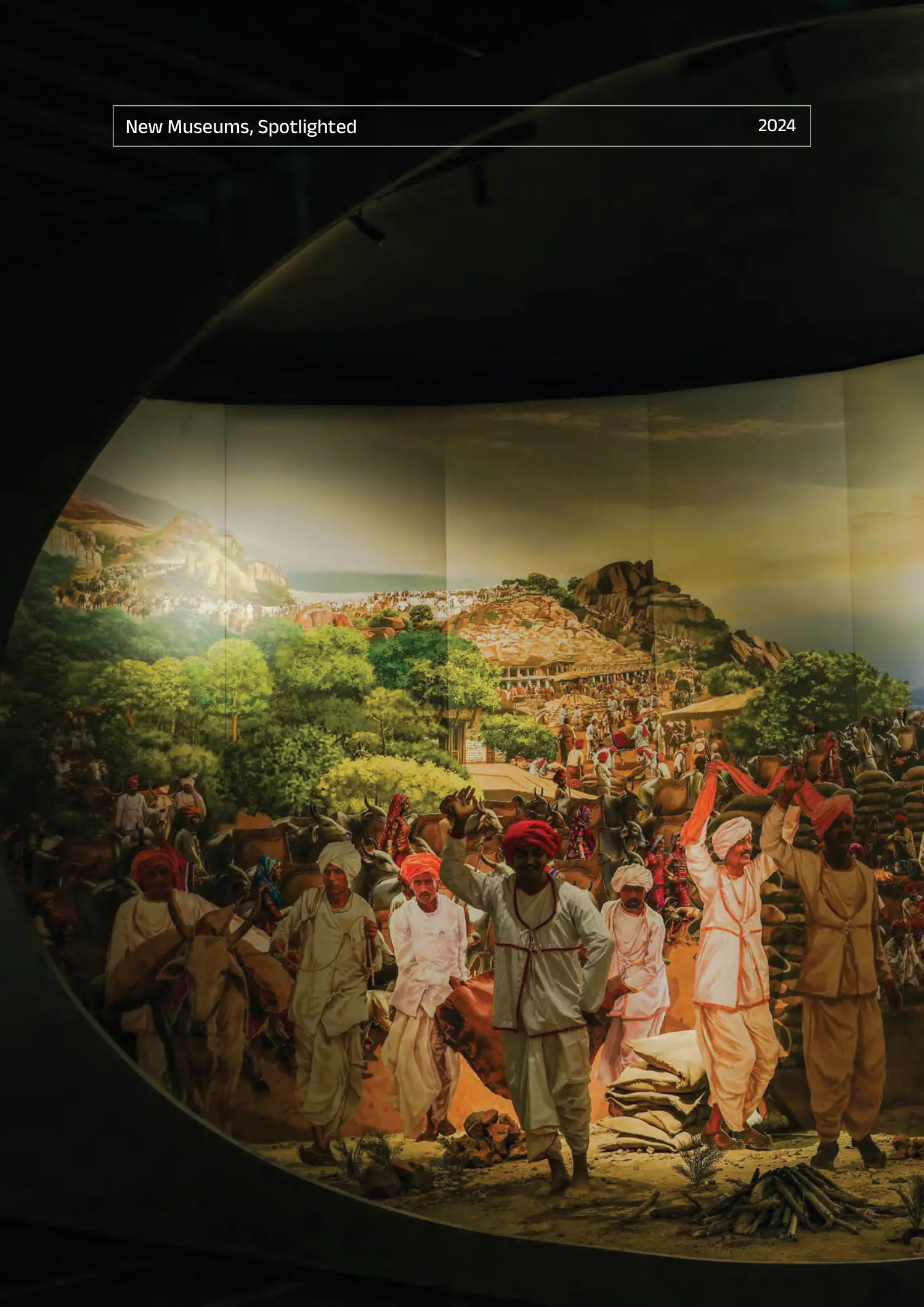
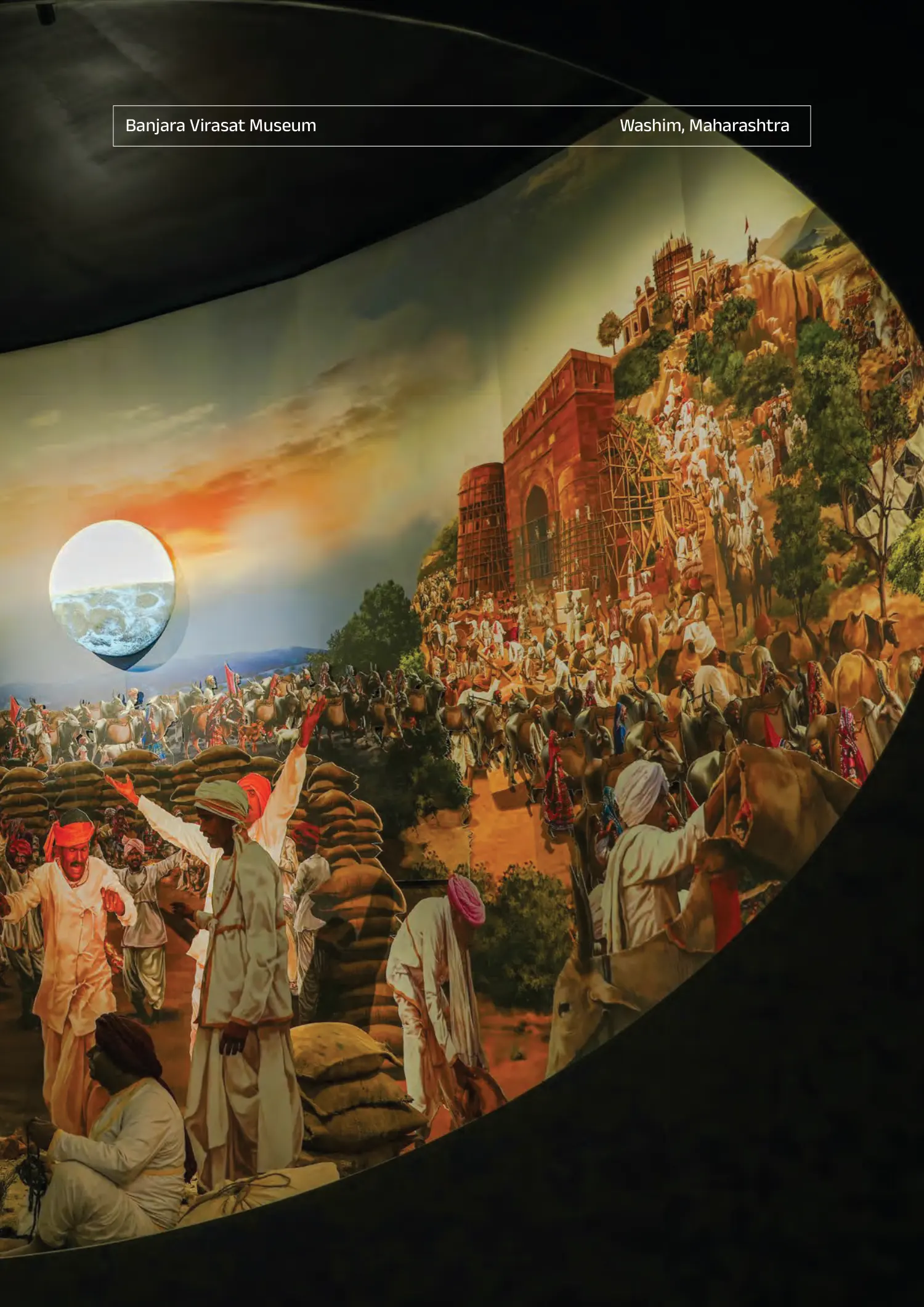
that document the various clans, gotras, and occupational groups within the Banjara community. Exhibits include traditional costumes, jewellery, and rare artefacts such
Banjara tanda (caravan), complete with authentic clothing, animals, and period props,
The museum also brings together information from diverse sources – Mughal, British, and French records, as well as oral histories and mythology of the Banjaras – to create a coherent and accessible narrative of Banjara history. This comprehensive approach makes the museum a key resource for anyone seeking to understand the community’s
beadwork, and textile arts, while interactive installations, including virtual reality and 3D holographic projections, immerse visitors in the community’s music, dance, and storytelling traditions. Oral traditions, a cornerstone of Banjara identity, resonate throughout the museum via multilingual audio guides narrating tales of heroism, rituals, and everyday life.
In the evenings, the museum’s Nangaara-shaped façade becomes the backdrop for a vibrant sound and light show— a 20-minute presentation featuring LED displays,
repository of artefacts, the Banjara Virasat Museum is a living, breathing homage uniting fragmented histories and safeguarding the legacy of a community whose
View original pages, photographs & credits
Originally published in Museum Mosaic 2024, published May 2025.
Part of our annual review. Descriptions reflect the publication’s reporting period.