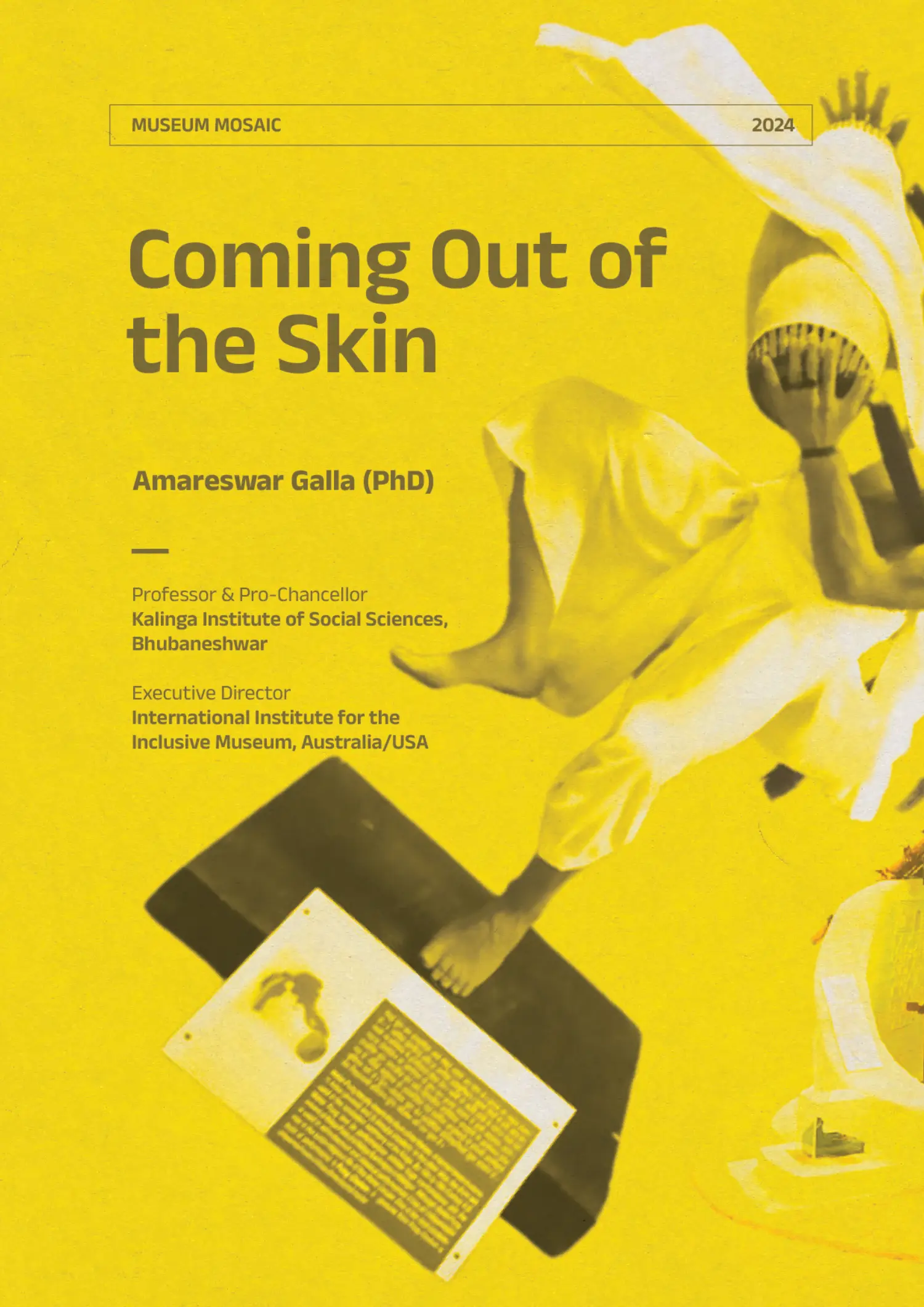
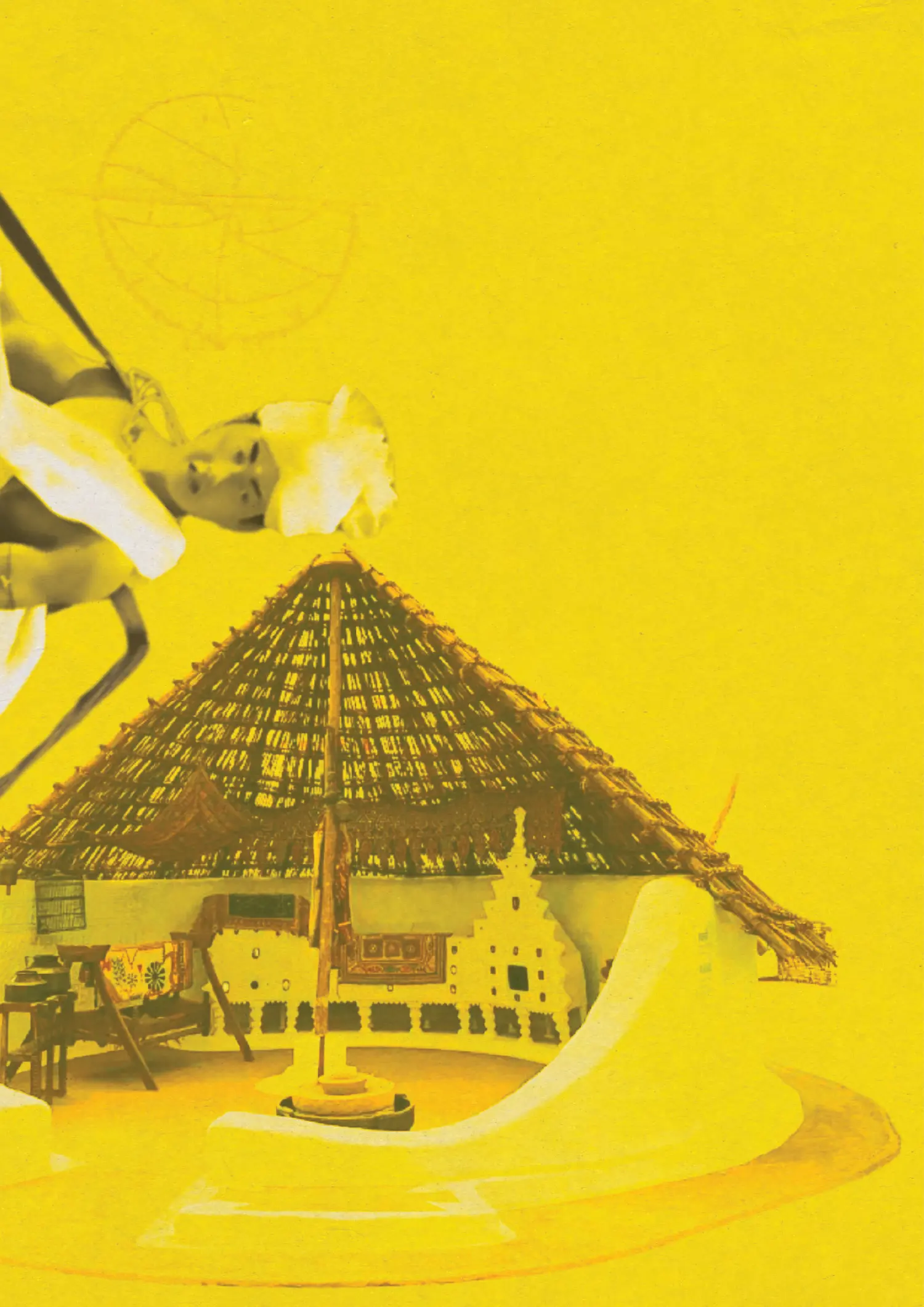
As an unhyphenated IndoAustralian I have started spending half the year in India, the country where I was born, brought up and educated. I have had four decades of museum and heritage experience in different parts of the world, often through ‘fingers in the dirt’ project work such as upskilling communities to build their own cultural spaces. Projects often centred on the ‘first voice’ approach, enabling communities to reclaim their identities and sense of self-esteem through the processes of decolonisation and recontextualisation. This article will focus on some of my concerns coming back to India.
What I encountered are debates that are yet to interrogate the binary discourses of ‘us’ and ‘them’, especially with regard to indigenous people (Tribal/Adivasi). They are parallel tracks that never seem to meet. This conundrum is not new in the world. Both in Australia and Canada such a situation was encountered not all that long ago. Cultures of Aborigines and Torres Strait Islanders in Australia and the First Nations in Canada were represented by others through museums and material culture until about the 1980s. However, both the countries witnessed decolonising processes - recognising, respecting and honouring creativity and Indigeneity in their museums and galleries.
Two major Indigenous exhibitions were brought to the National Gallery of Modern Art, New Delhi from Australia in the past couple of decades. They showcased the incredible transformations of the Australian creative landscapes. Contemporary Indigenous Art at its best. Both were curated by Indigenous People. They came from the National Gallery of Australia. On the host side, the consumption was among elite art circles. It did not include Indigenous people of India. An Indian situation. No connection was made with the creativity of contemporary Indigenous India. A missed opportunity for cultural exchange. However, the Australian curators were very conscious and respectful of Indigenous art of India. It was up to the hosts to facilitate the engagement.
I still recall almost forty years ago, Judy Watson, a brilliant artist from Australia spent time in Western India. She made connections with the similarities between the Indigenous art of the Warli communities and the Papunya Tula art of Central Australia. The former is still managed and represented by non-Indigenous people and dubbed as folk art. The latter is owned by Aboriginal people and is at the leading edge of contemporary art not just in Australia but also the world. This disparity between India and Australia was a challenge for me to fathom.
As a migrant to Australia in the mid-1980s, I had the privilege of working under the guidance of the National Aboriginal Educational Committee and funded initially by the then Council of the National Museum of Australia and Commonwealth Department of Education. As the Coordinator/ Director of the National Affirmative Action Programme for museums, based at the University of Canberra, I ensured that the curricula and pedagogy were informed through Indigenous First Voices of Australia. Visionary Indigenous educators gave their total and unflinching support. It was within the frame of the Australian Commonwealth Government’s Report by one of the most well-known Indigenous educationalists, Mick Miller. Popularly known as the Miller report, it mainstreamed Indigenous education.
Miller Report grounded indigenous voices in a post-colonial context. I relied on both Indigenous and Non-Indigenous expertise to make the programme successful. Most of the first Indigenous curators and even National Park Rangers across Australia came out of the programme. Political good will, a decolonising moment, an inclusive cultural and educational leadership and an aspirational agenda for reconciliation across the spectrum of culturally and linguistically diverse Australia, helped. India and Australia have different histories. Former with millennia of inroads from various people and the latter with about 245 years of rapid colonisation and recent transformative and corrective engagement. Population sizes are also considerably different. Indigenous is a contentious term in India with the preferred colonial ‘Tribal or Adivasi’. But India has one of the first Constitutional mandates in the world for the fundamental rights addressing ‘Tribal’ people. It dates back to the 1950s. Australia recognised Indigenous people as citizens only in 1967. Then, why is India lagging to address Indigenous participation in creativity and culture?
Prior to emigrating to Australia in the mid-70’s, I was fortunate to be involved at Bhimbetka, now a World Heritage site, in the first ever excavations there, led by Late Professor V. N. Misra, Deccan College, Pune. We were assisted by the Dorai Gonds, a significant Indigenous community of Central India. It was during this time that we learnt about the exciting development of a new National Museum of India for ethnography and anthropology, the Indira Gandhi Rastriya Manav Sangrahalaya (IGRMS), Bhopal. It has had a series of eminent directors who brought with them a strong research ethic. It is not surprising that IGRMS is one of the leading
generators of quality museum material in India. Its focus is on understanding and celebrating the cultural diversity and living heritage of India. It bridges the gulf between past and present to create an ongoing dialogue for a deeper and comprehensive understanding of India’s civilisational journey.
IGRMS recently convened national seminars on rethinking ethnographic museums and community engagement in India. It interrogated ethnographic studies and representation of the cultural diversity of India. ‘Self’ and the ‘Other’, plurality of perspectives and perceptions, were discussed in depth. How does one understand and represent the enormous cultural and linguistic diversity of India? What is the role of the first voice of Indigenous and all other communities in safeguarding the multivocality of heritage interpretation in India? Where is the 8.6% of Indian population that is Indigenous situated in this complexity.
What is ‘national’ in the national museums of India? There are so many institutions with that national tag! In this context, IGRMS is a national network of research, safeguarding activities and partnerships with research departments across India. It generates travelling exhibitions and significant inreach and outreach projects. It brings in people with diverse ethnicities to make their spaces on the huge cultural landscape of the IGRMS. In fact, it is a campus of a two-hundred-acre landscape museum with numerous engaging sites including an extension of the Bhimbetka network of rock art dating back to the Pleistocene or the last ice age.
IGRMS attempts to bring scholars from all disciplines, be they historians or cultural ecologists, to scope and present the living heritage of India, especially Indigenous People of India. They are NOT presented as ‘noble savages in the Garden of Eden’. Most museums in India still do that, presenting as anthropological objects frozen in time. But IGRMS attempts to disrupt this colonial gaze. It introduces different ideas of aesthetics. It does exactly what a national museum should do, to help people explore their sense of place and self-esteem in the contemporary globalising world with all its complexity.
IGRMS has generated a framework entitled- IGRMS Bhopal Charter (2024) on rethinking community cultural engagement as intercultural dialogue between equally empowered stakeholders. The Charter sets the benchmark for all museums in India as to how well they decolonise their narratives. The use of AI makes museum narratives increasingly complex and museologically challenging in a
fact-fiction-futurism mélange. It also offers an avenue to use mother tongue in all forms of museum activities, especially research, interpretation and communications.
Are Indian museums ready or have the capacity to come out of their skin?
View original pages, photographs & credits
Originally published in Museum Mosaic 2024, published May 2025.
Part of our annual review. Descriptions reflect the publication’s reporting period.