Nicholas Roerich: The Eternal
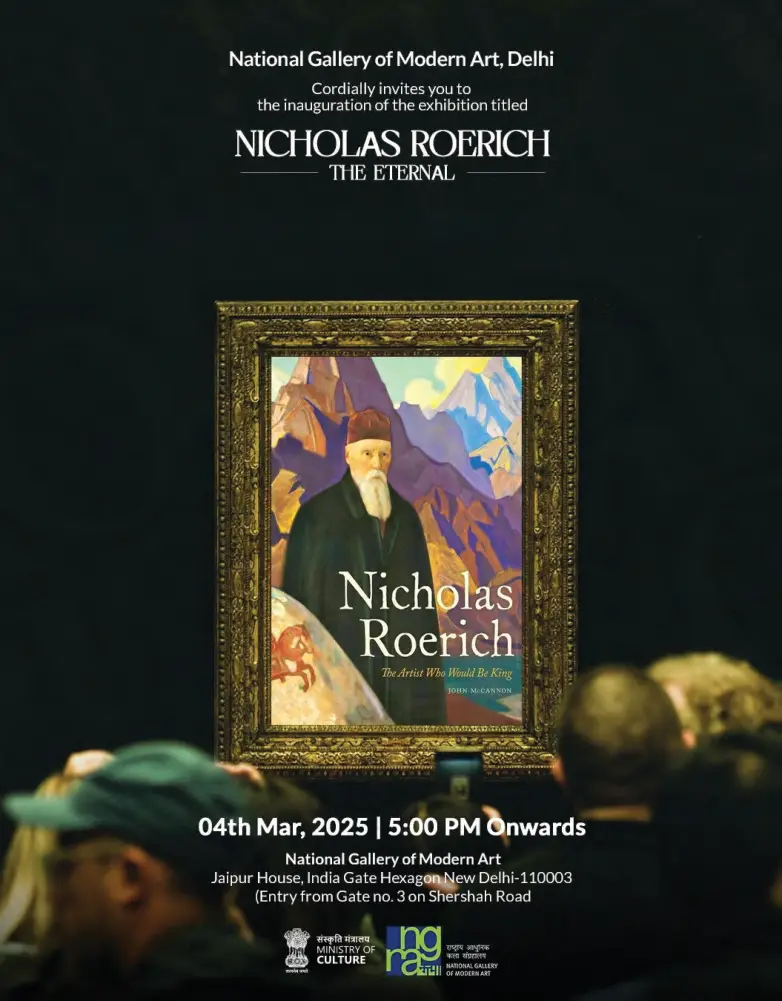
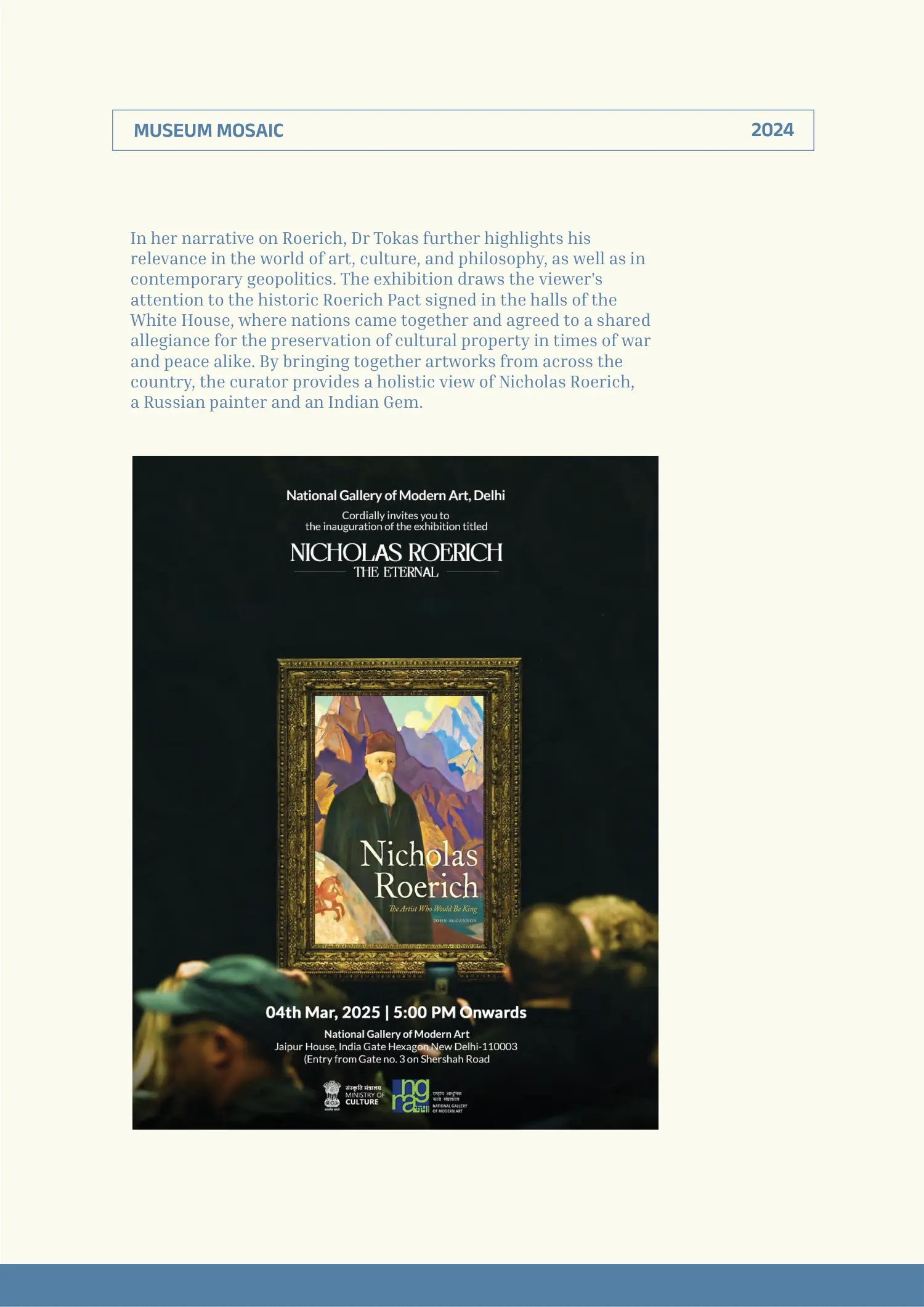
The timing of the exhibition, Nicholas Roerich: The Eternal, curated by Dr Jyoti Tokas, is apt, as her exhibition brings forth the message of peace, beauty and bliss at a time when the world is undergoing turmoil with a series of wars, economic crisis and natural disasters. As the title suggests, the contributions of Roerich, whether in art or literature, cuts across time and space. His ideals on spirituality, reverence for nature, futility of war and safeguarding of heritage is relevant today as was in the past and will continue to inspire the future generations.
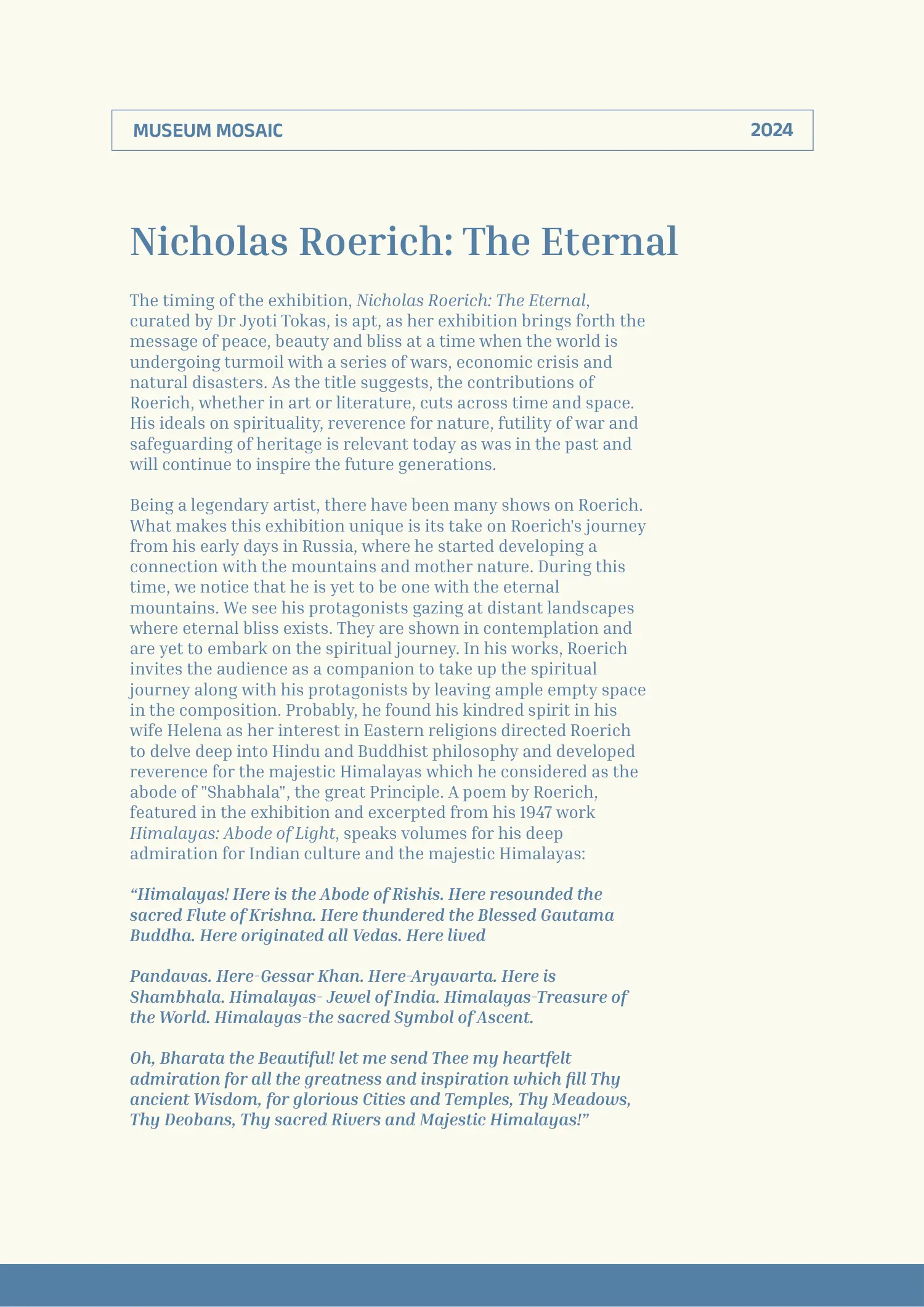
Being a legendary artist, there have been many shows on Roerich. What makes this exhibition unique is its take on Roerich's journey from his early days in Russia, where he started developing a connection with the mountains and mother nature. During this time, we notice that he is yet to be one with the eternal mountains. We see his protagonists gazing at distant landscapes where eternal bliss exists. They are shown in contemplation and are yet to embark on the spiritual journey. In his works, Roerich invites the audience as a companion to take up the spiritual journey along with his protagonists by leaving ample empty space in the composition. Probably, he found his kindred spirit in his wife Helena as her interest in Eastern religions directed Roerich to delve deep into Hindu and Buddhist philosophy and developed reverence for the majestic Himalayas which he considered as the abode of "Shabhala", the great Principle. A poem by Roerich, featured in the exhibition and excerpted from his 1947 work Himalayas: Abode of Light, speaks volumes for his deep admiration for Indian culture and the majestic Himalayas:
“Himalayas! Here is the Abode of Rishis. Here resounded the sacred Flute of Krishna. Here thundered the Blessed Gautama Buddha. Here originated all Vedas. Here lived
Pandavas. Here-Gessar Khan. Here-Aryavarta. Here is Shambhala. Himalayas- Jewel of India. Himalayas-Treasure of the World. Himalayas-the sacred Symbol of Ascent.
Oh, Bharata the Beautiful! let me send Thee my heartfelt admiration for all the greatness and inspiration which fill Thy ancient Wisdom, for glorious Cities and Temples, Thy Meadows, Thy Deobans, Thy sacred Rivers and Majestic Himalayas!”
In her narrative on Roerich, Dr Tokas further highlights his relevance in the world of art, culture, and philosophy, as well as in contemporary geopolitics. The exhibition draws the viewer's attention to the historic Roerich Pact signed in the halls of the White House, where nations came together and agreed to a shared allegiance for the preservation of cultural property in times of war and peace alike. By bringing together artworks from across the country, the curator provides a holistic view of Nicholas Roerich, a Russian painter and an Indian Gem.
Celluloid Soujourn: The Women of Indian Cinema
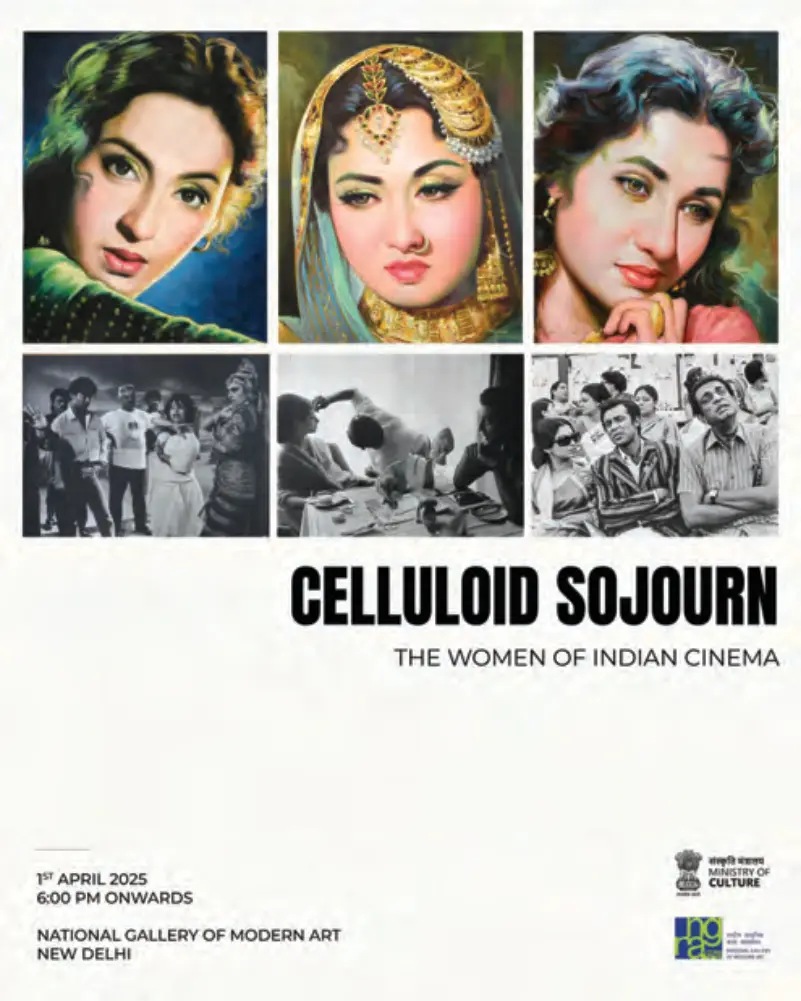
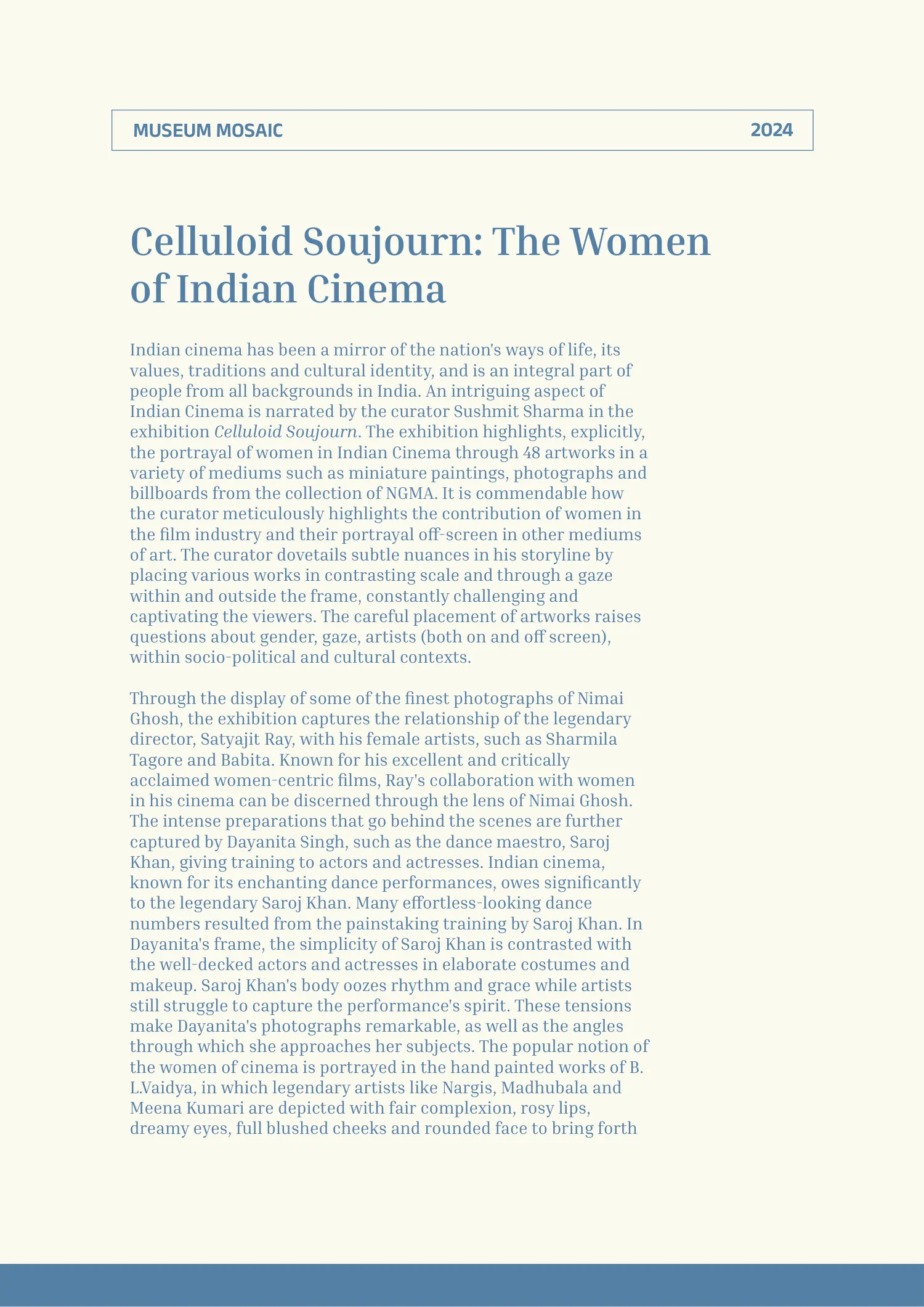
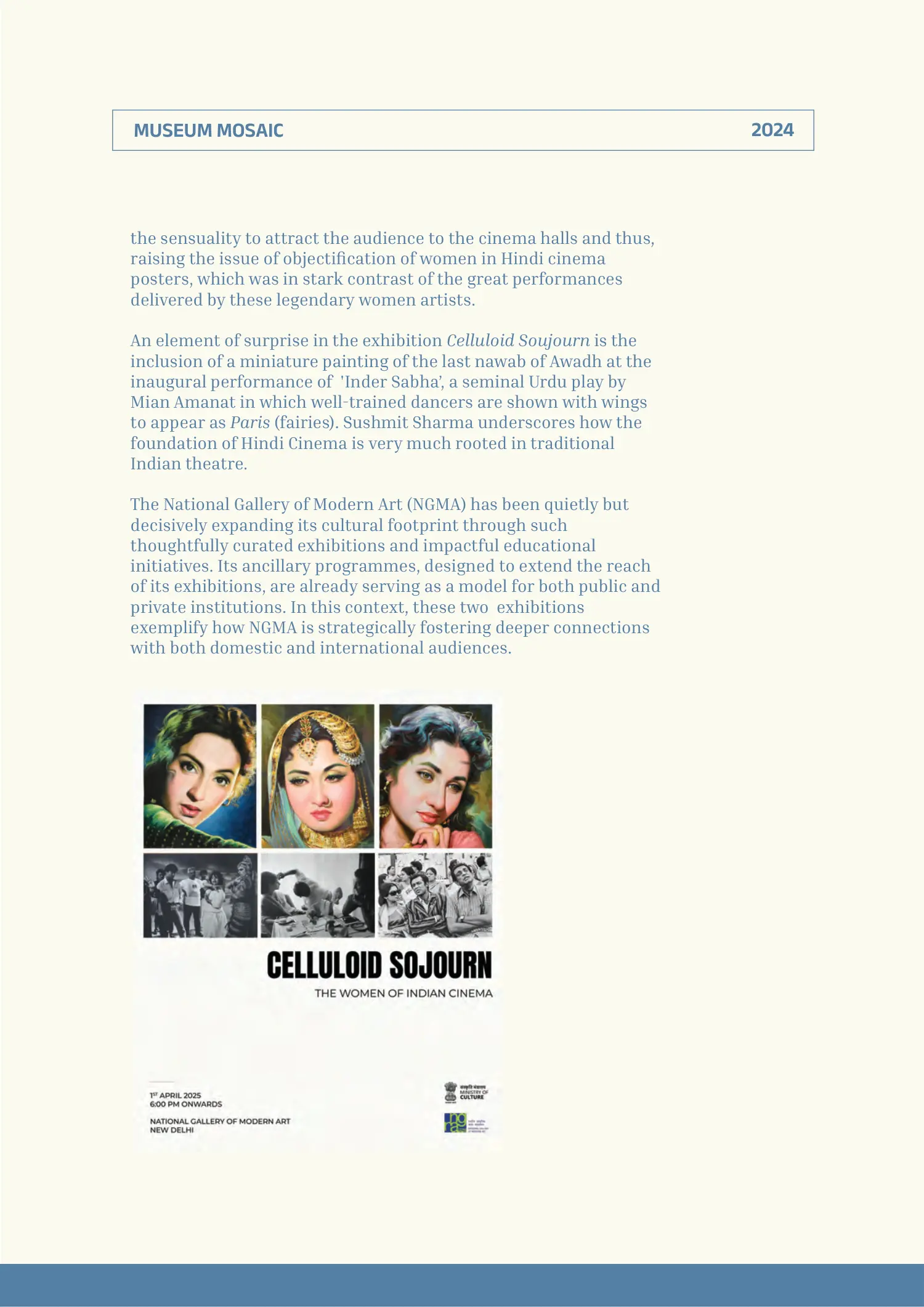
Indian cinema has been a mirror of the nation's ways of life, its values, traditions and cultural identity, and is an integral part of people from all backgrounds in India. An intriguing aspect of Indian Cinema is narrated by the curator Sushmit Sharma in the exhibition Celluloid Soujourn. The exhibition highlights, explicitly, the portrayal of women in Indian Cinema through 48 artworks in a variety of mediums such as miniature paintings, photographs and billboards from the collection of NGMA. It is commendable how the curator meticulously highlights the contribution of women in the film industry and their portrayal off-screen in other mediums of art. The curator dovetails subtle nuances in his storyline by placing various works in contrasting scale and through a gaze within and outside the frame, constantly challenging and captivating the viewers. The careful placement of artworks raises questions about gender, gaze, artists (both on and off screen), within socio-political and cultural contexts.
Through the display of some of the finest photographs of Nimai Ghosh, the exhibition captures the relationship of the legendary director, Satyajit Ray, with his female artists, such as Sharmila Tagore and Babita. Known for his excellent and critically acclaimed women-centric films, Ray's collaboration with women in his cinema can be discerned through the lens of Nimai Ghosh. The intense preparations that go behind the scenes are further captured by Dayanita Singh, such as the dance maestro, Saroj Khan, giving training to actors and actresses. Indian cinema, known for its enchanting dance performances, owes significantly to the legendary Saroj Khan. Many effortless-looking dance numbers resulted from the painstaking training by Saroj Khan. In Dayanita's frame, the simplicity of Saroj Khan is contrasted with the well-decked actors and actresses in elaborate costumes and makeup. Saroj Khan's body oozes rhythm and grace while artists still struggle to capture the performance's spirit. These tensions make Dayanita's photographs remarkable, as well as the angles through which she approaches her subjects. The popular notion of the women of cinema is portrayed in the hand painted works of B. L.Vaidya, in which legendary artists like Nargis, Madhubala and Meena Kumari are depicted with fair complexion, rosy lips, dreamy eyes, full blushed cheeks and rounded face to bring forth
the sensuality to attract the audience to the cinema halls and thus, raising the issue of objectification of women in Hindi cinema posters, which was in stark contrast of the great performances delivered by these legendary women artists.
An element of surprise in the exhibition Celluloid Soujourn is the inclusion of a miniature painting of the last nawab of Awadh at the inaugural performance of 'Inder Sabha’, a seminal Urdu play by Mian Amanat in which well-trained dancers are shown with wings to appear as Paris (fairies). Sushmit Sharma underscores how the foundation of Hindi Cinema is very much rooted in traditional Indian theatre.
The National Gallery of Modern Art (NGMA) has been quietly but decisively expanding its cultural footprint through such thoughtfully curated exhibitions and impactful educational initiatives. Its ancillary programmes, designed to extend the reach of its exhibitions, are already serving as a model for both public and private institutions. In this context, these two exhibitions exemplify how NGMA is strategically fostering deeper connections with both domestic and international audiences.
View original pages, photographs & credits
Originally published in Museum Mosaic 2024, published May 2025.
Part of our annual review. Descriptions reflect the publication’s reporting period.