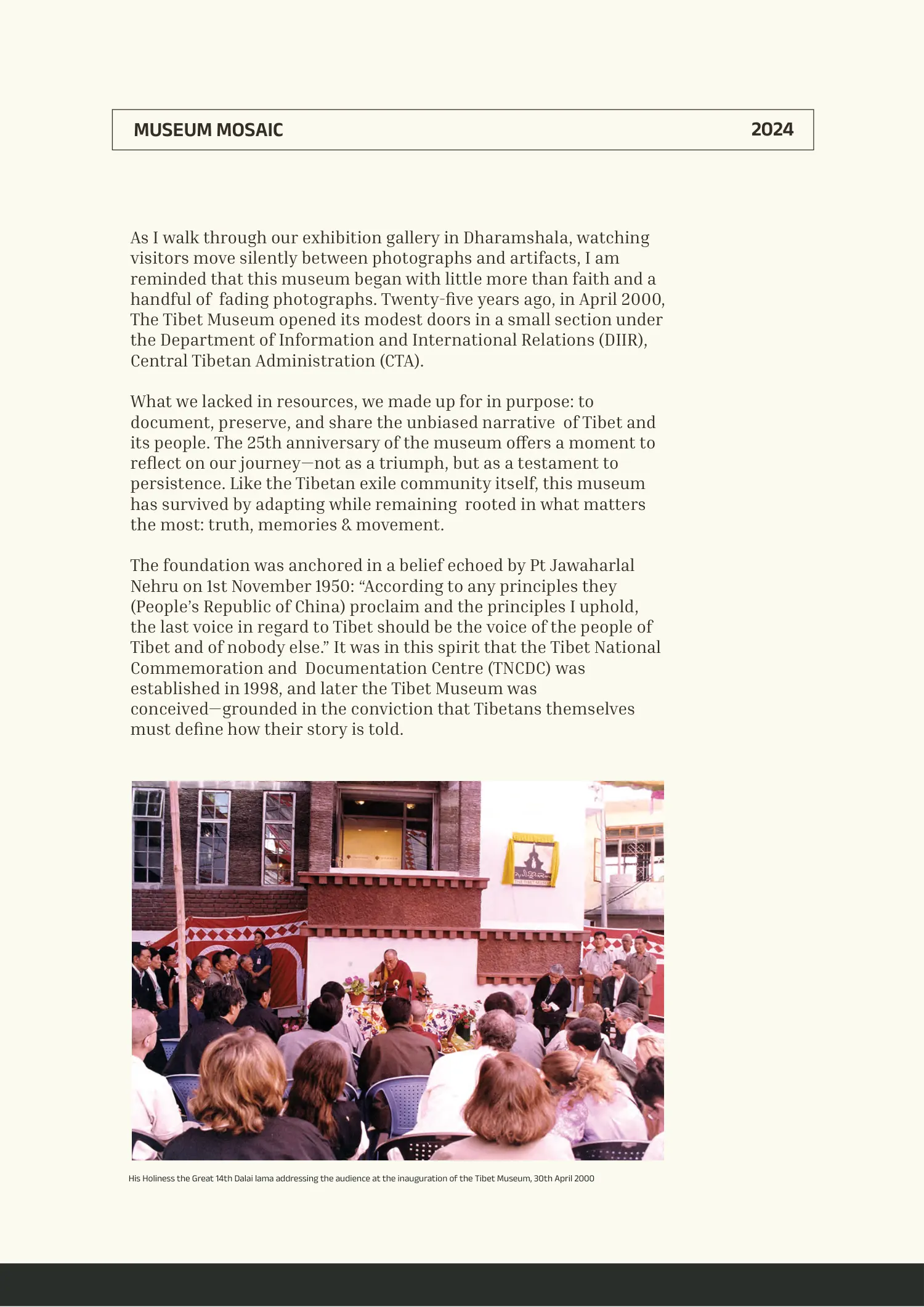
As I walk through our exhibition gallery in Dharamshala, watching visitors move silently between photographs and artifacts, I am reminded that this museum began with little more than faith and a handful of fading photographs. Twenty-five years ago, in April 2000, The Tibet Museum opened its modest doors in a small section under the Department of Information and International Relations (DIIR), Central Tibetan Administration (CTA).
What we lacked in resources, we made up for in purpose: to document, preserve, and share the unbiased narrative of Tibet and its people. The 25th anniversary of the museum offers a moment to reflect on our journey—not as a triumph, but as a testament to persistence. Like the Tibetan exile community itself, this museum has survived by adapting while remaining rooted in what matters the most: truth, memories & movement.
The foundation was anchored in a belief echoed by Pt Jawaharlal Nehru on 1st November 1950: “According to any principles they (People’s Republic of China) proclaim and the principles I uphold, the last voice in regard to Tibet should be the voice of the people of Tibet and of nobody else.” It was in this spirit that the Tibet National Commemoration and Documentation Centre (TNCDC) was established in 1998, and later the Tibet Museum was conceived—grounded in the conviction that Tibetans themselves must define how their story is told.
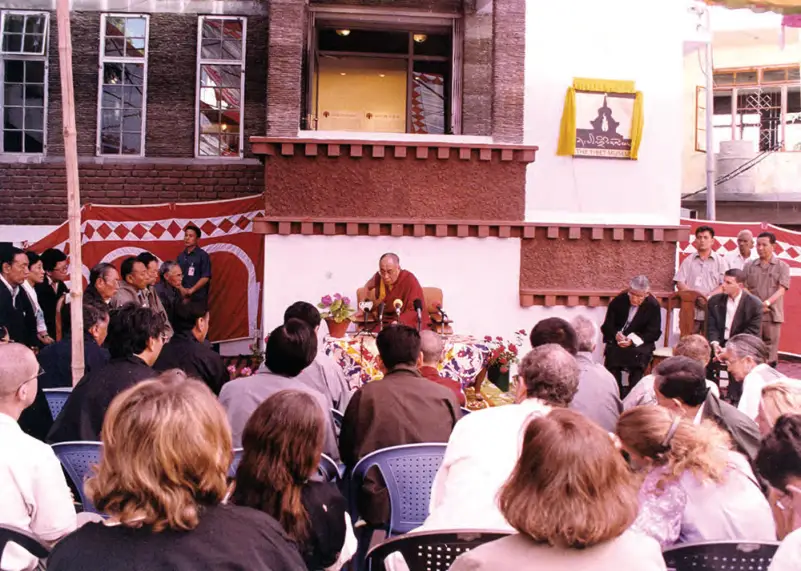
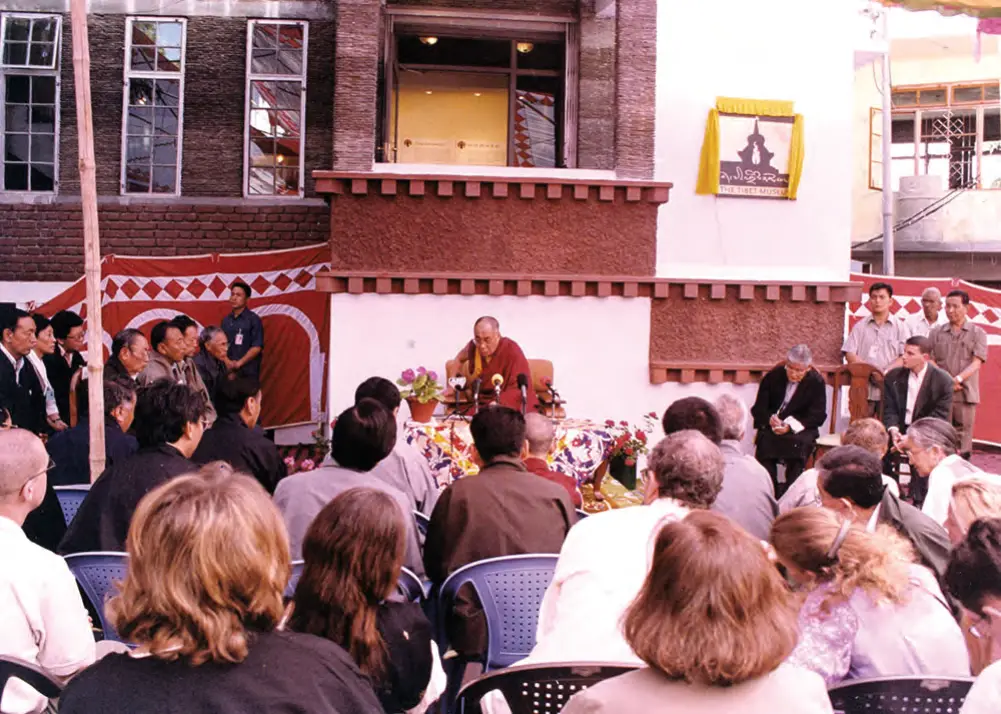
His Holiness the Great 14th Dalai lama addressing the audience at the inauguration of the Tibet Museum, 30th April 2000
The Seeds of Remembrance
The idea for a museum emerged in the late 1990s through the visionary efforts of a committed group of individuals within the Central Tibetan Administration and its affiliated institutions. Leaders, scholars, and advisors from departments such as the DIIR, the Library of Tibetan Works and Archives, the Office of His Holiness the Dalai Lama, and international allies played a key role in shaping this vision into reality. Their collective wisdom, dedication, and collaboration laid the foundation for what would become the Tibet Museum.
At the time, there was growing concern that the generation who had physically walked out of Tibet—those who carried vivid memories of life before 1959—was growing old. Their stories of monasteries, harvest rituals, traditional governance, and resistance were at the risk of fading into silence.
While His Holiness the Dalai Lama continued to guide our people with spiritual and political leadership in exile, the DIIR recognised the pressing need to archive these living memories—not only to preserve our identity but to strengthen the foundation for our ongoing nonviolent struggle. A museum, they believed, could serve as a powerful contemporary medium to inform, inspire, and mobilise support for Tibet.
The initial collection came together through donation drives. We asked Tibetan families across settlements in India and Nepal to share photographs, documents, religious items, clothing—anything that spoke to their experience. The response was overwhelming yet deeply heartbreaking. People parted with their most precious possessions because, as one elderly gentleman from Leh settlement told me, "These things matter more as testimony than as private treasures."
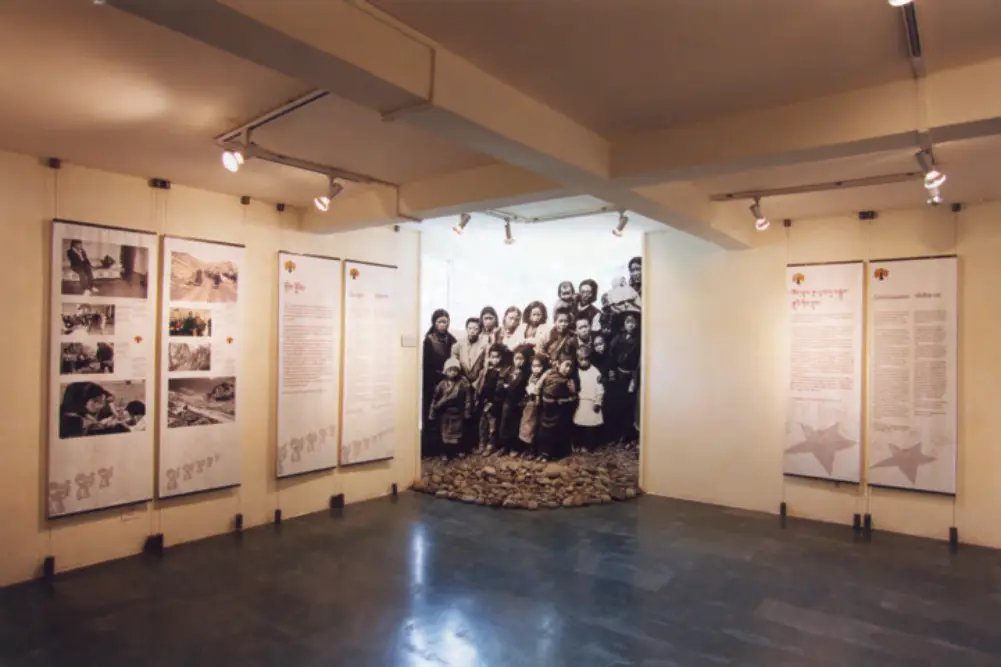
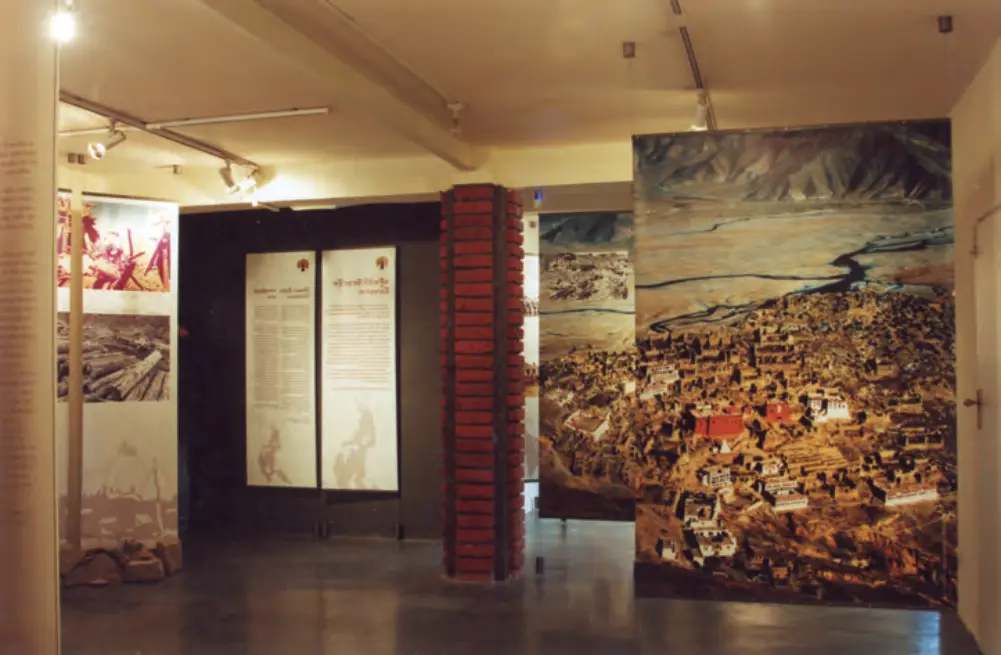
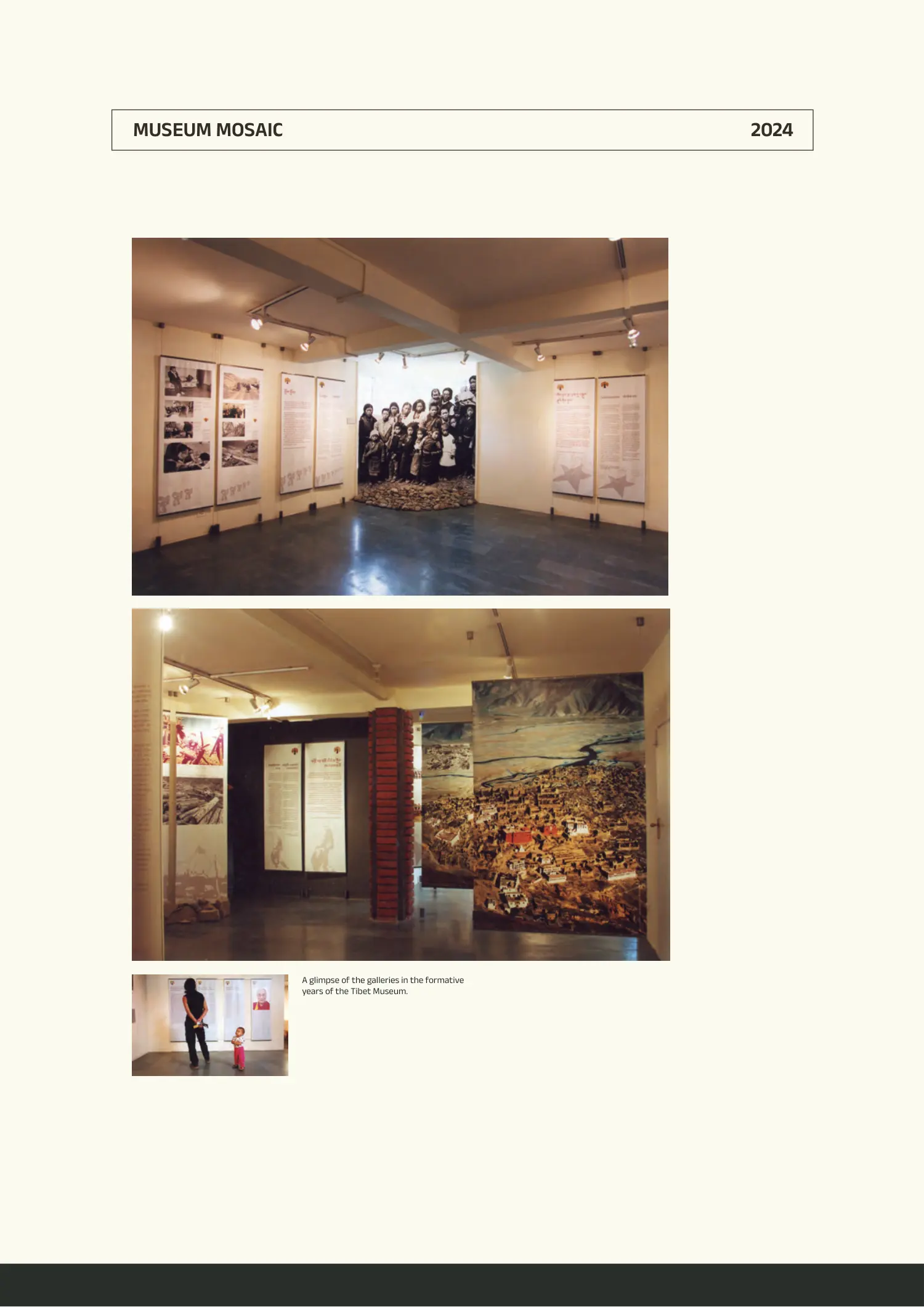
Our first exhibition space measured just 2300 square feet. Display cases were handmade by local carpenters, and a few descriptive labels were handwritten. But what we presented was authentic—photographs of monastries & villages now demolished, religious texts rescued during escapes, letters from family members who remained behind, and everyday objects that became sacred through the journey of exile.
A glimpse of the galleries in the formative years of the Tibet Museum.
Finding Our Voice
The early years taught us that a museum in exile faces unique challenges. Without a homeland to return to, for collecting artifacts, along with limited funding and the archaeological continuity that the other cultural institutions enjoy, we had to invent our own museology. We asked: How does one curate the experience of displacement? How does one document an ongoing occupation? And how do you tell the story of a resistance that is still unfolding?
We weren’t preserving a past that was complete—we were building a living record of an ongoing reality. This meant learning to be more than a curator. We had to become historians and advocates, archivists and activists, often all at the same time. During these years, we also began an intensive effort to collect images, videos, and personal testimonies from the Tibetan community in exile. Many were reluctant at first, finding it painful to revisit their losses. Others worried about repercussions for family members still in Tibet. Yet over time, many came forward, understanding that their memories were irreplaceable primary sources for future generations.
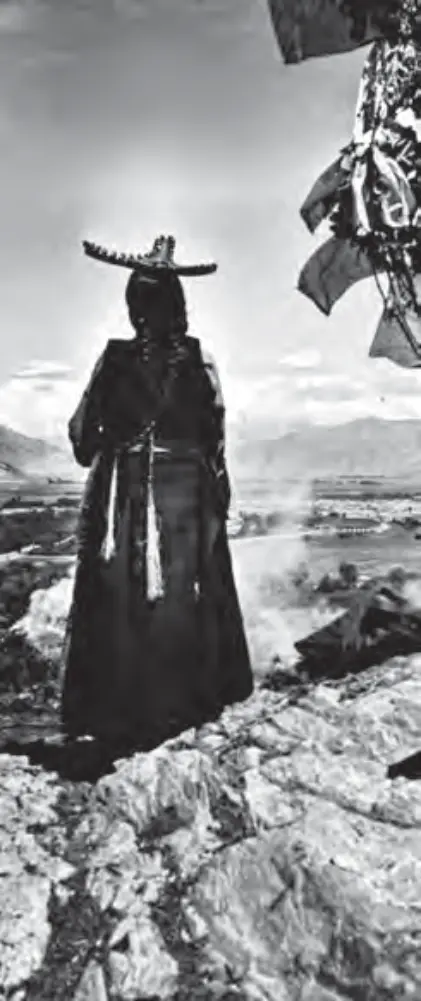
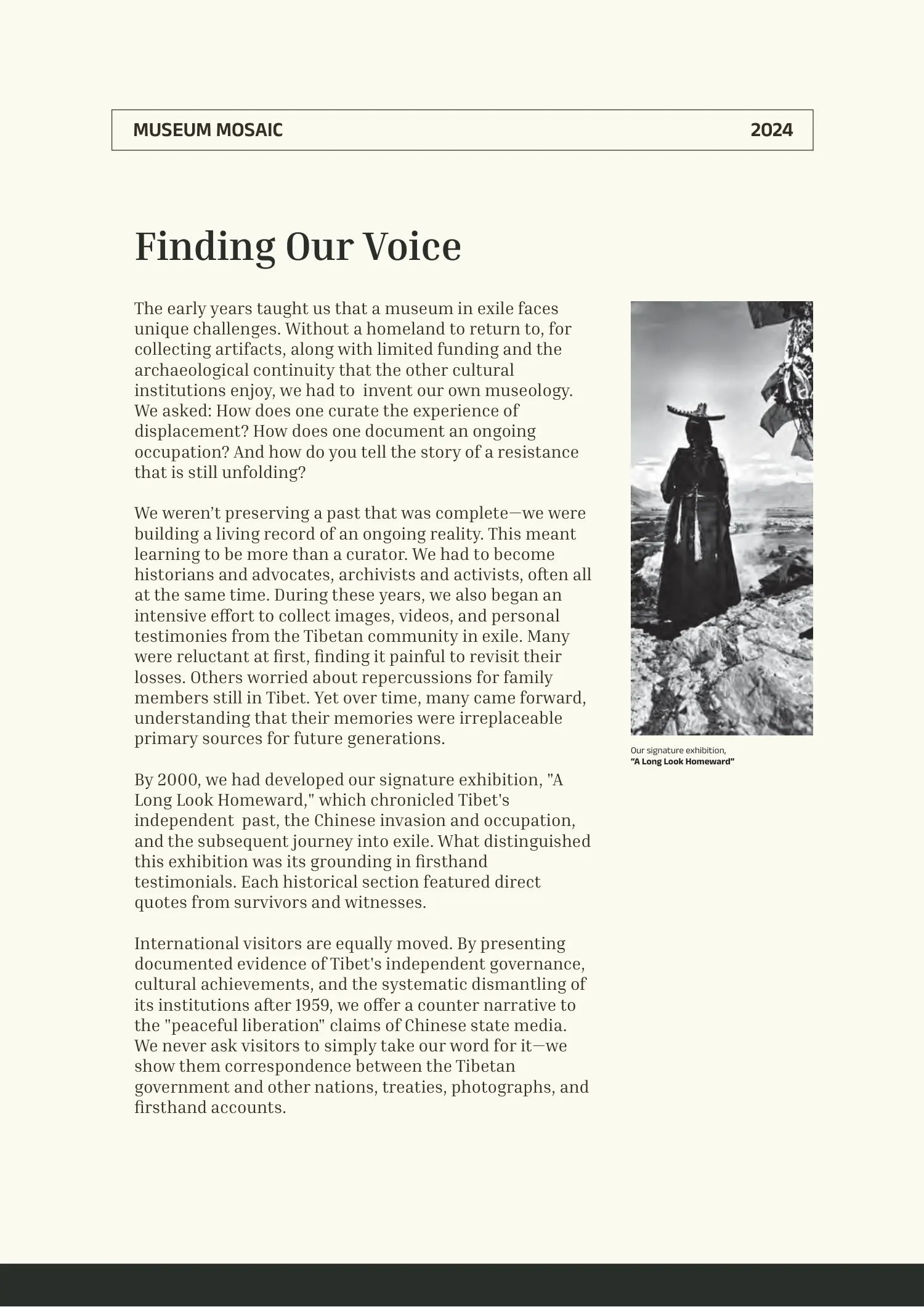
Our signature exhibition, “A Long Look Homeward”
By 2000, we had developed our signature exhibition, "A Long Look Homeward," which chronicled Tibet's independent past, the Chinese invasion and occupation, and the subsequent journey into exile. What distinguished this exhibition was its grounding in firsthand testimonials. Each historical section featured direct quotes from survivors and witnesses.
International visitors are equally moved. By presenting documented evidence of Tibet's independent governance, cultural achievements, and the systematic dismantling of its institutions after 1959, we offer a counter narrative to the "peaceful liberation" claims of Chinese state media. We never ask visitors to simply take our word for it—we show them correspondence between the Tibetan government and other nations, treaties, photographs, and firsthand accounts.
Beyond Walls
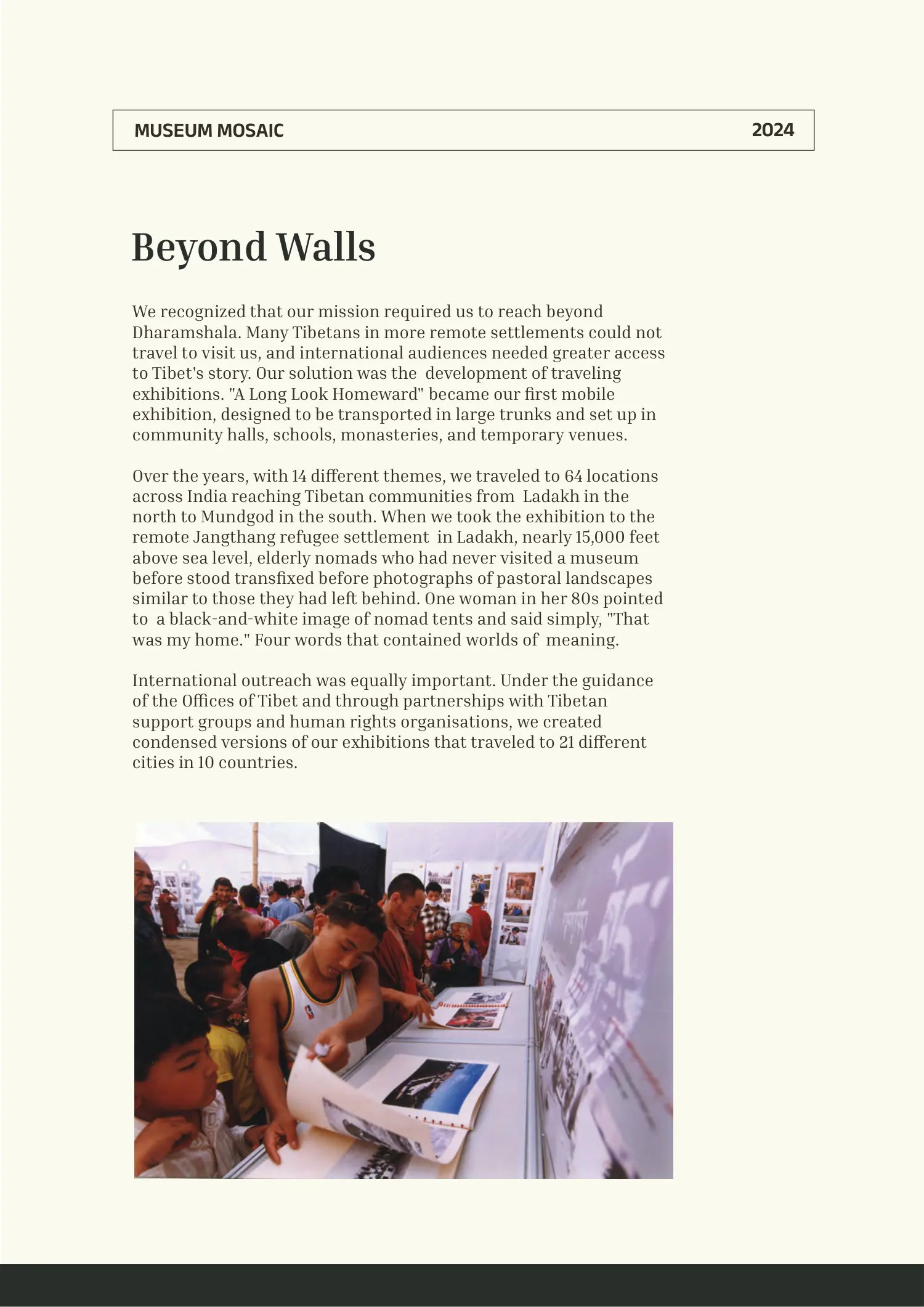
We recognized that our mission required us to reach beyond Dharamshala. Many Tibetans in more remote settlements could not travel to visit us, and international audiences needed greater access to Tibet's story. Our solution was the development of traveling exhibitions. "A Long Look Homeward" became our first mobile exhibition, designed to be transported in large trunks and set up in community halls, schools, monasteries, and temporary venues.
Over the years, with 14 different themes, we traveled to 64 locations across India reaching Tibetan communities from Ladakh in the north to Mundgod in the south. When we took the exhibition to the remote Jangthang refugee settlement in Ladakh, nearly 15,000 feet above sea level, elderly nomads who had never visited a museum before stood transfixed before photographs of pastoral landscapes similar to those they had left behind. One woman in her 80s pointed to a black-and-white image of nomad tents and said simply, "That was my home." Four words that contained worlds of meaning.
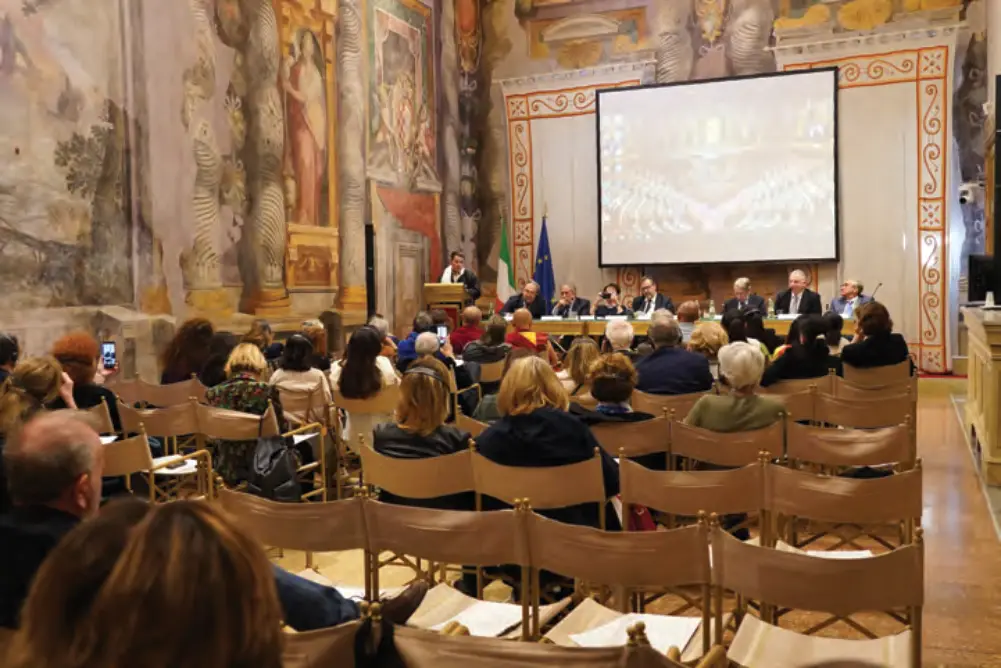
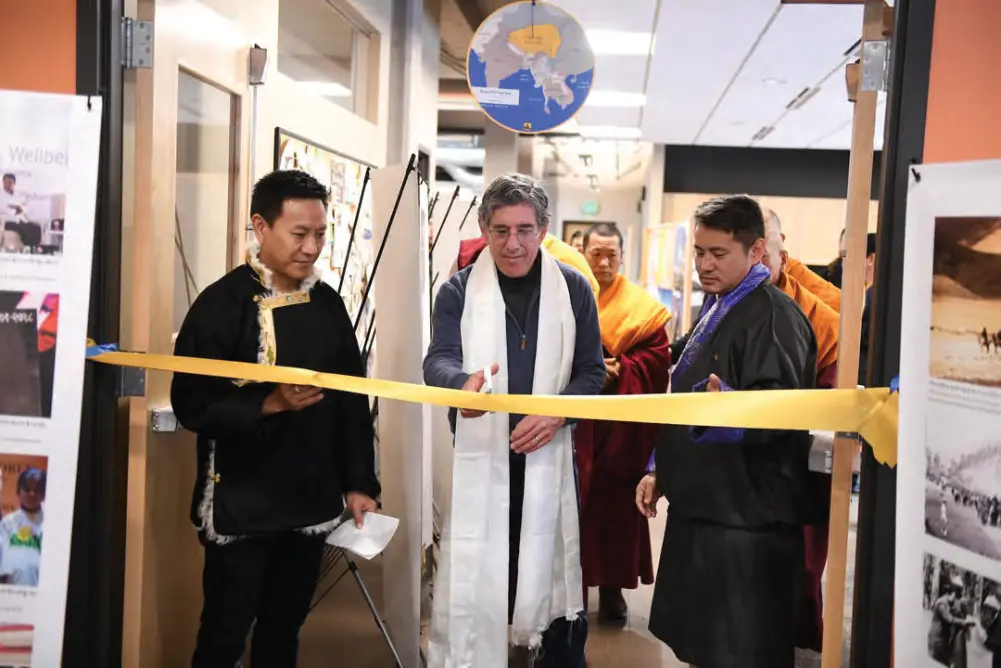
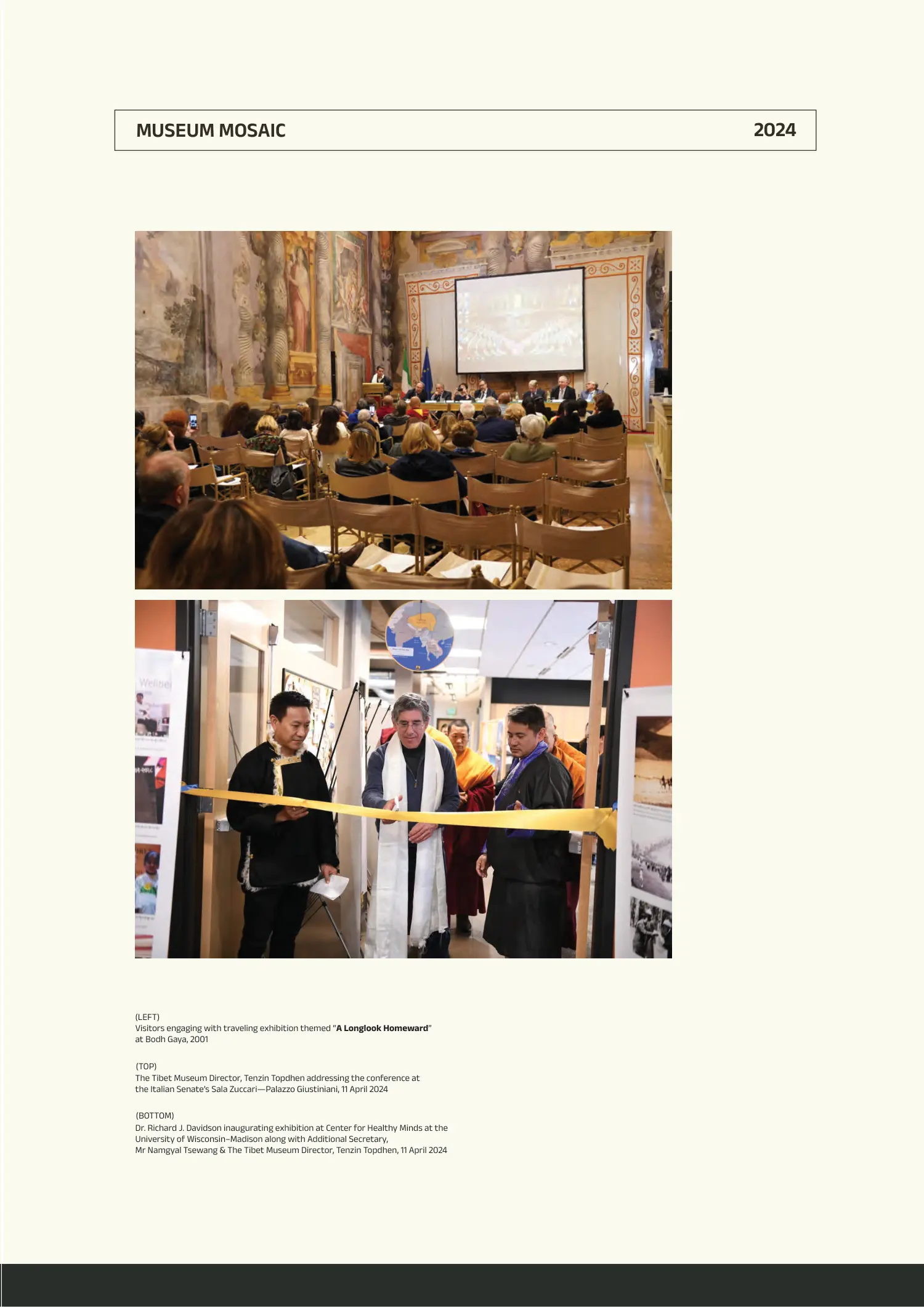
International outreach was equally important. Under the guidance of the Offices of Tibet and through partnerships with Tibetan support groups and human rights organisations, we created condensed versions of our exhibitions that traveled to 21 different cities in 10 countries.
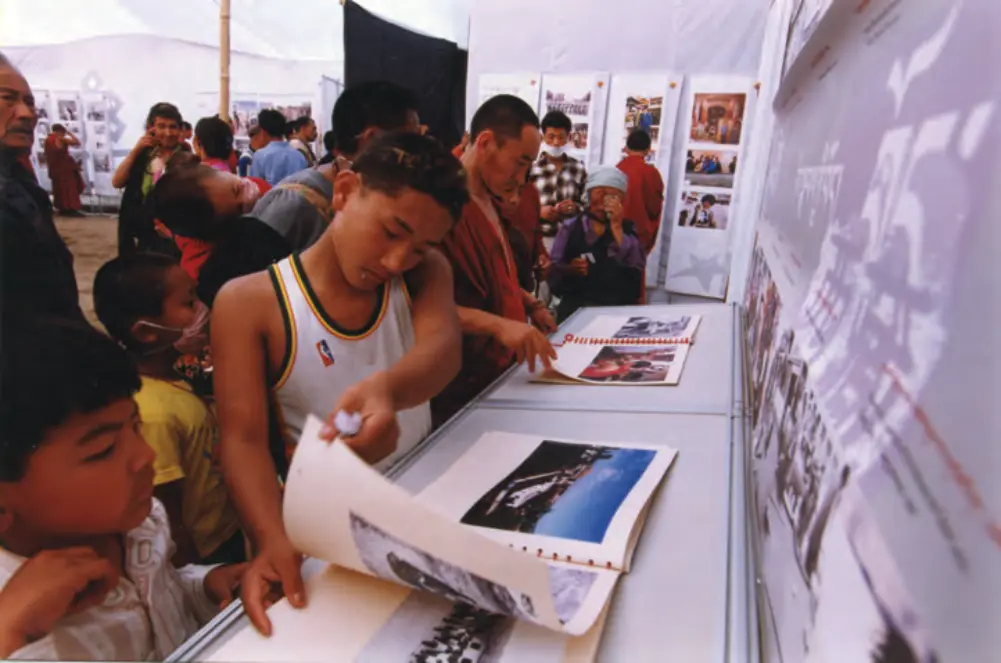
(LEFT)
Visitors engaging with traveling exhibition themed “A Longlook Homeward” at Bodh Gaya, 2001
(TOP)
The Tibet Museum Director, Tenzin Topdhen addressing the conference at the Italian Senate’s Sala Zuccari—Palazzo Giustiniani, 11 April 2024
(BOTTOM)
Dr. Richard J. Davidson inaugurating exhibition at Center for Healthy Minds at the University of Wisconsin–Madison along with Additional Secretary, Mr Namgyal Tsewang & The Tibet Museum Director, Tenzin Topdhen, 11 April 2024
A New Chapter
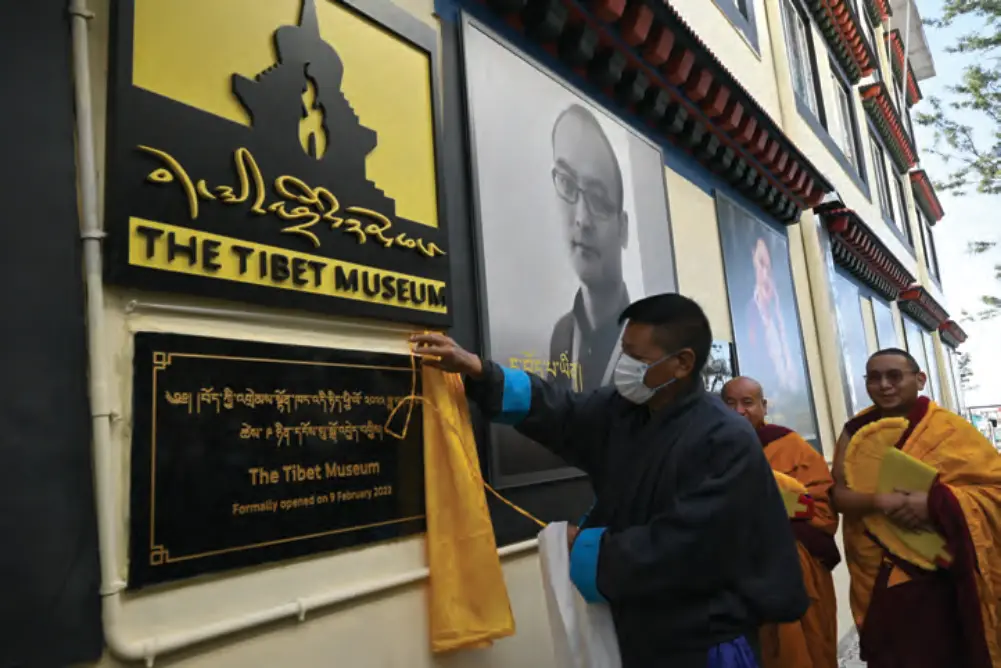
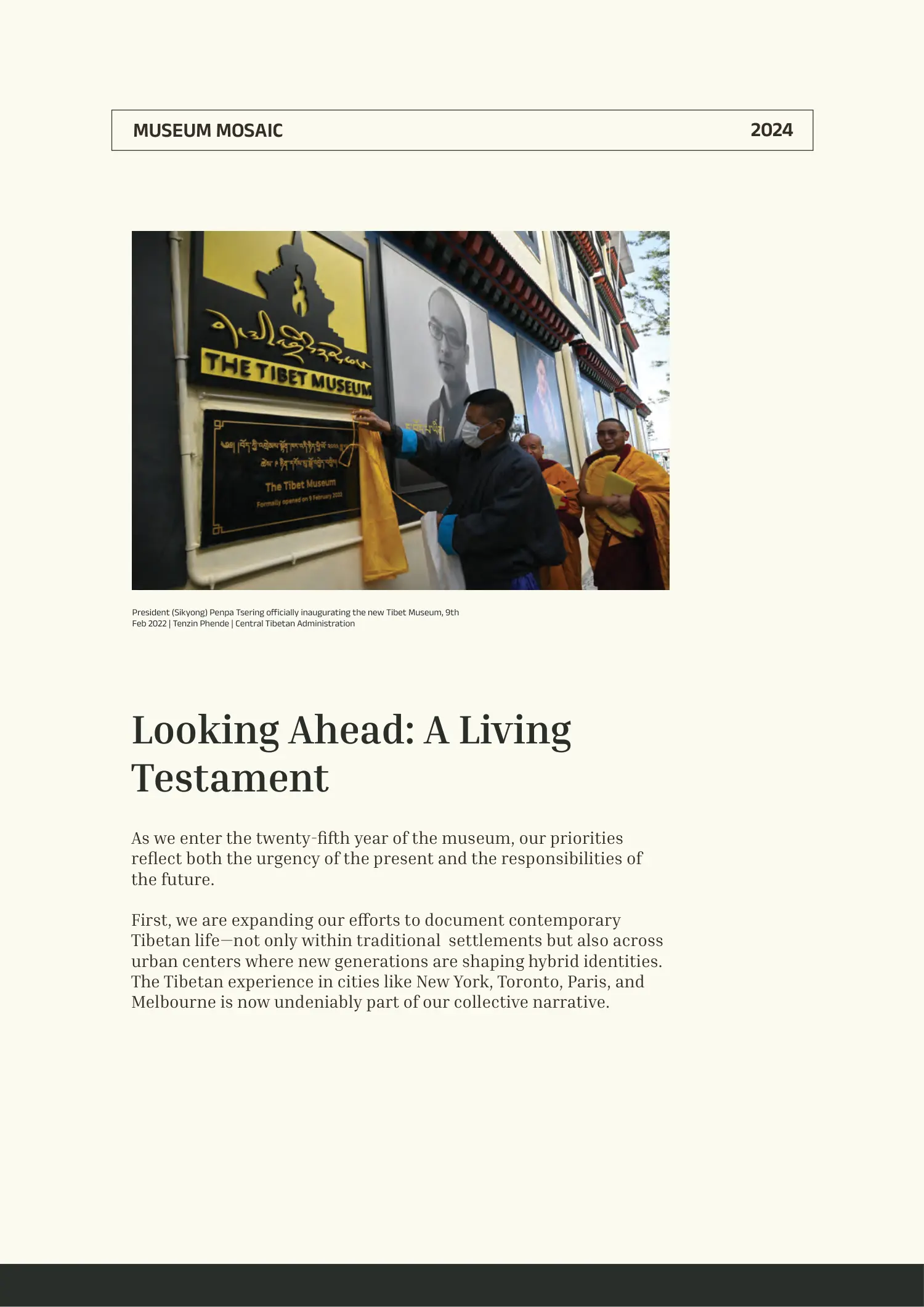
The opening of the new Tibet Museum on 9th February 2022 by President Penpa Tsering marked the beginning of our current chapter. With the support of curator Dr. Emma Martin, exhibition designers Alexandra Grandjacques and Markus Strümpel, and a team of international consultants, we finally realized a long-held dream: a 9,000-square-foot exhibition space featuring climate-controlled storage for sensitive materials and dedicated areas for temporary exhibitions— facilities that now match the scale of our vision and ambition.
The expanded space has allowed us to move beyond the narrative of victimhood that sometimes dominates discussions of Tibet. New exhibitions like “Being Tibetan” highlight the evolving story of Tibetan identity and resilience in the 21st century, offering a message of hope and continuity. “Women of Tibet” documents the strength and perseverance of contemporary Tibetan women, shedding light on their ongoing struggles while igniting aspiration in the hearts of younger generations. Perhaps most notably, the “Mapping Tibet” exhibition—developed in collaboration with renowned cartographer Tsering Wangyal Shawa—offers a rare and visually rich journey through historical maps of Tibet published in Western countries from the late 17th century onward. Together, these exhibitions reflect a profound shift: The museum has evolved from preserving what was lost to celebrating what continues to be created. This transformation recognizes that Tibetan culture is not frozen in time—it is dynamic, adaptive, and actively responding to the present.
Our education programs through temporary and traveling exhibitions, now reach both Tibetan and non-Tibetan. For young Tibetans born in India, Canada, Switzerland, or the United States, these programs provide cultural grounding that complements their formal education. For non-Tibetan students, they offer perspectives on globalization, cultural rights, and resilience that transcend geographic boundaries.
President (Sikyong) Penpa Tsering officially inaugurating the new Tibet Museum, 9th Feb 2022 | Tenzin Phende | Central Tibetan Administration
Looking Ahead: A Living Testament
As we enter the twenty-fifth year of the museum, our priorities reflect both the urgency of the present and the responsibilities of the future.
First, we are expanding our efforts to document contemporary Tibetan life—not only within traditional settlements but also across urban centers where new generations are shaping hybrid identities. The Tibetan experience in cities like New York, Toronto, Paris, and Melbourne is now undeniably part of our collective narrative.
Second, we are forging deeper educational partnerships with universities and schools. Recent collaborations with institutions across India, Europe, and North America have helped bring Tibetan history and culture into academic curriculums where they were once absent. These partnerships not only fill a historical gap but also amplify our relevance in global dialogues.
Third, we are working to improve the provenance and accessibility of our collections. Through our growing digital archive, we are creating bridges across the diaspora—particularly for elders who can contribute to crowdsourcing authentic information. This collaborative verification process enriches our holdings and deepens communal ownership of our history.
Finally, we remain deeply committed to preserving Tibet’s intangible heritage. Beyond physical objects, we collect the lived experiences and oral traditions that give those objects meaning. These stories—told around kitchen fires, in monasteries, and now online—carry forward the wisdom, humor, and resilience that define Tibetan identity. They prove remarkably adaptive, even as they uphold the spiritual and cultural foundations passed down through generations.
Twenty-five years since our humble beginning, the Tibet Museum stands as a living testament to the power of cultural memory in sustaining identity through displacement. We are more than a repository of artifacts; we are a communal anchor, an educational space, and a platform for ongoing cultural expression.
When I see a grandmother showing her grandchildren black-and-white photos of places they’ve never seen, or when I observe a foreign visitor standing in silence before a self-immolation exhibit, visibly moved—I’m reminded that a museum in exile must do more than display the past. It must stir empathy, provoke thought, and illuminate what remains at stake.
As His Holiness the 14th Dalai Lama reminded us during the inauguration of the Tibet Museum:
“Remember the suffering brought by the changing times to the people of the snow-land, the people endowed with history, courage and a sense of national responsibility. Remember their unflinching determination and let us continue to develop our own sense of national responsibility.”
As we look to the future, we commit to safeguarding the past not as a static relic but as a living resource—fuel for the imagination, conscience, and agency of future generations who will carry Tibet’s story forward in ways we cannot yet forsee.
View original pages, photographs & credits
Originally published in Museum Mosaic 2024, published May 2025.
Part of our annual review. Descriptions reflect the publication’s reporting period.