Reimagining Royal Spaces: A Global and Local Phenomenon
The transformation of royal residences into public museums marks a critical juncture in the democratisation of heritage. It offers not just spatial access but a reframing of memory, legacy, and identity. Across the world, such conversions—from Versailles in France and the Topkapı Palace in Istanbul, to Mysore Palace in Karnataka and the City Palace of Jaipur in Rajasthan, India—signal a broader change in the landscape: the relocation of power from private to public, from lineage to legacy.
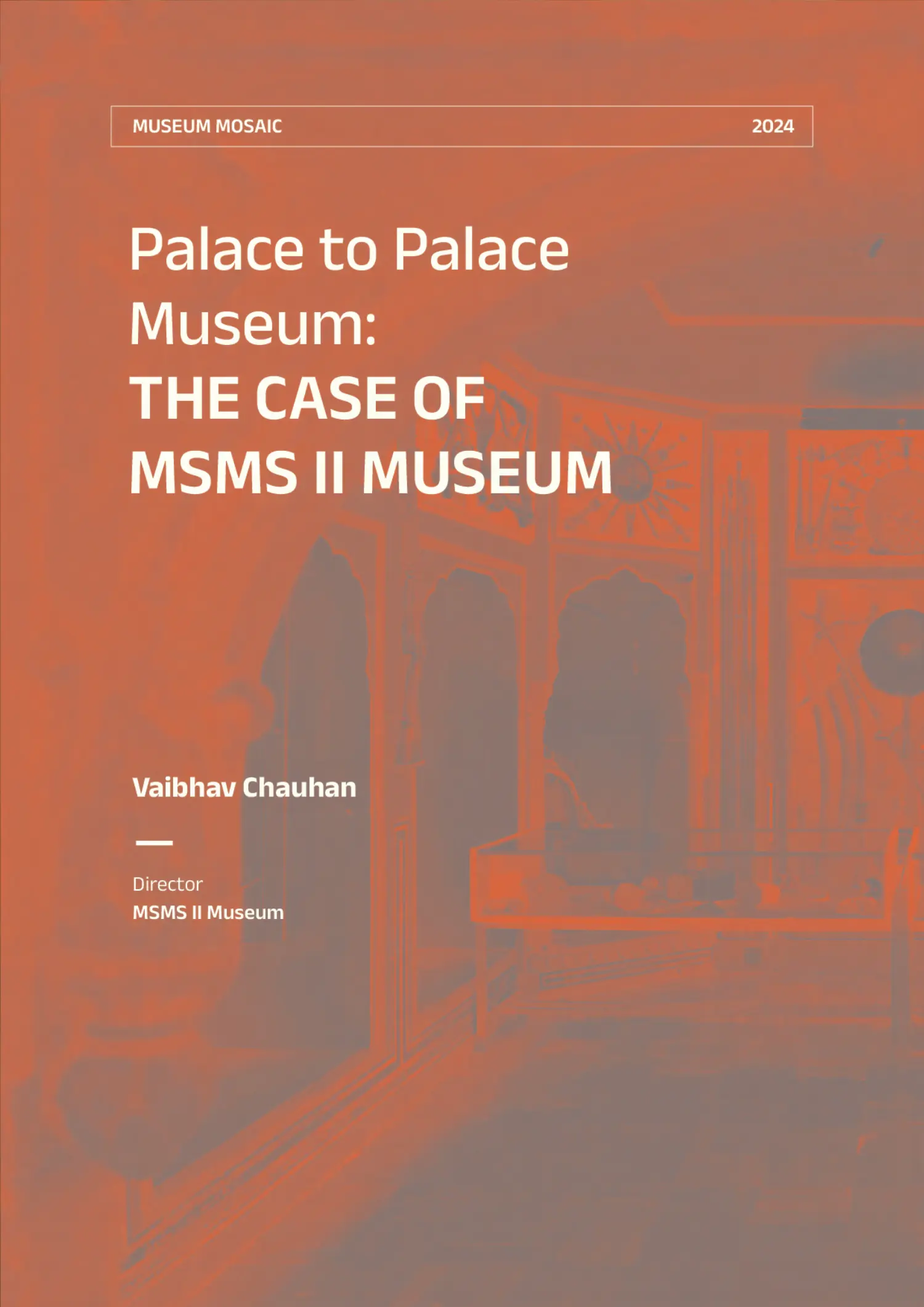
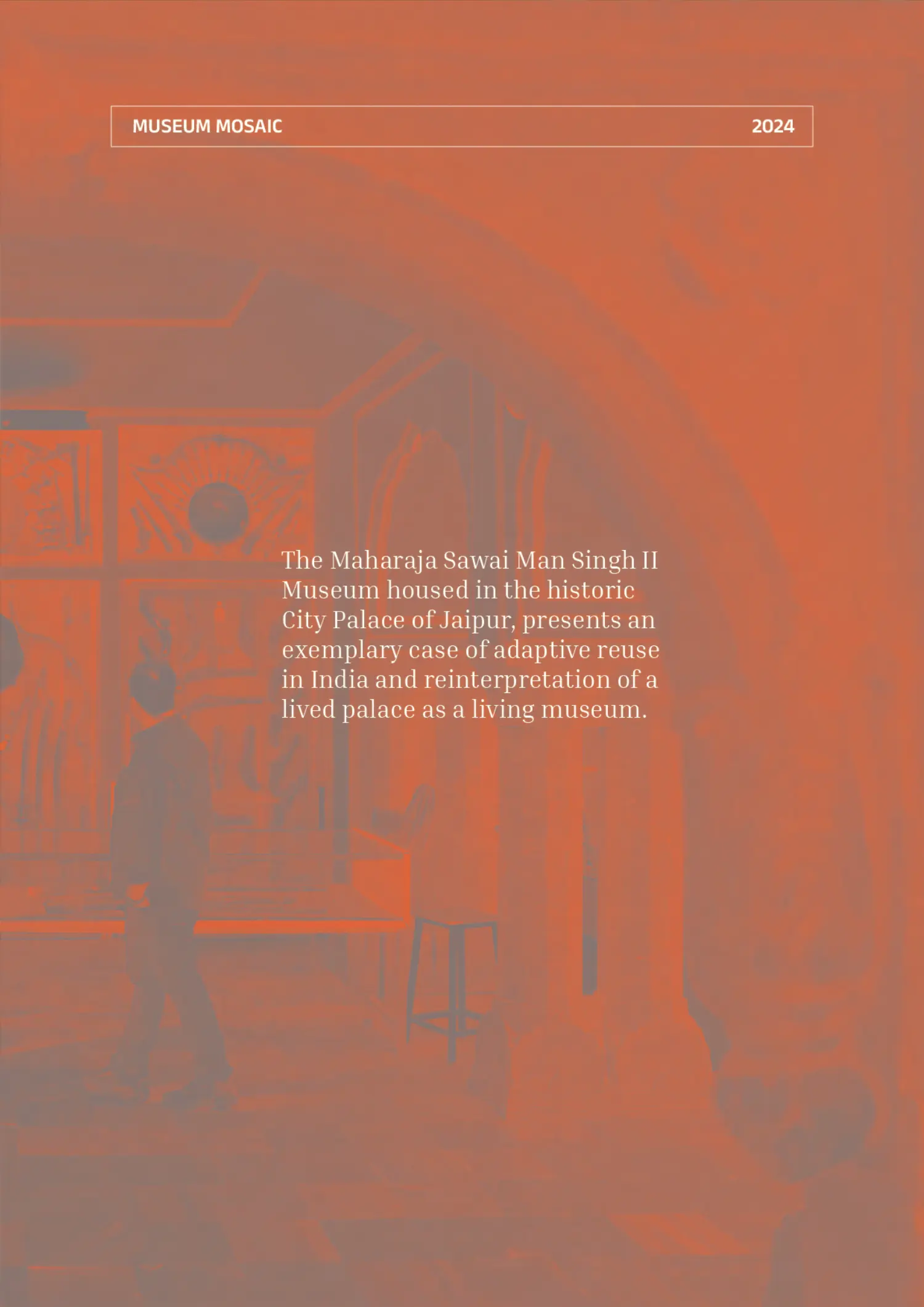
In this light, the Maharaja Sawai Man Singh II Museum (MSMS II Museum), housed in the historic City Palace of Jaipur, presents an exemplary case of adaptive reuse in India and reinterpretation of a lived palace as a living museum. Today, more than a passive repository of artefacts, it is an evolving cultural institution that reflects both historical continuity and curatorial innovation.
Curating the Court: A Seat of Power Transformed
Established between 1729 and 1732 by Maharaja Sawai Jai Singh II, the City Palace was envisioned as the epicentre of the newly founded city of Jaipur, grounded in cosmological principles, urban design, and political acumen. The palace complex is a synthesis of Rajput, Mughal, and later European influences, a layered architectural palimpsest that housed the Kachhwaha rulers for generations.
Maharaja Sawai Man Singh II Museum Trust was established in 1959 to steward and share the tangible and intangible heritage of Jaipur with current and future generations. The collections of the museum connect local and regional history with that of national and global, due to Jaipur’s position as a key node in the network that linked South Asia to the world for exchange of knowledge, goods, art, and culture over several centuries.
Receiving over 1.5 million visitors per year is a testament to the iconic status of MSMS II Museum as one of India’s earliest such institutions dedicated to preserving and conserving the heritage of India. The Trust has embarked on an ambitious transformation programme, in time for the 300th anniversary of Jaipur’s foundation in 2027.
Today, the MSMS II Museum presents an expansive narrative of Jaipur’s royal past, material culture, and artistic excellence through the following galleries:
Mubarak Mahal (Textile Gallery)
Built in the 1800s for royal guests, this gallery showcases not only the opulence of royal attire but also the technical brilliance of Indian textile traditions—zari, gota, bandhani, and chikan embroidery. It positions textiles as carriers of both identity and diplomacy.
Sileh Khana (Arms and Armour)
Rather than glorifying warfare, this gallery highlights metallurgy, innovation, and symbolic aesthetics. The exhibit displays finely crafted daggers, swords, and firearms with jewelled hilts and inscribed blades, demonstrating how martial artefacts were also aesthetic objects, often customised to reflect status and personality.
Sabha Niwas (Hall of Audience)
Once the nerve centre of governance and diplomacy, this durbar hall—now home to portraits, courtly regalia, and ceremonial objects—retains an air of solemnity. The painted ceilings and chandeliers, along with rare manuscripts and insignias, narrate an aesthetic of authority.
Sarvato Bhadra (Diwan-e-Khas)
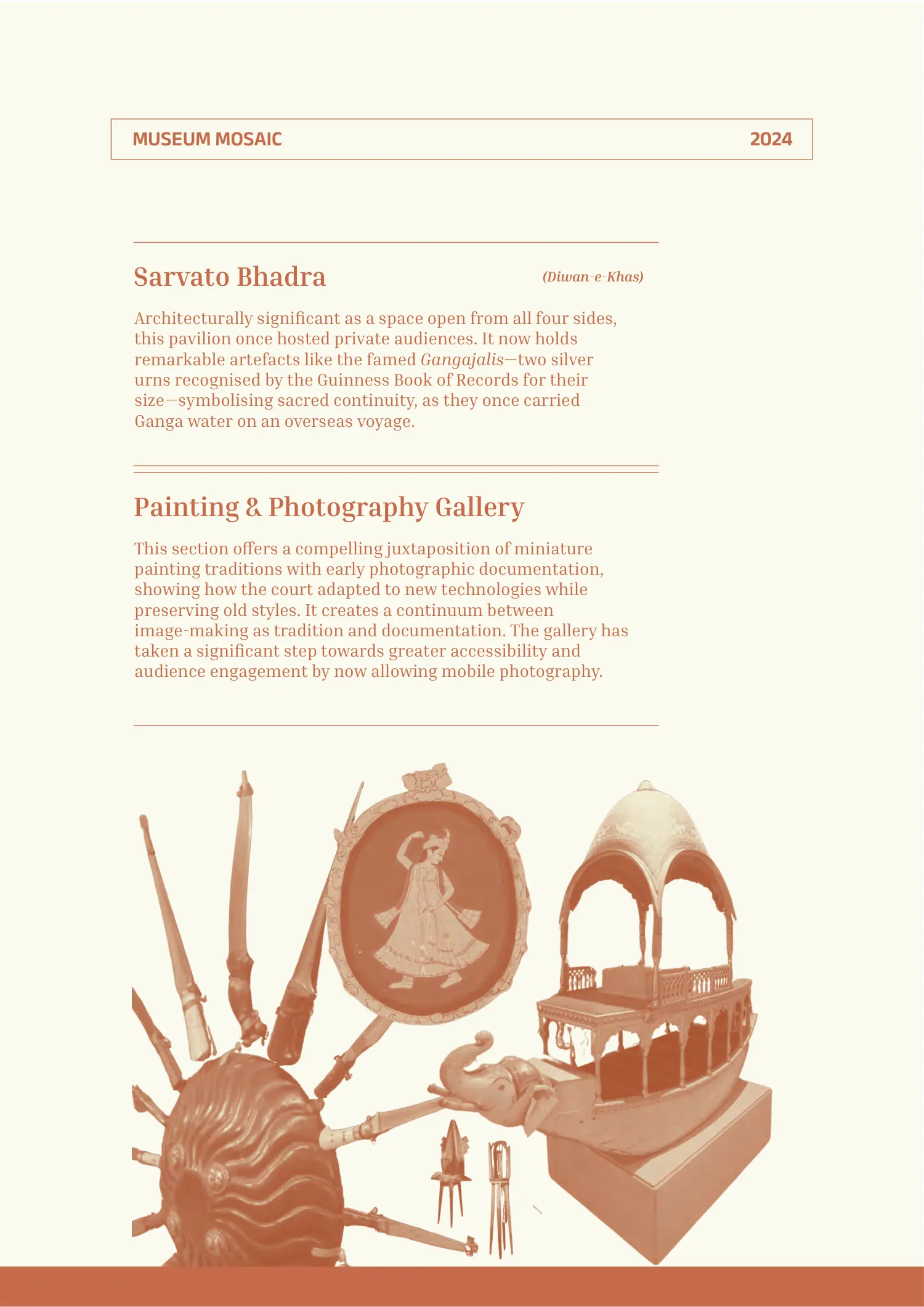
Architecturally significant as a space open from all four sides, this pavilion once hosted private audiences. It now holds remarkable artefacts like the famed Gangajalis—two silver urns recognised by the Guinness Book of Records for their size—symbolising sacred continuity, as they once carried Ganga water on an overseas voyage.
Painting & Photography Gallery
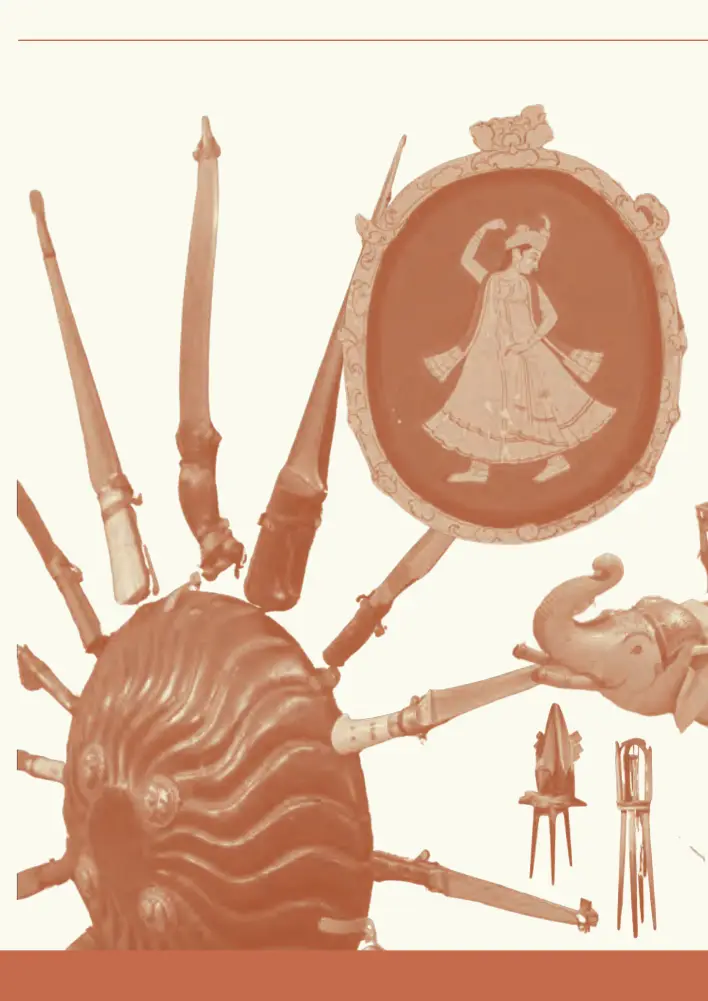
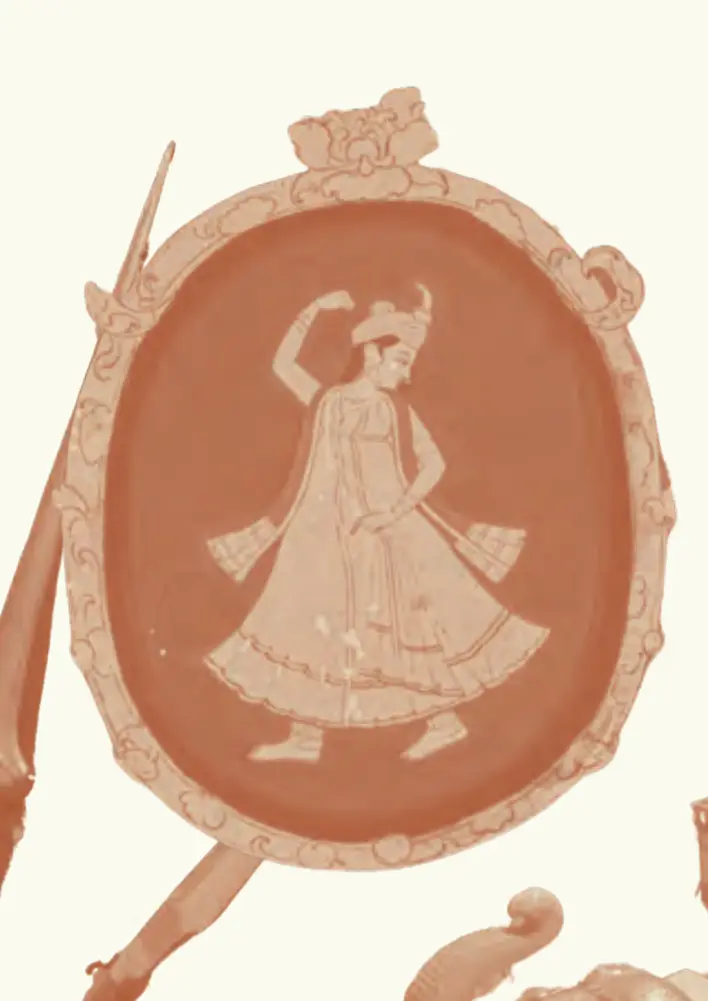
This section offers a compelling juxtaposition of miniature painting traditions with early photographic documentation, showing how the court adapted to new technologies while preserving old styles. It creates a continuum between image-making as tradition and documentation. The gallery has taken a significant step towards greater accessibility and audience engagement by now allowing mobile photography.
From Object-Centric to Community-Engaged
What distinguishes MSMS II Museum in the current museum landscape is its shift from static display to dynamic storytelling. Like leading global institutions such as the Rijksmuseum’s thematic reinterpretations or the Victoria & Albert Museum’s craft revival initiatives, the MSMS II Museum is embracing customer centricity, thoughtful curation, contemporary collaborations, and versatile sensory experiences. It acts as a cultural node, frequently hosting:
Workshops on miniature painting, block printing, and textile conservation, thereby sustaining endangered craft knowledge.
Lecture-demonstrations and residencies with artisans, turning the museum into a site of knowledge production rather than just presentation.
Contemporary exhibitions through national and global collaborations that draw parallels between past and present.
Public festivals like Gangaur, Teej, or Holi, celebrated within the palace premises that reanimate spaces through living heritage. In doing so, the museum becomes more than a repository, it becomes a stage where heritage is performed, experienced, and continually renewed, blurring the lines between conservation and community engagement.
This layered programming reflects an important museological shift—from museums as repositories of art to forums of cultural dialogue. Moreover, the museum actively negotiates the line between tourism and education. While the Palace remains a prime attraction on the Jaipur heritage circuit, efforts are made to create slow, immersive, and interpretive experiences rather than transactional visits.
Challenges and Ethical Imperatives
The conversion of royal estates into public institutions is not without its tensions. The questions of ownership, access, representation, and authenticity are crucial.
Who gets to tell the story? How is the past curated without glorification or erasure?
At MSMS II Museum, these challenges are met with thoughtful engagement. The Maharaja Sawai Man Singh II Museum Trust ensures that heritage stewardship is intergenerational and interdisciplinary. Collaborations with conservationists, historians, designers, and community elders help balance curatorial authority with inclusivity.
Internationally, museums housed in former palaces, like the Palácio Nacional da Ajuda in Lisbon or Winter Palace (Hermitage) in St. Petersburg, have similarly confronted the dual task of conserving material wealth and interpreting historical power. The MSMS II Museum fits into this global conversation with a uniquely Indian sensitivity: it sees heritage not just as patrimony but as praxis—something to be activated, shared, and continually reimagined.
In contrast to museums built from scratch, palace museums must constantly mediate between the symbolic aura of the royal and the secular function of the civic. The City Palace of Jaipur achieves this balance gracefully. The continued residence of the royal family in a section of the complex adds a layer of authenticity, yet the openness of the museum program signals democratic access.
The Way Forward
As the idea of museums itself is being redefined—becoming digital, decolonial, participatory, and sustainable—the MSMS II Museum offers a compelling model of a ‘living museum.’ Not only does it preserve objects of the past, but it also curates practices, people, and performances that carry the past into the present.
In the coming years, with planned initiatives such as digitisation of its collections, expanded national and global collaborations, incubation space for professionals and organisations in the domains, and an exemplary institution navigating the Gallery, Libraries, Museums and Archives (GLAM) space, MSMS II Museum is working on a blueprint to be not just as a site of the past, but as a vision for the future.
View original pages, photographs & credits
Originally published in Museum Mosaic 2024, published May 2025.
Part of our annual review. Descriptions reflect the publication’s reporting period.