DAUGHTER OF PROVIDENCE
RAGHU RAI: A THOUSAND LIVES
Kiran Nadar Museum of Art (KNMA) New Delhi
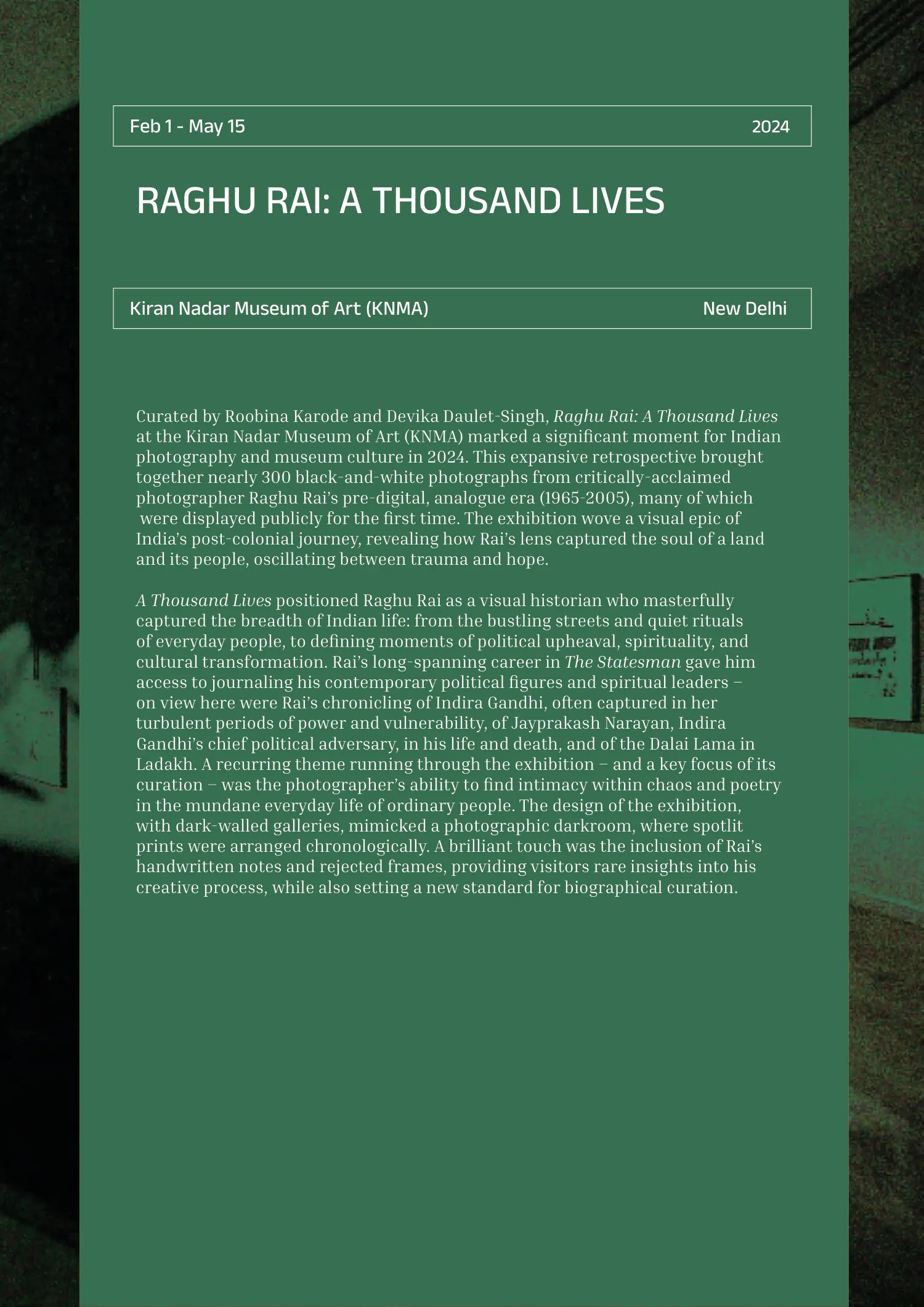
Curated by Roobina Karode and Devika Daulet-Singh, Raghu Rai: A Thousand Lives
photography and museum culture in 2024. This expansive retrospective brought together nearly 300 black-and-white photographs from critically-acclaimed
The Ancient Sculptures: India, Egypt, Assyria, Greece, Rome exhibition at Mumbai’s Chhatrapati Shivaji Maharaj Vastu Sangrahalaya (CSMVS) was a landmark event
India’s post-colonial journey, revealing how Rai’s lens captured the soul of a land and its people, oscillating between trauma and hope.
together a global understanding of the ancient historical past. The project was initiated and supported in collaboration with the J. Paul Getty Museum, British Museum, Staatliche Museen zu Berlin and various museums in India.
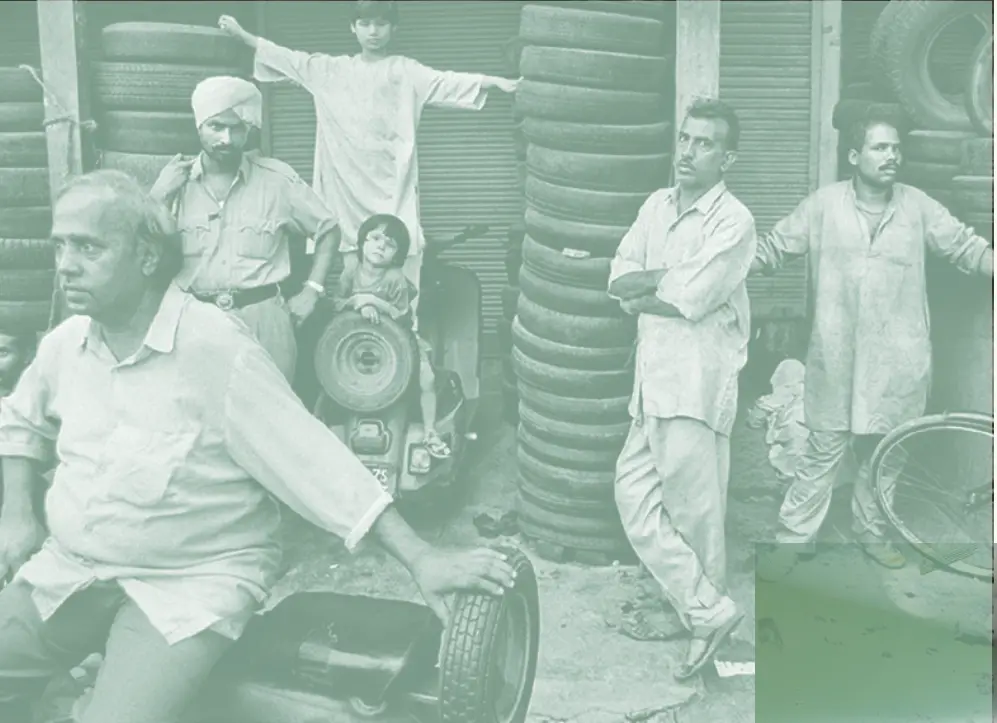
A Thousand Lives positioned Raghu Rai as a visual historian who masterfully captured the breadth of Indian life: from the bustling streets and quiet rituals
cultural transformation. Rai’s long-spanning career in The Statesman gave him
and Rome, the exhibition challenged the Eurocentric divide between “East” and
turbulent periods of power and vulnerability, of Jayprakash Narayan, Indira Gandhi’s chief political adversary, in his life and death, and of the Dalai Lama in
Varaha or boar in Indian mythic tradition was a standout object in the exhibition, creating a narrative of an important tradition of zoomorphic depictions of deities in antiquarian cultures. Similarly, Ancient Sculptures showcased a 3,000-year-old Sekhmet sculpture from Egypt depicting the female deity with a lion-head.
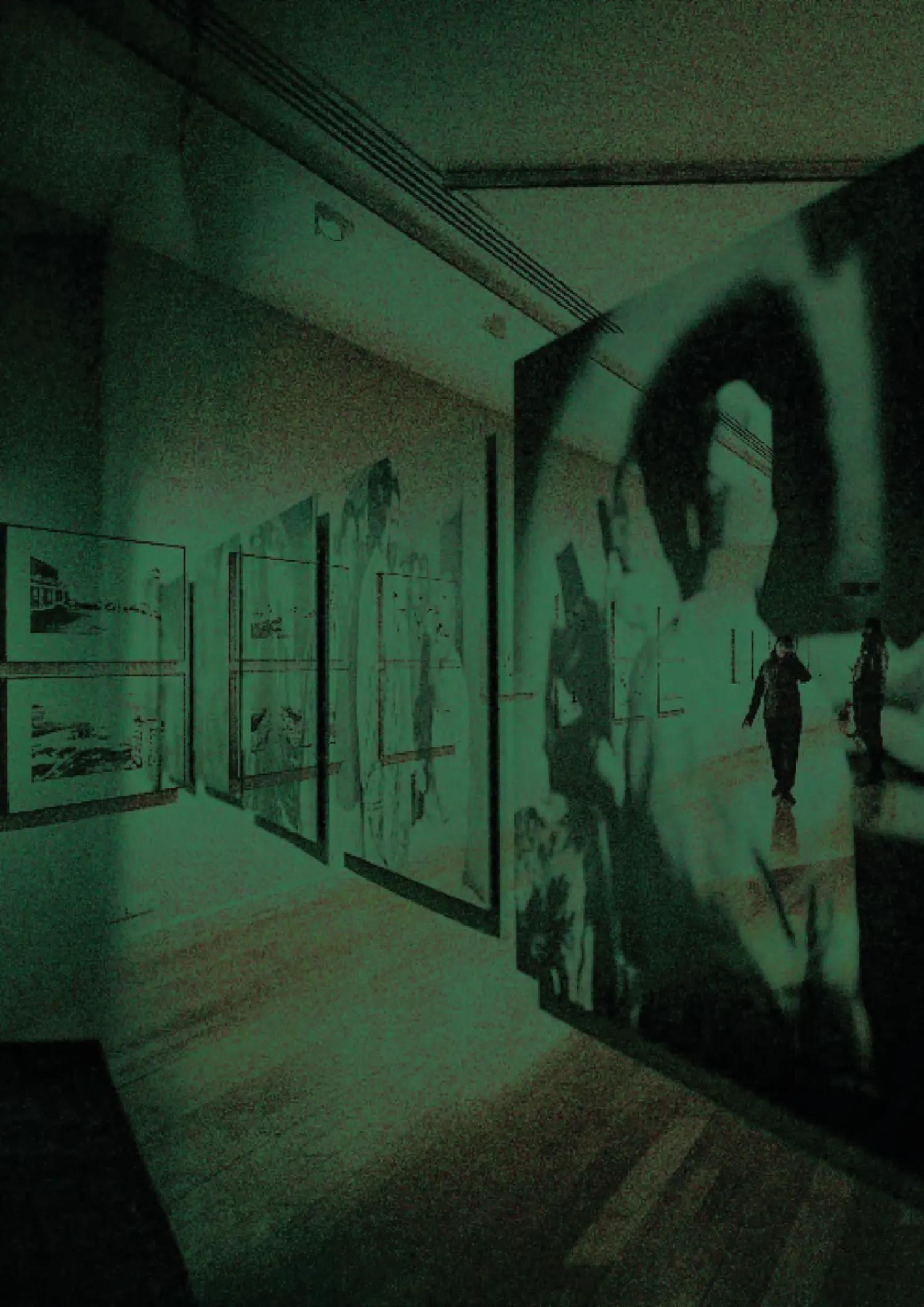
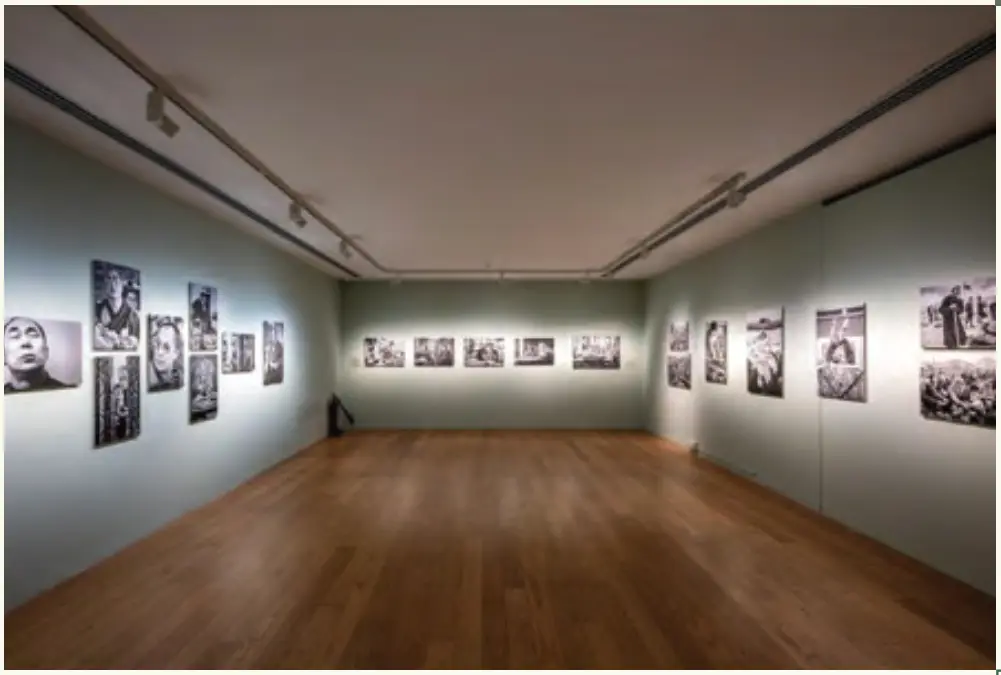
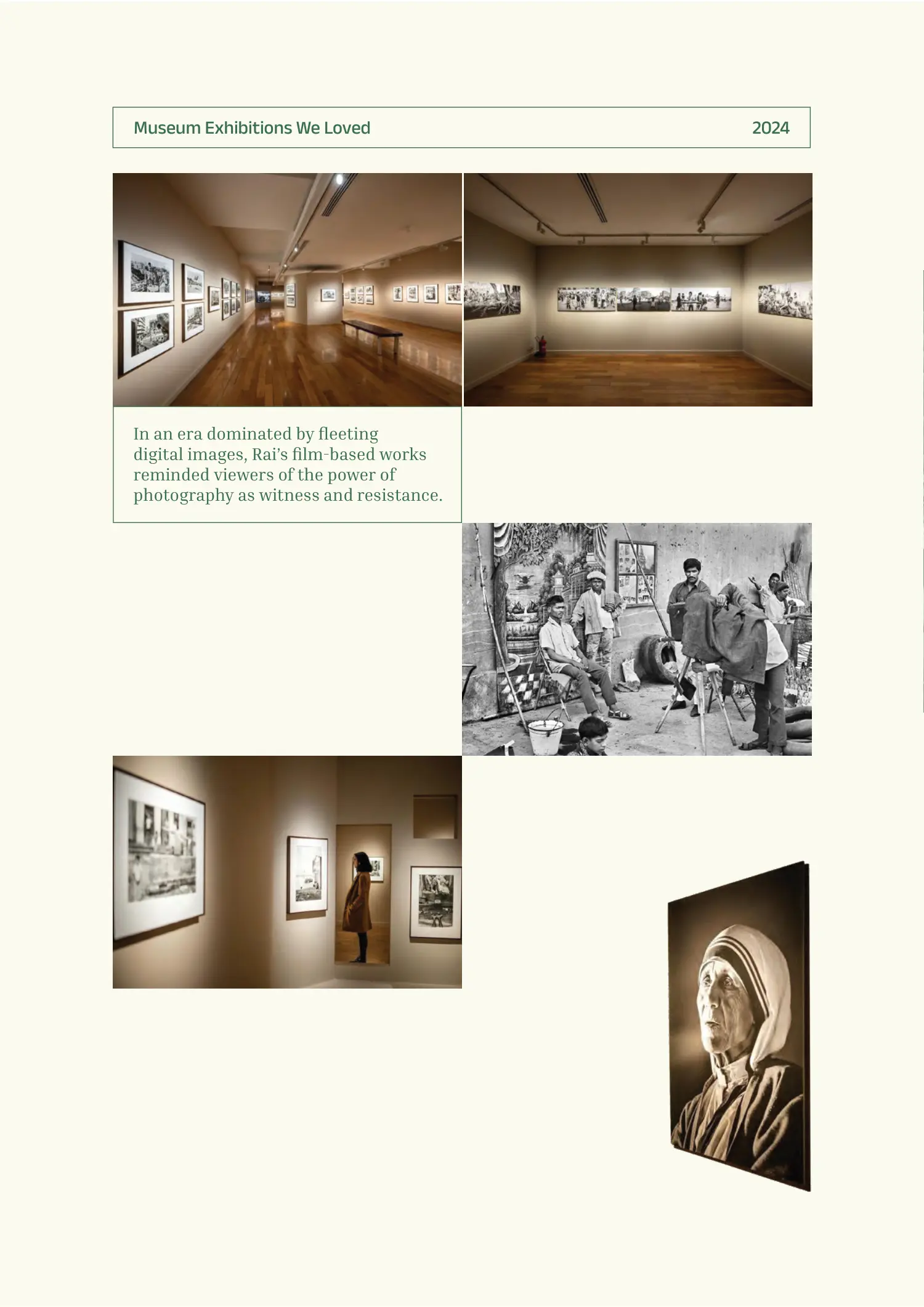
in the mundane everyday life of ordinary people. The design of the exhibition, with dark-walled galleries, mimicked a photographic darkroom, where spotlit
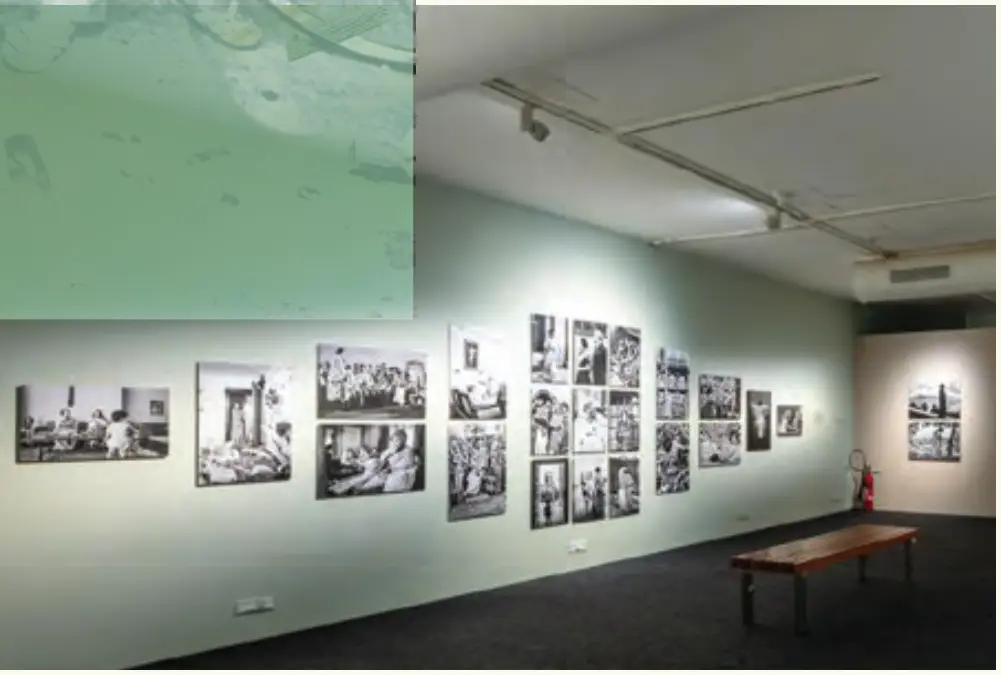
The exhibition resisted a geographic or chronological split, instead curated the
handwritten notes and rejected frames, providing visitors rare insights into his creative process, while also setting a new standard for biographical curation.
of nature in our lives, the divine form, and ideas and paradigms of beauty, that resonated with a contemporary audience fostering greater connection with an
statues digitally.
reminded viewers of the power of photography as witness and resistance.
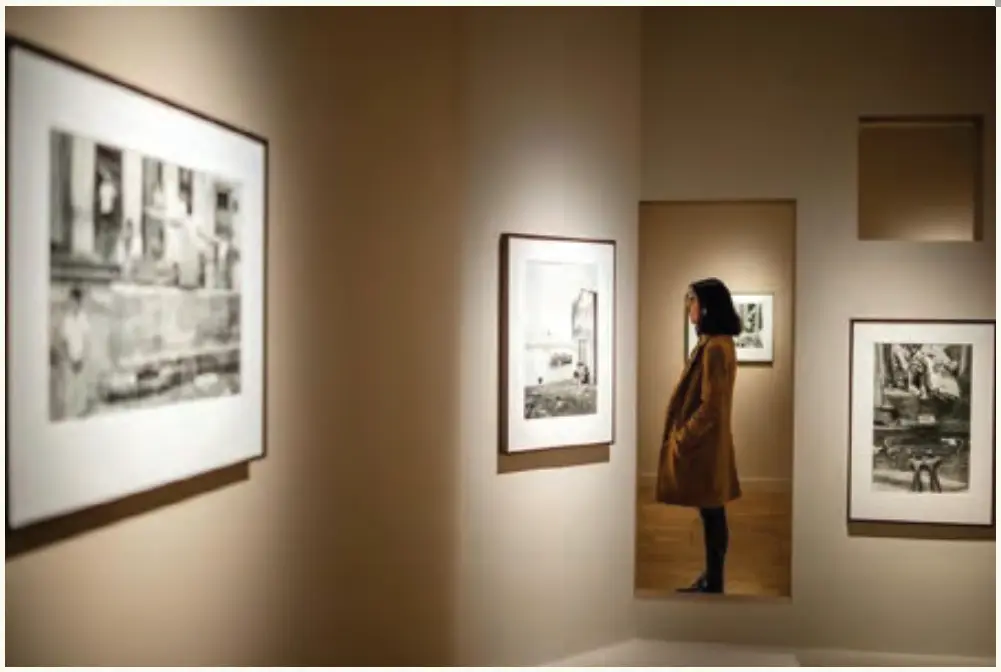
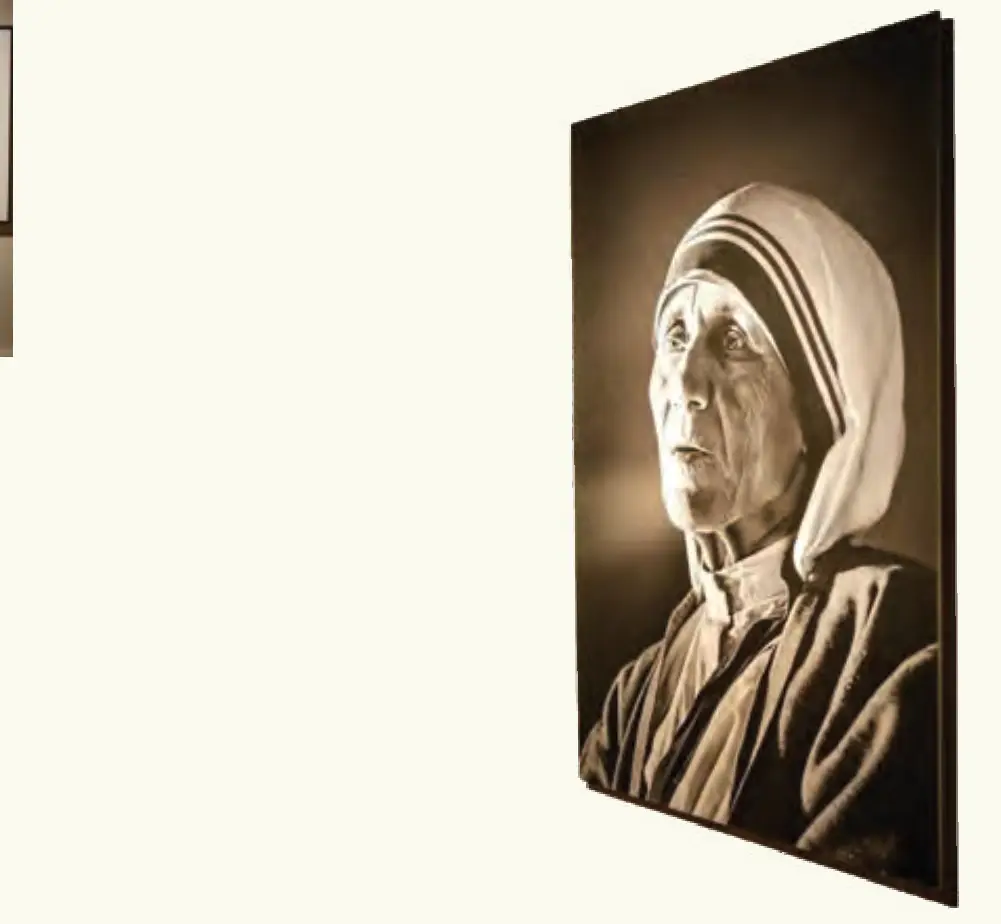
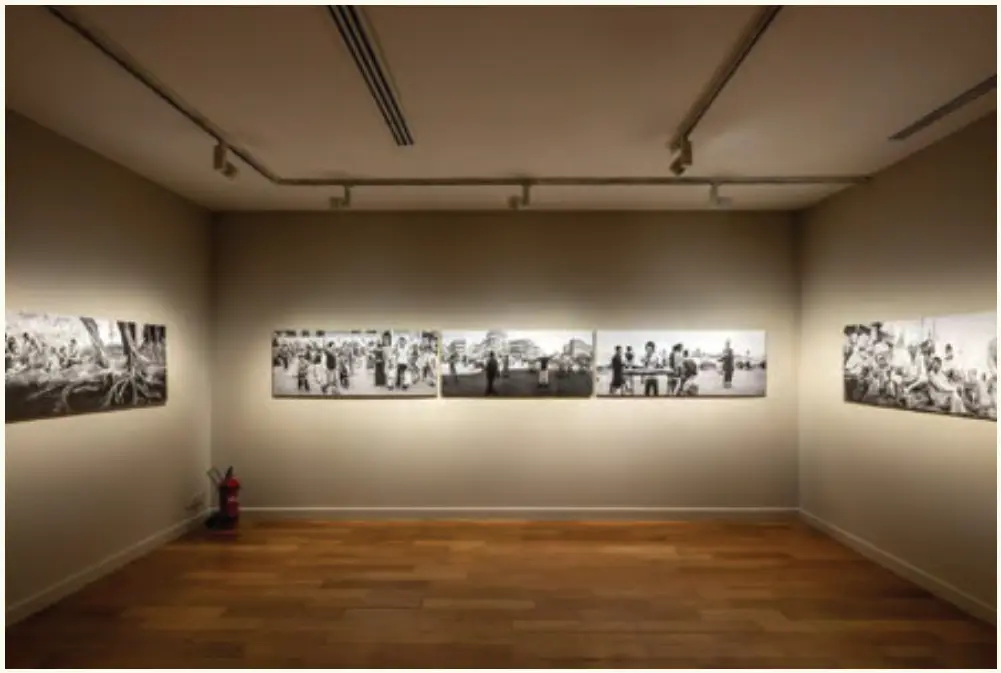
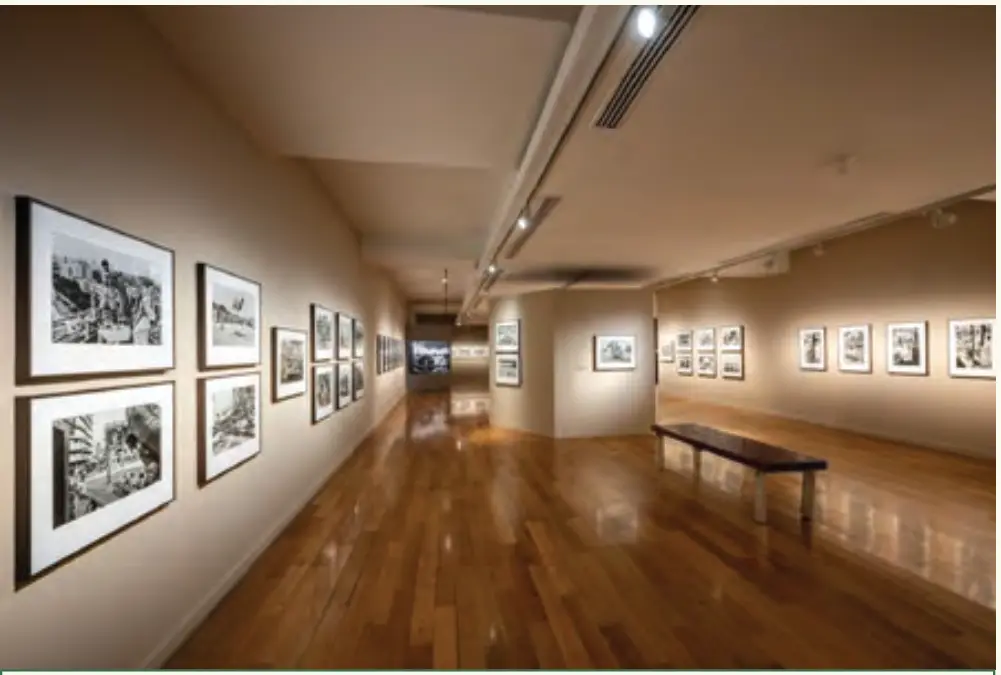
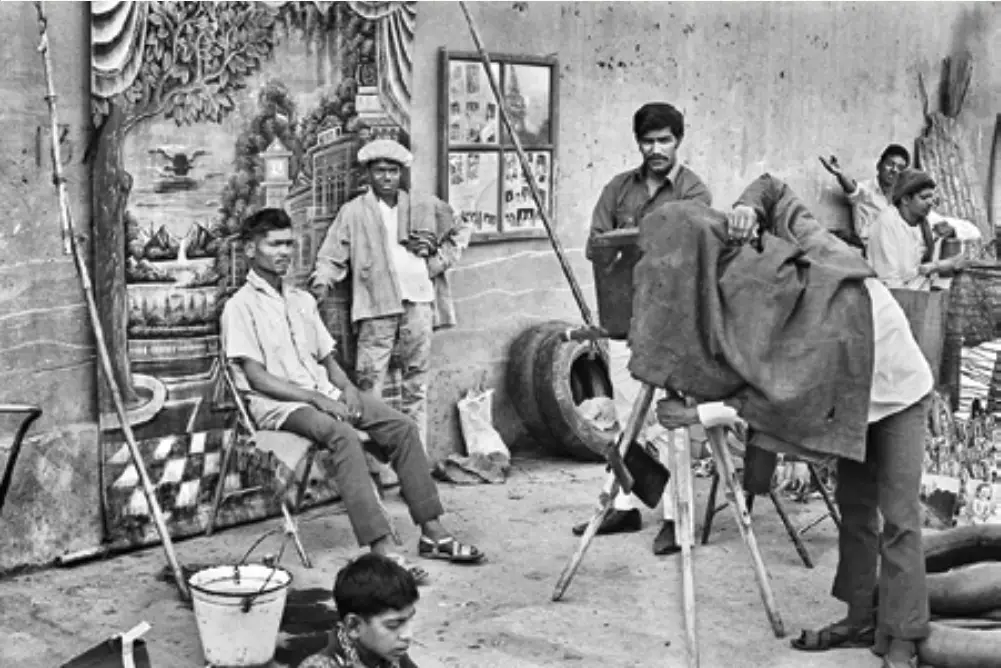

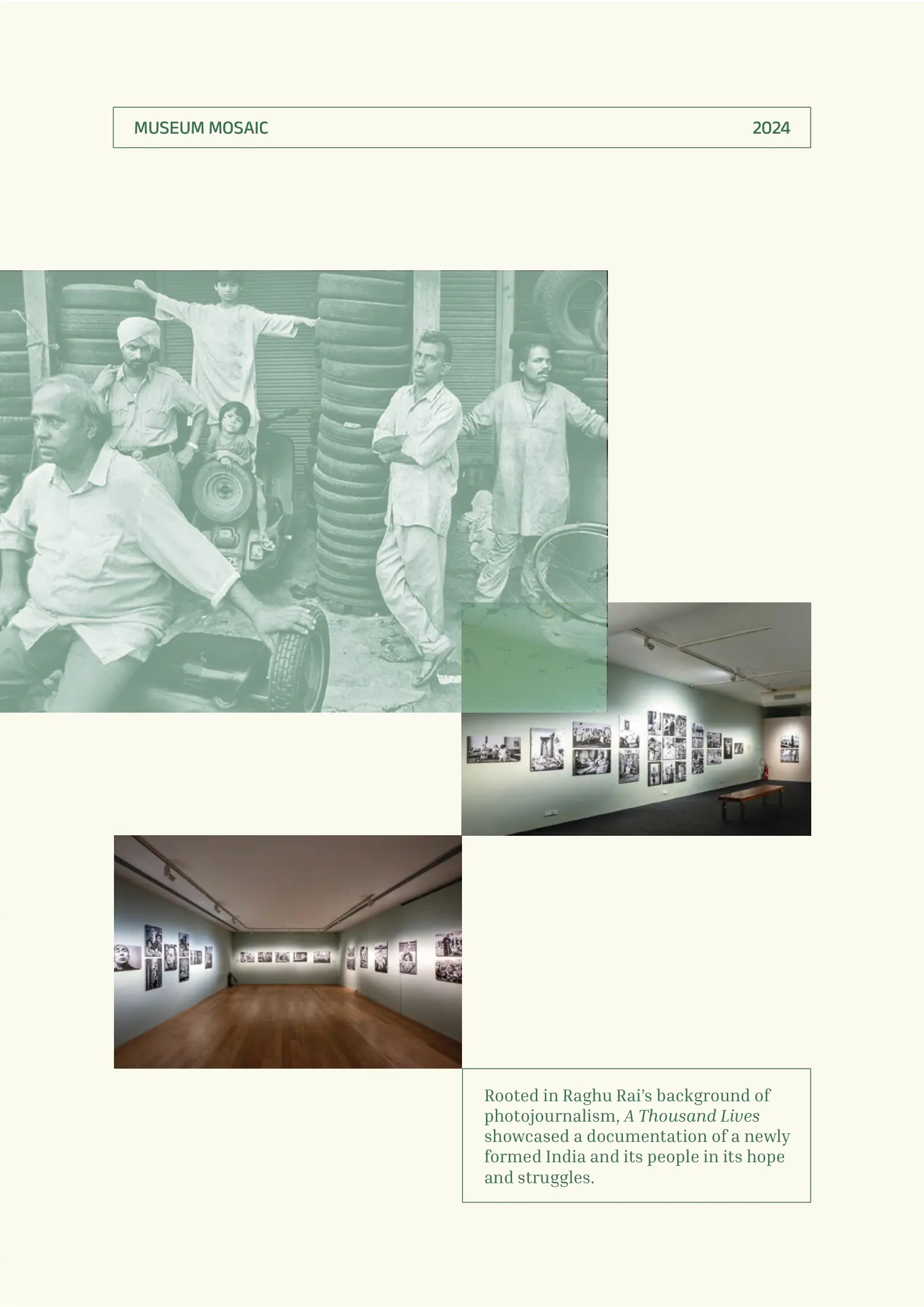
Rooted in Raghu Rai’s background of photojournalism, A Thousand Lives showcased a documentation of a newly formed India and its people in its hope and struggles.
View original pages, photographs & credits
Originally published in Museum Mosaic 2024, published May 2025.
Part of our annual review. Descriptions reflect the publication’s reporting period.