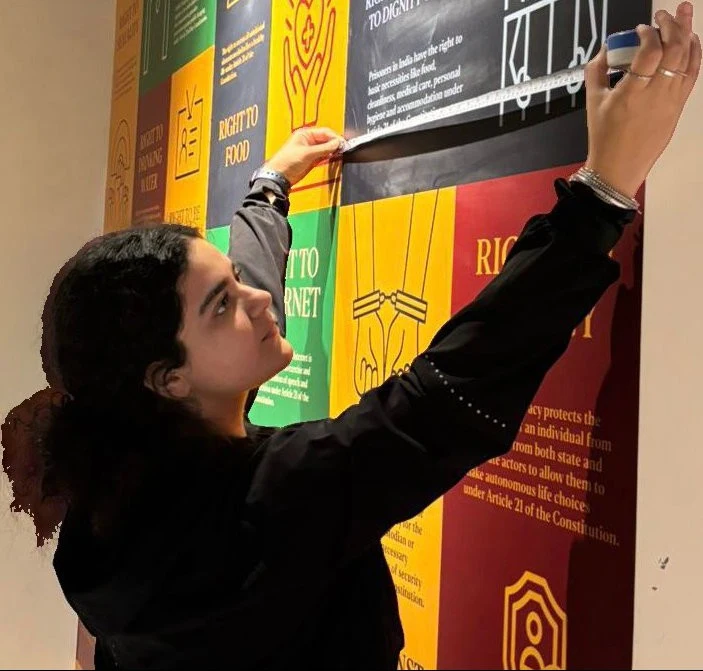
Inaugurated on the historic 75th anniversary of the adoption of the Constitution of India, the Constitution Museum & The Rights and Freedoms Academy (CMRFA) at the O. P. Jindal Global University campus in Sonepat, Haryana, is a tribute to the enduring legacy and transformative journey of this foundational document.
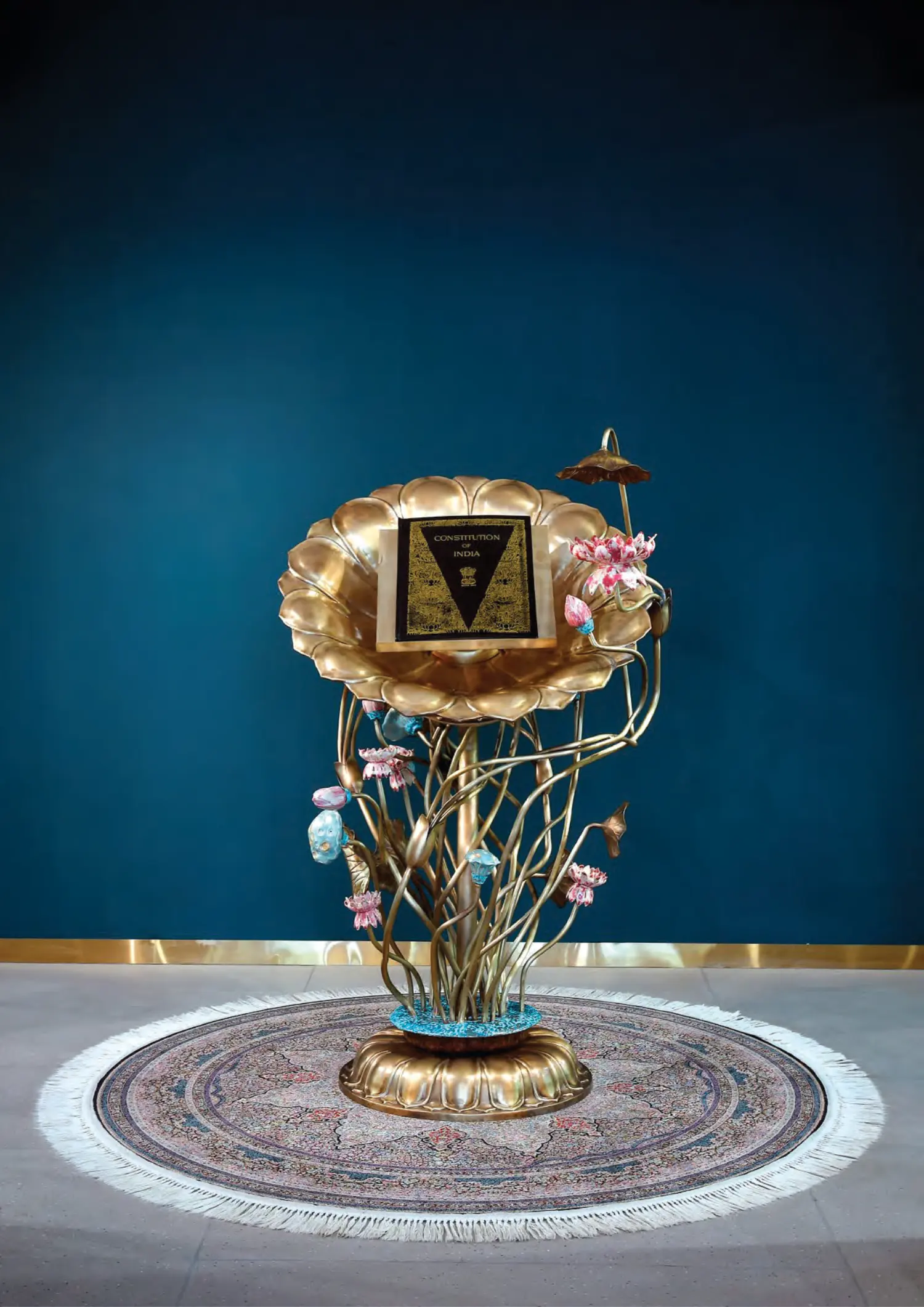
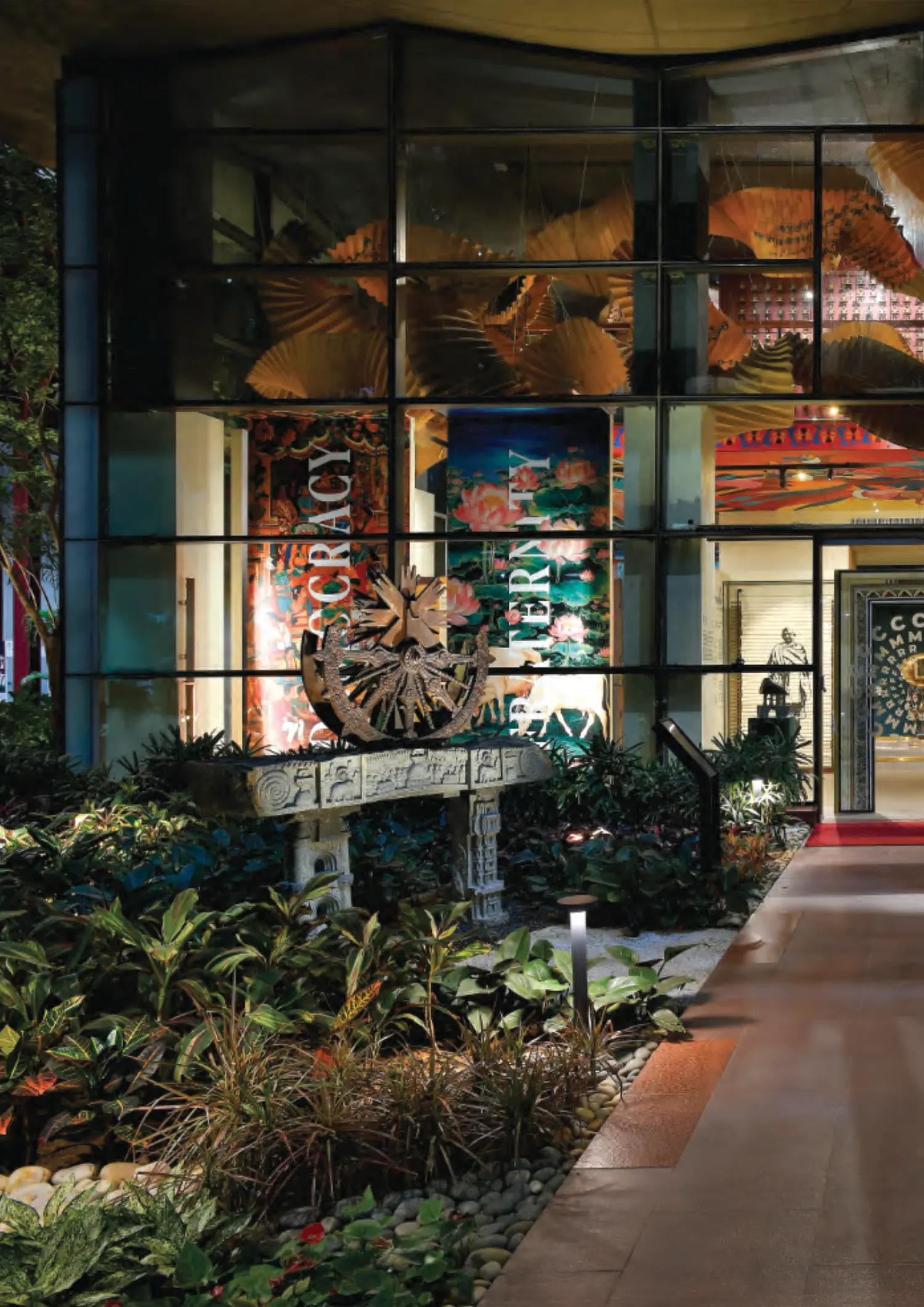
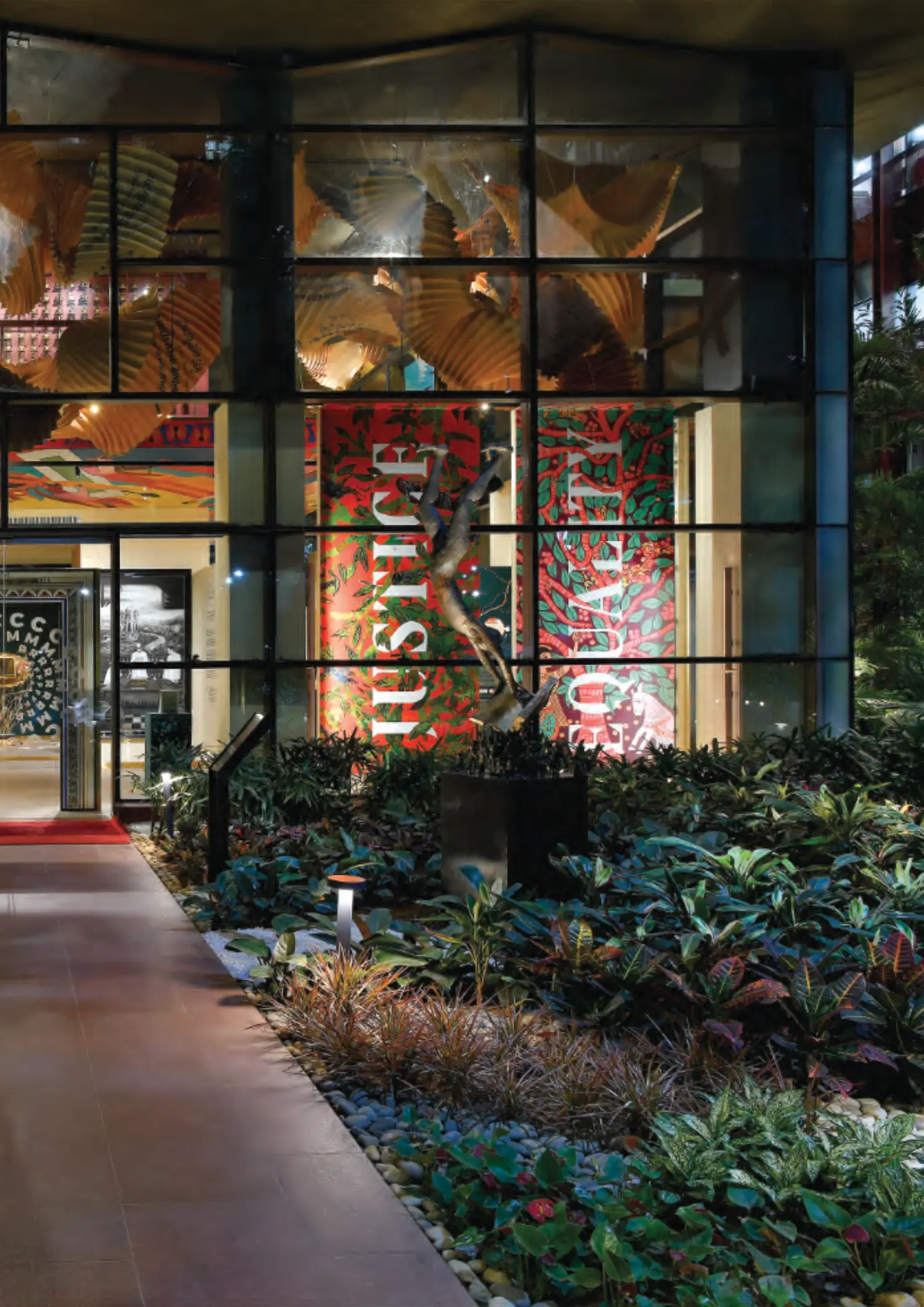
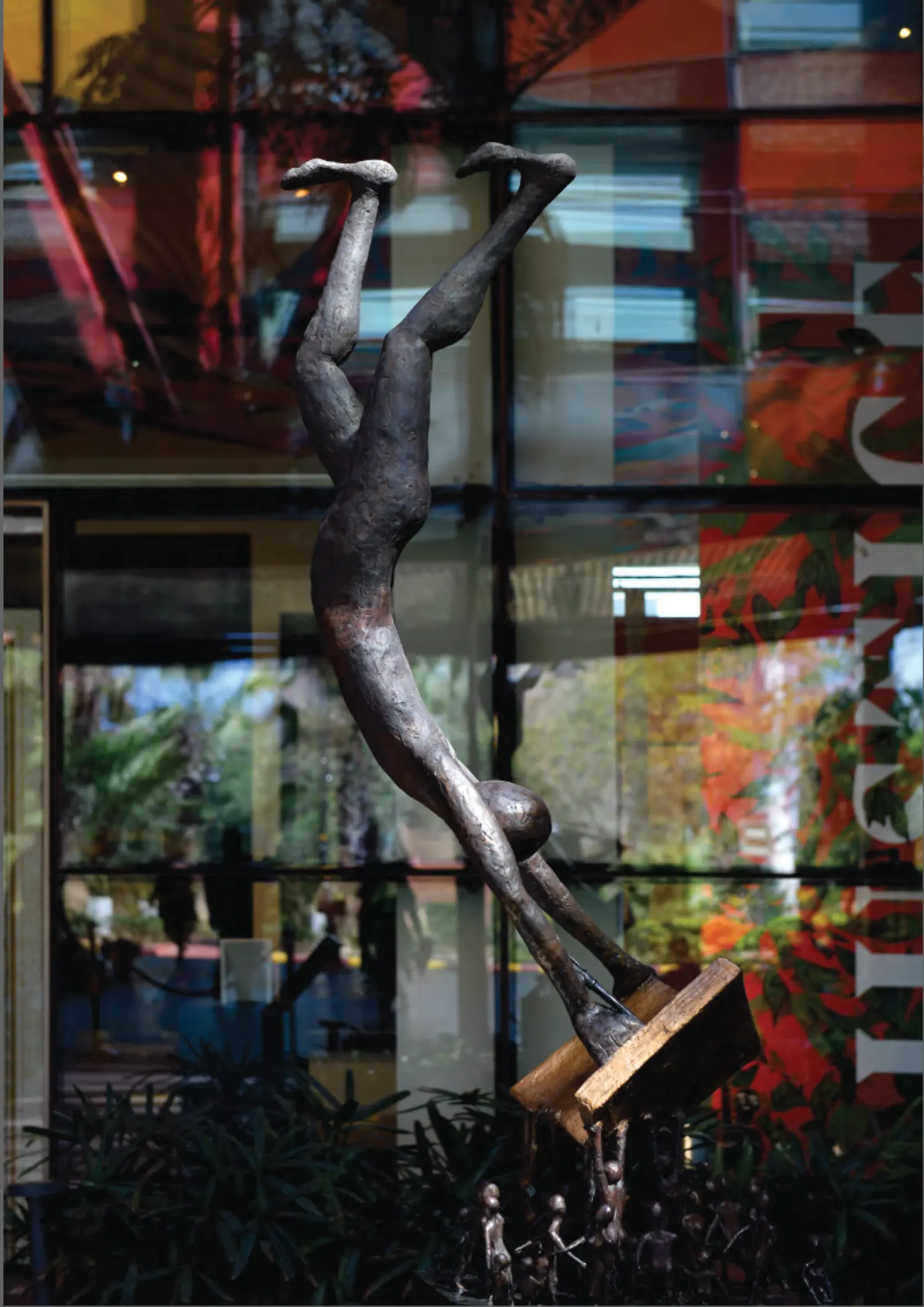
The museum delves deep into the heart of the Constitution, exploring its historical context while emphasising its critical role in shaping contemporary Indian society. The three galleries are designed as learning spaces that ignite curiosities and a sense of exploration about the values enshrined in the Constitution. Through a multitude of formats and artistic expressions, the museum aims to instil a sense of pride and awe, and also, to create an informed citizenry that appreciates and advocates for democratic values. Art pieces crafted by contemporary artists are on display across the museum. Not mere embellishments, these are interpretive reflections that embody the essence of the ideals enshrined in the Constitution. The museum strives to create active engagement, and invites visitors to traverse intellectual landscapes as well as emotional ones.
KEY GALLERIES & HIGHLIGHTS
Constitution: A Kaleidoscope
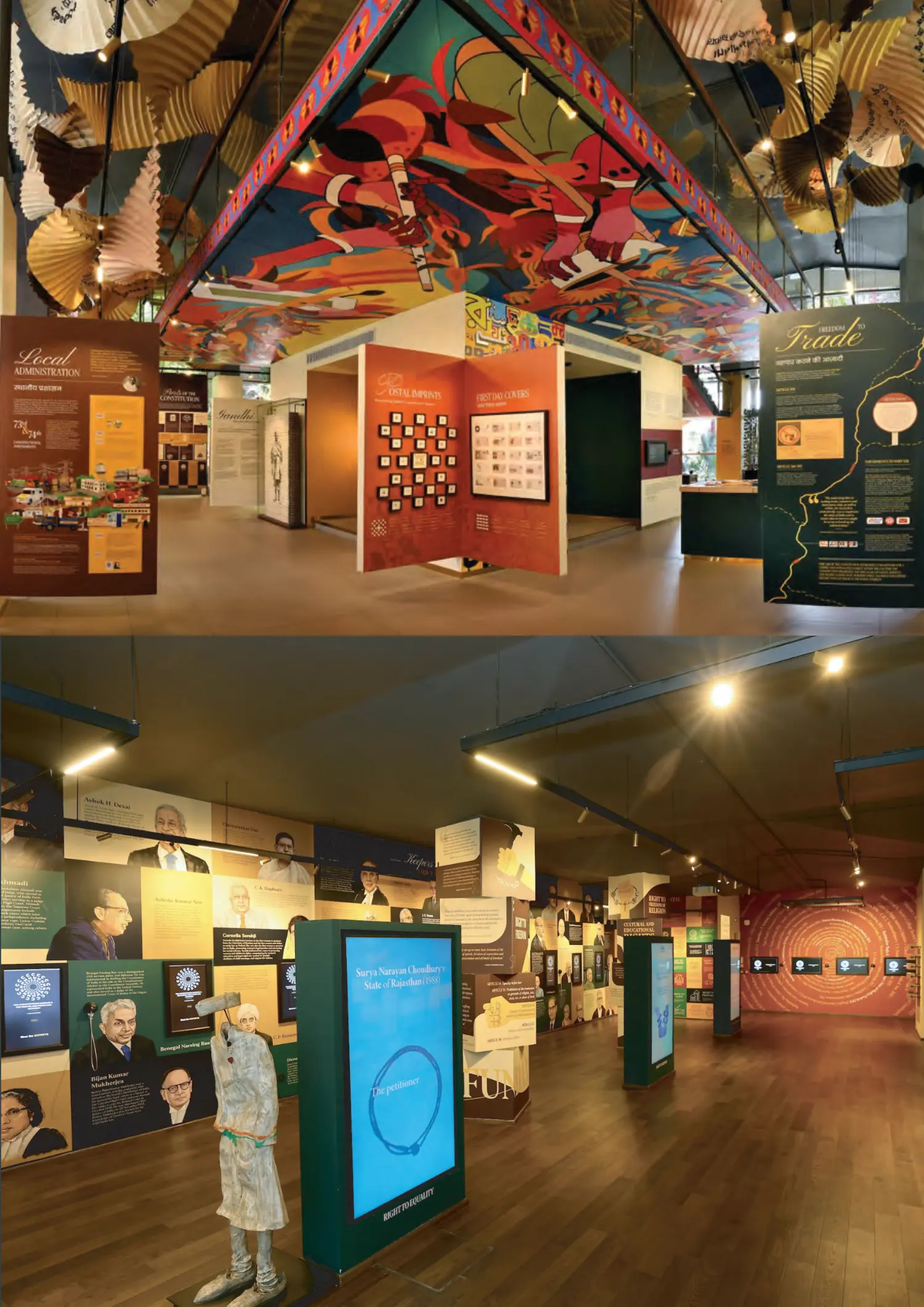
Constitution: A Kaleidoscope offers an in-depth exploration of the philosophical underpinnings and key provisions of the Constitution. As the centrepiece, a striking facsimile of the Constitution is on display, that encapsulates the collective aspirations of a diverse populace dedicated to principles of liberty, equality, justice, and fraternity. The gallery unfolds into various sections that illuminate fundamental provisions of the Constitution. The Constitution’s design ensures it can reflect the diverse, multifaceted nature of a nation while upholding core values of liberty and equality. Each segment encourages visitors to engage with concepts that define Indian democracy, illustrating how these principles serve as a blueprint for the governance of a complex and pluralistic nation.
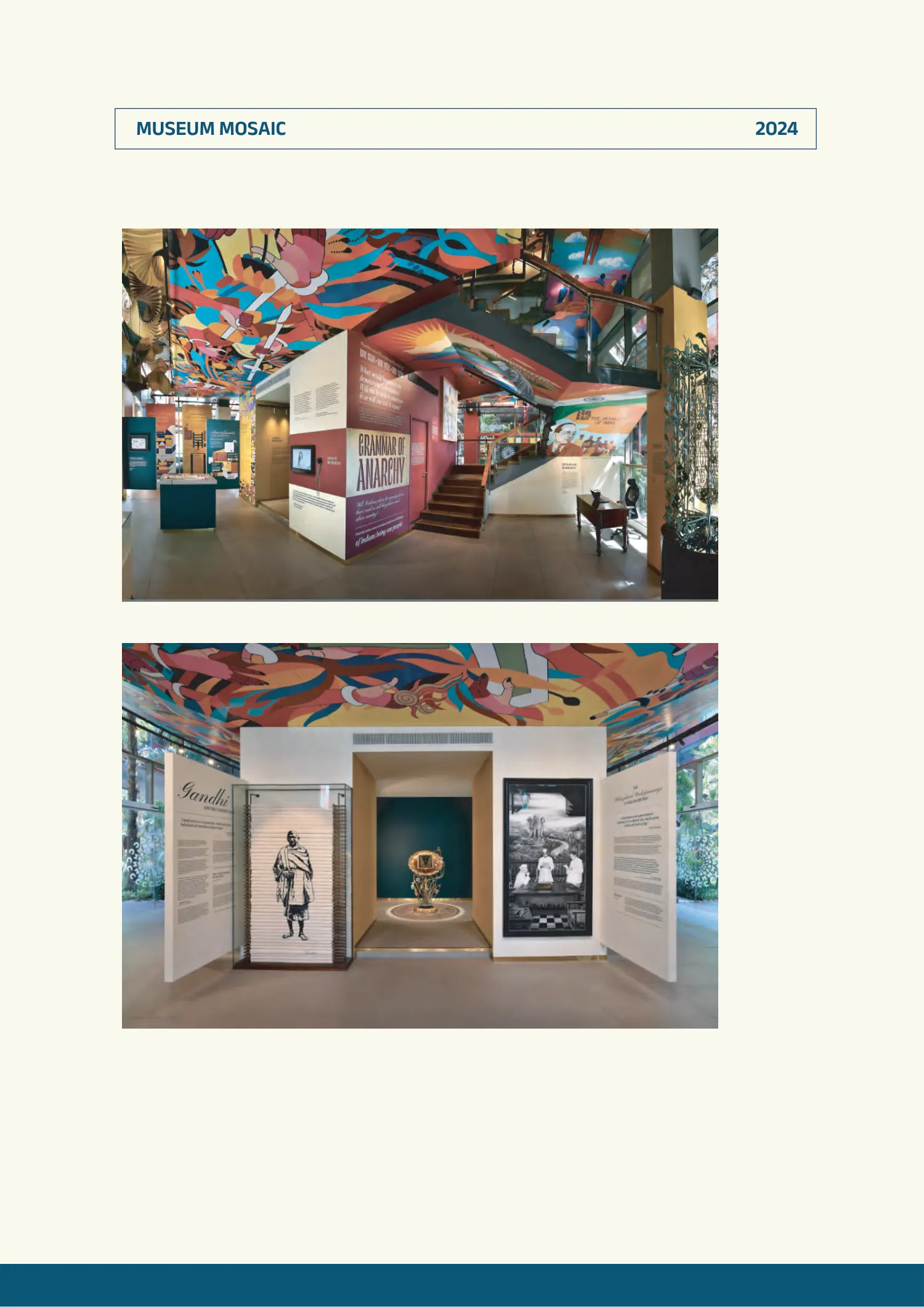
The Maker’s Gallery
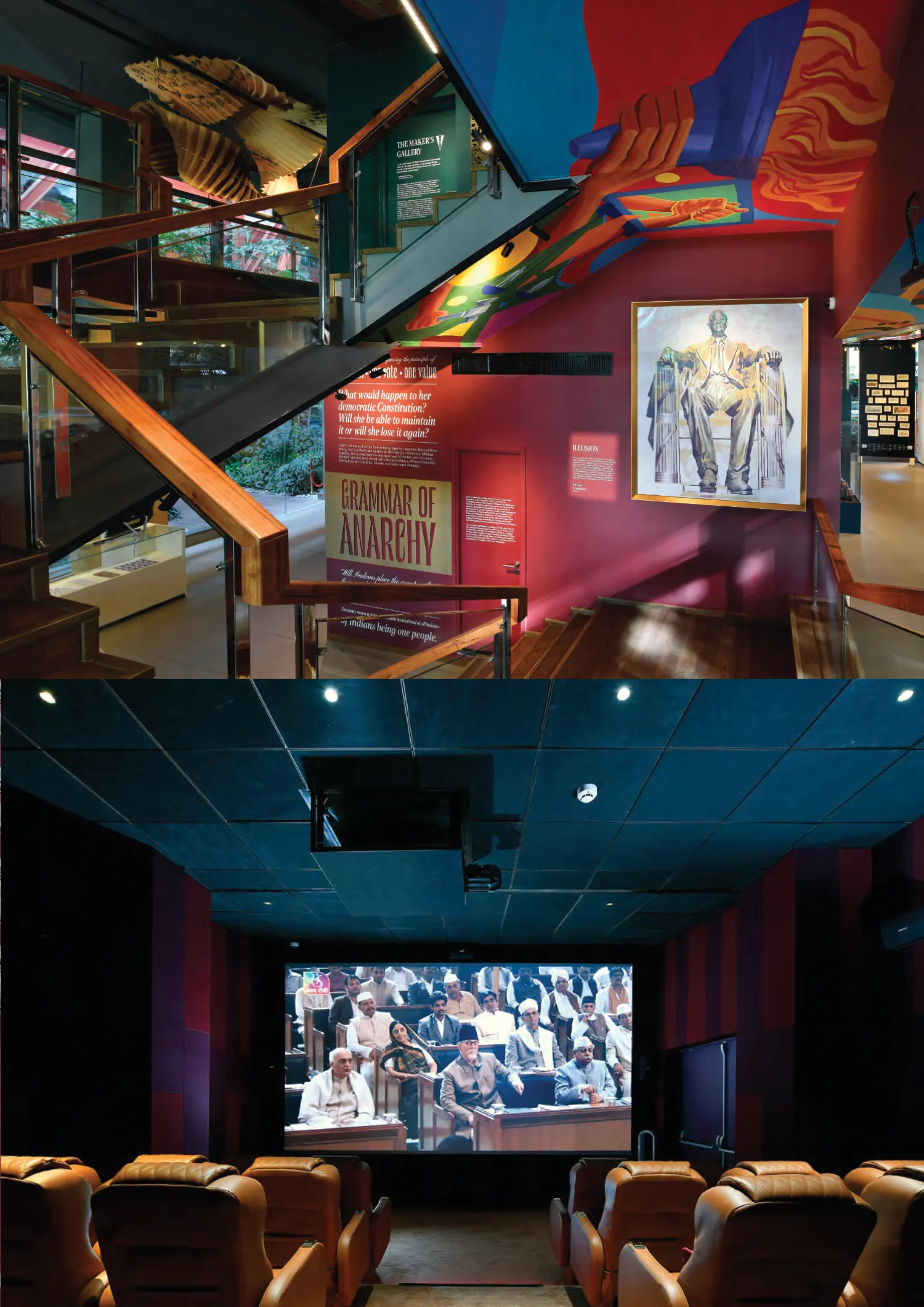
The Constitution of India was born from a unique confluence of ideas, experiences, and struggles, both local and global, historical and contemporary. Its shaping was influenced by centuries of social evolution, the bitter lessons of colonial rule, and a newfound, deeply felt desire for Swaraj or self-governance. The Maker’s Gallery explores the nuances and intricacies of the Constitution drafting process, shedding light on the journey towards its adoption.
Understanding the making of the Constitution is not just an academic exercise; it is a journey into India’s collective conscience. Every clause, every word in the Constitution was forged in the fires of intense discourse. Through archival treasures—Constituent Assembly Debates, speeches, newspaper articles, and even rare audio and video recordings—visitors will be able to witness these discussions in their raw form, each session as a step towards building a democratic India. The exhibits give us a glimpse of the hopes, anxieties, and convictions of the Constitution’s framers.
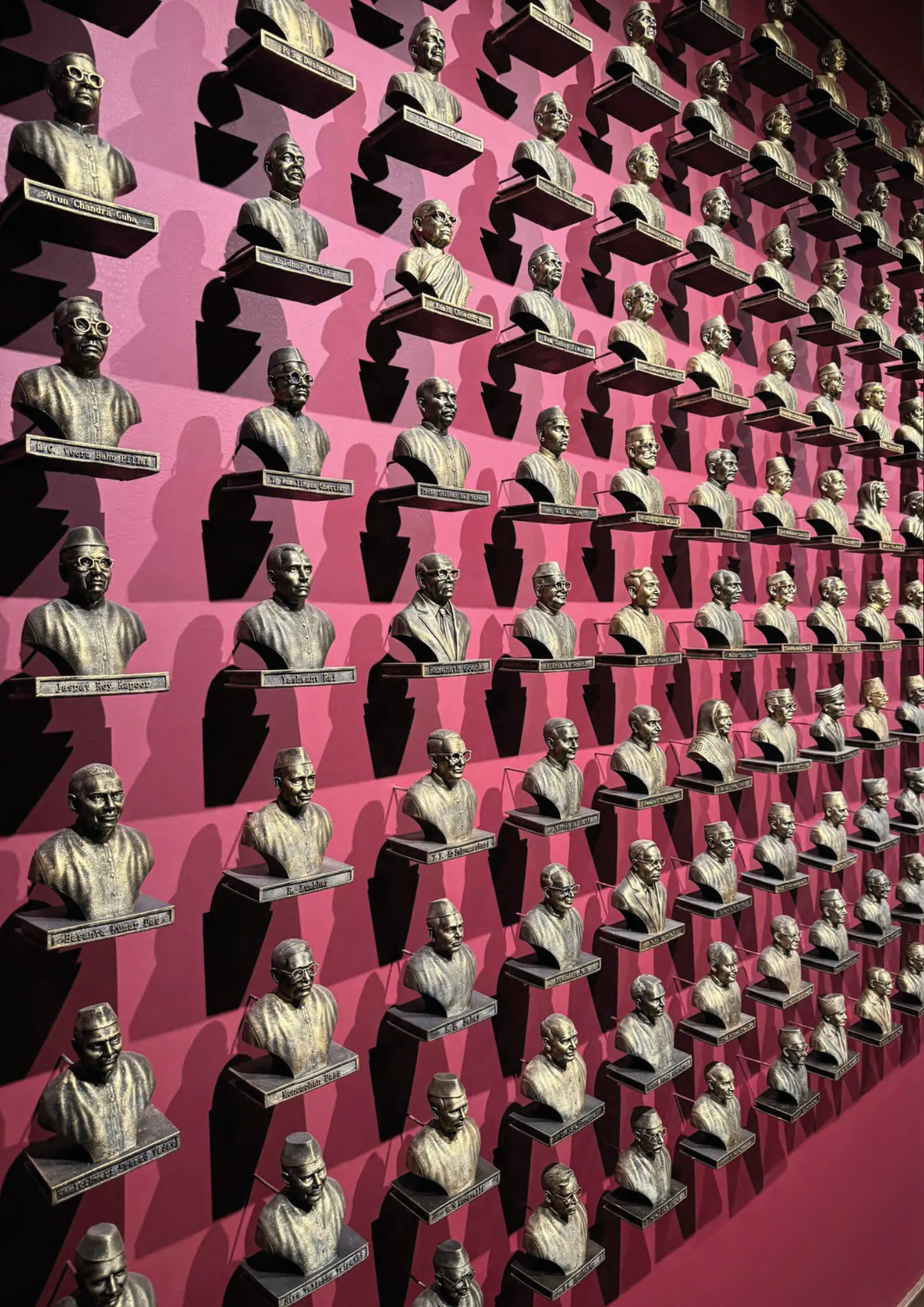
At the core of this process was the Constituent Assembly, an assembly truly "for the people, by the people, and of the people." The Assembly, consisting of individuals from a diverse range of backgrounds–freedom fighters, social reformers, legal scholars, and political leaders—brought together their perspectives, ideals, and concerns to the drafting process. The gallery honours these luminaries and celebrates their enduring legacy.
Freedom’s Journey
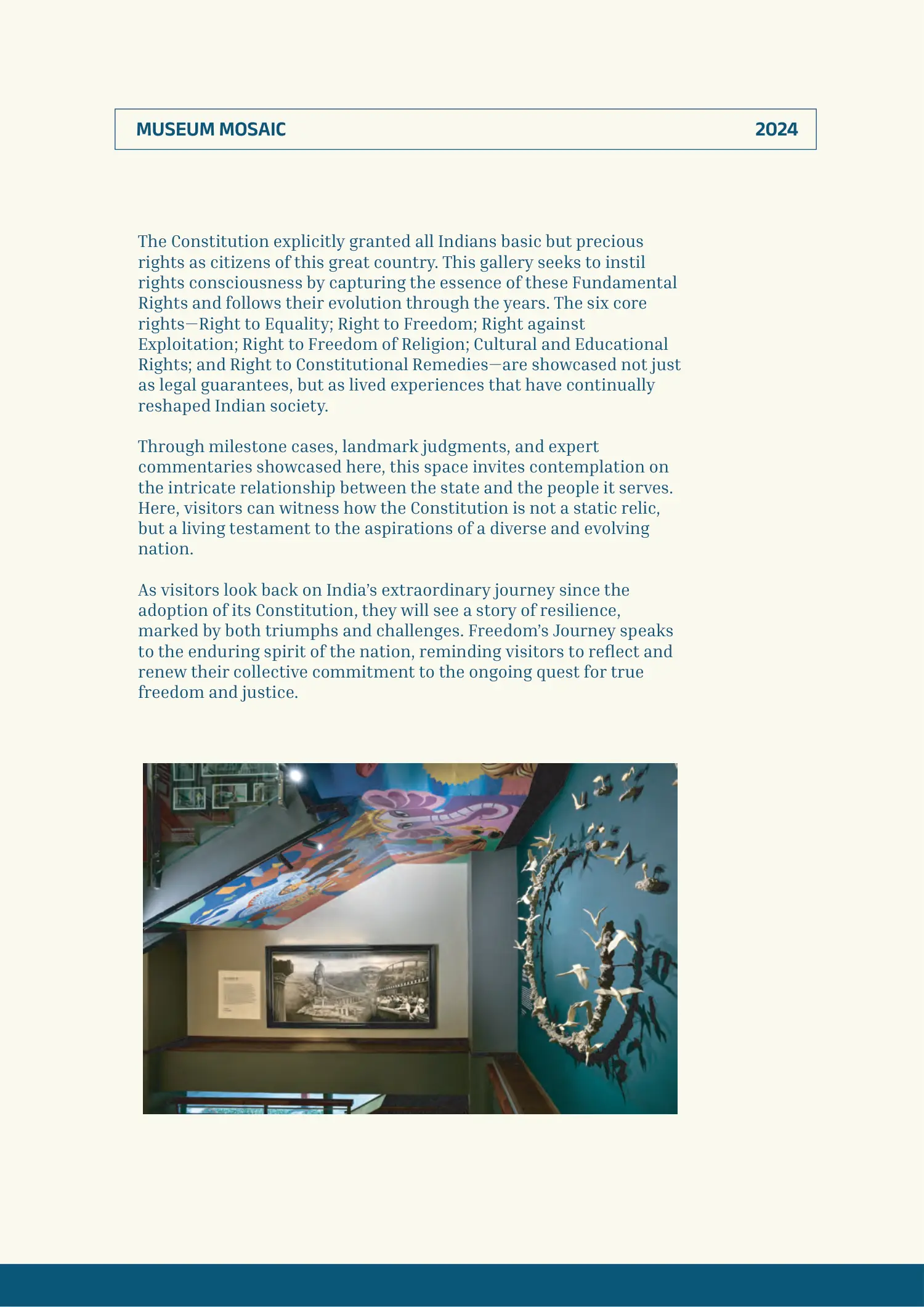
The Constitution of India, forged through the accord of distinguished leaders, has guided the lives of generations of Indians, upholding their rights and defining their responsibilities as citizens, cementing a sense of belonging with their nation. But what truly changed with the adoption of a constitution? What did it mean to be a citizen of a sovereign republic? What rights and liberties did it bring to the people of India? Freedom’s Journey explores the lived experiences surrounding this transition, and offers a glimpse into how Indians understood and embraced the new order marked by the Constitution.
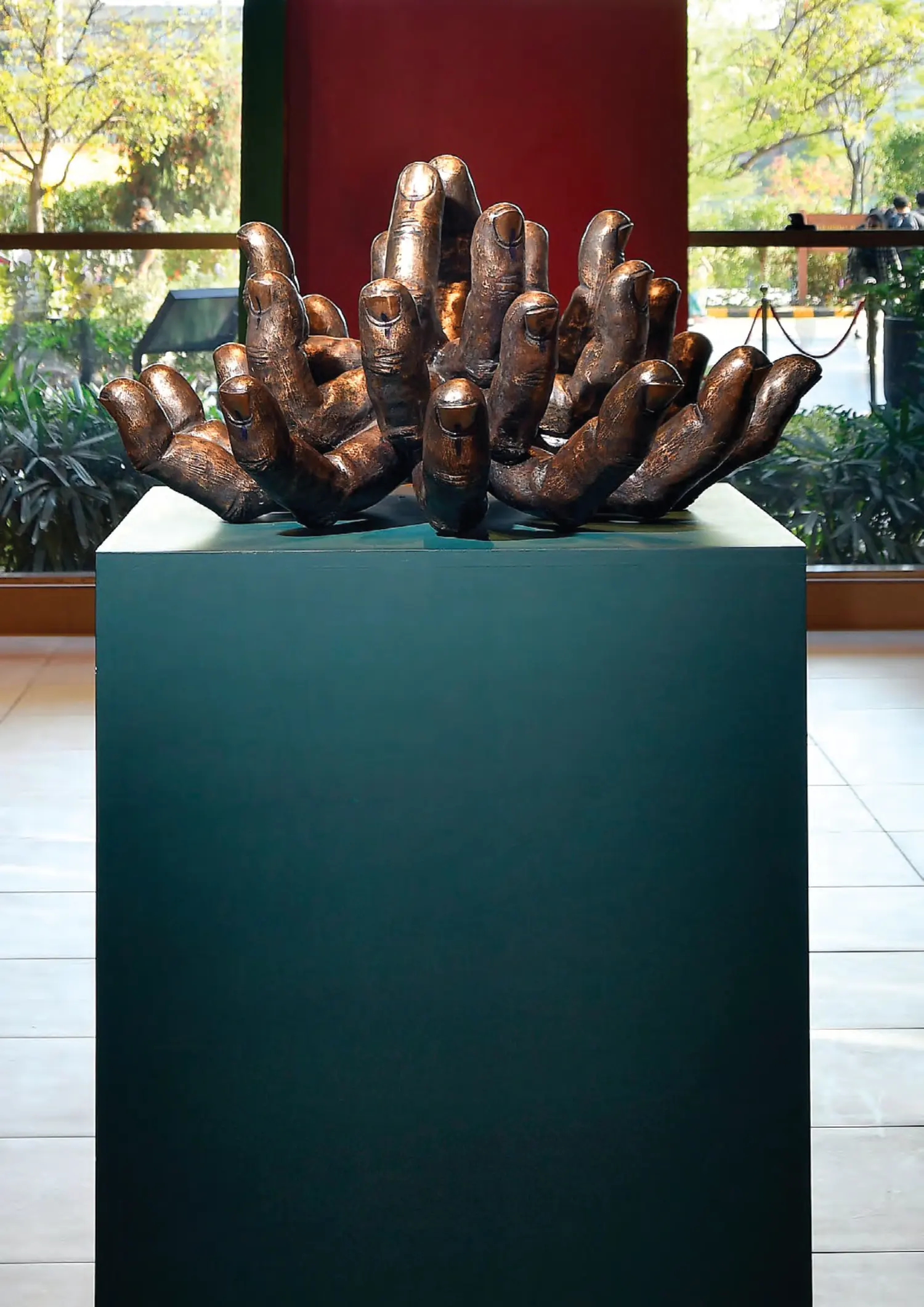
The Constitution explicitly granted all Indians basic but precious rights as citizens of this great country. This gallery seeks to instil rights consciousness by capturing the essence of these Fundamental Rights and follows their evolution through the years. The six core rights—Right to Equality; Right to Freedom; Right against Exploitation; Right to Freedom of Religion; Cultural and Educational Rights; and Right to Constitutional Remedies—are showcased not just as legal guarantees, but as lived experiences that have continually reshaped Indian society.
Through milestone cases, landmark judgments, and expert commentaries showcased here, this space invites contemplation on the intricate relationship between the state and the people it serves. Here, visitors can witness how the Constitution is not a static relic, but a living testament to the aspirations of a diverse and evolving nation.
As visitors look back on India’s extraordinary journey since the adoption of its Constitution, they will see a story of resilience, marked by both triumphs and challenges. Freedom’s Journey speaks to the enduring spirit of the nation, reminding visitors to reflect and renew their collective commitment to the ongoing quest for true freedom and justice.
Interactive and Immersive Experiences
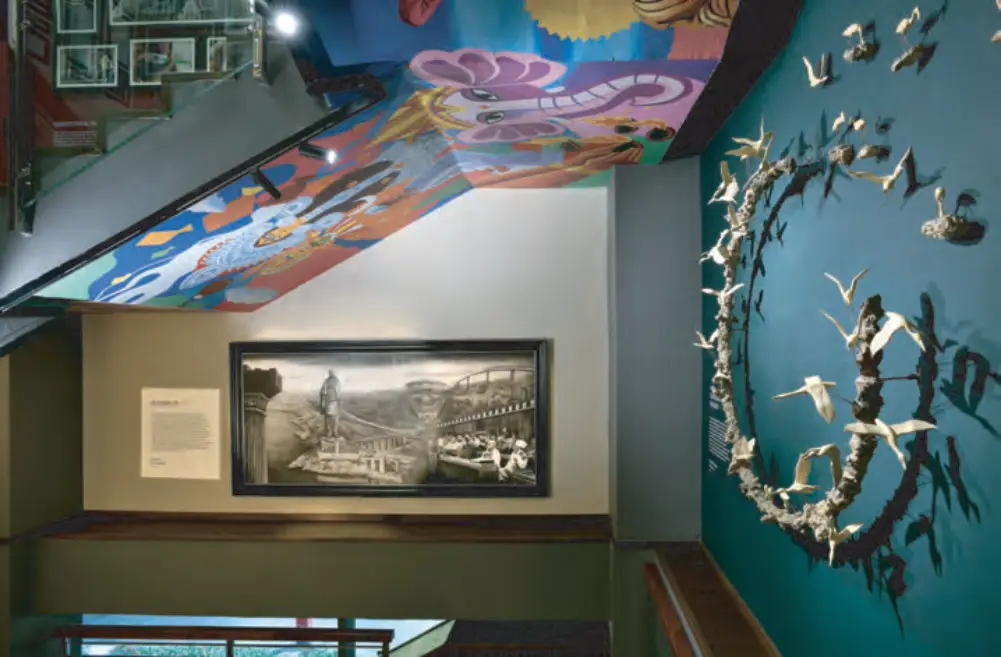
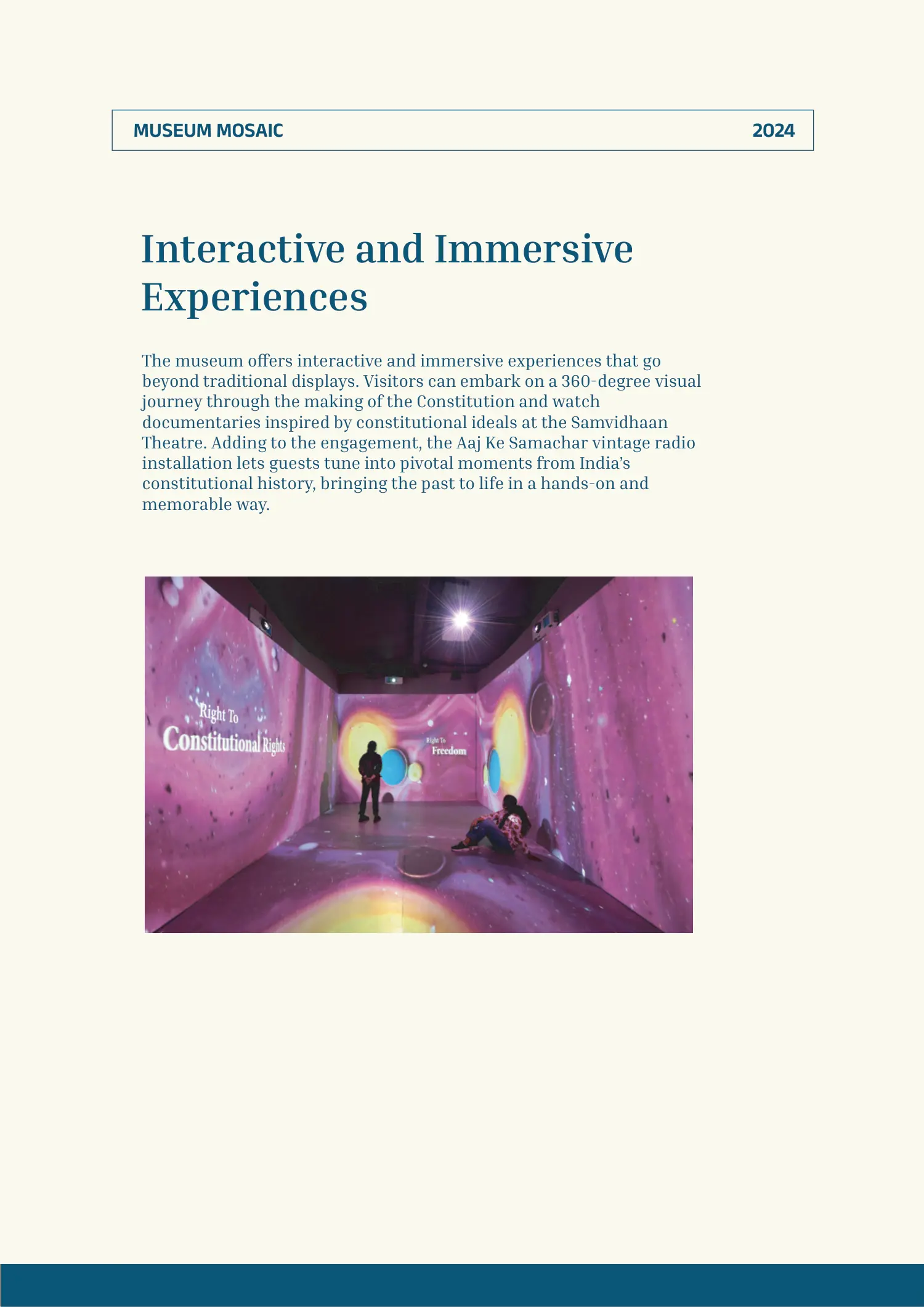
The museum offers interactive and immersive experiences that go beyond traditional displays. Visitors can embark on a 360-degree visual journey through the making of the Constitution and watch documentaries inspired by constitutional ideals at the Samvidhaan Theatre. Adding to the engagement, the Aaj Ke Samachar vintage radio installation lets guests tune into pivotal moments from India’s constitutional history, bringing the past to life in a hands-on and memorable way.
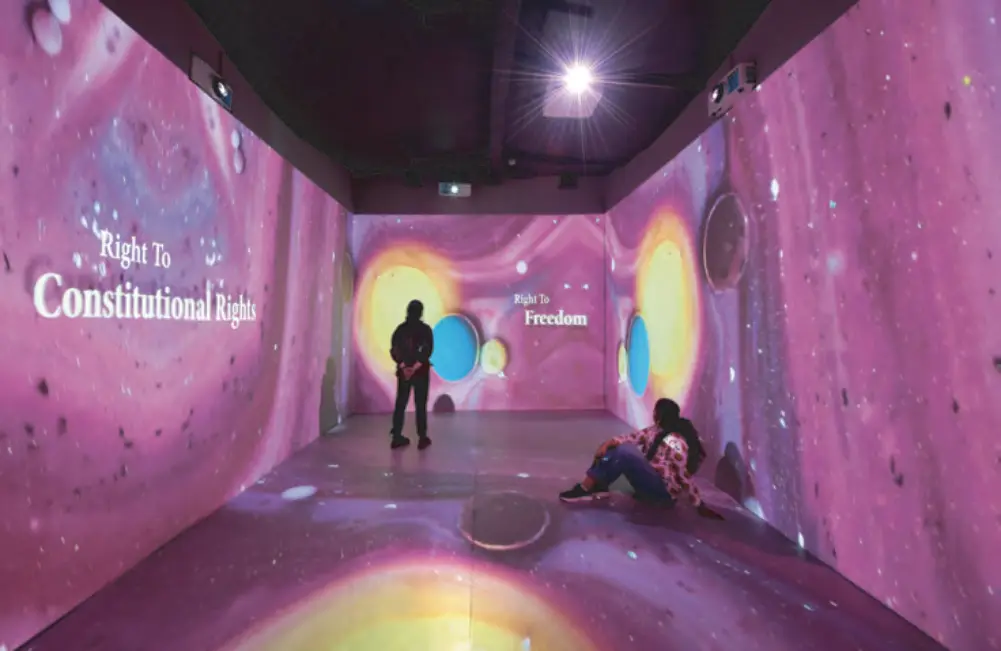
Fostering Rights Consciousness
The museum also educates visitors about the six Fundamental Rights enshrined in the Constitution, which protect citizens against discrimination and empower them to uphold equality, freedom, and justice. Through multimedia storytelling featuring landmark cases and real-life examples, the museum highlights how these rights—right to equality, right to freedom, right against exploitation, right to freedom of religion, cultural and educational rights, and right to constitutional remedies—continue to shape society and safeguard individual dignity. Additionally, a special exhibit honours Naveen Jindal’s campaign for the right to hoist the national flag, symbolising national pride and unity.
Learn from Legal Luminaries
Talks and interviews with constitutional scholars, judges, and advocates provide deeper insights into the ongoing relevance of the Constitution. The museum also explores the portrayal of constitutional themes in print media and literature, offering a broader cultural and philosophical context.
A New Landmark for Civic Learning
With its blend of history, art, technology, and interactive engagement, the Constitution Museum & The Rights and Freedoms Academy has emerged as a vital new institution. It not only preserves the legacy of India’s supreme legal document but also inspires every visitor to become an informed, active participant in the nation’s democratic journey.
View original pages, photographs & credits
Originally published in Museum Mosaic 2024, published May 2025.
Part of our annual review. Descriptions reflect the publication’s reporting period.