A few weeks ago, I walked through a gallery in Kolkata where three people were glued to their phones - two scrolling Instagram, one texting - right in front of a 19th-century painting. The irony wasn’t lost on anyone. But it did make me wonder:
Are we doing enough to meet audiences where they are today, or are we resisting the change we’re supposed to respond to?
‘Engagement’ Today
The question isn't whether people still ‘GO’ to museums, because they do. The real question is: How do we get their attention (or engage them) once they’re through the gates?
Traditionally, museums were measured by footfall. If you walked in, took a selfie, bought a mug, and left, you were counted as engaged. But that measuring system doesn’t hold true anymore. Today, we scroll past more artworks in a day on our phones, than we might have in person in a year. The bar for attention is higher, and the tools we need to hold it have to be different too.
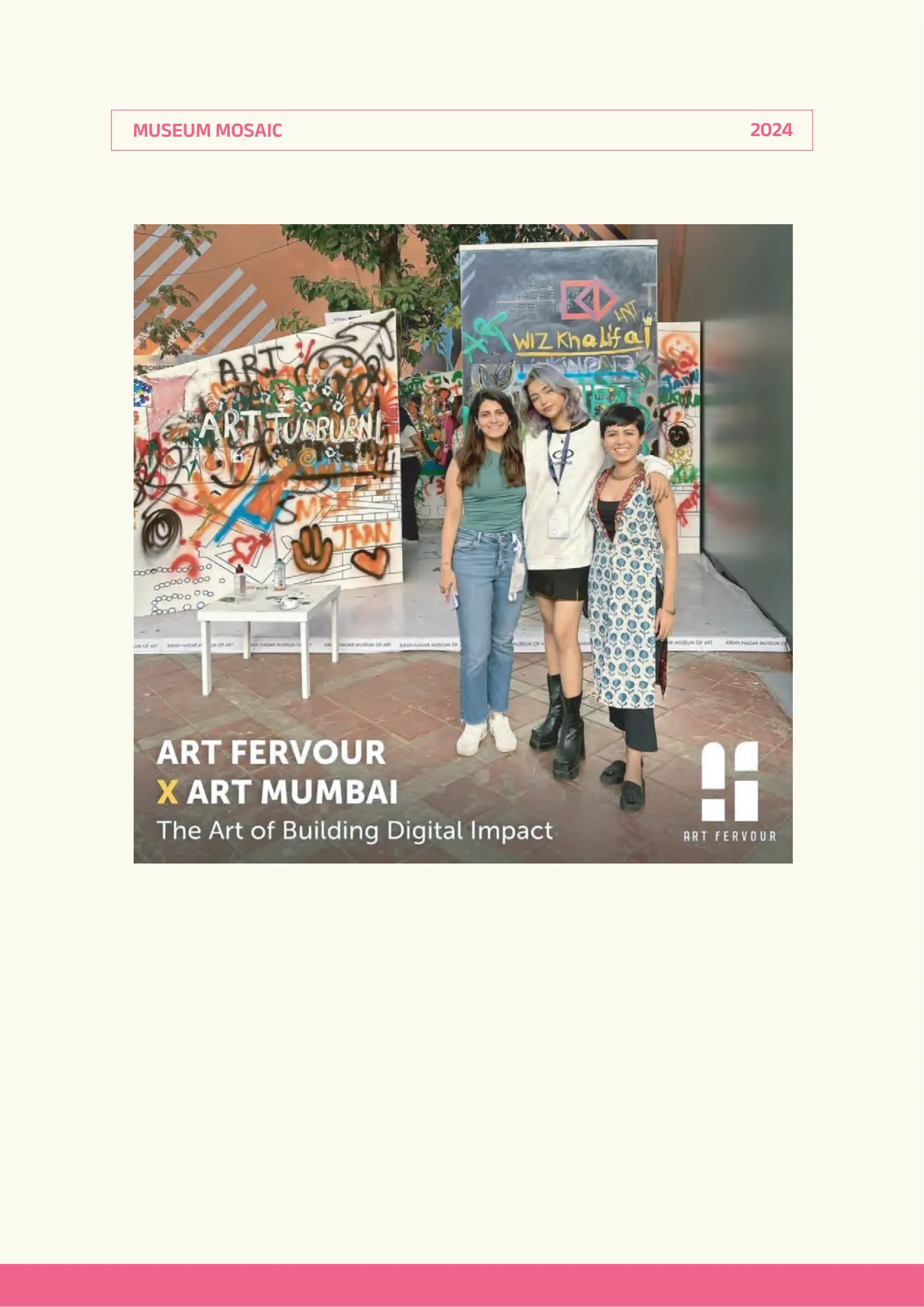
At Art Fervour, we see this shift play out daily. Audiences are more interested in how museums talk to them, be it on social media, through programming or through their choice of exhibitions. The notion of art only belonging on walls is now outdated.
Globally too, the definition of engagement is changing. Institutions like the Smithsonian in the US now actively crowdsource stories from the public for their archives, moving from being custodians of history to co-creators of it.
Can we talk about ‘brain rot’ and short attention spans?
To be honest: we’re all dealing with a bit of brain rot. Between endless Reels, meme chains, and algorithmic overstimulation, the idea of standing still in front of a sculpture for more than 30 seconds feels... ambitious. Our brains are wired for speed and museums that rely on silence and wall text alone are losing the room, even when it’s full.
Museums like CSMVS in Mumbai have recognised this shift and have been active in making the change. Starting with ‘Museum on Wheels,’ where you don’t ‘go’ to a museum - the museum comes to you. Launched in 2015, it travelled across Maharashtra and Gujarat, reaching schools, public spaces, and areas where museums are inaccessible. One of their early fossil exhibitions was a huge hit with children and educators alike. Since then, they’ve kept expanding; right now, they’re running exhibitions on Origami and Ancient Sculptures, taking everything from paper folds to temple fragments into playgrounds and town squares.
Similarly, the Kiran Nadar Museum of Art (KNMA) often pairs their exhibitions with guided walkthroughs, comic-book tie-ups, artist talks, and workshops, creating multi-access points for different kinds of attention spans. Shows like ‘Of Worlds Within Worlds’ (Gulammohammed Sheikh retrospective) brought together artworks with large digital screens, reviving the narrative elements in a new format. You could sit and watch different parts of a single work come alive, in a sense therapeutic, it slowed you down.
Internationally, the V&A in London made headlines with their ‘Videogames: Design/Play/Disrupt’ exhibition, treating gaming as a serious cultural form and drawing in a whole generation of non-traditional museum-goers. They showed behind-the-scenes sketches, early design notes, and storyboards from famous console games like ‘The Last of Us’ and ‘Journey’. The exhibition later travelled to V&A Dundee, where it helped pull in over 800,000 visitors in the first year alone. We’ve seen through all these efforts so far that while content does matter, the format matters just as much. New ways of engagement, with zines, memes, and QR codes that link to playlists, games, memory walls, stay longer with viewers than big blocks of information that overwhelms them.
Museums as idea labs and hands-on experiences, not ‘Muse’ temples
One of the most outdated ideas is that museums are temples: silent, sacred, and untouchable. But the ones doing meaningful work right now are treating their spaces less like shrines and more like labs. You walk in, and instead of being told to observe quietly, you're asked to take part.
MAP in Bengaluru had already started experimenting before their physical space opened in 2023. Through Museum From Home, they ran live talks, online exhibitions, and video walkthroughs. Their AI-powered archive Interwoven, built with Microsoft, lets you search South Asian textile collections by motif, technique, or region. Inside the building today, you can browse a painting show or sit at a touchscreen for an hour tracing the outline of a sari through different eras. It’s not about tech for the sake of tech. It’s about giving visitors more than one way in.
The PM Museum in Delhi does this in a completely different context. Built on the Teen Murti estate, it doesn’t rely on display cases and panels. You can take a selfie with any Prime Minister, watch a robot recreate handwritten notes that can be taken home as memorabilia, or leave your own message for ‘India in 2047’ as part of Shatabdi Sankalp. It’s not asking you to admire leadership. It’s asking you to reflect on what leadership should look like now.
Vadnagar’s Archaeological Experiential Museum, which opened earlier this year, takes you even further back. Built next to a live excavation site, the museum walks you through 2,500 years of settlement. You step across glass floors that reveal ruins below your feet. Inside, there’s a 270-degree immersive screen, VR reconstructions of city life, and digital maps you can move through. Outside, the dig site itself has a viewing walkway, so you're watching archaeology in progress. It’s half museum, half field lab. And it makes you stay longer than you meant to.
Tate Modern’s Tate Collective flips the model entirely. It hands over part of the museum’s programming to people aged 16 to 25. They design events, make posters, run late nights. Over 150,000 young
people have signed up. It’s not about ticking a youth outreach box. It’s about letting them decide what kind of museum they want to be part of.
And it’s not just smaller or newer spaces doing this. In 2024, the Musée d’Orsay in Paris broke attendance records with their Van Gogh exhibition ‘Van Gogh in Auvers-sur-Oise: The Final Months’. The exhibition focused on the final months of his life in Auvers-sur-Oise but went well beyond traditional wall labels. The show included a VR walkthrough of his paintings and an AI-based ‘conversation’ with Van Gogh trained on his letters. More than 790,000 people came through in just four months. The format clearly struck a chord. Quietly immersive, personal, and nothing like a textbook.
From museum fatigue to micro-engagement
Not everyone wants to spend two hours in a gallery. At Art Fervour, we’ve been working across formats to keep viewers engaged without losing attention.
For the ‘Light Into Space’ exhibition, currently on view at NMACC, we put together a crossword. Clues came from the works on display: textures, colours, bits of text and artists themselves. You had to walk through the show to find the clues. These interactive gamifications of the exhibition have helped in interactions, engagements and outreach to the viewers.
We’ve used games, prompts, and formats like these across exhibitions and festivals. The response has been steady. People use them, mention them to others, and sometimes come back with friends.
So, what comes next?
Museums can’t only be about preserving the past. They also need to participate now. That could mean adapting to shorter attention spans without losing depth. Or designing for emotion as much as information. Or just asking a different kind of question.
It doesn’t always need to involve tech or budgets, it can be structural, tone or a different format.
When Beyoncé and Jay-Z filmed ‘Apeshit’ at the Louvre in Paris, under-30 attendance went up by 50% the next year. They used simple visibility without branding or advertising.
Over the years, maybe decades, we have heard about all the rules in a museum, don’t take photos, stay quiet, don’t touch anything, and those restrictions haven’t helped the institutions, maybe it's time to change and find more ways in.
View original pages, photographs & credits
Originally published in Museum Mosaic 2024, published May 2025.
Part of our annual review. Descriptions reflect the publication’s reporting period.