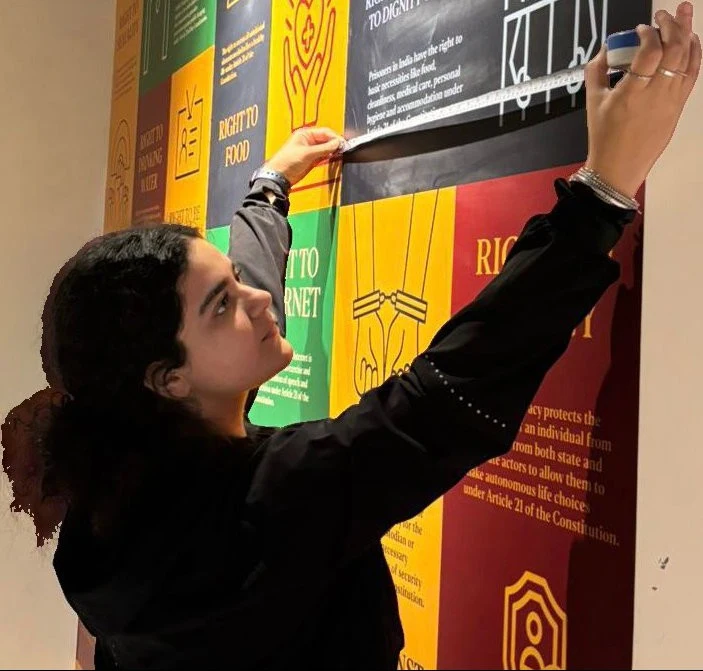
Sakshi Ahuja,
Art Conservator
The best part of creating art is sharing it with the world. To ensure that an artwork is exhibited professionally and artistically, the use of a picture frame becomes almost non-negotiable. A frame, along with its mounts and protective elements, not only enhances the visual appeal of an artwork but also safeguards it from environmental and physical damage. Proper framing helps artworks remain stable and in good condition for generations.
Vincent van Gogh is often credited with saying, “A picture without a frame is like a soul without a body.” Beyond aesthetics, a frame possesses the ability to transform the way an artwork is perceived. Ideally, while viewing a framed piece, the viewer’s attention should first be drawn to the artwork itself, then to the frame, and finally to the harmony created between the two. More importantly, frames chosen for their preservation qualities protect artworks from a range of damaging factors that can compromise their longevity. Framing provides artworks and artefacts with a secure structure for display, handling, transportation, storage, and support.
When Framing Causes Damage
Ironically, many conventional framing practices can themselves become a source of deterioration. Materials commonly used in commercial framing including mats, backing boards, decorative fabrics, and hinges are often neither chemically stable nor truly acid-free, despite labels claiming them to be “archival” or “acid-free.” Over time, these materials can release acids and harmful compounds that slowly discolour, weaken and damage the artworks.
Such deterioration may occur gradually over years or decades, or in some cases surprisingly quickly, within days or even hours. Light exposure, fluctuating humidity, poor-quality adhesives, and acidic supports all contribute to the degradation of paper, textiles, photographs, and painted surfaces.
What is Conservation Framing?
Conservation framing is a specialised approach to framing that prioritises the long-term preservation of artworks. It protects artworks from two major forms of damage: chemical damage typically caused by acidic materials and accelerated by ultraviolet (UV) light and mechanical damage resulting from improper handling, pressure, or structural instability.
Within museums and professional conservation studios, framing is approached with a deep understanding of an artwork’s individual requirements. The goal is not merely to display an object attractively, but to ensure its stability and survival for future generations. Conservation framing is particularly important for artworks and artifacts of historical, cultural, or emotional significance.
One of the fundamental principles of conservation framing is reversibility. Any artwork that has been framed should be capable of being returned to its original state without damage. Consequently, artworks should never be permanently altered, trimmed, folded, or adhered irreversibly. If an artwork is mounted to a support, it must be removable without causing harm to the object
The Components of Conservation Framing
Every material used in conservation framing is selected according to one guiding principle: nothing that surrounds or comes into contact with the artwork should cause damage.
Frames
Conservation-quality frames are typically made from wood or metal. Before becoming a frame, the raw material exists as a molding usually supplied in long lengths. These moldings contain a rabbet, a recessed groove designed to hold the glazing, mat board, artwork, and backing securely in place. Wooden frames often undergo careful finishing processes, including sealing, gesso application and gilding, all of which must be completed using stable and conservation-safe materials.
Glazing
Glazing refers to the protective glass or acrylic placed at the front of a frame. It serves both protective and visual purposes. Conservation framing commonly employs three types of glazing:
• Standard glazing, offering basic physical protection • Conservation glazing, which reduces UV radiation and glare • Museum glazing, which minimizes reflections while providing superior UV protection
Proper glazing shields artworks from dust, pollutants, humidity, and harmful light exposure while ensuring optimal visibility.
Mat Boards
A mat board is the flat paper-based material placed between the artwork and the glazing. Besides enhancing presentation, mats create necessary space between the artwork and the glass, preventing condensation and surface damage.
High-quality conservation mats are typically made from cotton fiber and are free from lignin and harmful acids. They also help conceal hinges and mounting systems while providing visual breathing space around the artwork.
Backing Boards
Backing boards protect the reverse side of an artwork and provide structural support. In conservation framing, backing materials must be acid-free, lignin-free, and chemically stable to prevent long-term deterioration. Artworks may also be hinged to these boards using reversible conservation techniques.
Framing
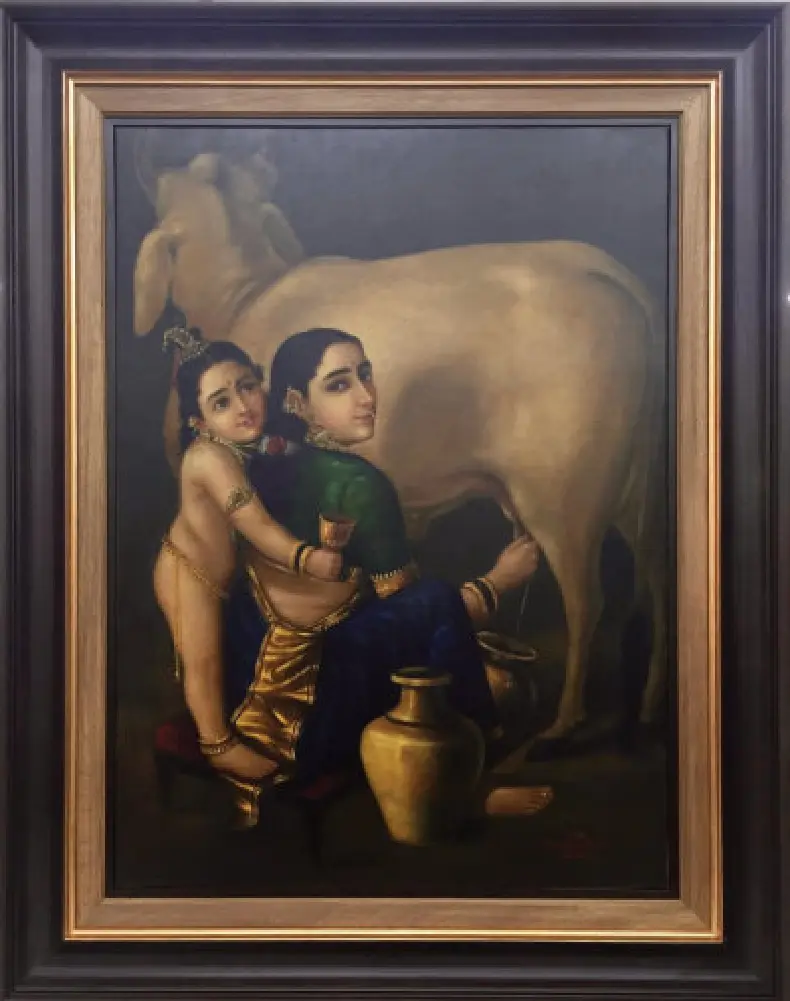
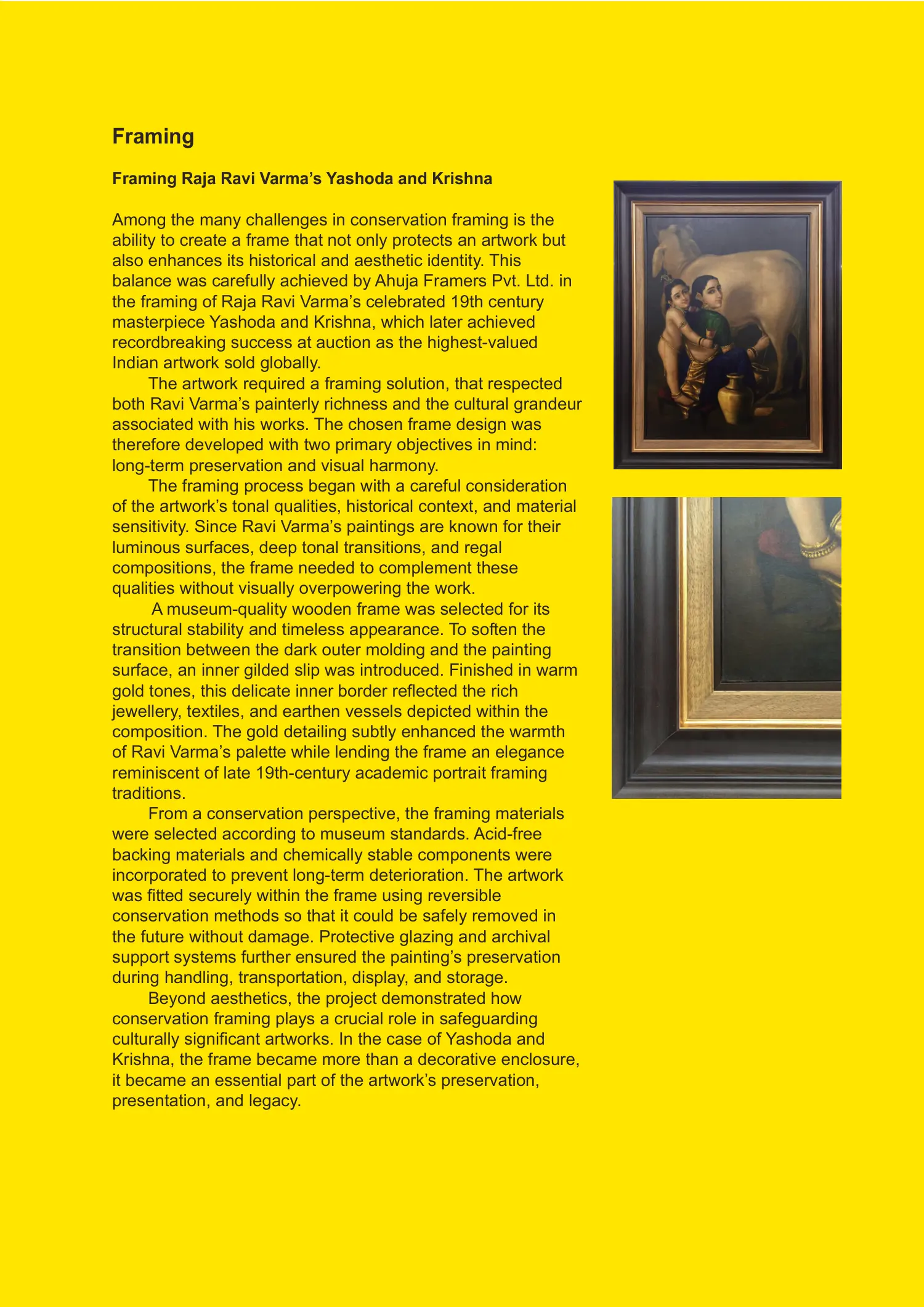
Framing Raja Ravi Varma’s Yashoda and Krishna
Among the many challenges in conservation framing is the ability to create a frame that not only protects an artwork but also enhances its historical and aesthetic identity. This balance was carefully achieved by Ahuja Framers Pvt. Ltd. in the framing of Raja Ravi Varma’s celebrated 19th century masterpiece Yashoda and Krishna, which later achieved recordbreaking success at auction as the highest-valued Indian artwork sold globally.
The artwork required a framing solution, that respected both Ravi Varma’s painterly richness and the cultural grandeur associated with his works. The chosen frame design was therefore developed with two primary objectives in mind: long-term preservation and visual harmony.
The framing process began with a careful consideration of the artwork’s tonal qualities, historical context, and material sensitivity. Since Ravi Varma’s paintings are known for their luminous surfaces, deep tonal transitions, and regal compositions, the frame needed to complement these qualities without visually overpowering the work.
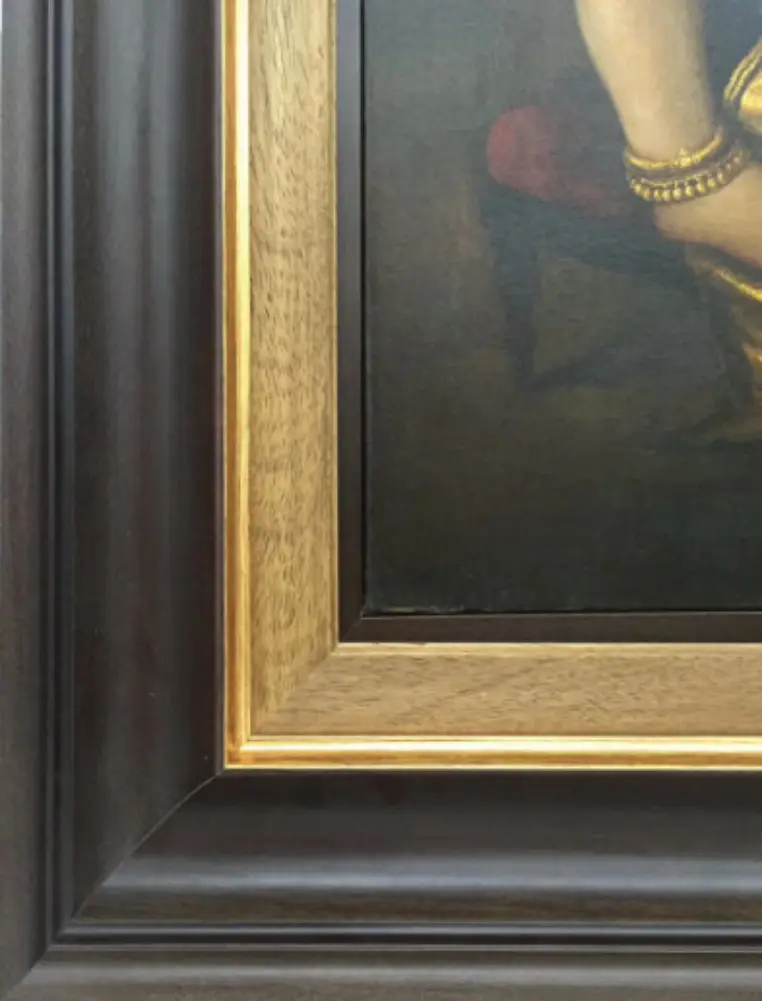
A museum-quality wooden frame was selected for its structural stability and timeless appearance. To soften the transition between the dark outer molding and the painting surface, an inner gilded slip was introduced. Finished in warm gold tones, this delicate inner border reflected the rich jewellery, textiles, and earthen vessels depicted within the composition. The gold detailing subtly enhanced the warmth of Ravi Varma’s palette while lending the frame an elegance reminiscent of late 19th-century academic portrait framing traditions.
From a conservation perspective, the framing materials were selected according to museum standards. Acid-free backing materials and chemically stable components were incorporated to prevent long-term deterioration. The artwork was fitted securely within the frame using reversible conservation methods so that it could be safely removed in the future without damage. Protective glazing and archival support systems further ensured the painting’s preservation during handling, transportation, display, and storage.
Beyond aesthetics, the project demonstrated how conservation framing plays a crucial role in safeguarding culturally significant artworks. In the case of Yashoda and Krishna, the frame became more than a decorative enclosure, it became an essential part of the artwork’s preservation, presentation, and legacy.
Horst: Photographer of Style at the V&A Museum
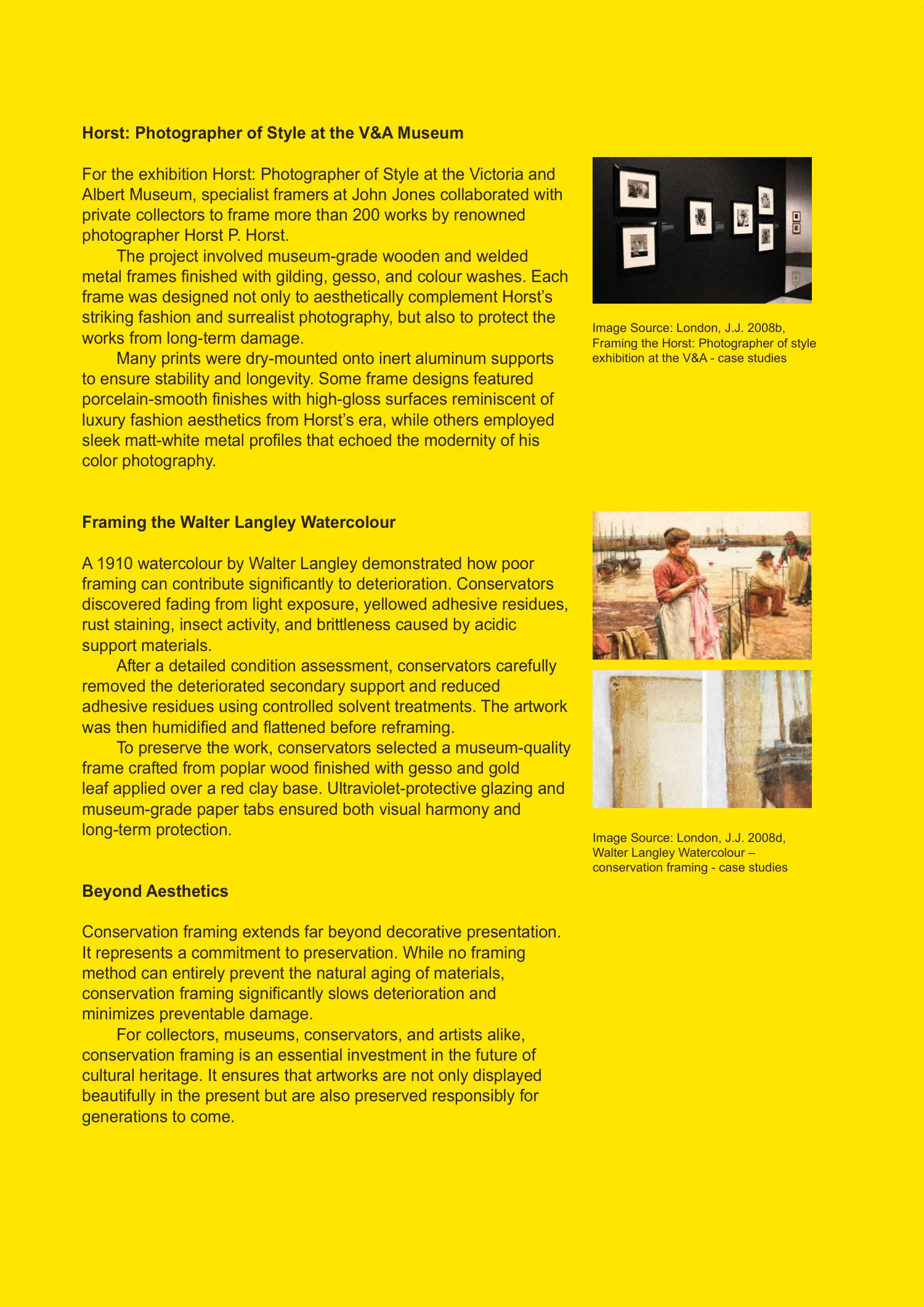
For the exhibition Horst: Photographer of Style at the Victoria and Albert Museum, specialist framers at John Jones collaborated with private collectors to frame more than 200 works by renowned photographer Horst P. Horst.
The project involved museum-grade wooden and welded metal frames finished with gilding, gesso, and colour washes. Each frame was designed not only to aesthetically complement Horst’s striking fashion and surrealist photography, but also to protect the works from long-term damage.
Image Source: London, J.J. 2008b, Framing the Horst: Photographer of style exhibition at the V&A - case studies
Many prints were dry-mounted onto inert aluminum supports to ensure stability and longevity. Some frame designs featured porcelain-smooth finishes with high-gloss surfaces reminiscent of luxury fashion aesthetics from Horst’s era, while others employed sleek matt-white metal profiles that echoed the modernity of his color photography.
Framing the Walter Langley Watercolour
A 1910 watercolour by Walter Langley demonstrated how poor framing can contribute significantly to deterioration. Conservators discovered fading from light exposure, yellowed adhesive residues, rust staining, insect activity, and brittleness caused by acidic support materials.
After a detailed condition assessment, conservators carefully removed the deteriorated secondary support and reduced adhesive residues using controlled solvent treatments. The artwork was then humidified and flattened before reframing.
To preserve the work, conservators selected a museum-quality frame crafted from poplar wood finished with gesso and gold leaf applied over a red clay base. Ultraviolet-protective glazing and museum-grade paper tabs ensured both visual harmony and long-term protection.
Image Source: London, J.J. 2008d, Walter Langley Watercolour – conservation framing - case studies
Beyond Aesthetics
Conservation framing extends far beyond decorative presentation. It represents a commitment to preservation. While no framing method can entirely prevent the natural aging of materials, conservation framing significantly slows deterioration and minimizes preventable damage.
For collectors, museums, conservators, and artists alike, conservation framing is an essential investment in the future of cultural heritage. It ensures that artworks are not only displayed beautifully in the present but are also preserved responsibly for generations to come.
Ultimately, conservation framing challenges us to look beyond the immediate visual impact of an artwork and consider our long-term responsibility toward the objects in our care.
Every artwork we inherit carries history, memory, and meaning and thoughtful framing helps ensure that future generations experience these works exactly as they were intended to be seen.
View original pages, photographs & credits
Originally published in Museum Mosaic 2025, published May 2026.
Part of our annual review. Descriptions reflect the publication’s reporting period.