Lalbhai Dalpatbhai Museum Ahmedabad
29 March - 20 July
Image credits: Lalbhai Dalpatbhai Museum
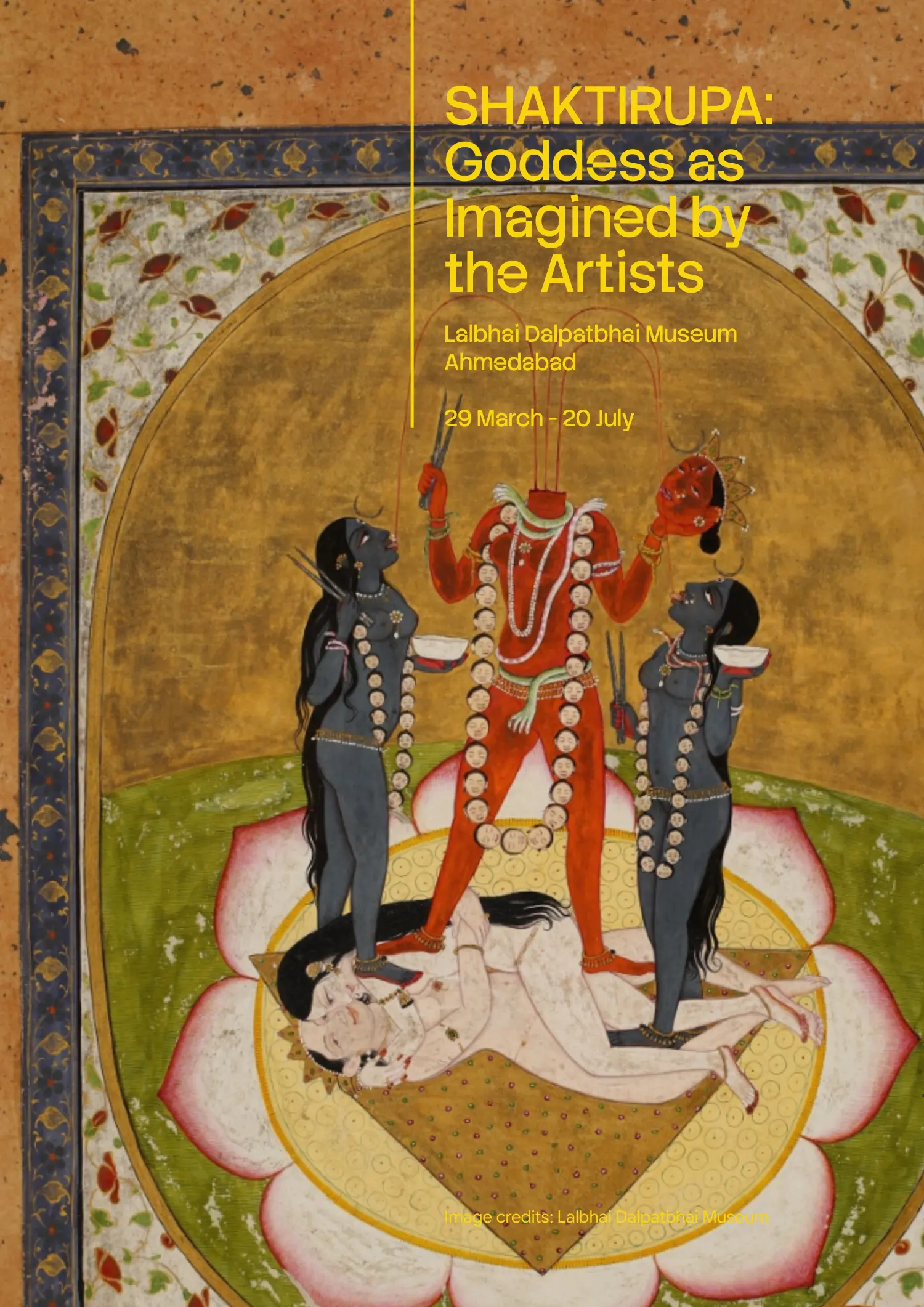
The idea of the Goddess has always held a powerful place in Indian imagination. She is known as Devi, often understood as Shakti, the divine feminine energy that sustains the universe. Across mythology, art, and lived traditions, she appears in many forms, each carrying its own meaning and emotion. The exhibition Shaktirupa: Goddess as Imagined by the Artists at the Lalbhai Dalpatbhai Museum brought together these varied visions and invited visitors to reflect on how artists have imagined and represented the Goddess over time.
The concept of the feminine as a source of creation is not new. Long before structured religious systems, ancient cultures worshipped mother goddesses as symbols of fertility, protection, and prosperity. In Hinduism, the divine is seen as both male and female, and sometimes as a union of the two, such as the form of Ardhanarishwara. Within this framework, Shakti emerges as a central force, shaping both the cosmos and its artistic expressions.
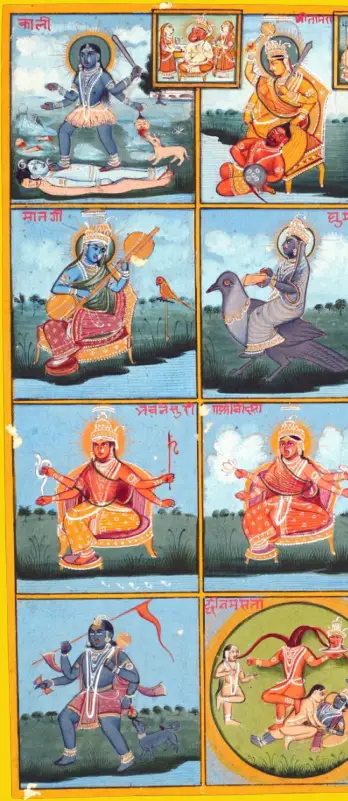
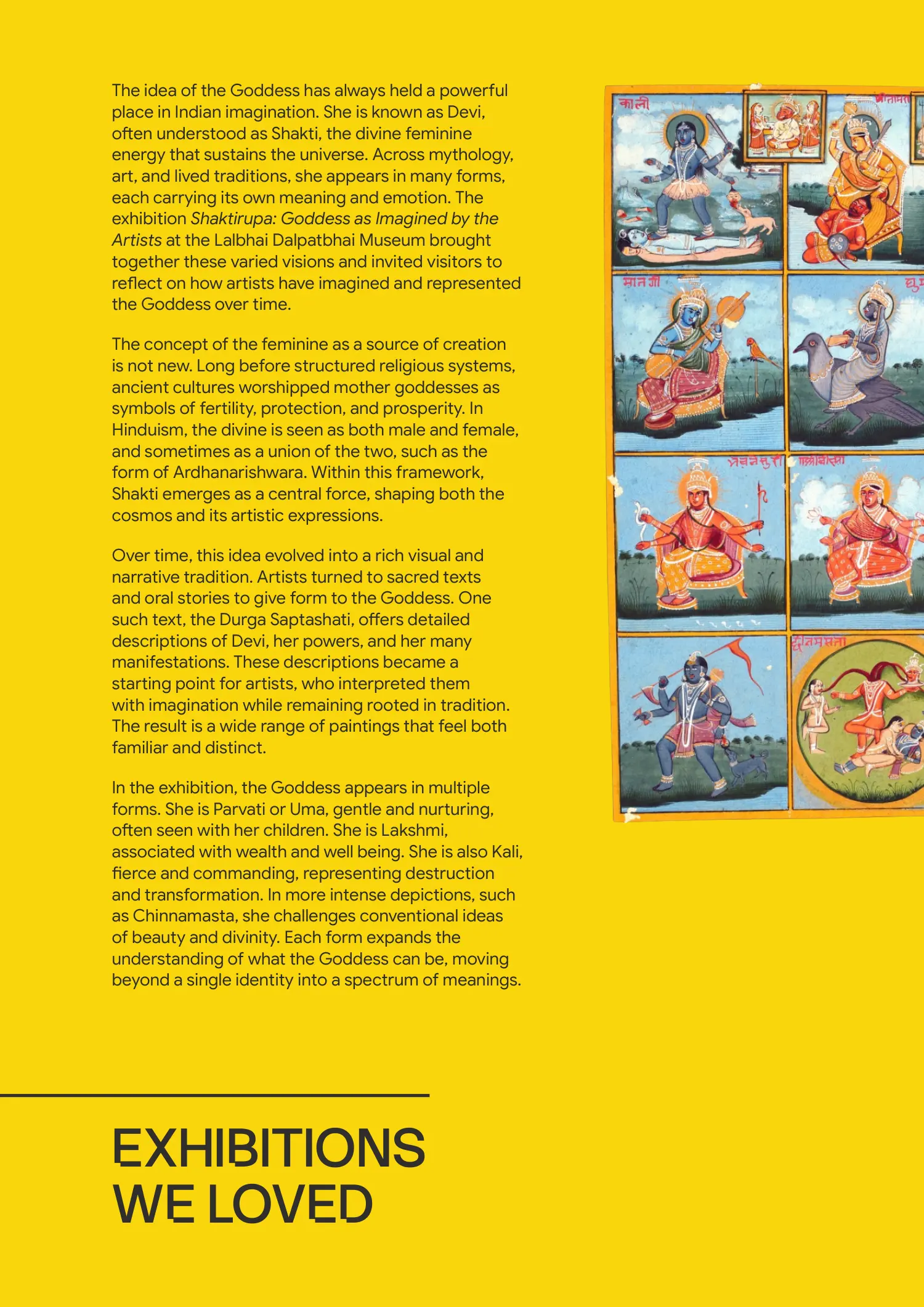
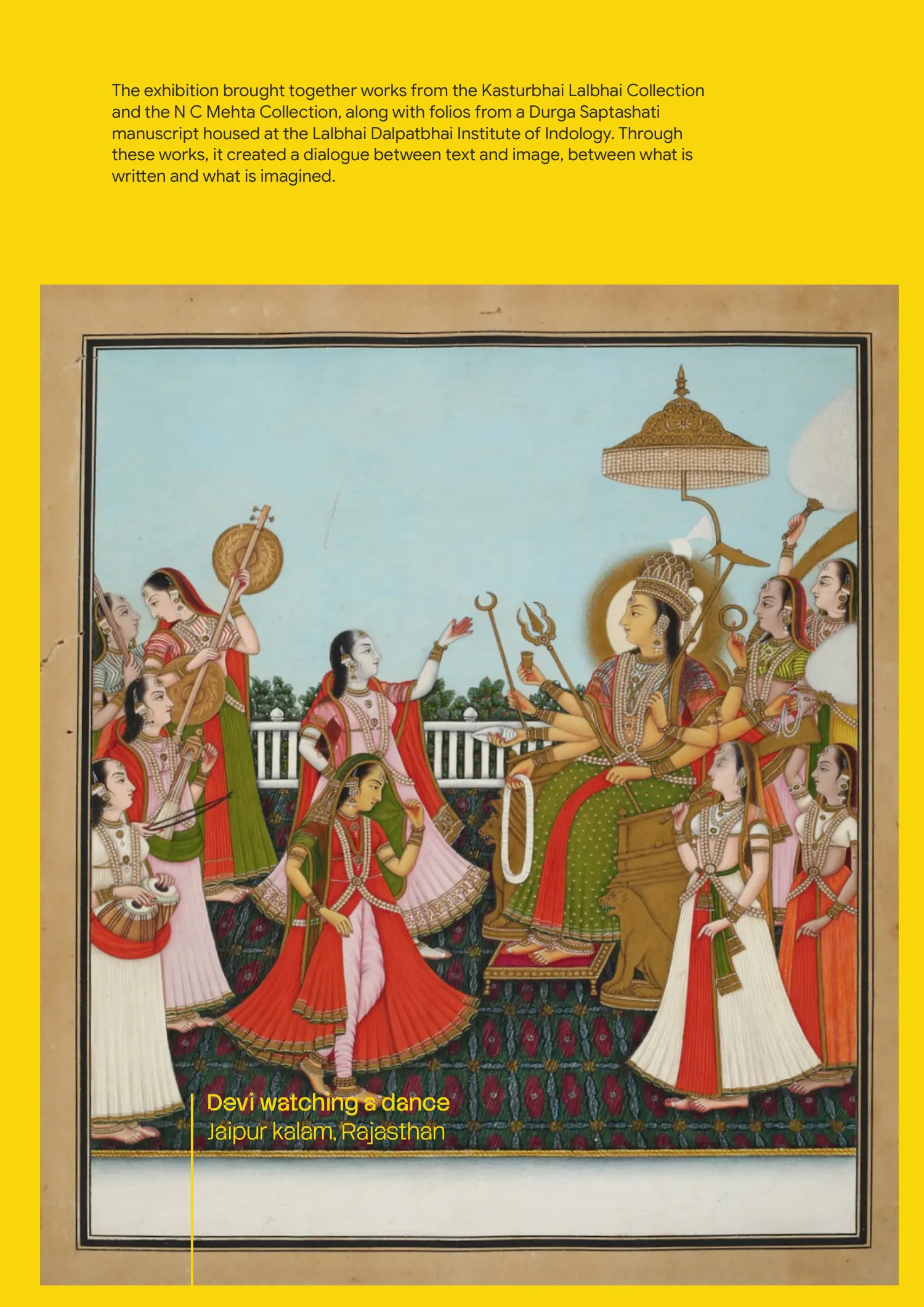
Over time, this idea evolved into a rich visual and narrative tradition. Artists turned to sacred texts and oral stories to give form to the Goddess. One such text, the Durga Saptashati, offers detailed descriptions of Devi, her powers, and her many manifestations. These descriptions became a starting point for artists, who interpreted them with imagination while remaining rooted in tradition. The result is a wide range of paintings that feel both familiar and distinct.
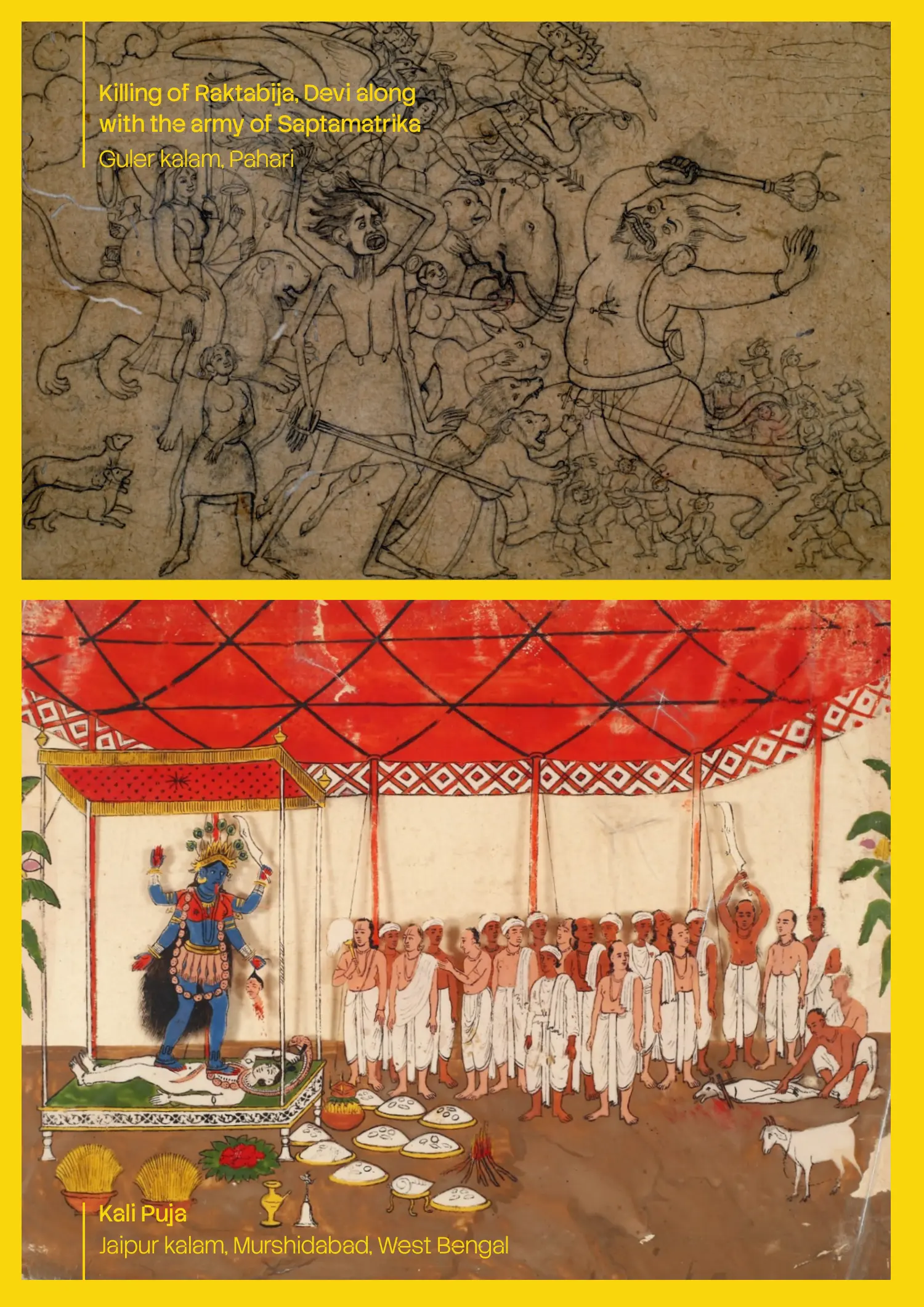
In the exhibition, the Goddess appears in multiple forms. She is Parvati or Uma, gentle and nurturing, often seen with her children. She is Lakshmi, associated with wealth and well being. She is also Kali, fierce and commanding, representing destruction and transformation. In more intense depictions, such as Chinnamasta, she challenges conventional ideas of beauty and divinity. Each form expands the understanding of what the Goddess can be, moving beyond a single identity into a spectrum of meanings.
EXHIBITIONS WE LOVED
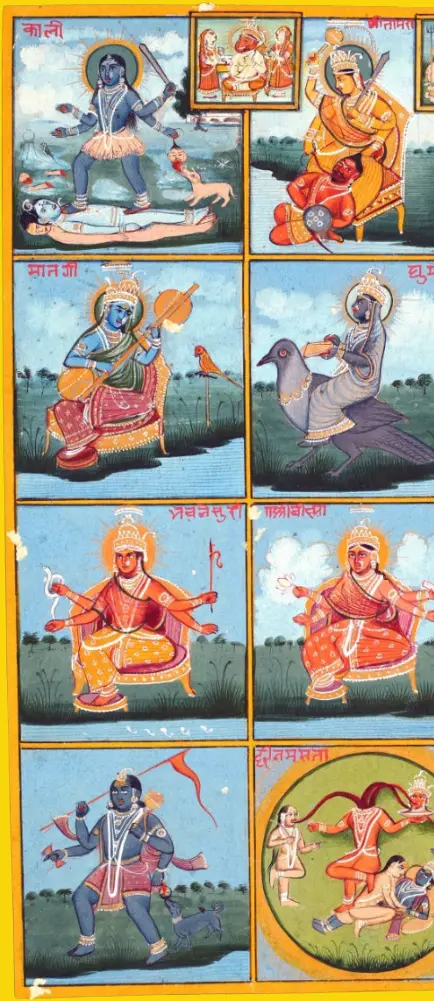
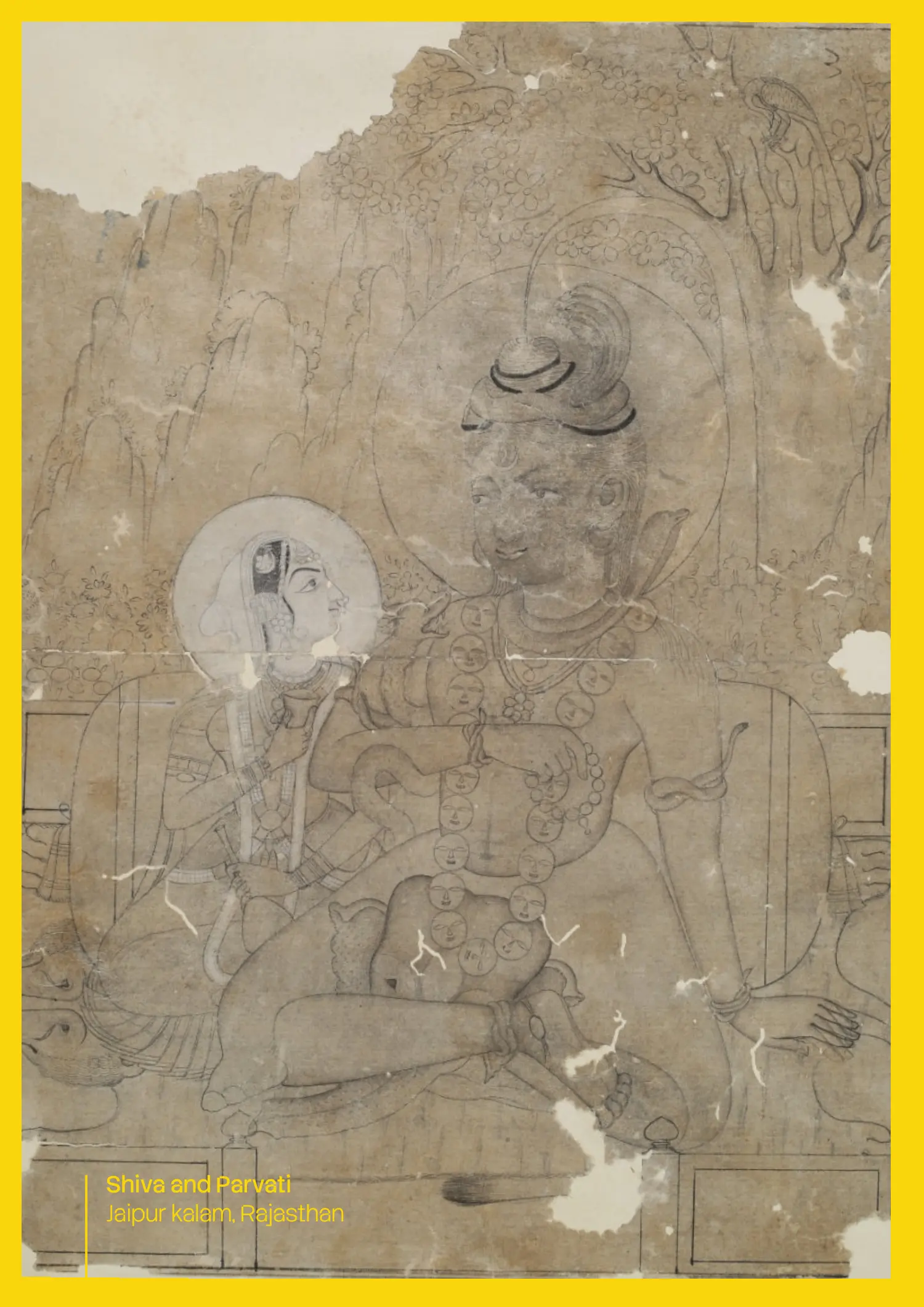
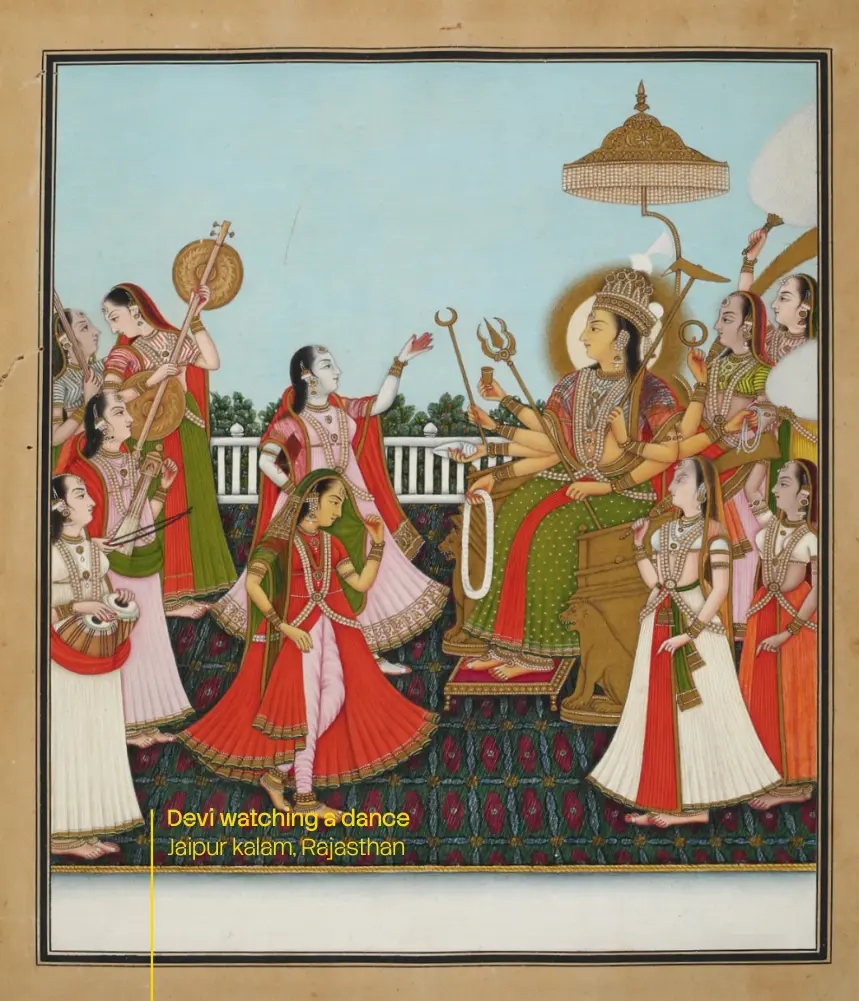
The exhibition brought together works from the Kasturbhai Lalbhai Collection and the N C Mehta Collection, along with folios from a Durga Saptashati manuscript housed at the Lalbhai Dalpatbhai Institute of Indology. Through these works, it created a dialogue between text and image, between what is written and what is imagined.
Devi watching a dance Jaipur kalam, Rajasthan
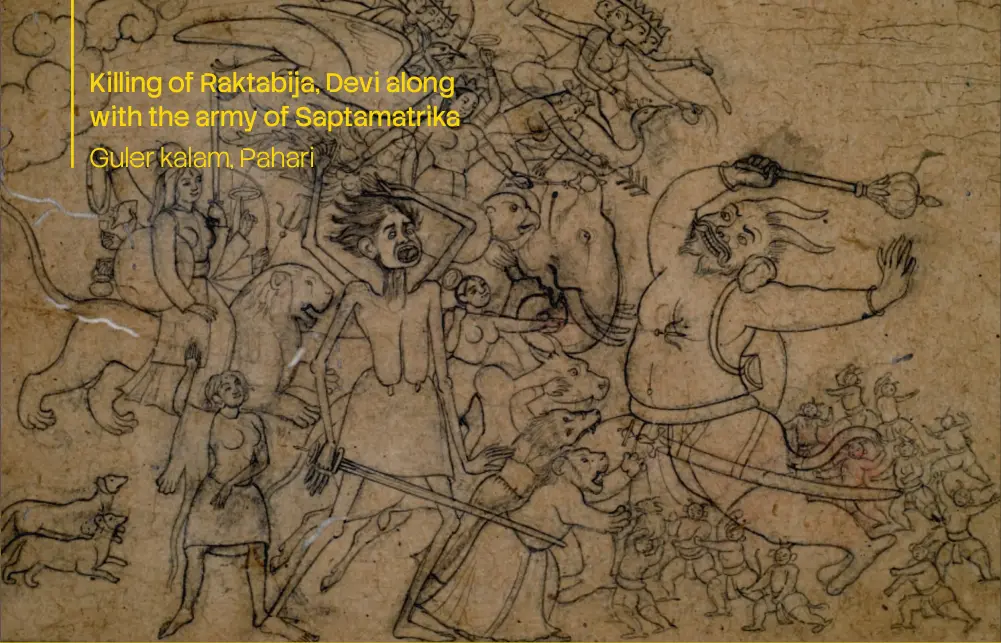
Killing of Raktabija, Devi along with the army of Saptamatrika
Guler kalam, Pahari
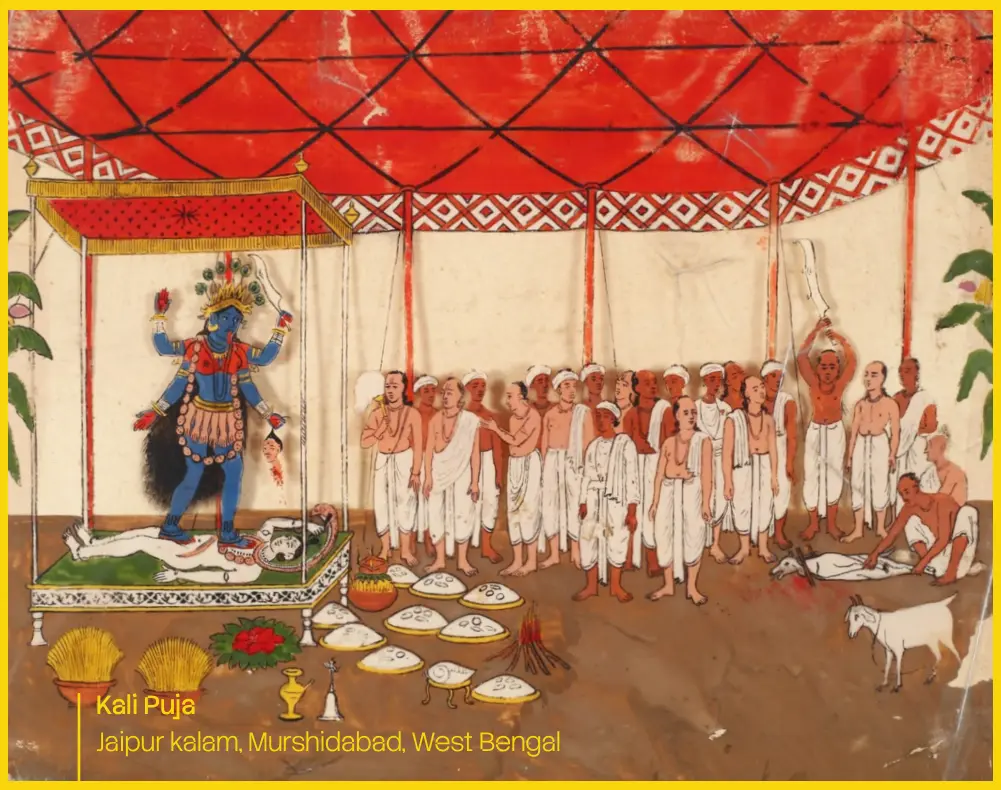
Kali Puja
Jaipur kalam, Murshidabad, West Bengal
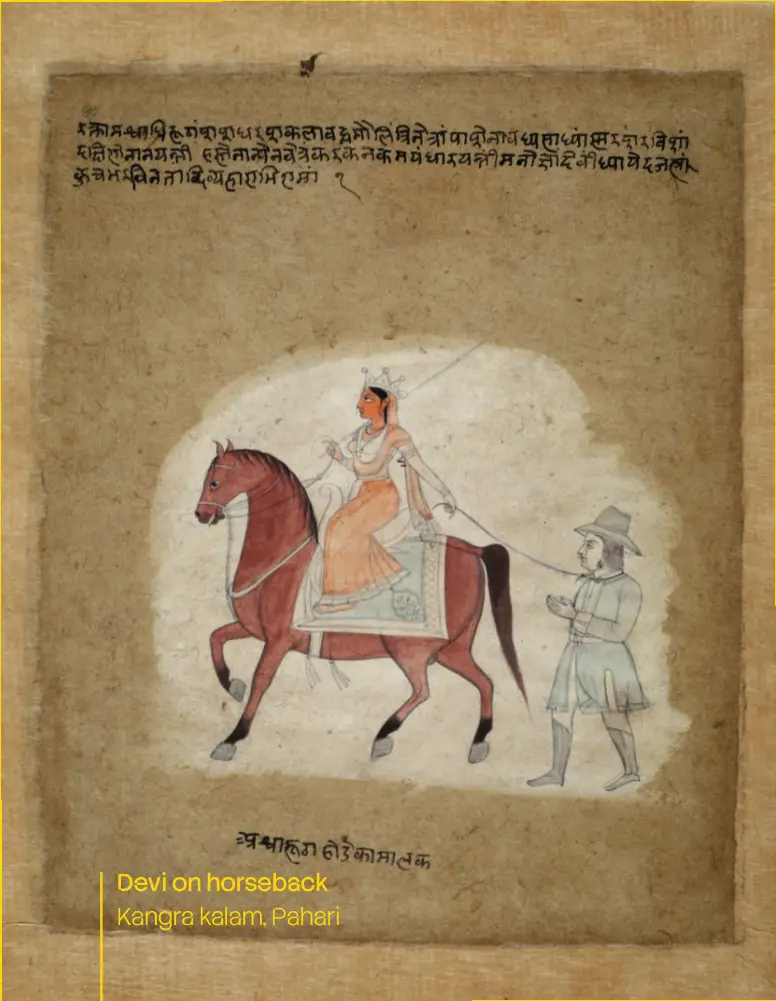
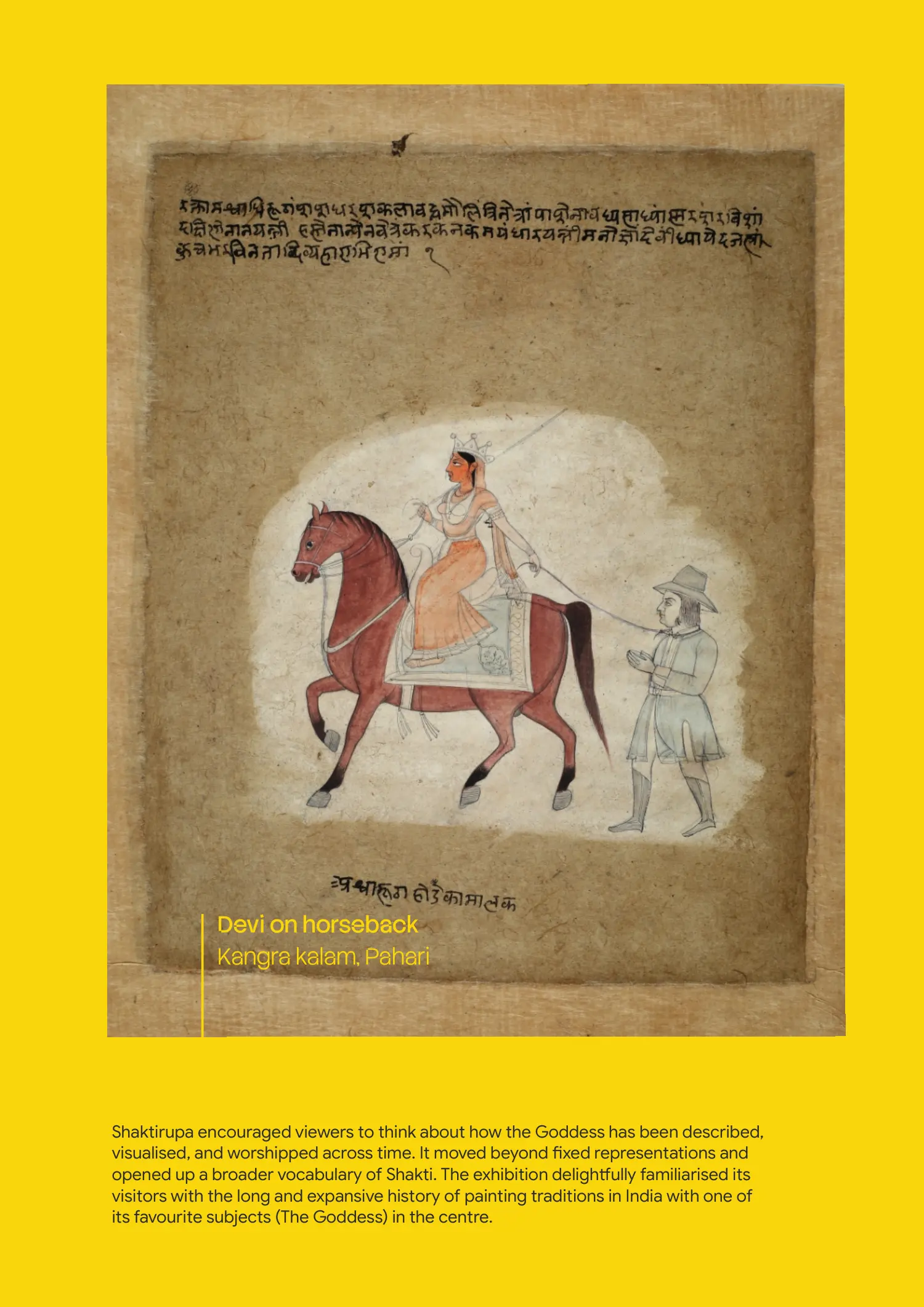
Devi on horseback Kangra kalam, Pahari
Shaktirupa encouraged viewers to think about how the Goddess has been described, visualised, and worshipped across time. It moved beyond fixed representations and opened up a broader vocabulary of Shakti. The exhibition delightfully familiarised its visitors with the long and expansive history of painting traditions in India with one of its favourite subjects (The Goddess) in the centre.
View original pages, photographs & credits
Originally published in Museum Mosaic 2025, published May 2026.
Part of our annual review. Descriptions reflect the publication’s reporting period.