India’s Annual Recap
India's rich cultural legacy is woven with threads of history, art, and heritage, each artefact telling a unique story of the subcontinent's diverse past. In this section, we journey through 100 museums across India, showcasing the most cherished pieces that define their collections. As we delve into these museums' prized possessions, we celebrate the stories they preserve and the connections they foster between the past and present. From ancient relics to modern masterpieces, each artefact is a testament to the ingenuity and creativity of the artisans and cultures that have shaped a timeless civilization.
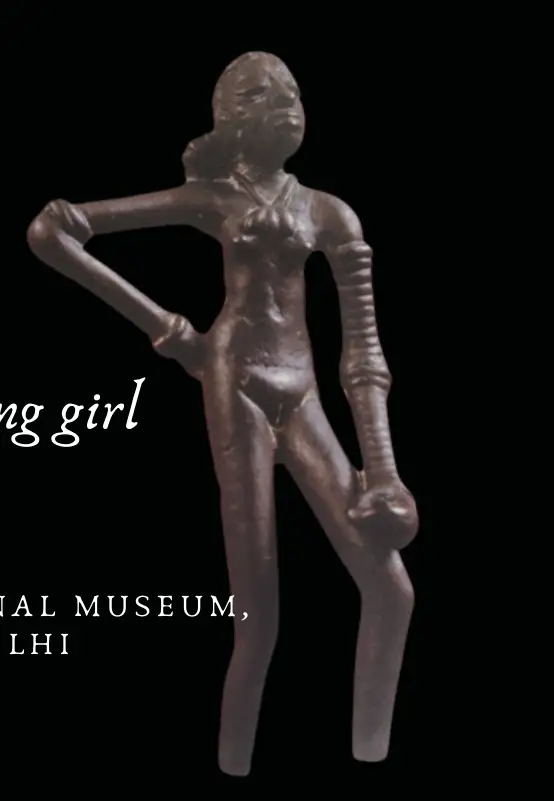
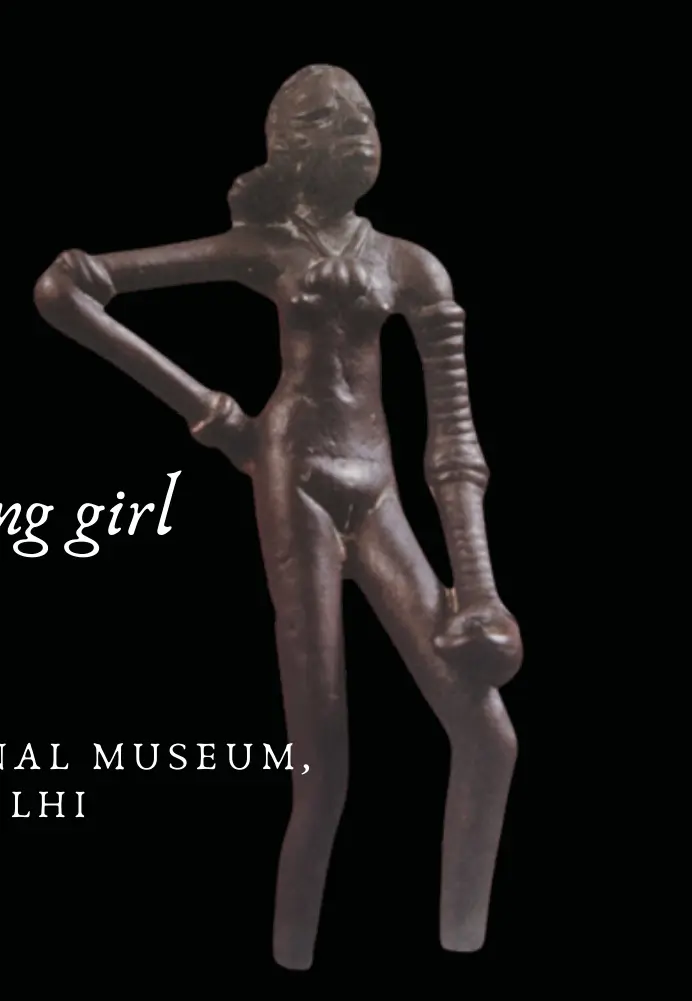
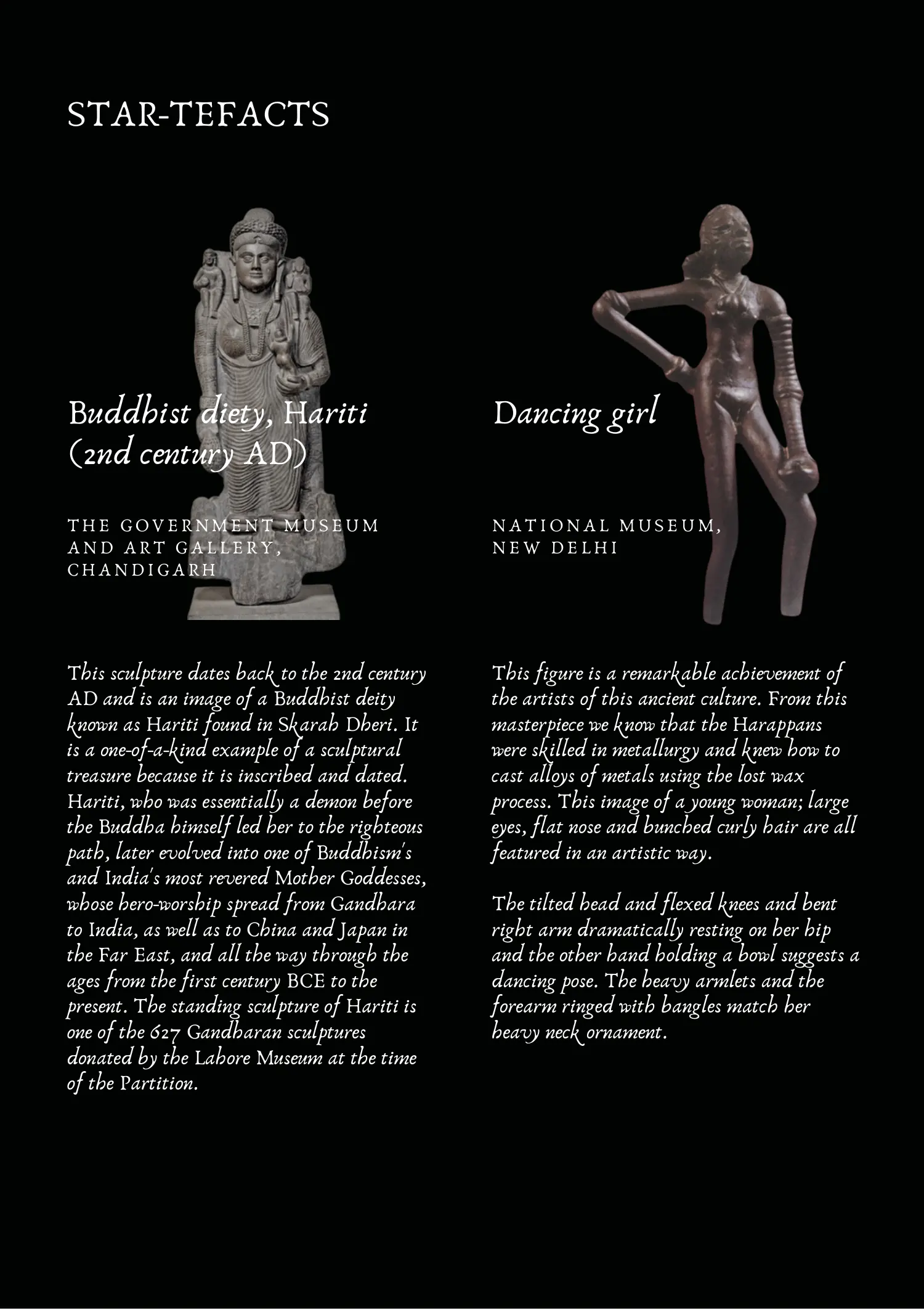
Dancing girl
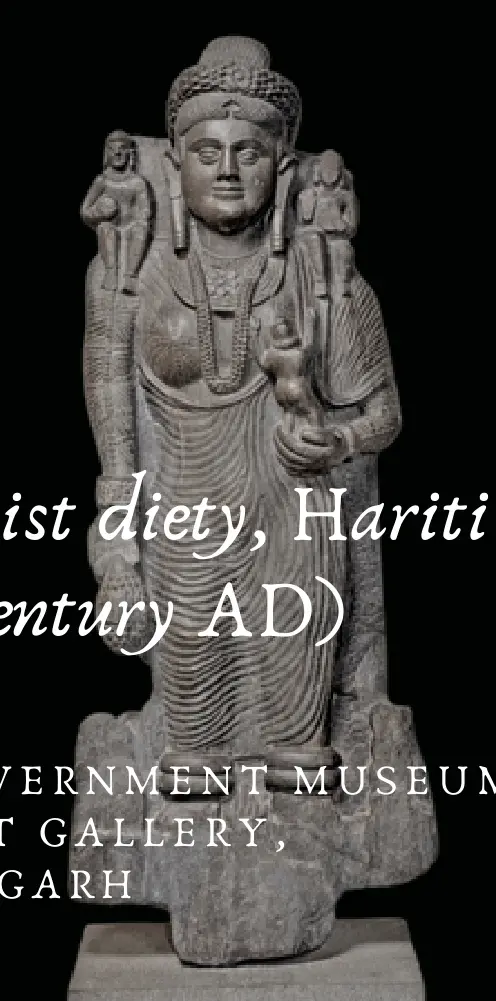
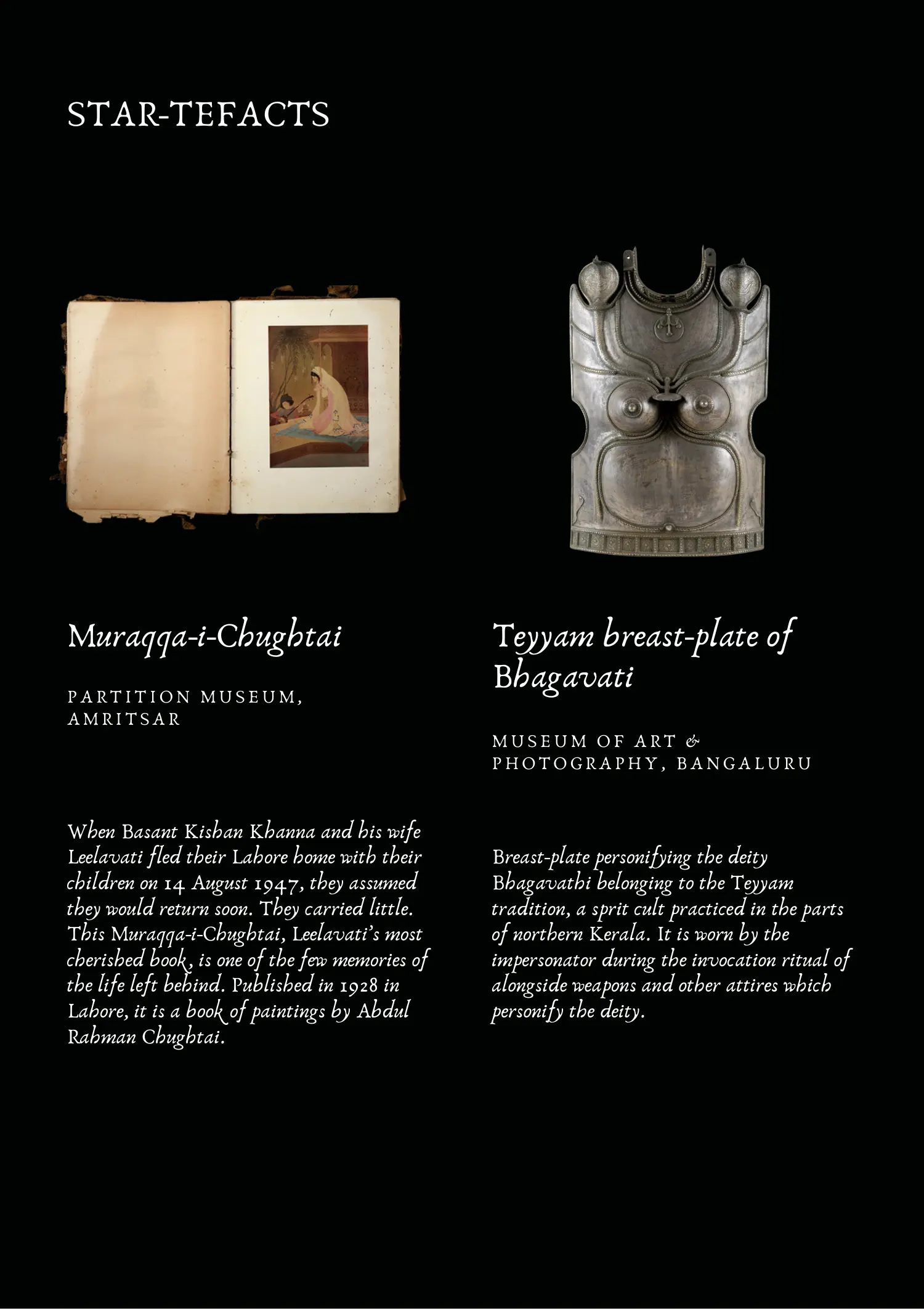
Buddhist diety, Hariti (2nd century AD)
N A T I O N A L M U S E U M , N E W D E L H I
T H E G O V E R N M E N T M U S E U M A N D A R T G A L L E R Y, C H A N D I G A R H
This figure is a remarkable achievement of the artists of this ancient culture. From this masterpiece we know that the Harappans were skilled in metallurgy and knew how to cast alloys of metals using the lost wax process. This image of a young woman; large eyes, flat nose and bunched curly hair are all featured in an artistic way.
The tilted head and flexed knees and bent right arm dramatically resting on her hip and the other hand holding a bowl suggests a dancing pose. The heavy armlets and the forearm ringed with bangles match her heavy neck ornament.
This sculpture dates back to the 2nd century AD and is an image of a Buddhist deity known as Hariti found in Skarah Dheri. It is a one-of-a-kind example of a sculptural treasure because it is inscribed and dated. Hariti, who was essentially a demon before the Buddha himself led her to the righteous path, later evolved into one of Buddhism's and India's most revered Mother Goddesses, whose hero-worship spread from Gandhara to India, as well as to China and Japan in the Far East, and all the way through the ages from the first century BCE to the present. The standing sculpture of Hariti is one of the 627 Gandharan sculptures donated by the Lahore Museum at the time of the Partition.
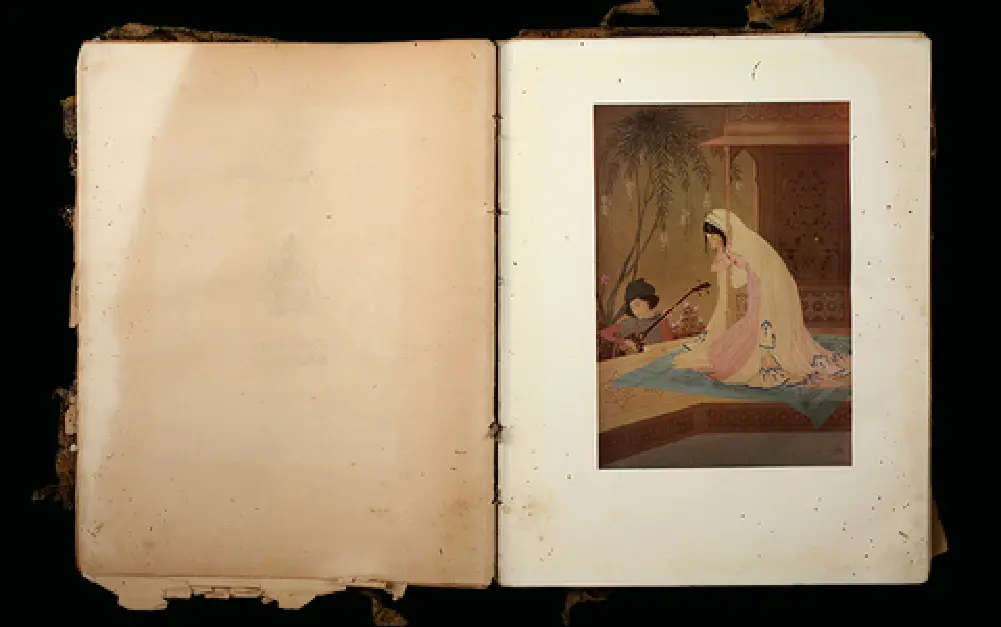
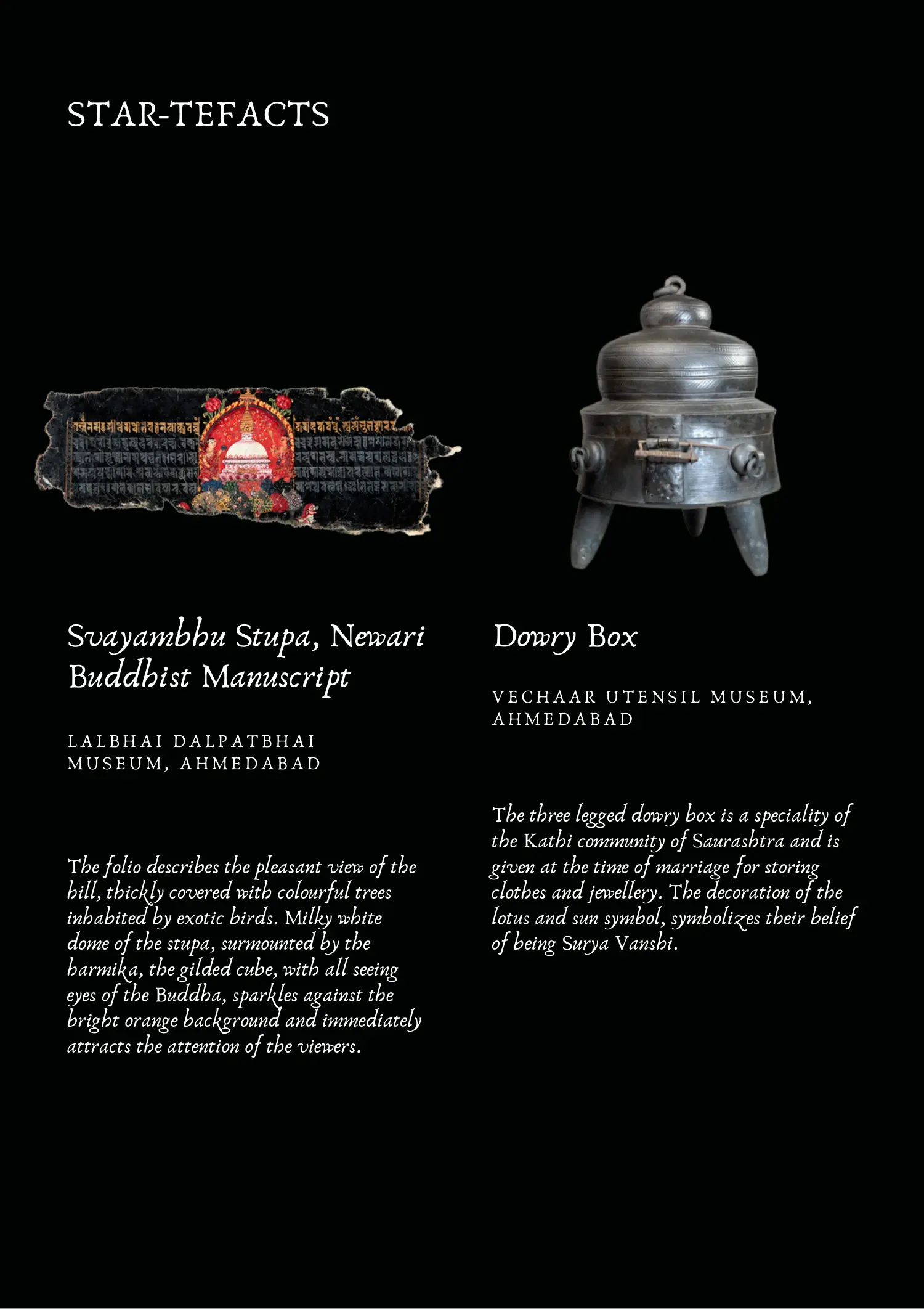
Muraqqa-i-Chughtai
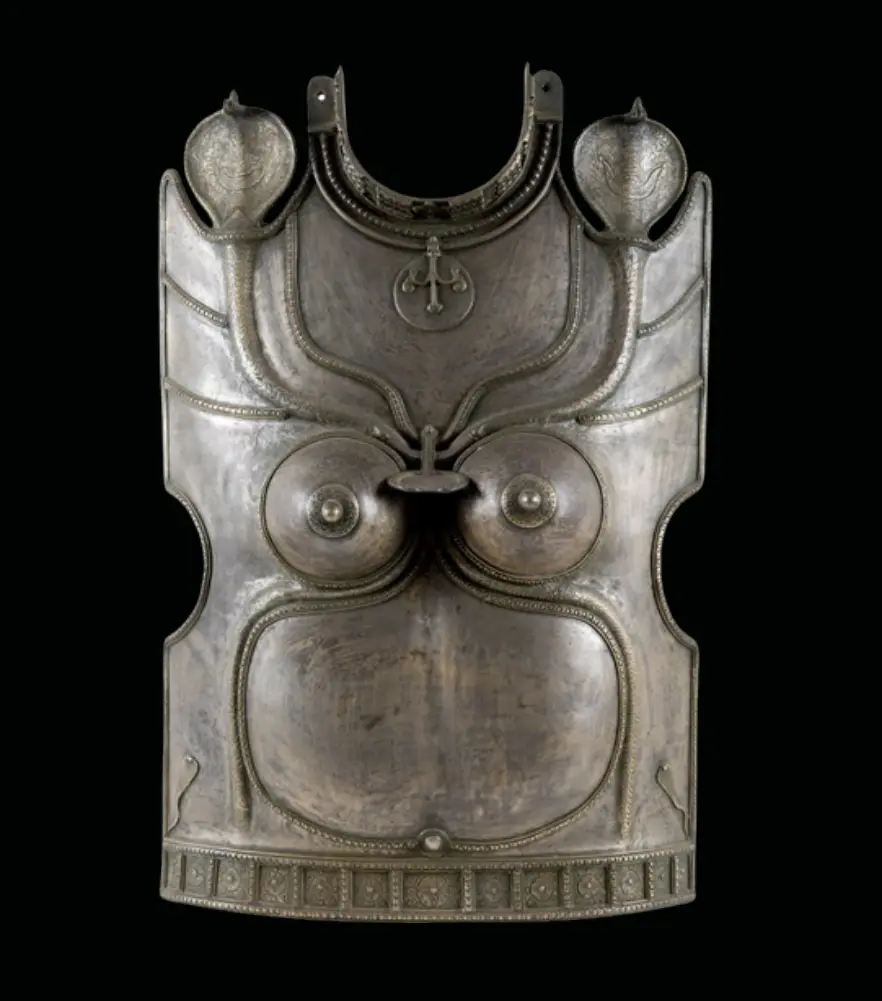
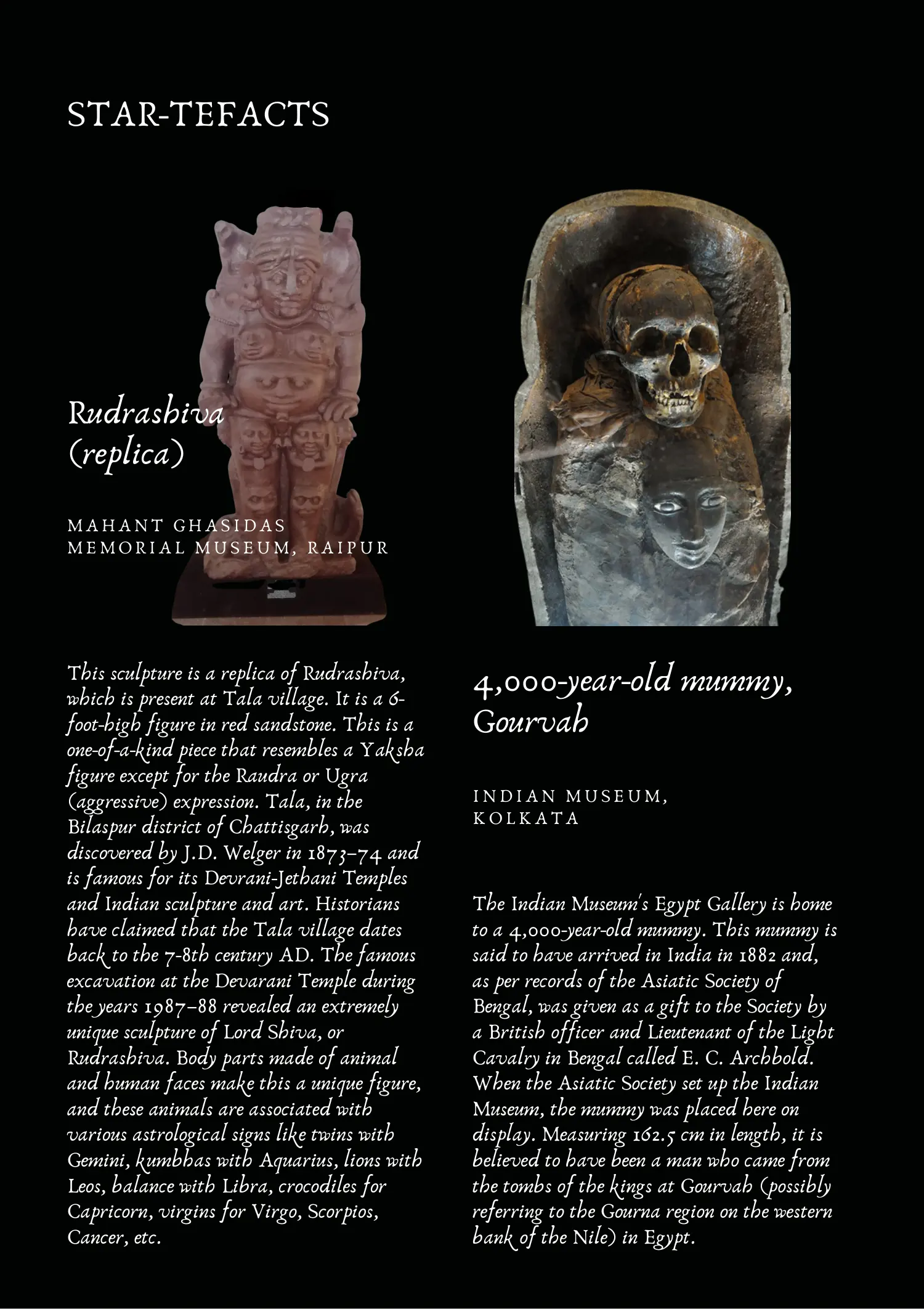
Teyyam breast-plate of Bhagavati
P A R T I T I O N M U S E U M , A M R I T S A R
M U S E U M O F A R T & P H O T O G R A P H Y , B A N G A L U R U
Breast-plate personifying the deity Bhagavathi belonging to the Teyyam tradition, a sprit cult practiced in the parts of northern Kerala. It is worn by the impersonator during the invocation ritual of alongside weapons and other attires which personify the deity.
When Basant Kishan Khanna and his wife Leelavati fled their Lahore home with their children on 14 August 1947, they assumed they would return soon. They carried little. This Muraqqa-i-Chughtai, Leelavati’s most cherished book, is one of the few memories of the life left behind. Published in 1928 in Lahore, it is a book of paintings by Abdul Rahman Chughtai.
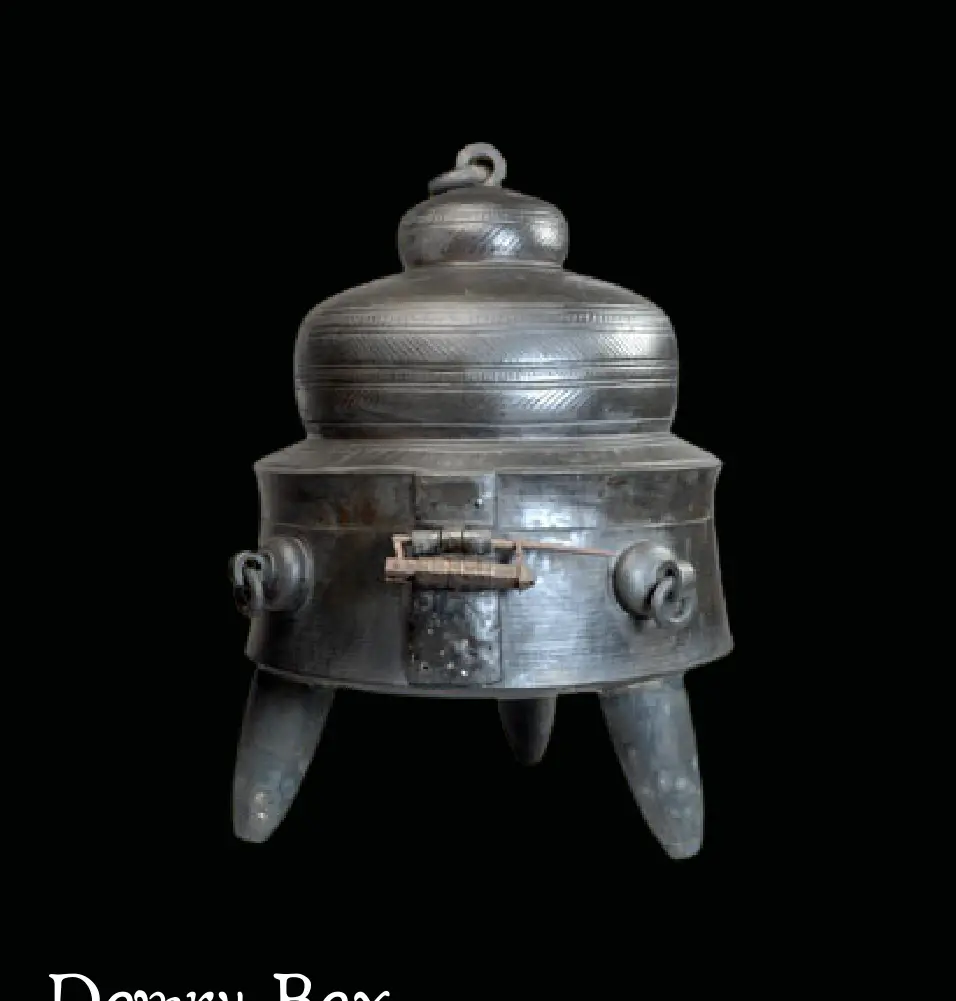
Dowry Box
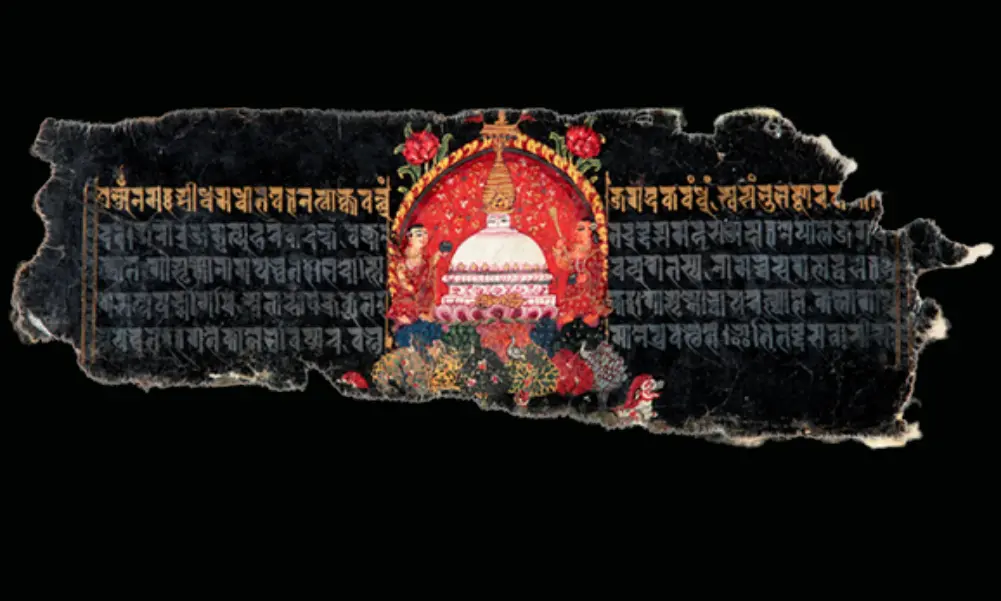
Svayambhu Stupa, Newari Buddhist Manuscript
V E C H A A R U T E N S I L M U S E U M , A H M E D A B A D
L A L B H A I D A L P A T B H A I M U S E U M , A H M E D A B A D
The three legged dowry box is a speciality of the Kathi community of Saurashtra and is given at the time of marriage for storing clothes and jewellery. The decoration of the lotus and sun symbol, symbolizes their belief of being Surya Vanshi.
The folio describes the pleasant view of the hill, thickly covered with colourful trees inhabited by exotic birds. Milky white dome of the stupa, surmounted by the harmika, the gilded cube, with all seeing eyes of the Buddha, sparkles against the bright orange background and immediately attracts the attention of the viewers.
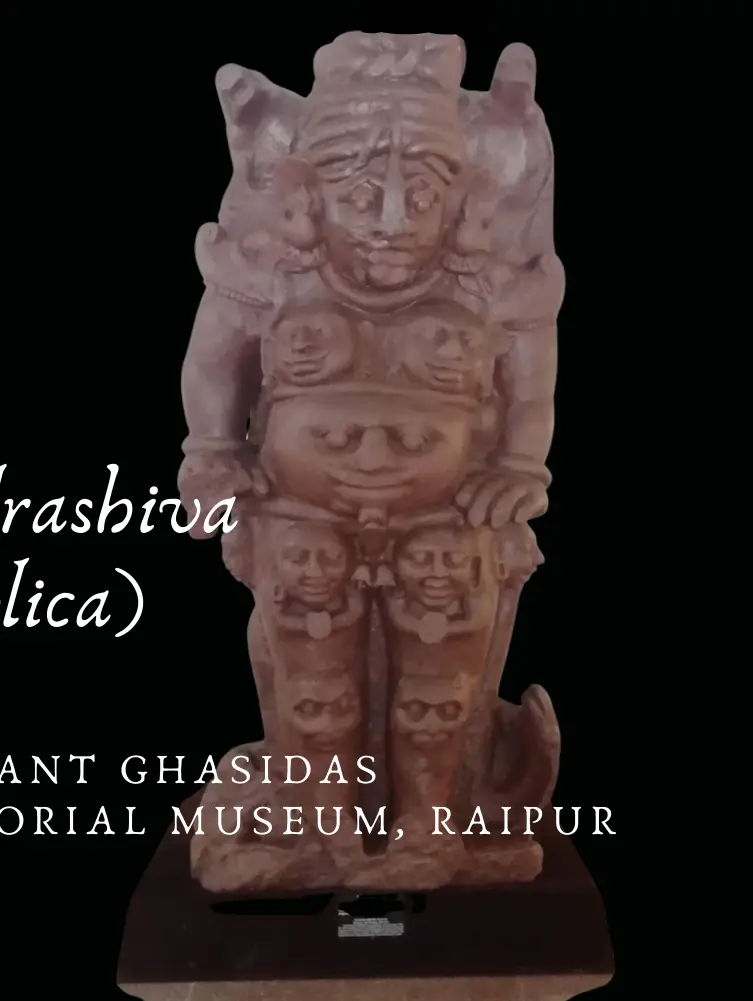
Rudrashiva (replica)
M A H A N T G H A S I D A S M E M O R I A L M U S E U M , R A I P U R
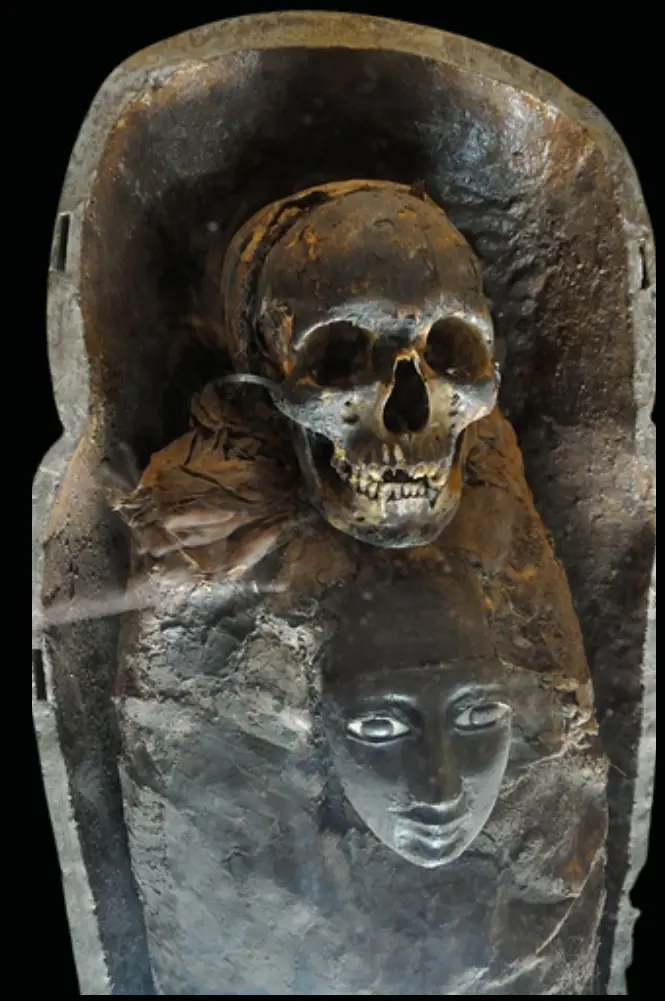
4,000-year-old mummy, Gourvah
I N D I A N M U S E U M , K O L K A T A
The Indian Museum's Egypt Gallery is home to a 4,000-year-old mummy. This mummy is said to have arrived in India in 1882 and, as per records of the Asiatic Society of Bengal, was given as a gift to the Society by a British officer and Lieutenant of the Light Cavalry in Bengal called E. C. Archbold. When the Asiatic Society set up the Indian Museum, the mummy was placed here on display. Measuring 162.5 cm in length, it is believed to have been a man who came from the tombs of the kings at Gourvah (possibly referring to the Gourna region on the western bank of the Nile) in Egypt.
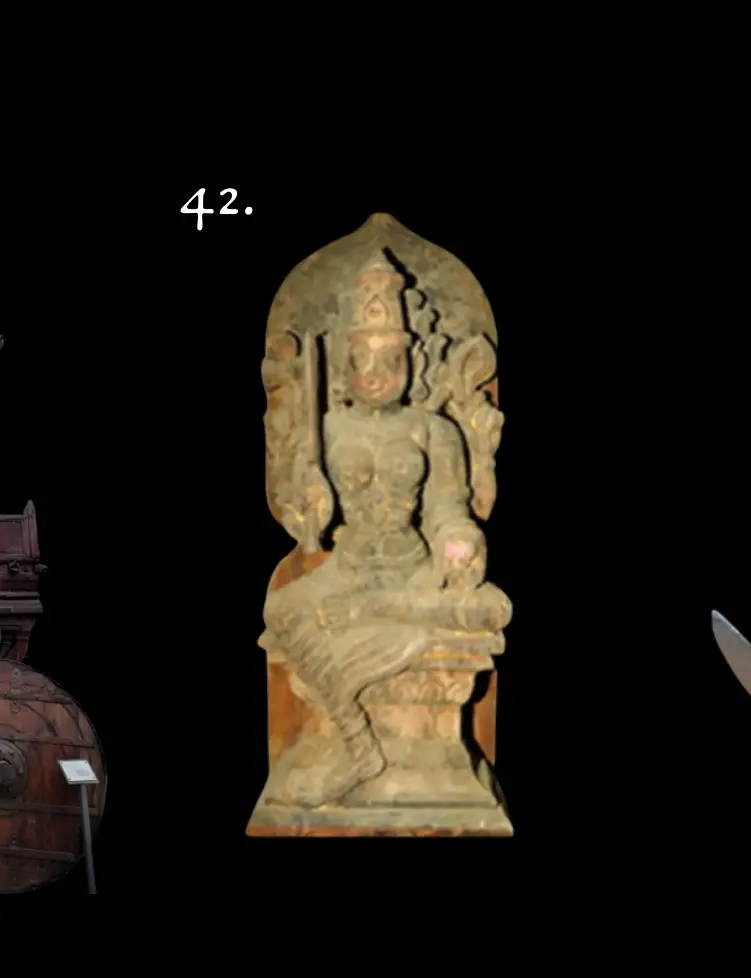
This sculpture is a replica of Rudrashiva, which is present at Tala village. It is a 6- foot-high figure in red sandstone. This is a one-of-a-kind piece that resembles a Yaksha figure except for the Raudra or Ugra (aggressive) expression. Tala, in the Bilaspur district of Chattisgarh, was discovered by J.D. Welger in 1873–74 and is famous for its Devrani-Jethani Temples and Indian sculpture and art. Historians have claimed that the Tala village dates back to the 7-8th century AD. The famous excavation at the Devarani Temple during the years 1987–88 revealed an extremely unique sculpture of Lord Shiva, or Rudrashiva. Body parts made of animal and human faces make this a unique figure, and these animals are associated with various astrological signs like twins with Gemini, kumbhas with Aquarius, lions with Leos, balance with Libra, crocodiles for Capricorn, virgins for Virgo, Scorpios, Cancer, etc.
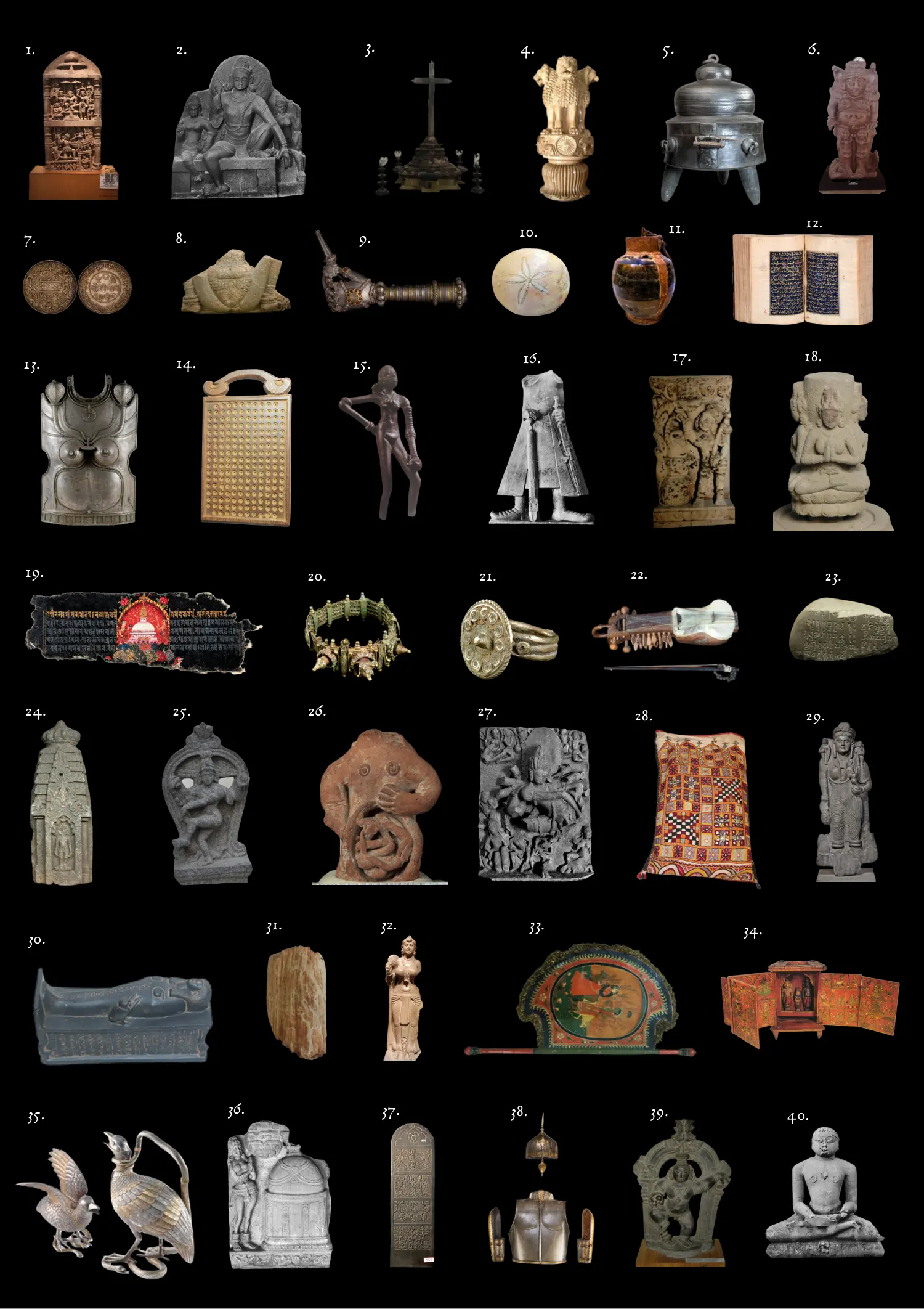
7. 8. 9. 10. 11. 12.
13. 14. 15. 16. 17. 18.
19. 20. 21. 22. 23.
24. 25. 26. 27. 28. 29.
30. 31. 32. 33. 34.
35. 36. 37. 38. 39. 40.
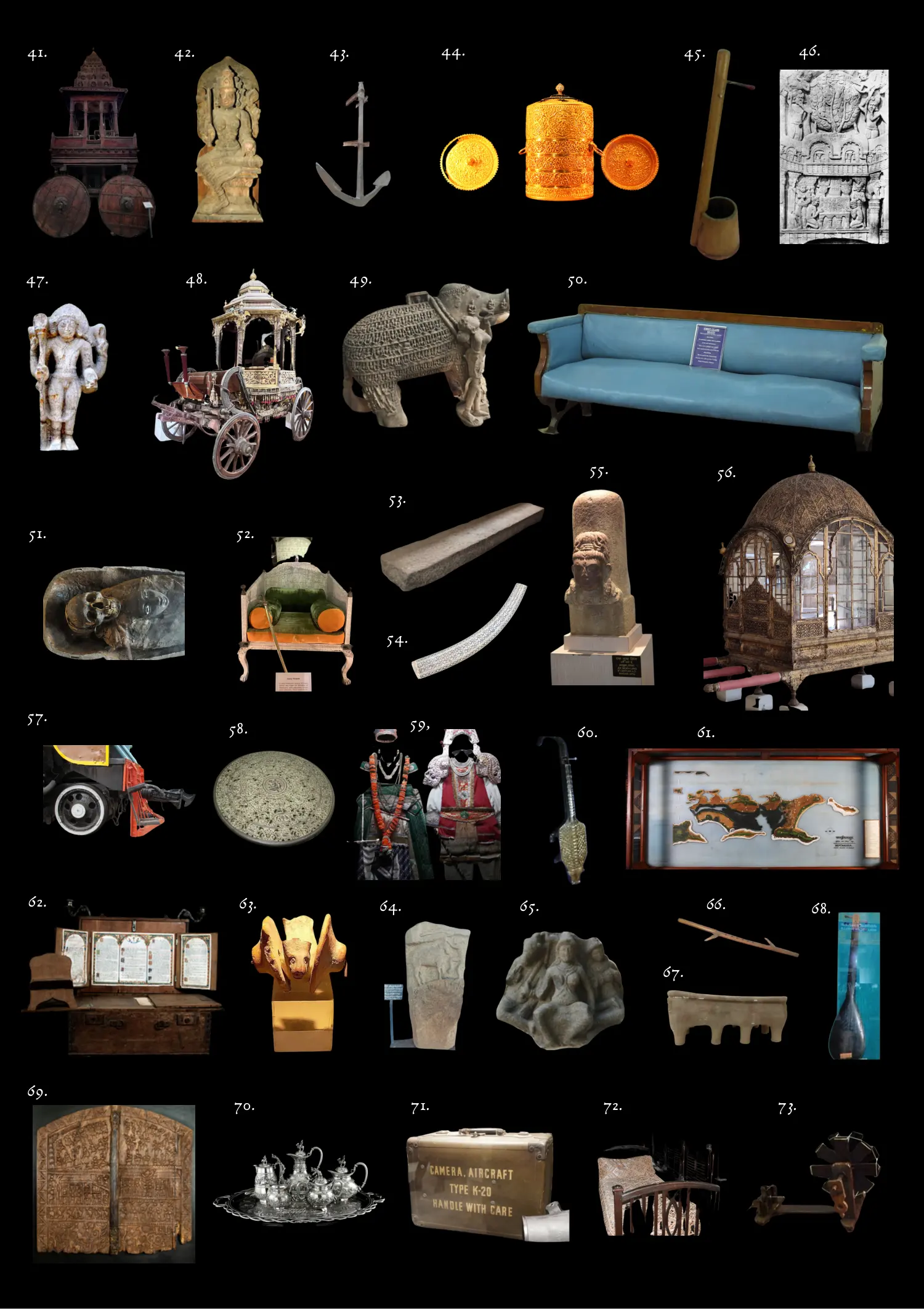
47. 48. 49. 50.
55. 56.
53.
51. 52.
54.
57. 58. 59, 60. 61.
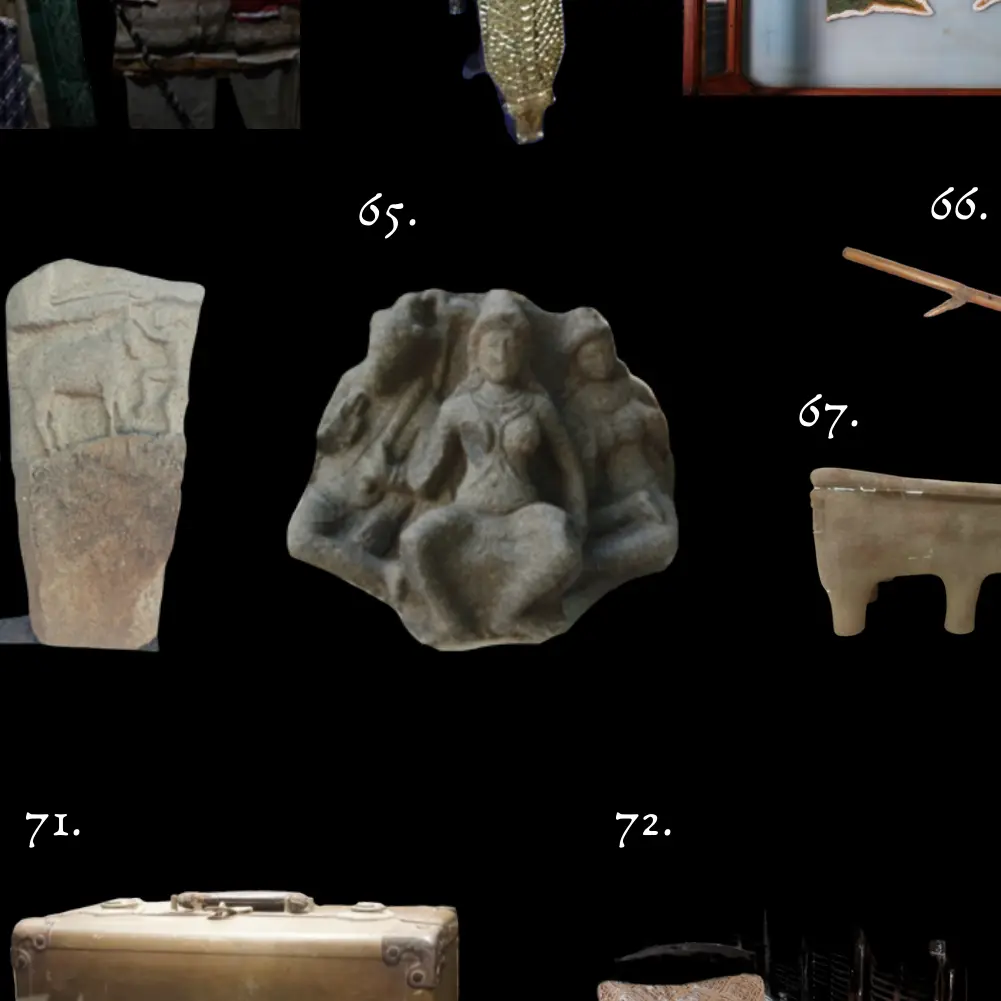
62. 63. 64. 65. 66.
68.
67.
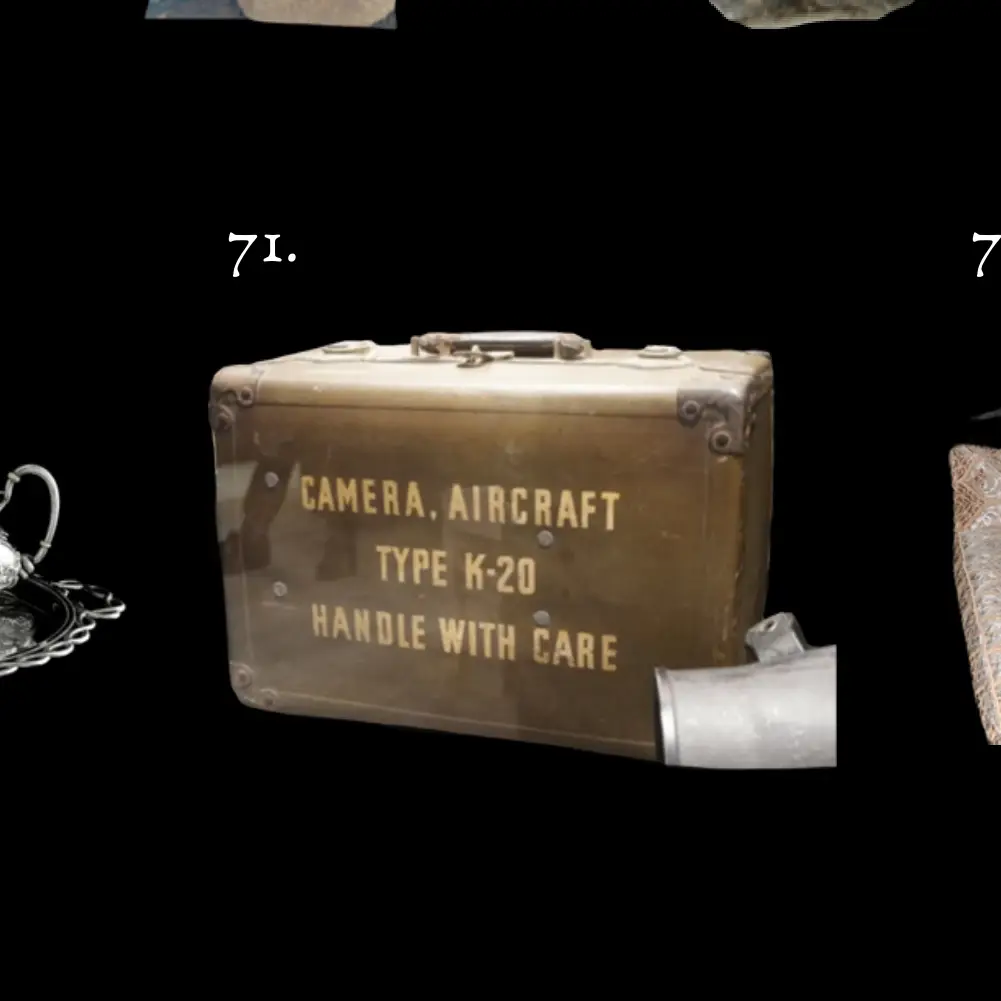
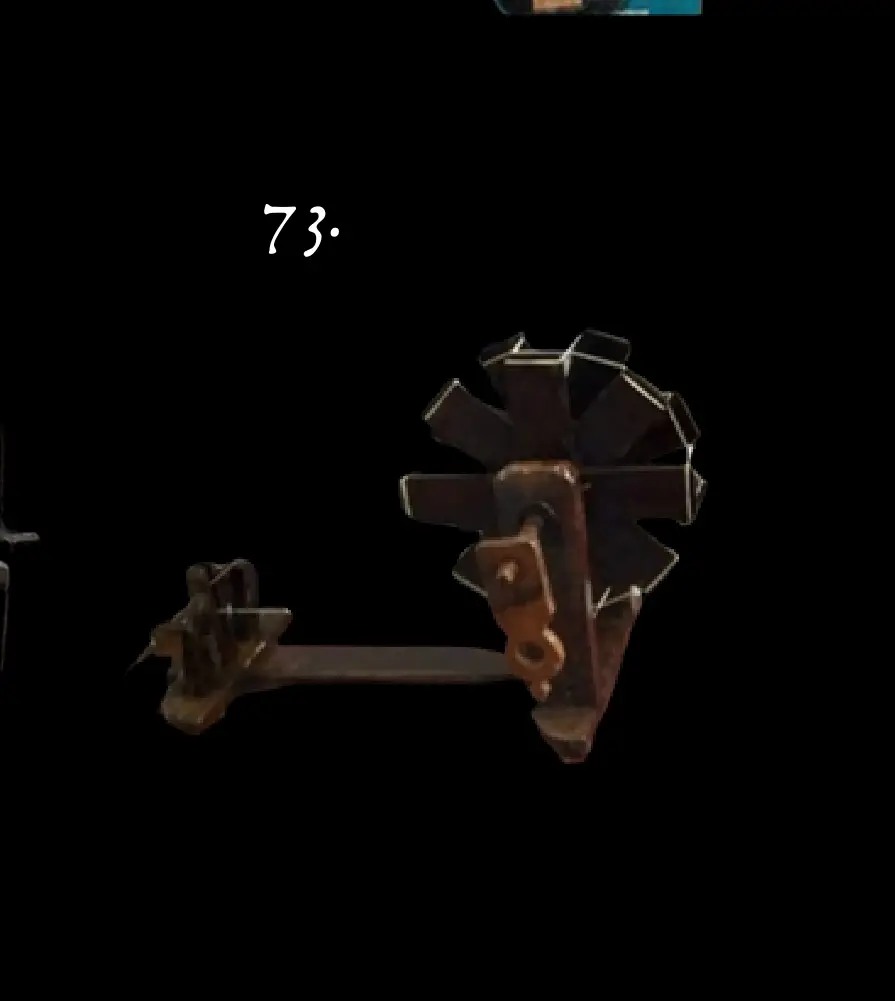
69. 70. 71. 72. 73.
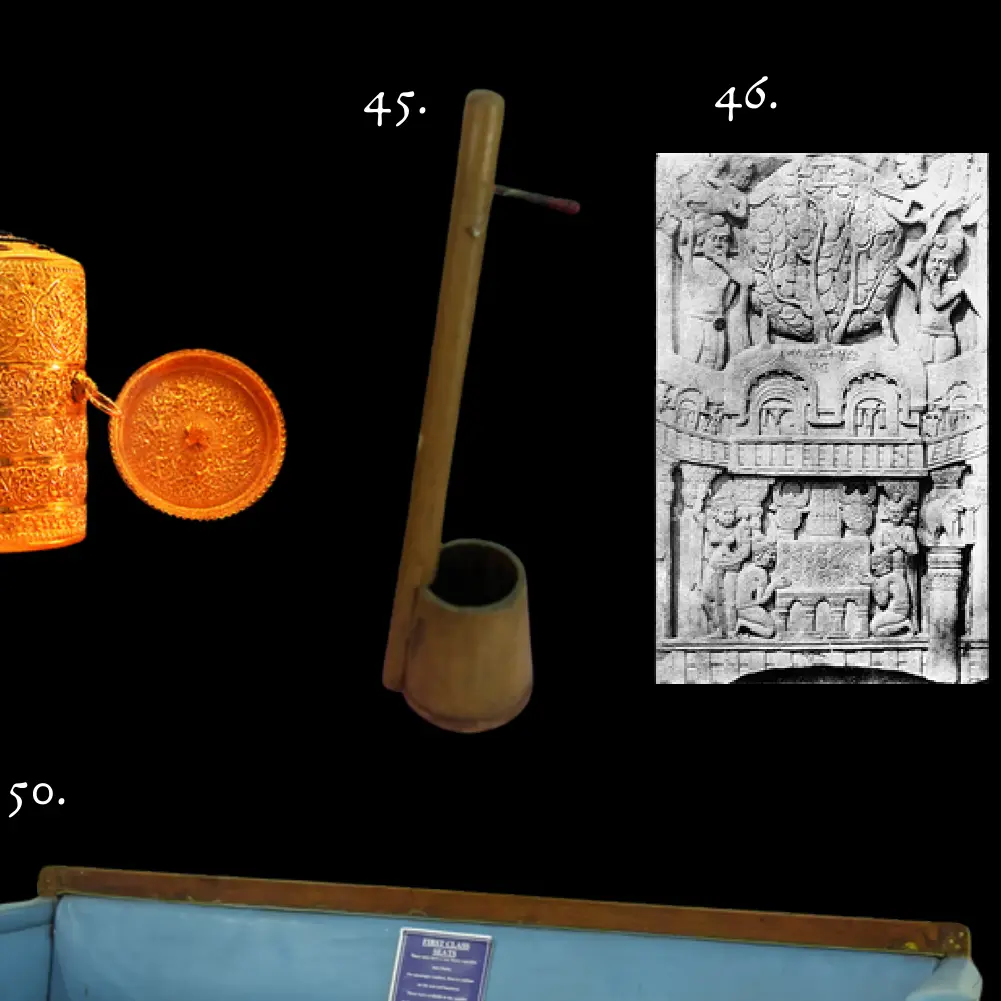
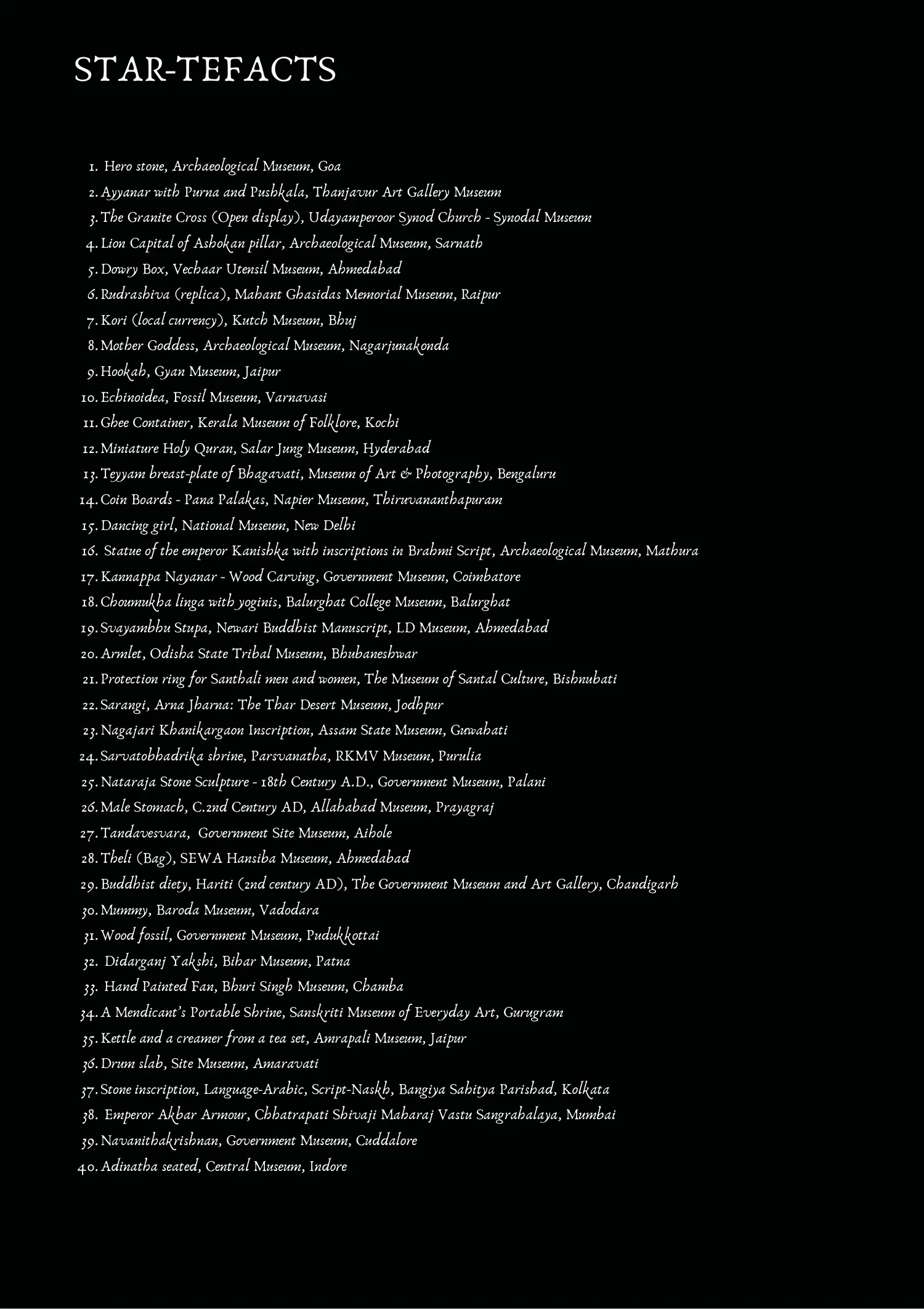
Hero stone, Archaeological Museum, Goa 1.
Ayyanar with Purna and Pushkala, Thanjavur Art Gallery Museum 2.
The Granite Cross (Open display), Udayamperoor Synod Church - Synodal Museum 3.
Lion Capital of Ashokan pillar, Archaeological Museum, Sarnath 4.
Dowry Box, Vechaar Utensil Museum, Ahmedabad 5.
Rudrashiva (replica), Mahant Ghasidas Memorial Museum, Raipur 6.
Kori (local currency), Kutch Museum, Bhuj 7.
Mother Goddess, Archaeological Museum, Nagarjunakonda 8.
Hookah, Gyan Museum, Jaipur 9.
Echinoidea, Fossil Museum, Varnavasi 10.
Ghee Container, Kerala Museum of Folklore, Kochi 11.
Miniature Holy Quran, Salar Jung Museum, Hyderabad 12.
Teyyam breast-plate of Bhagavati, Museum of Art & Photography, Bengaluru 13.
Coin Boards - Pana Palakas, Napier Museum, Thiruvananthapuram 14.
Dancing girl, National Museum, New Delhi 15.
Statue of the emperor Kanishka with inscriptions in Brahmi Script, Archaeological Museum, Mathura 16.
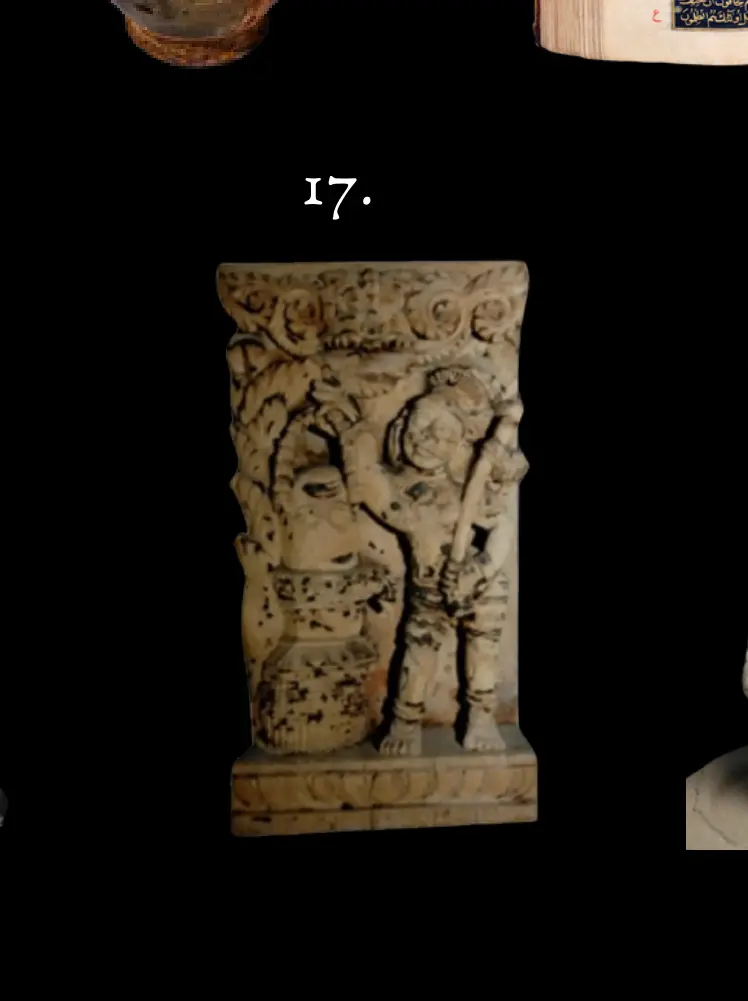
Kannappa Nayanar - Wood Carving, Government Museum, Coimbatore 17.
Choumukha linga with yoginis, Balurghat College Museum, Balurghat 18.
Svayambhu Stupa, Newari Buddhist Manuscript, LD Museum, Ahmedabad 19.
Armlet, Odisha State Tribal Museum, Bhubaneshwar 20.
Protection ring for Santhali men and women, The Museum of Santal Culture, Bishnubati 21.
Sarangi, Arna Jharna: The Thar Desert Museum, Jodhpur 22.
Nagajari Khanikargaon Inscription, Assam State Museum, Guwahati 23.
Sarvatobhadrika shrine, Parsvanatha, RKMV Museum, Purulia 24.
Nataraja Stone Sculpture - 18th Century A.D., Government Museum, Palani 25.
Male Stomach, C.2nd Century AD, Allahabad Museum, Prayagraj 26.
Tandavesvara, Government Site Museum, Aihole 27.
Theli (Bag), SEWA Hansiba Museum, Ahmedabad 28.
Buddhist diety, Hariti (2nd century AD), The Government Museum and Art Gallery, Chandigarh 29.
Mummy, Baroda Museum, Vadodara 30.
Wood fossil, Government Museum, Pudukkottai 31.
Didarganj Yakshi, Bihar Museum, Patna 32.
Hand Painted Fan, Bhuri Singh Museum, Chamba 33.
A Mendicant’s Portable Shrine, Sanskriti Museum of Everyday Art, Gurugram 34.
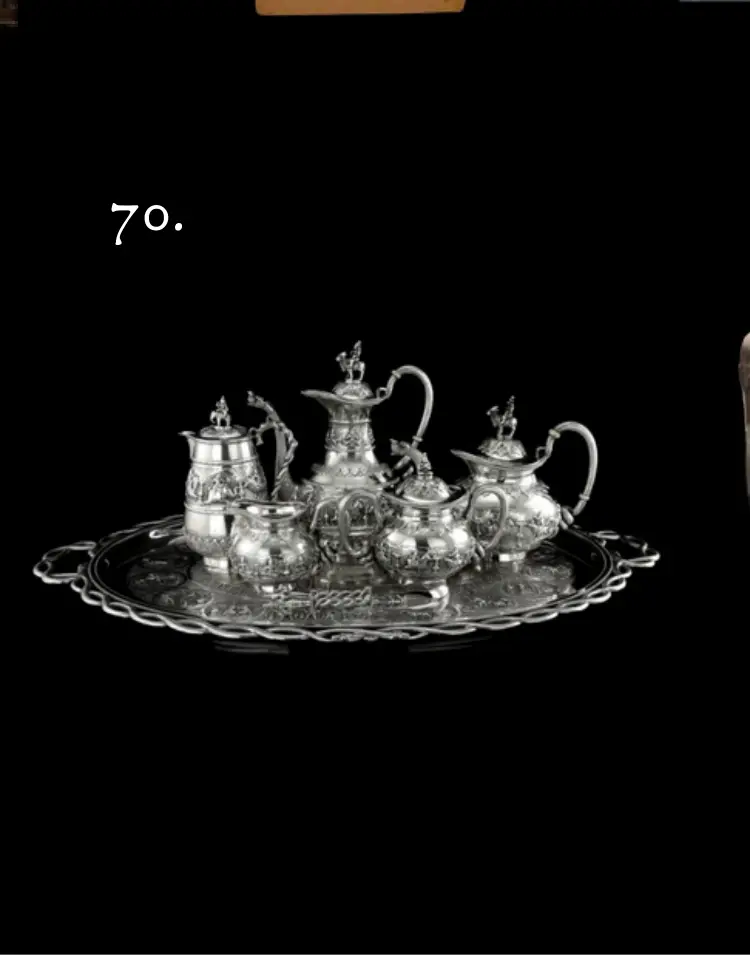
Kettle and a creamer from a tea set, Amrapali Museum, Jaipur 35.
Drum slab, Site Museum, Amaravati 36.
Stone inscription, Language-Arabic, Script-Naskh, Bangiya Sahitya Parishad, Kolkata 37.
Emperor Akbar Armour, Chhatrapati Shivaji Maharaj Vastu Sangrahalaya, Mumbai 38.
Navanithakrishnan, Government Museum, Cuddalore 39.
Adinatha seated, Central Museum, Indore 40.
View original pages, photographs & credits
Originally published in Museum Mosaic 2023, published 2024.
Part of our annual review. Descriptions reflect the publication’s reporting period.