Birds have always held a special place in our visual and cultural imagination. They glide easily between earth and sky, between the seen and the unseen, meanings that often go beyond their form. In art, they may appear as divine companions or demonic characters, storytellers or silent witnesses to moments unfolding around them, or sometimes simply as a part of nature and our world. As these birds appear fluently in our visual culture, this trail invites you to follow them as they glide across museum collections. From one artwork to another, from one museum to the next, the birds become your guide, leading you through different spaces, time periods and cultures. As you move along, watch how their roles change. A bird may take the form of a demon to be defeated or stand as a symbol of beauty and grace. It may interrupt a story, carry a message or quietly observe from the edges of a scene. But as you pause and look closely, you begin to see how they connect artworks that may seem distant at first.
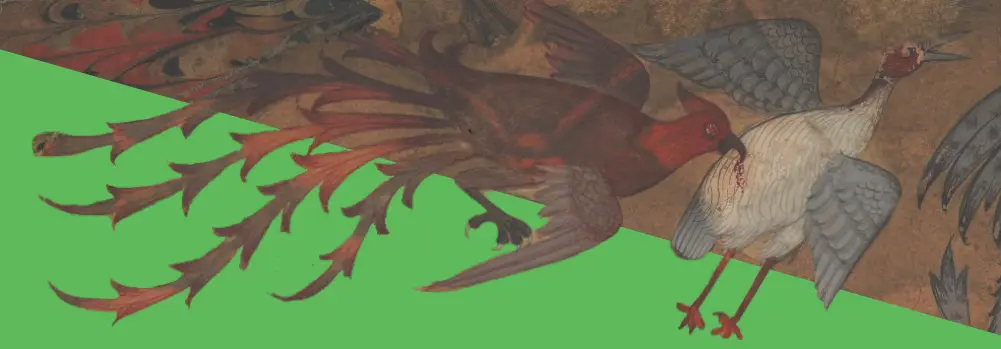
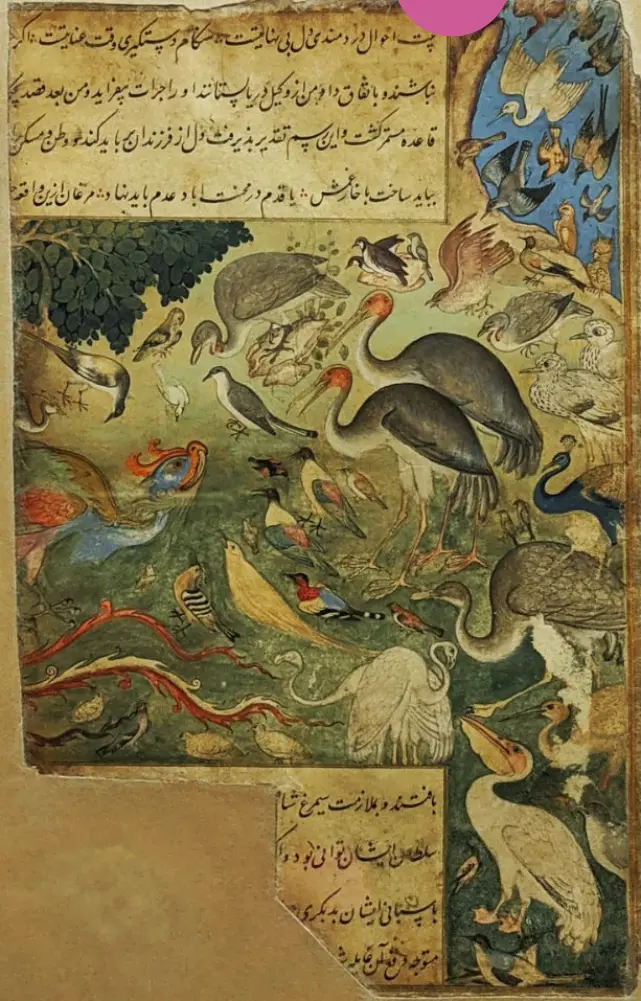
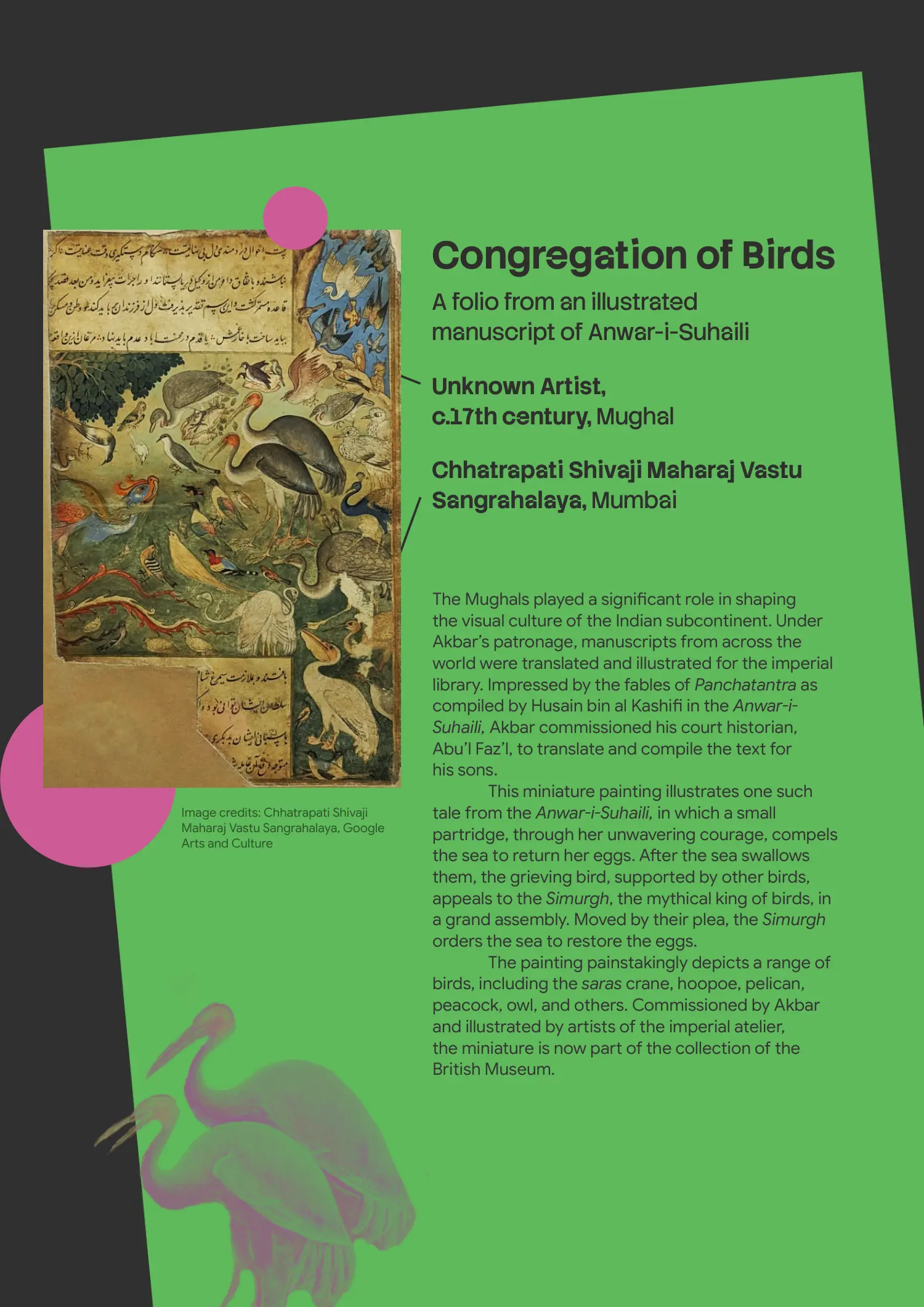
Congregation of Birds
A folio from an illustrated manuscript of Anwar-i-Suhaili
Unknown Artist, c.17th century, Mughal
Chhatrapati Shivaji Maharaj Vastu Sangrahalaya, Mumbai
Image credits: Chhatrapati Shivaji Maharaj Vastu Sangrahalaya, Google Arts and Culture
The Mughals played a significant role in shaping the visual culture of the Indian subcontinent. Under Akbar’s patronage, manuscripts from across the world were translated and illustrated for the imperial library. Impressed by the fables of Panchatantra as compiled by Husain bin al Kashifi in the Anwar-i- Suhaili, Akbar commissioned his court historian, Abu’l Faz’l, to translate and compile the text for his sons. This miniature painting illustrates one such tale from the Anwar-i-Suhaili, in which a small partridge, through her unwavering courage, compels the sea to return her eggs. After the sea swallows them, the grieving bird, supported by other birds, appeals to the Simurgh, the mythical king of birds, in a grand assembly. Moved by their plea, the Simurgh orders the sea to restore the eggs. The painting painstakingly depicts a range of birds, including the saras crane, hoopoe, pelican, peacock, owl, and others. Commissioned by Akbar and illustrated by artists of the imperial atelier, the miniature is now part of the collection of the British Museum.
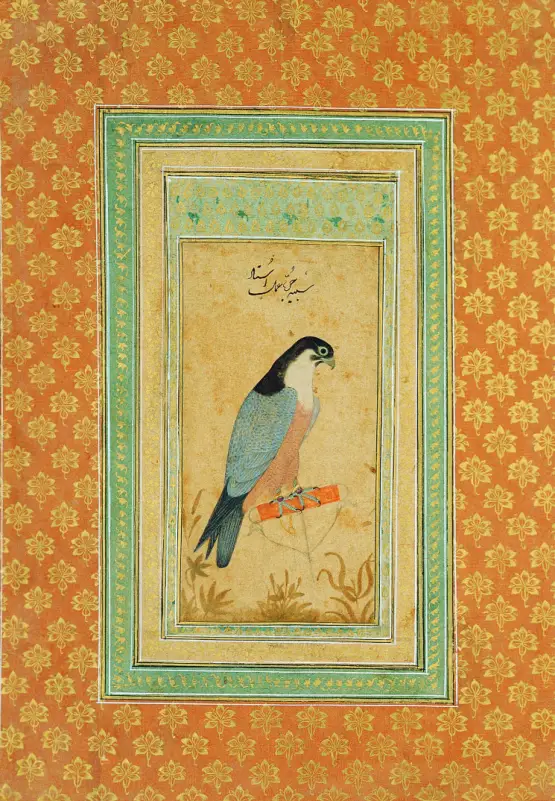
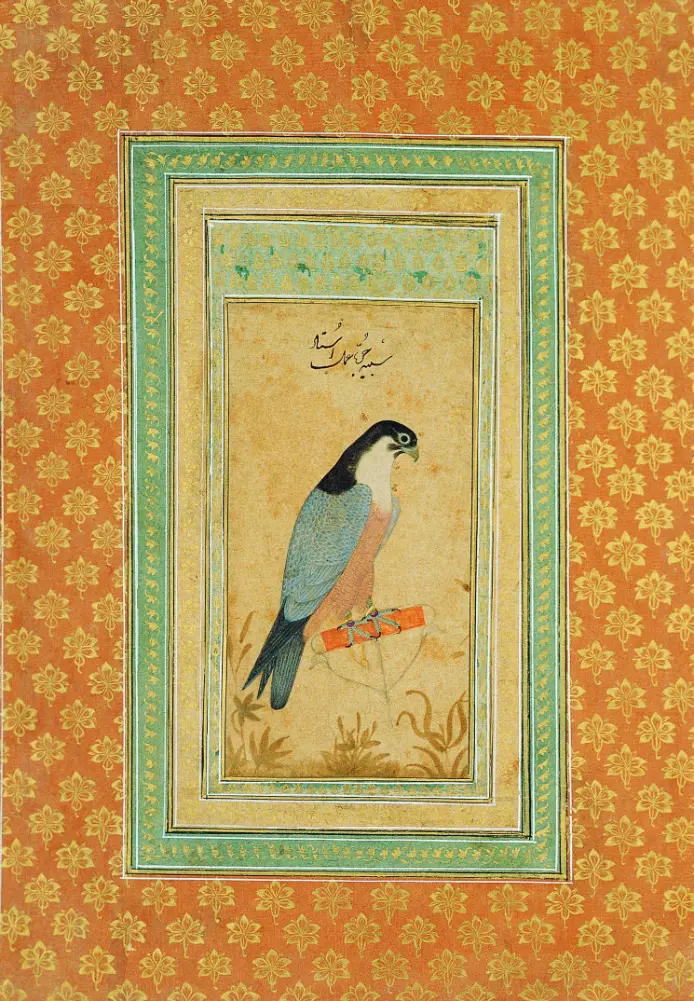
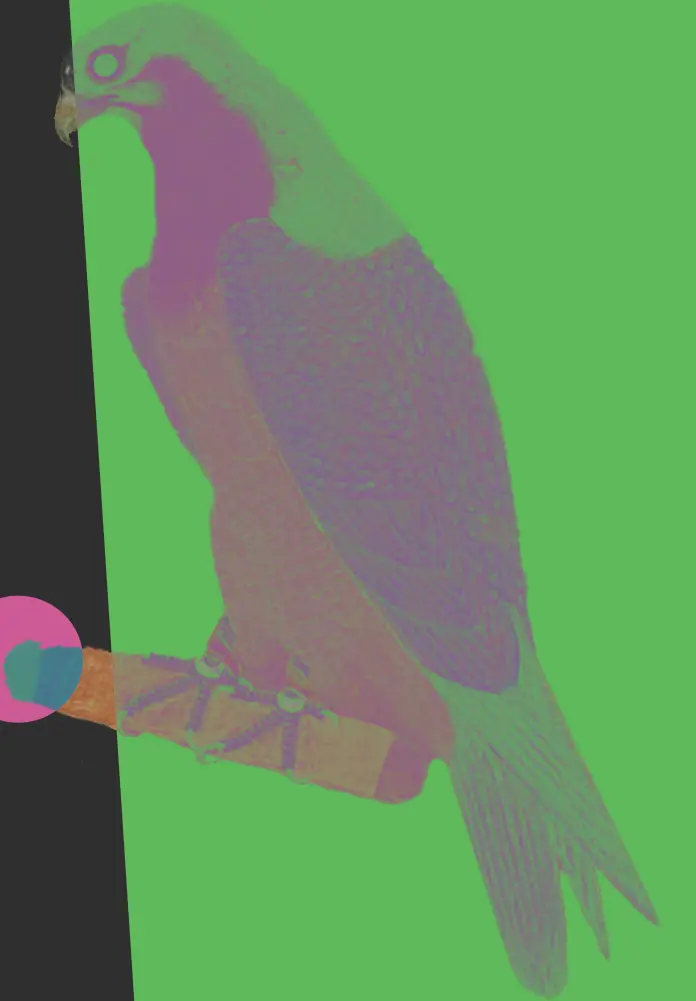
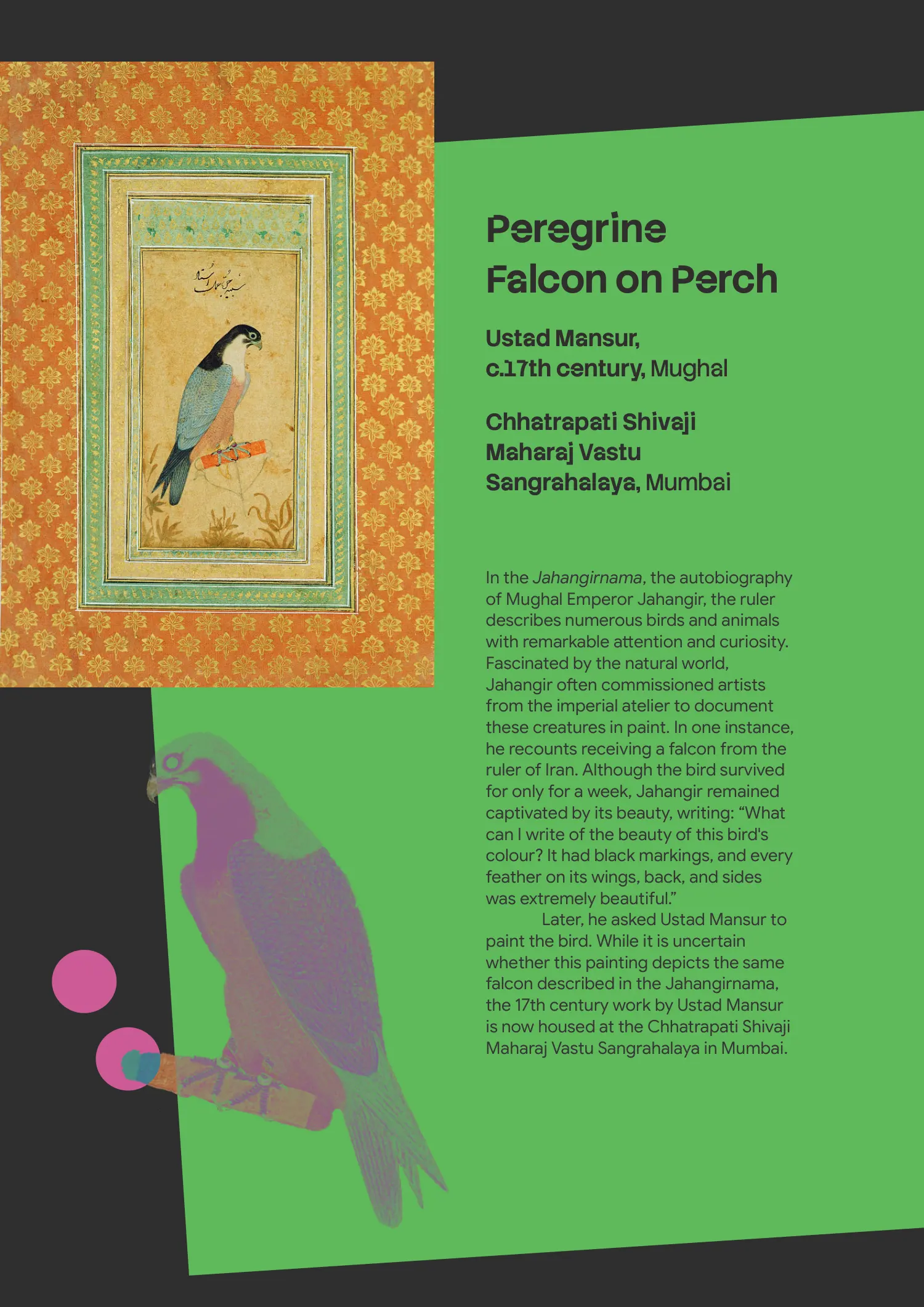
Peregrine Falcon on Perch
Ustad Mansur, c.17th century, Mughal
Chhatrapati Shivaji Maharaj Vastu Sangrahalaya, Mumbai
In the Jahangirnama, the autobiography of Mughal Emperor Jahangir, the ruler describes numerous birds and animals with remarkable attention and curiosity. Fascinated by the natural world, Jahangir often commissioned artists from the imperial atelier to document these creatures in paint. In one instance, he recounts receiving a falcon from the ruler of Iran. Although the bird survived for only for a week, Jahangir remained captivated by its beauty, writing: “What can I write of the beauty of this bird's colour? It had black markings, and every feather on its wings, back, and sides was extremely beautiful.” Later, he asked Ustad Mansur to paint the bird. While it is uncertain whether this painting depicts the same falcon described in the Jahangirnama, the 17th century work by Ustad Mansur is now housed at the Chhatrapati Shivaji Maharaj Vastu Sangrahalaya in Mumbai.
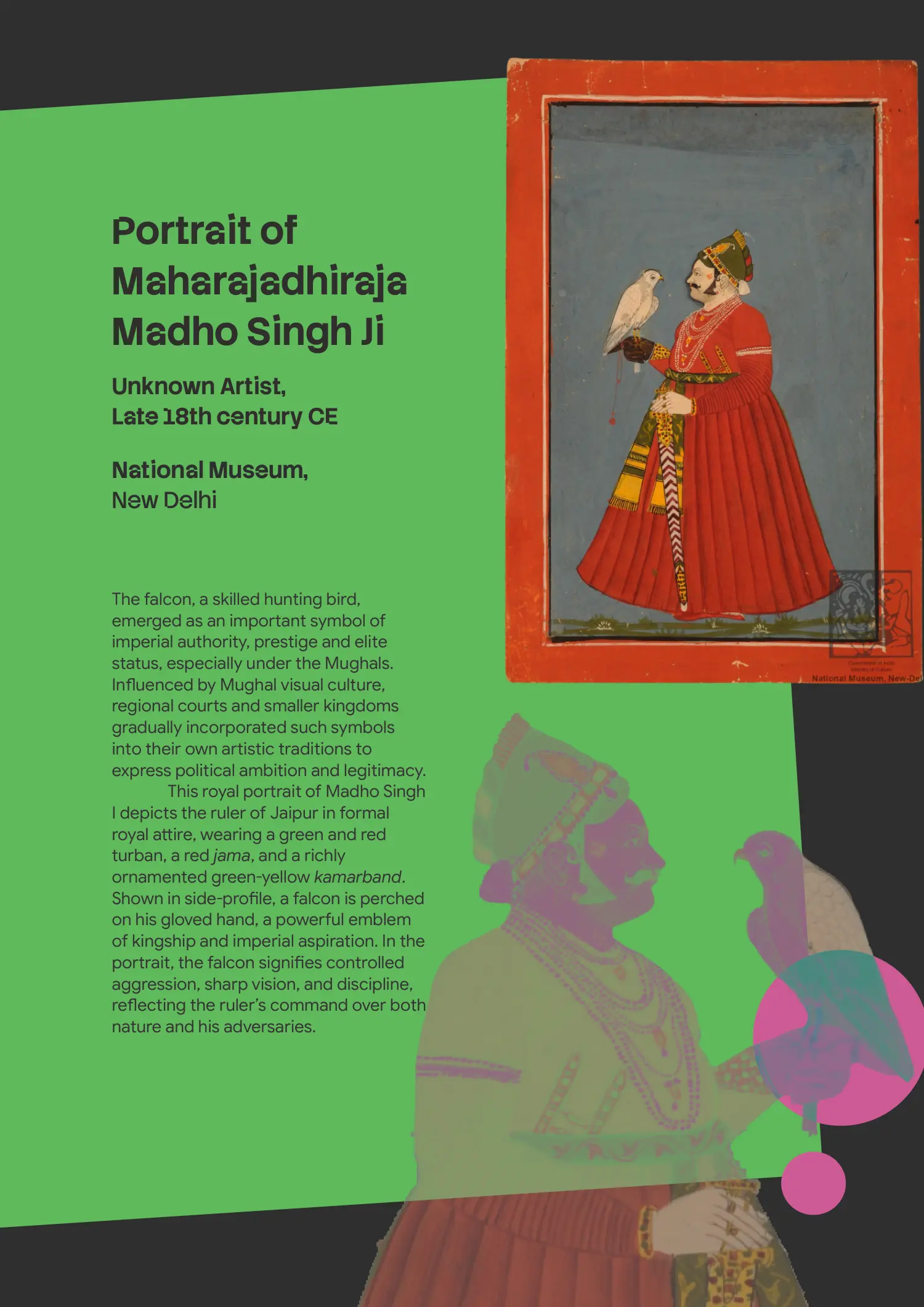
Portrait of Maharajadhiraja Madho Singh Ji
Unknown Artist, Late 18th century CE
National Museum, New Delhi
The falcon, a skilled hunting bird, emerged as an important symbol of imperial authority, prestige and elite status, especially under the Mughals. Influenced by Mughal visual culture, regional courts and smaller kingdoms gradually incorporated such symbols into their own artistic traditions to express political ambition and legitimacy. This royal portrait of Madho Singh I depicts the ruler of Jaipur in formal royal attire, wearing a green and red turban, a red jama, and a richly ornamented green-yellow kamarband. Shown in side-profile, a falcon is perched on his gloved hand, a powerful emblem of kingship and imperial aspiration. In the portrait, the falcon signifies controlled aggression, sharp vision, and discipline, reflecting the ruler’s command over both nature and his adversaries.
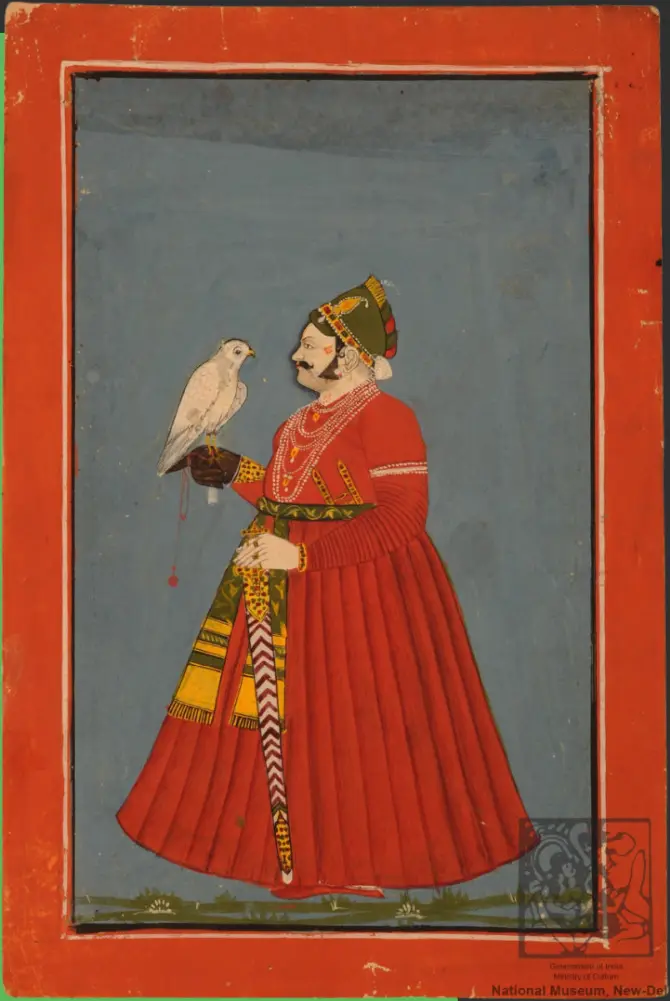
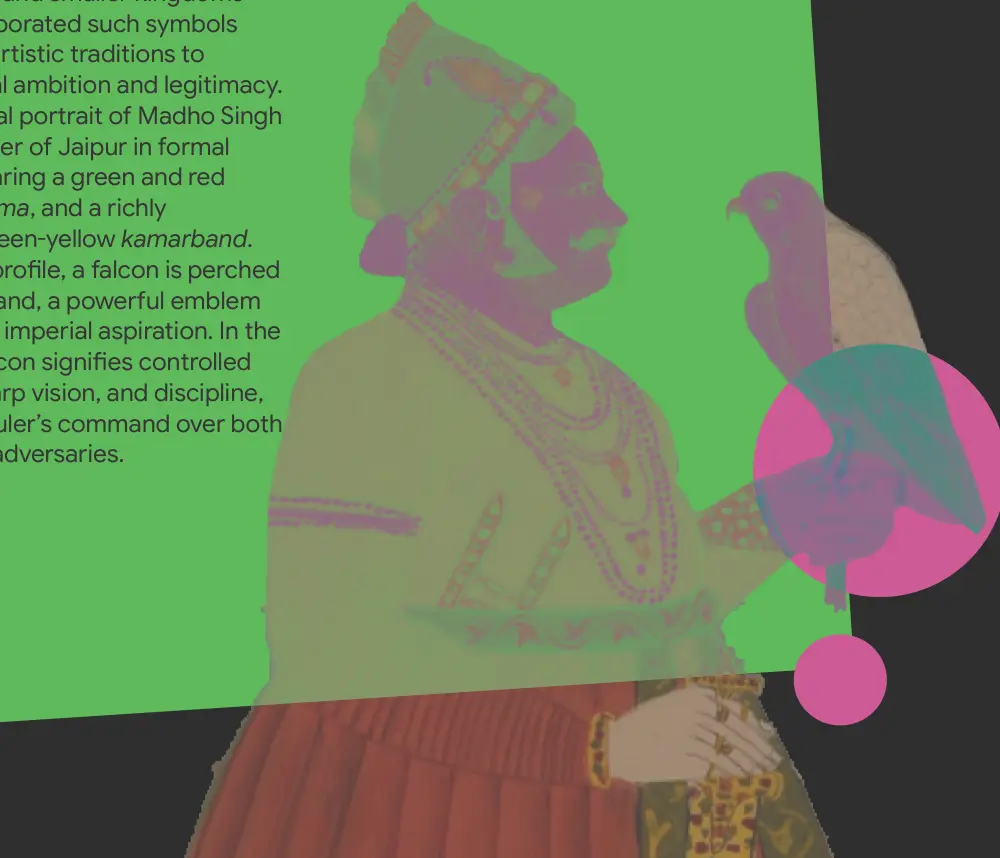
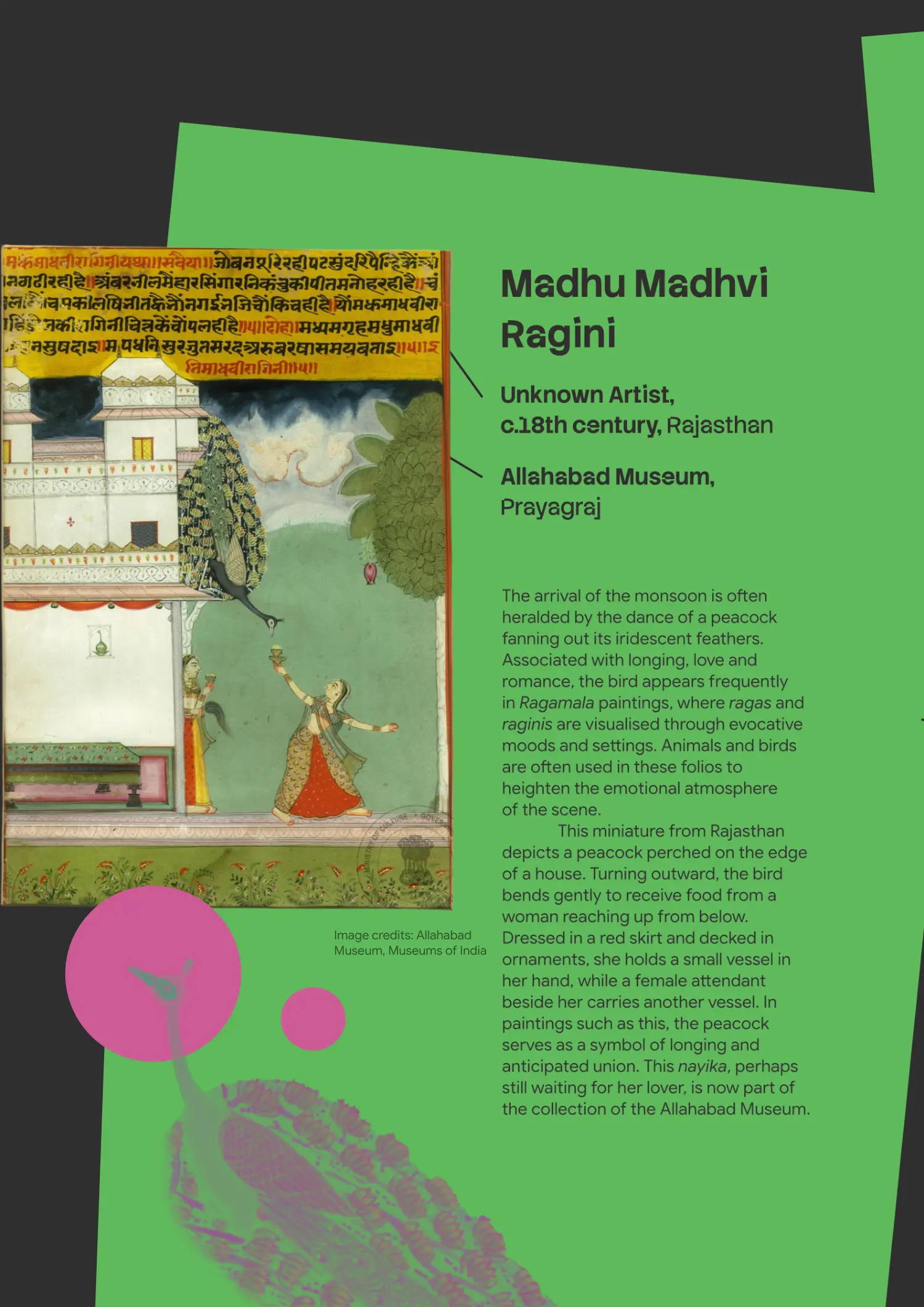
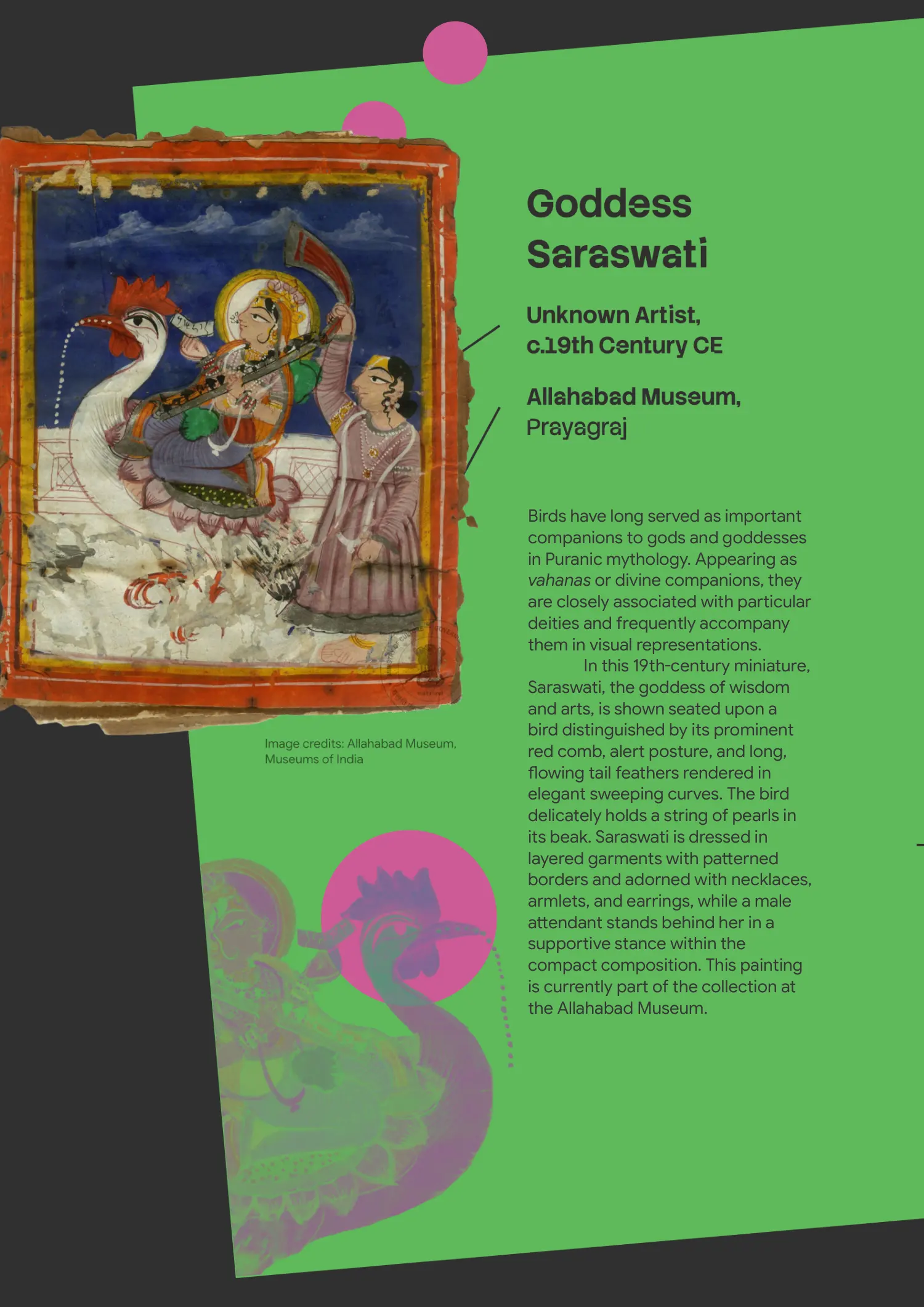
Image credits: Allahabad Museum, Museums of India
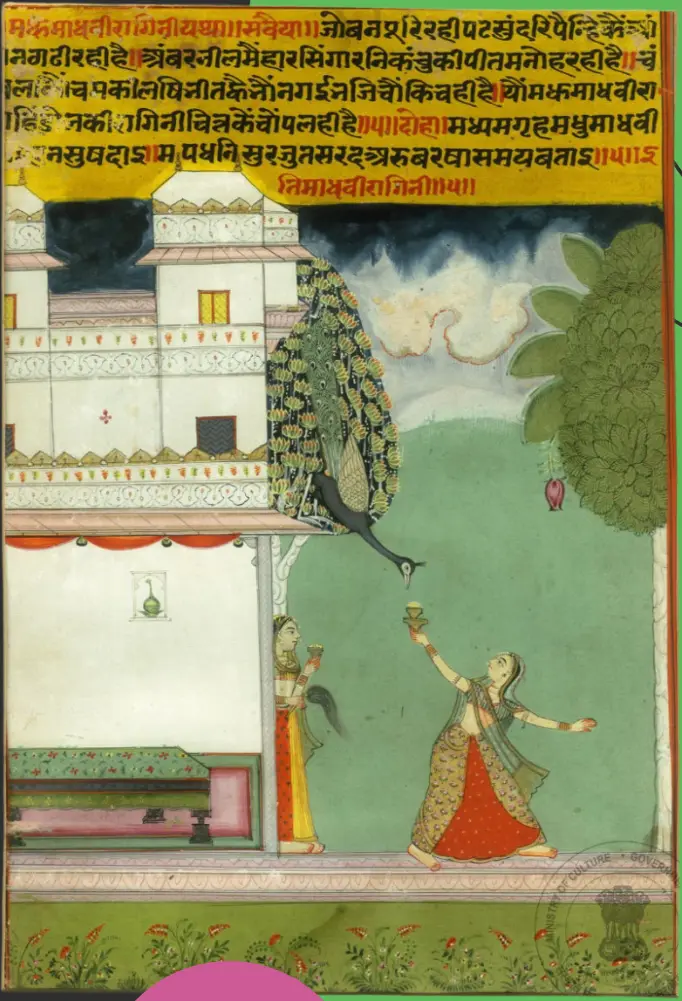
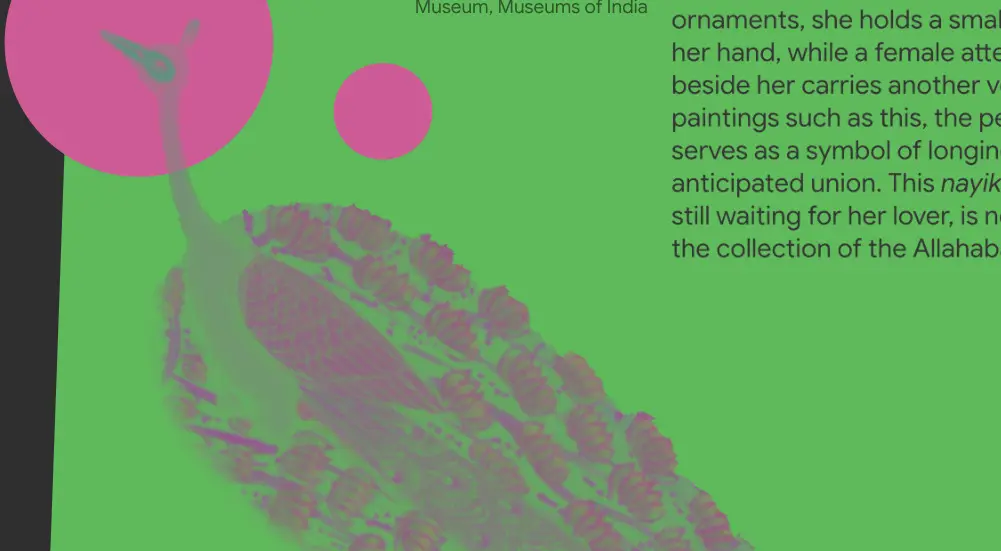
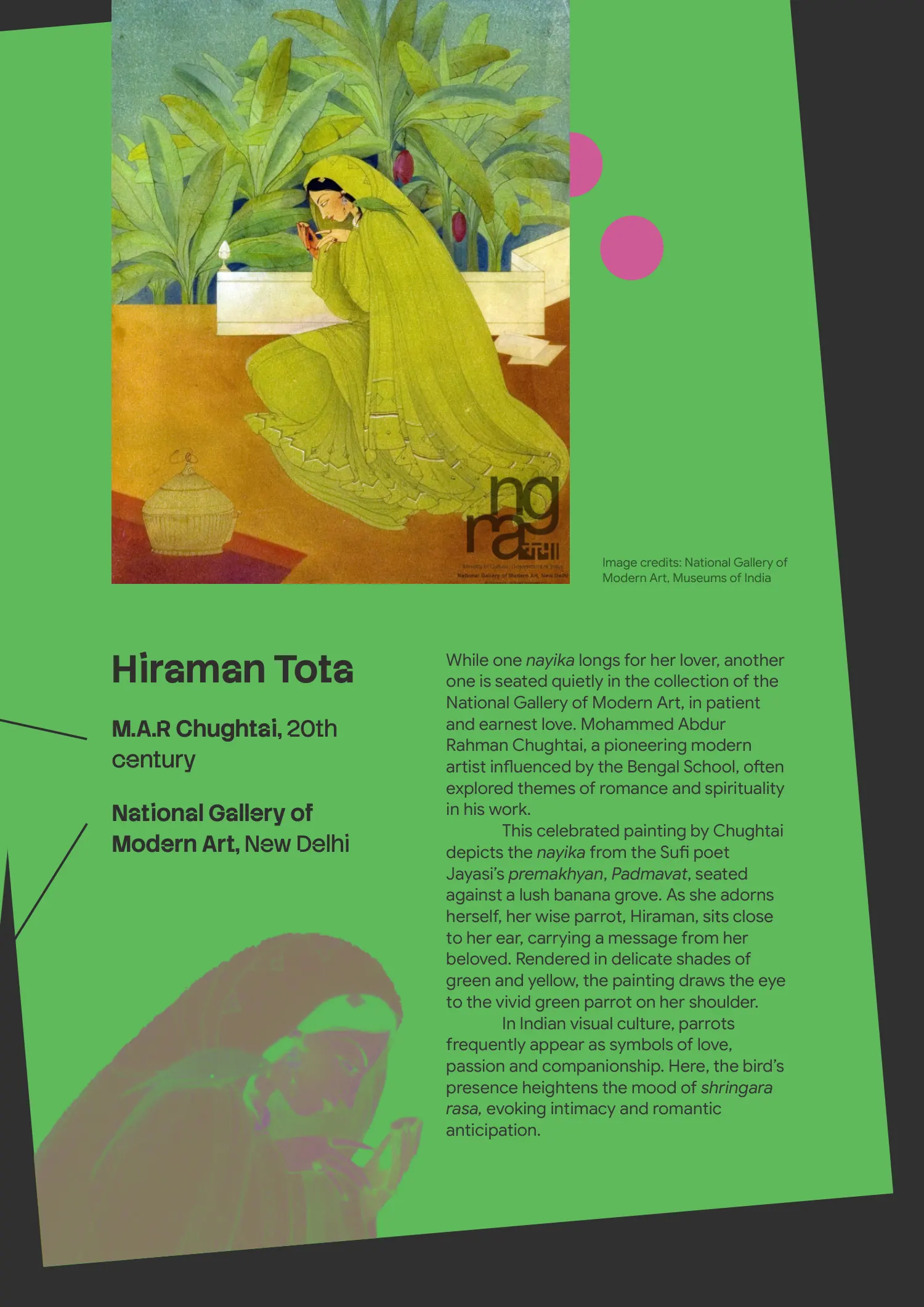
Image credits: National Gallery of Modern Art, Museums of India
Hiraman Tota
M.A.R Chughtai, 20th century
National Gallery of Modern Art, New Delhi
While one nayika longs for her lover, another one is seated quietly in the collection of the National Gallery of Modern Art, in patient and earnest love. Mohammed Abdur Rahman Chughtai, a pioneering modern artist influenced by the Bengal School, often explored themes of romance and spirituality in his work. This celebrated painting by Chughtai depicts the nayika from the Sufi poet Jayasi’s premakhyan, Padmavat, seated against a lush banana grove. As she adorns herself, her wise parrot, Hiraman, sits close to her ear, carrying a message from her beloved. Rendered in delicate shades of green and yellow, the painting draws the eye to the vivid green parrot on her shoulder. In Indian visual culture, parrots frequently appear as symbols of love, passion and companionship. Here, the bird’s presence heightens the mood of shringara rasa, evoking intimacy and romantic anticipation.

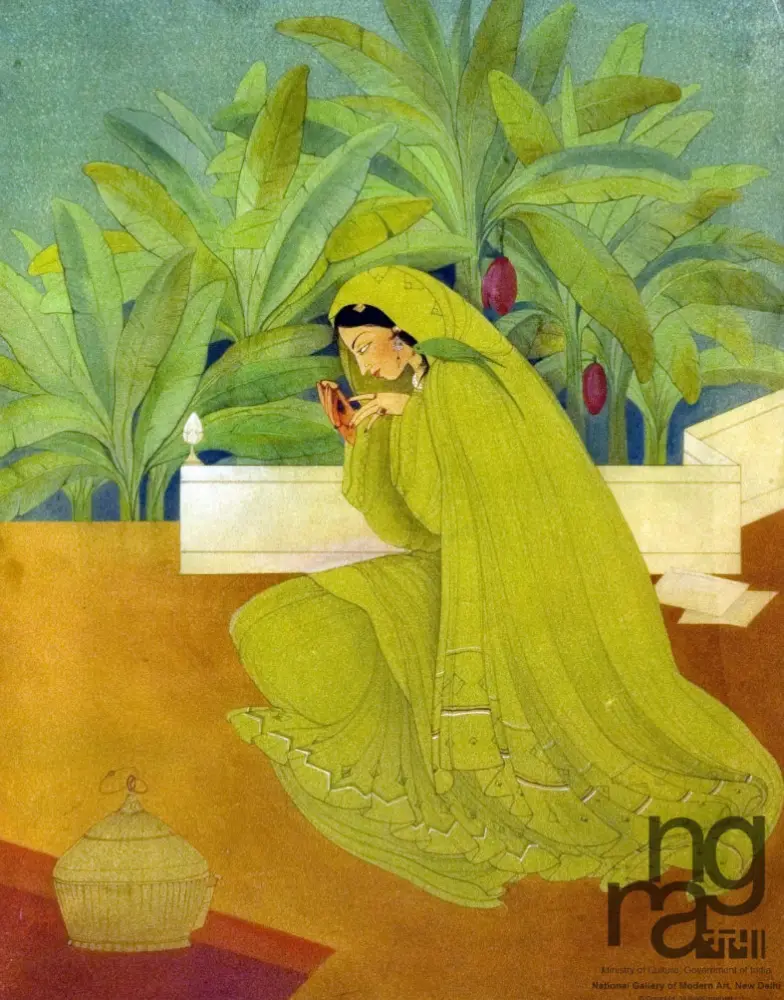
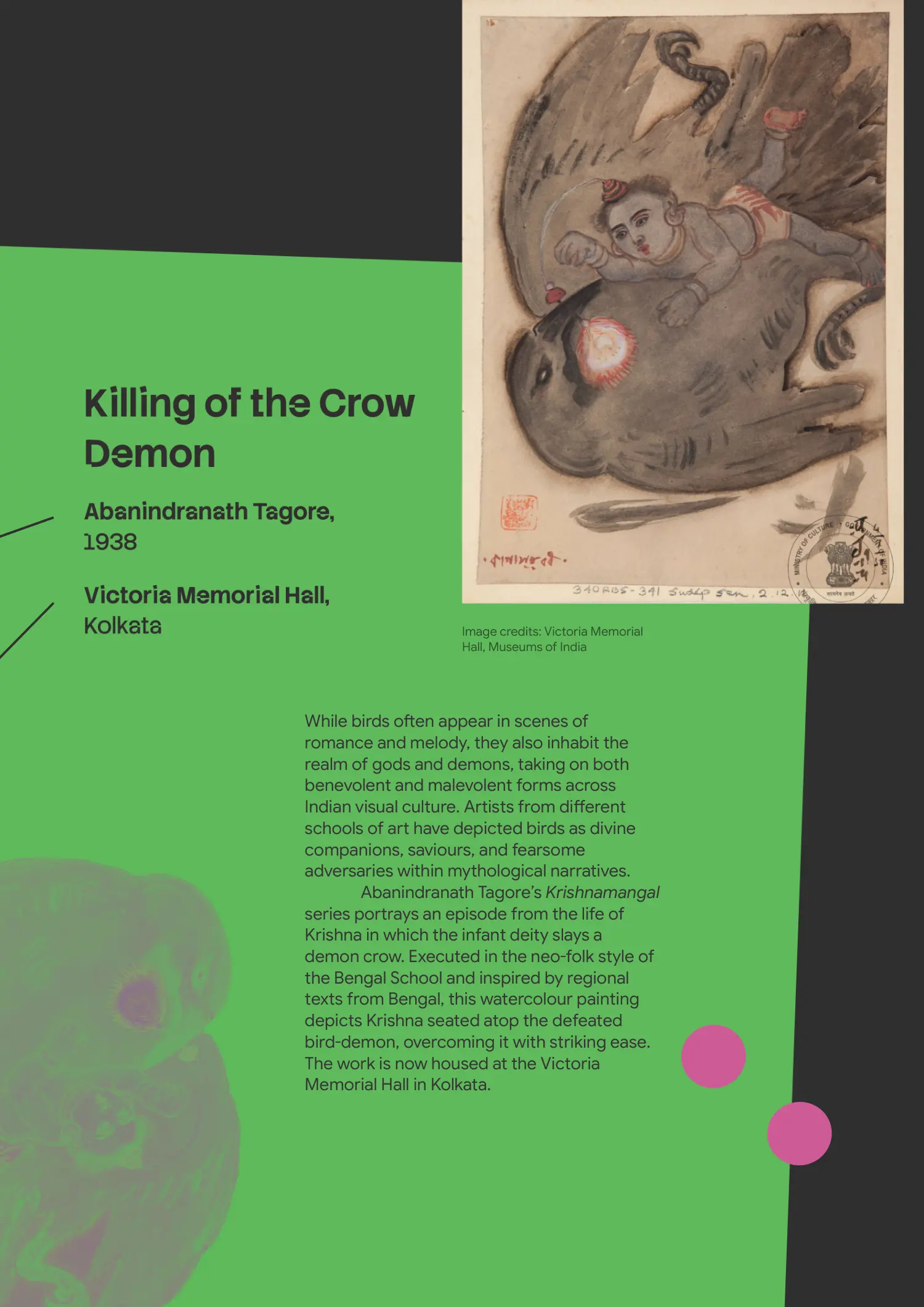
Image credits: Victoria Memorial Hall, Museums of India
While birds often appear in scenes of romance and melody, they also inhabit the realm of gods and demons, taking on both benevolent and malevolent forms across Indian visual culture. Artists from different schools of art have depicted birds as divine companions, saviours, and fearsome adversaries within mythological narratives. Abanindranath Tagore’s Krishnamangal series portrays an episode from the life of Krishna in which the infant deity slays a demon crow. Executed in the neo-folk style of the Bengal School and inspired by regional texts from Bengal, this watercolour painting depicts Krishna seated atop the defeated bird-demon, overcoming it with striking ease. The work is now housed at the Victoria Memorial Hall in Kolkata.
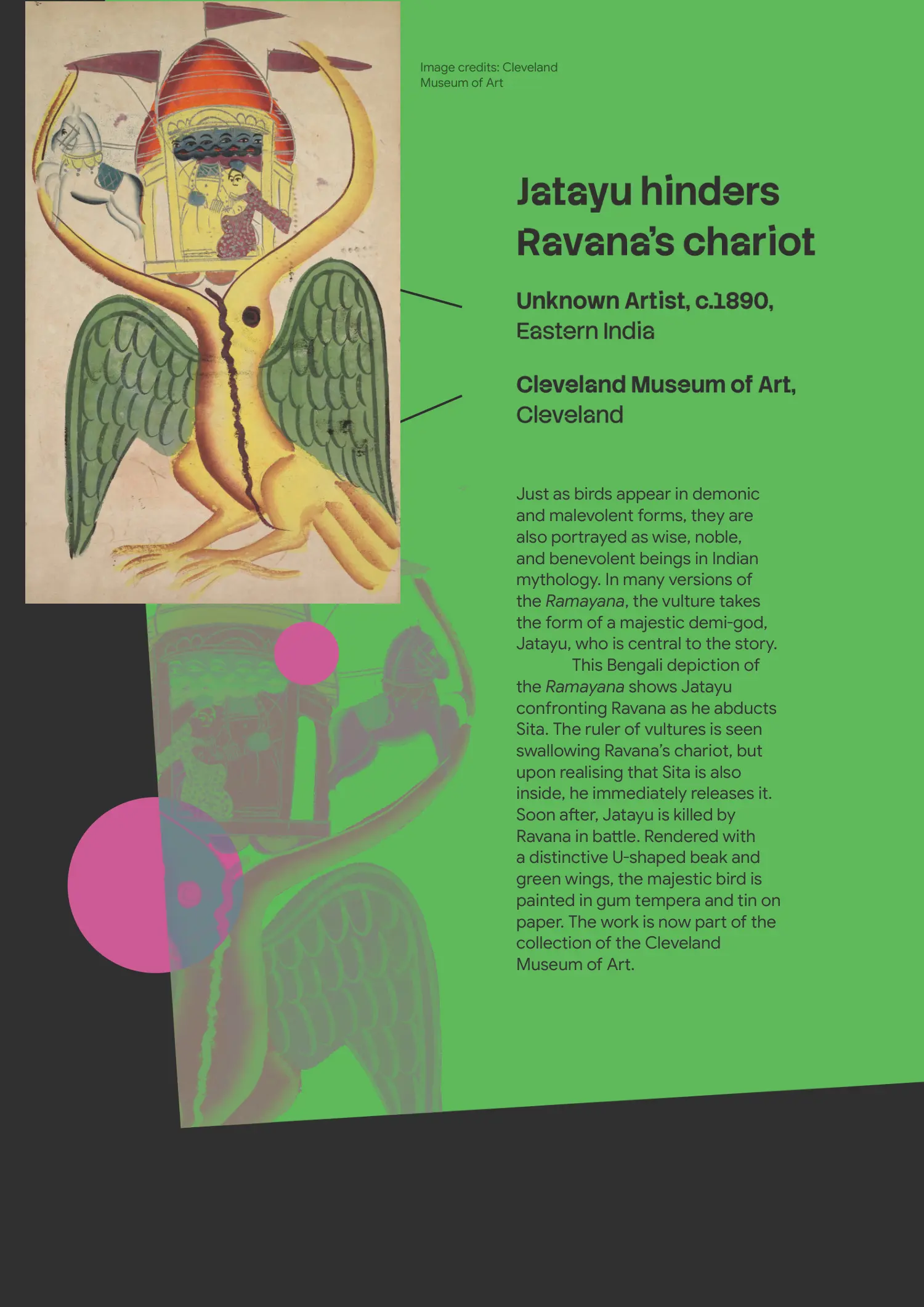
Image credits: Cleveland Museum of Art
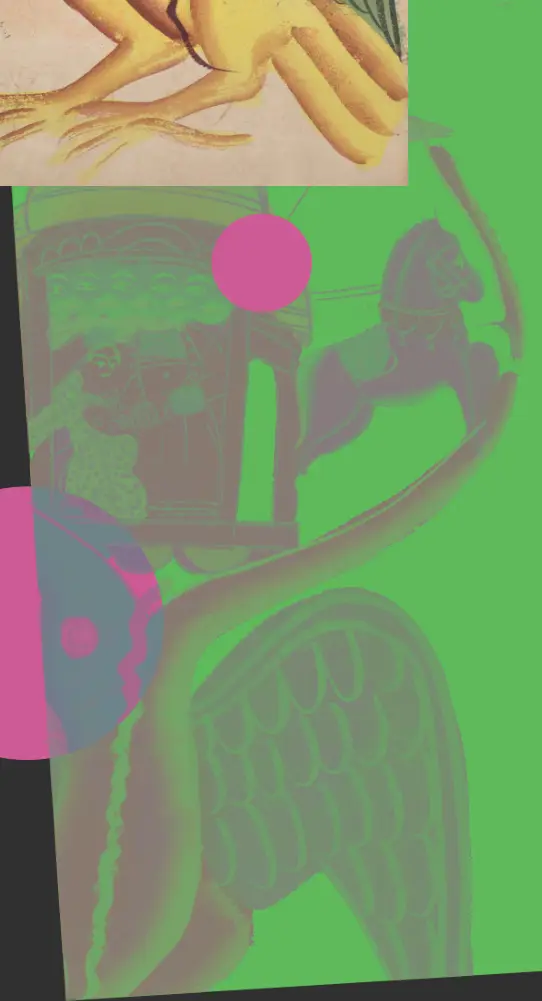
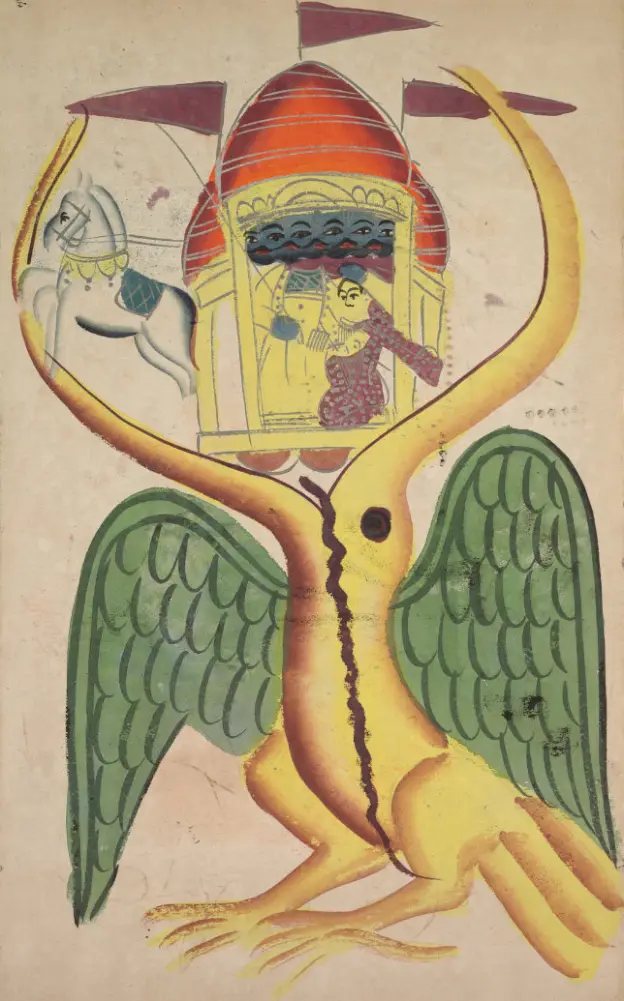
Just as birds appear in demonic and malevolent forms, they are also portrayed as wise, noble, and benevolent beings in Indian mythology. In many versions of the Ramayana, the vulture takes the form of a majestic demi-god, Jatayu, who is central to the story. This Bengali depiction of the Ramayana shows Jatayu confronting Ravana as he abducts Sita. The ruler of vultures is seen swallowing Ravana’s chariot, but upon realising that Sita is also inside, he immediately releases it. Soon after, Jatayu is killed by Ravana in battle. Rendered with a distinctive U-shaped beak and green wings, the majestic bird is painted in gum tempera and tin on paper. The work is now part of the collection of the Cleveland Museum of Art.
Birds have long served as important companions to gods and goddesses in Puranic mythology. Appearing as vahanas or divine companions, they are closely associated with particular deities and frequently accompany them in visual representations. In this 19th-century miniature, Saraswati, the goddess of wisdom and arts, is shown seated upon a bird distinguished by its prominent red comb, alert posture, and long, flowing tail feathers rendered in elegant sweeping curves. The bird delicately holds a string of pearls in its beak. Saraswati is dressed in layered garments with patterned borders and adorned with necklaces, armlets, and earrings, while a male attendant stands behind her in a supportive stance within the compact composition. This painting is currently part of the collection at the Allahabad Museum.
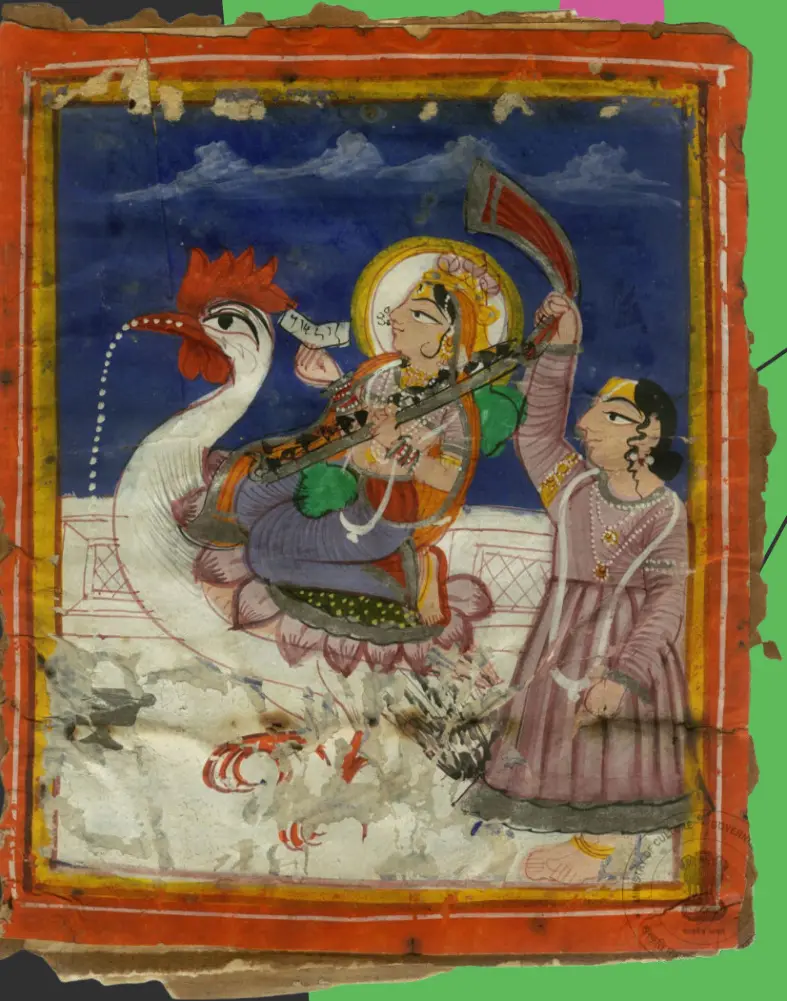
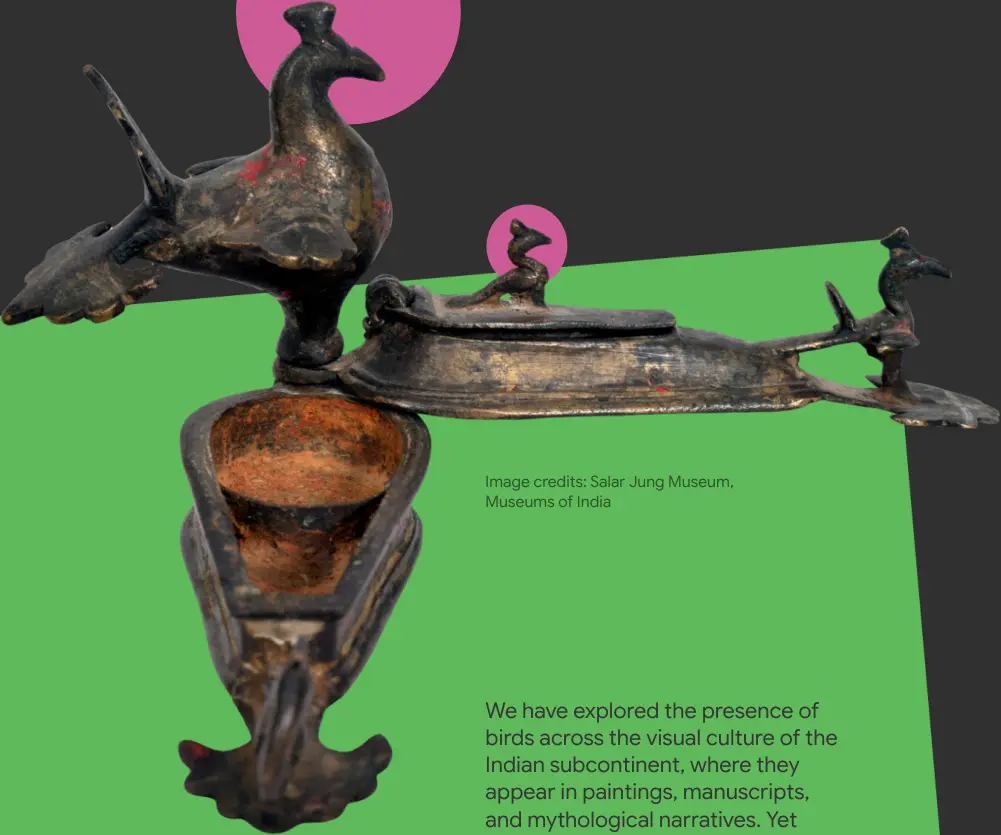
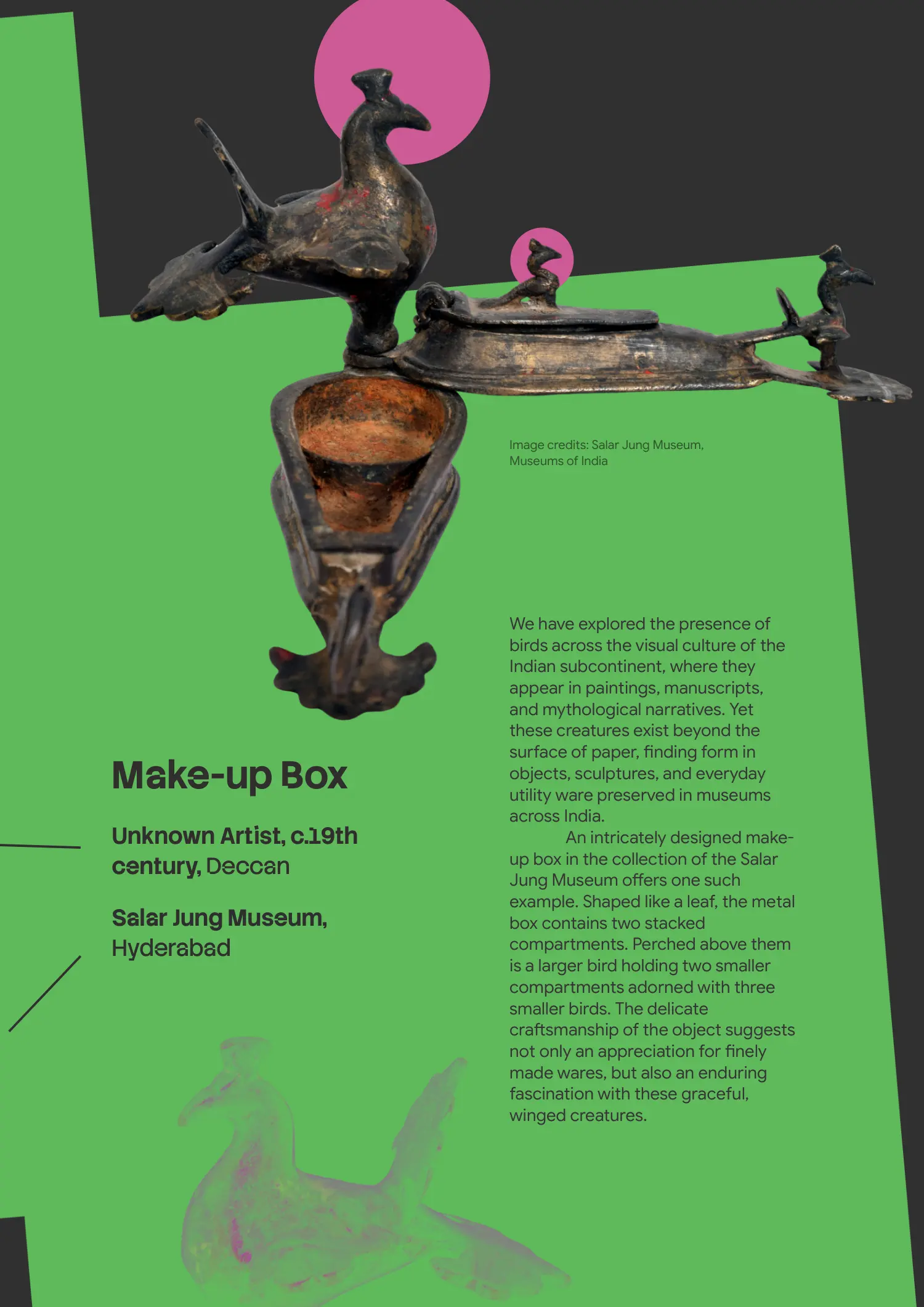
Image credits: Salar Jung Museum, Museums of India
Make-up Box
Unknown Artist, c.19th century, Deccan
Salar Jung Museum, Hyderabad
We have explored the presence of birds across the visual culture of the Indian subcontinent, where they appear in paintings, manuscripts, and mythological narratives. Yet these creatures exist beyond the surface of paper, finding form in objects, sculptures, and everyday utility ware preserved in museums across India. An intricately designed make- up box in the collection of the Salar Jung Museum offers one such example. Shaped like a leaf, the metal box contains two stacked compartments. Perched above them is a larger bird holding two smaller compartments adorned with three smaller birds. The delicate craftsmanship of the object suggests not only an appreciation for finely made wares, but also an enduring fascination with these graceful, winged creatures.
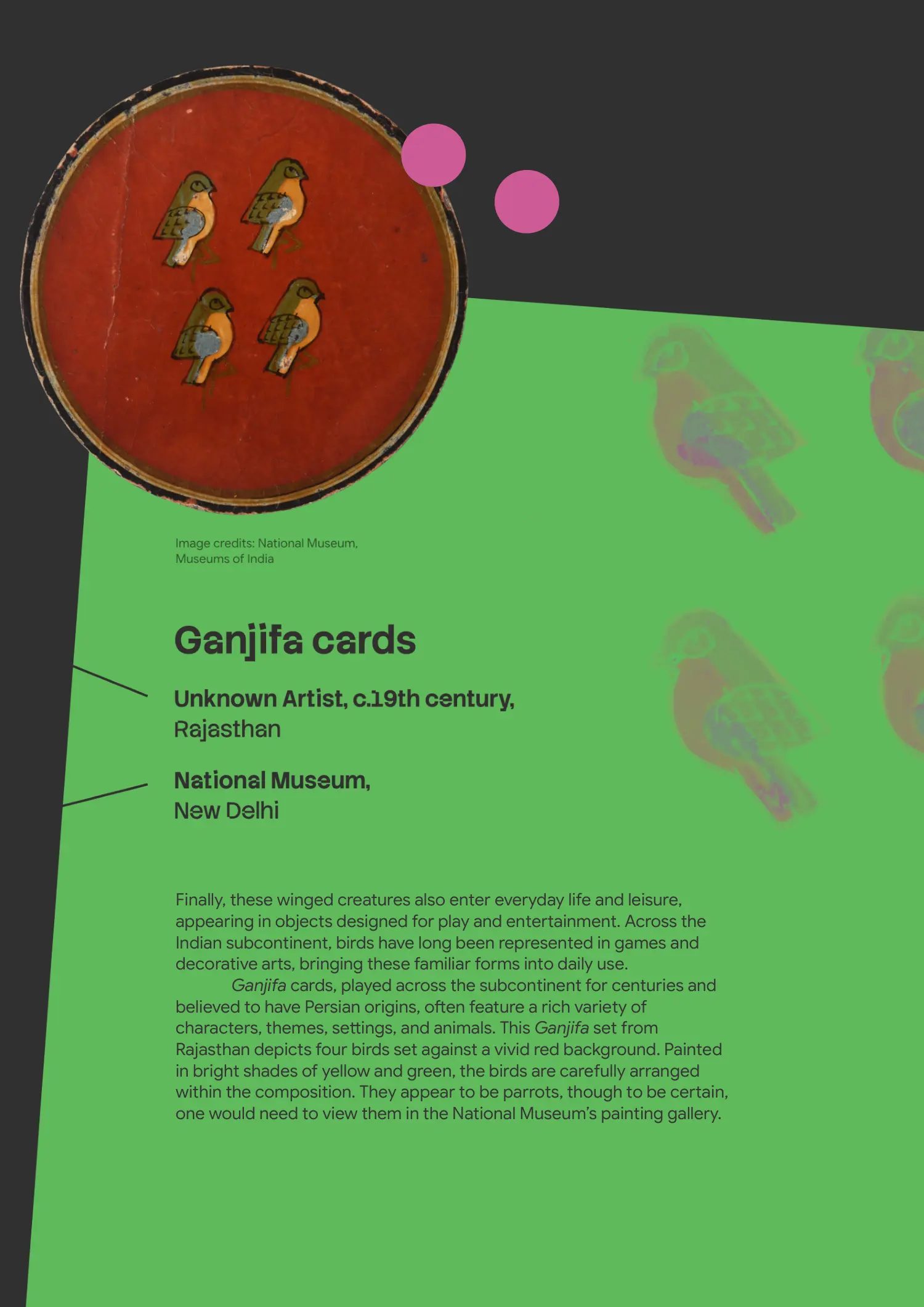
Finally, these winged creatures also enter everyday life and leisure, appearing in objects designed for play and entertainment. Across the Indian subcontinent, birds have long been represented in games and decorative arts, bringing these familiar forms into daily use.
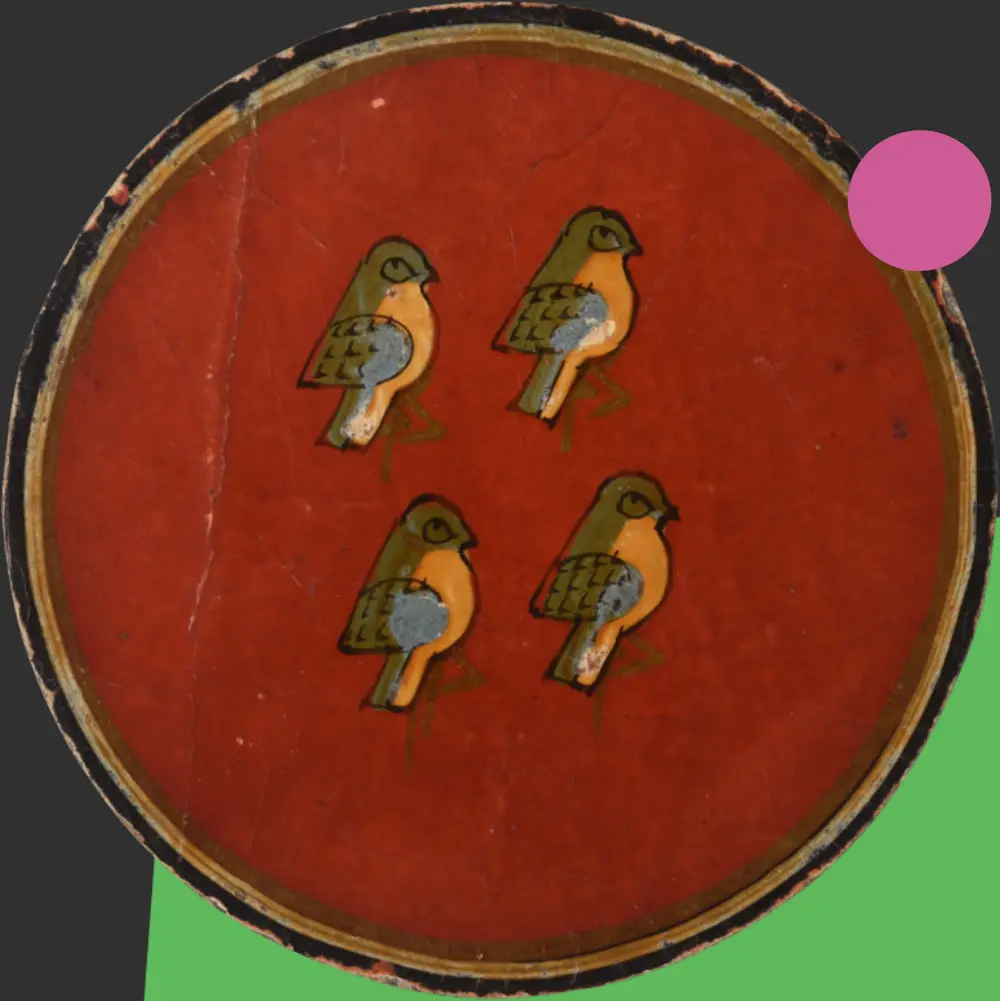
Ganjifa cards, played across the subcontinent for centuries and believed to have Persian origins, often feature a rich variety of characters, themes, settings, and animals. This Ganjifa set from Rajasthan depicts four birds set against a vivid red background. Painted in bright shades of yellow and green, the birds are carefully arranged within the composition. They appear to be parrots, though to be certain, one would need to view them in the National Museum’s painting gallery.

As this flight trails its end, birds have however never really left our imagination. A lot of us are still thrilled spotting a colourful bird in a concrete filled city. Our affection and attention towards these creatures only point towards how they still capture our imagination, staying imprinted on what we create. Jahangir kept his birds close to him, either in cages or in his gardens; Mansur drew them extensively; emperors often included them in their portraits; devotees worshipped them; admirers moulded them on their wares. This trail tries to trace birds in the Indian visual culture and encourages you to think about their presence in skies, nests and in the art that surrounds us (with a subtle agenda that you might think about this trail whenever you see a bird next time!)
View original pages, photographs & credits
Originally published in Museum Mosaic 2025, published May 2026.
Part of our annual review. Descriptions reflect the publication’s reporting period.