Yangthang Cultural Centre, Pelling, Sikkim Ramgauri Sangralaya, Rhenock, Sikkim Nepali Museum, Aho, Sikkim
Domestic spheres are one of the most active sites of socialisation and identity formation, marked by gendered and class-based roles. Through the material artefacts associated with cooking, caregiving, hospitality, and worship, we look at the repetitive labour embedded within everyday life. This trail covers artefacts from households across Sikkim and the Himalayan region, showing that traces of domestic comfort and ritual continuity within these intimate quarters, along with leisure, are a result of these rituals, produced and sustained through labour. Through a gallery of household heirlooms — collections of ancestors and memories that are remembered — the artefacts in this trail once belonged to such intimate spaces inside homes that were lived and worked in.
Abhibyanjana R. Thatal Musician & Researcher
All images are provided by the author
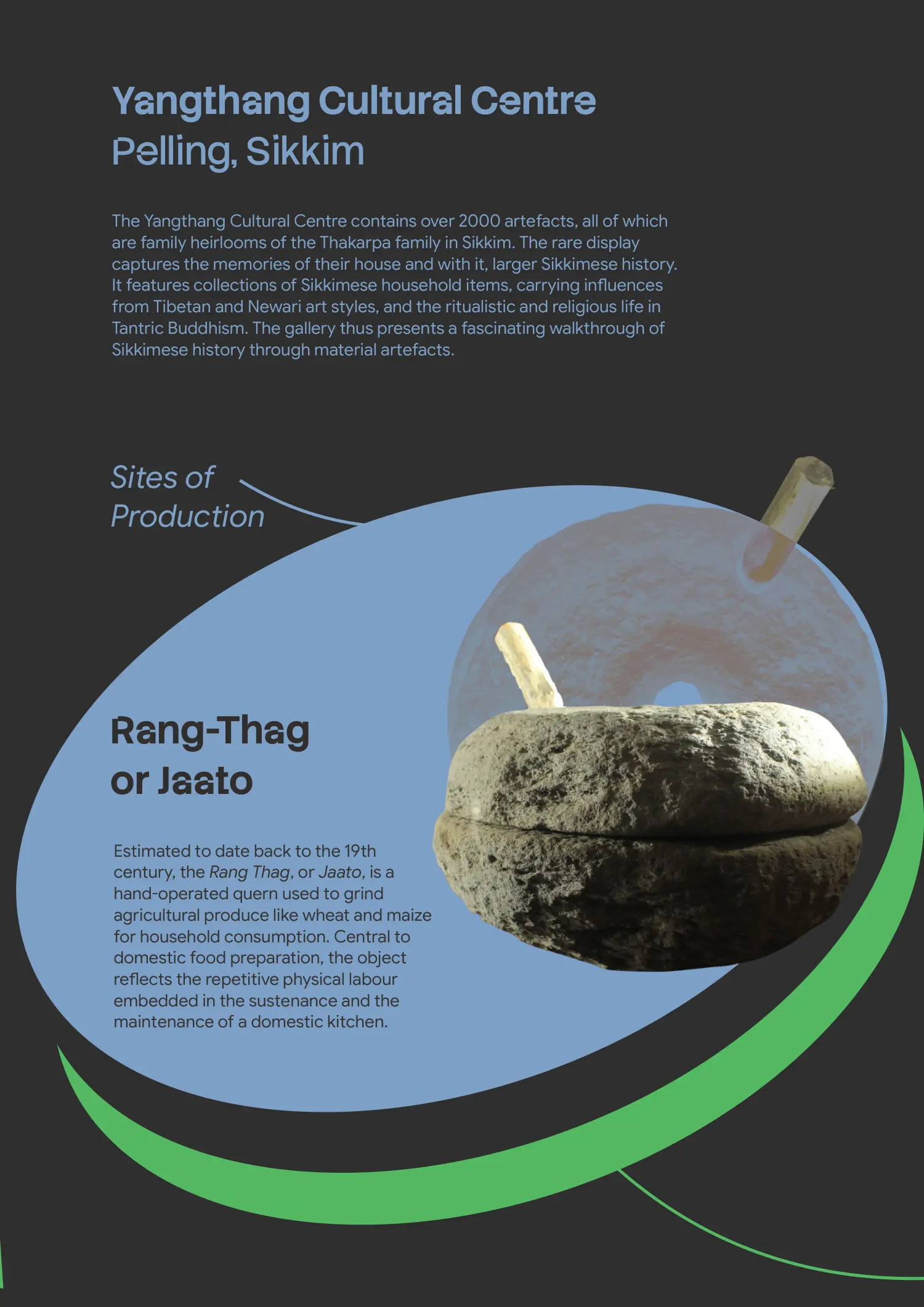
Yangthang Cultural Centre Pelling, Sikkim
The Yangthang Cultural Centre contains over 2000 artefacts, all of which are family heirlooms of the Thakarpa family in Sikkim. The rare display captures the memories of their house and with it, larger Sikkimese history. It features collections of Sikkimese household items, carrying influences from Tibetan and Newari art styles, and the ritualistic and religious life in Tantric Buddhism. The gallery thus presents a fascinating walkthrough of Sikkimese history through material artefacts.
Sites of Production
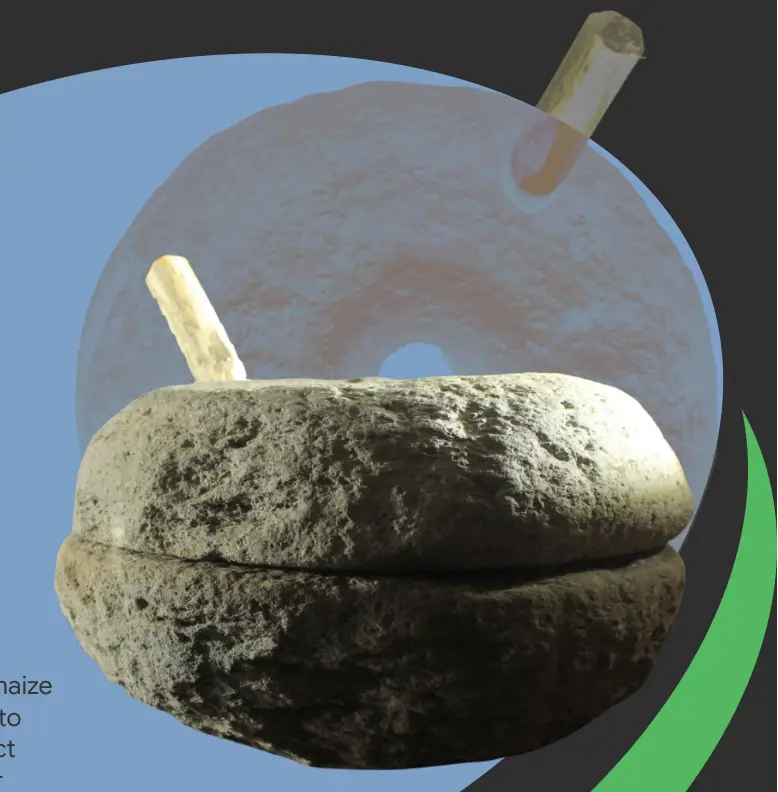
Rang-Thag or Jaato
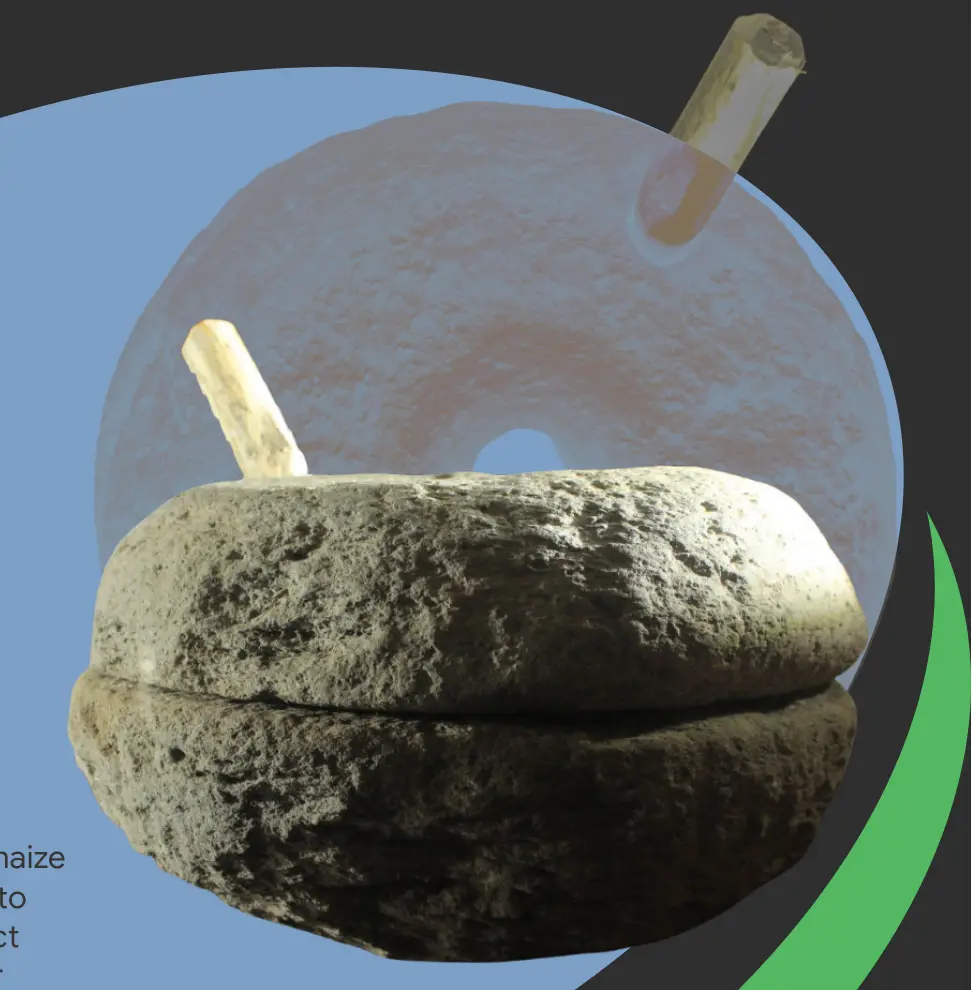
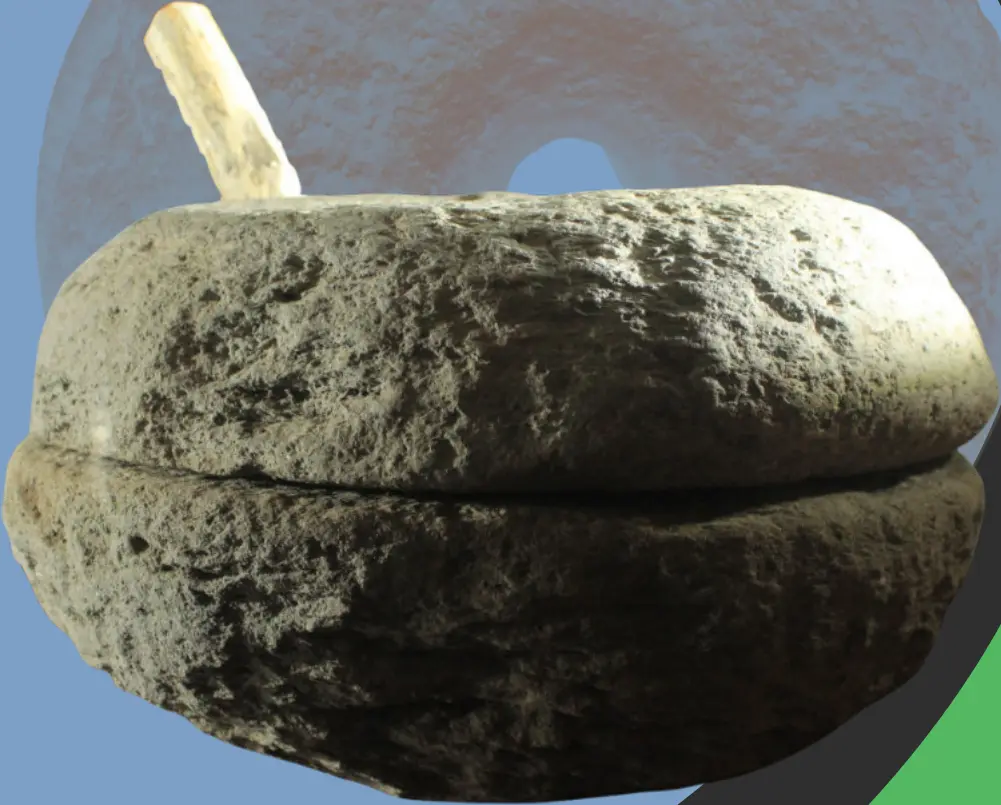
Estimated to date back to the 19th century, the Rang Thag, or Jaato, is a hand-operated quern used to grind agricultural produce like wheat and maize for household consumption. Central to domestic food preparation, the object reflects the repetitive physical labour embedded in the sustenance and the maintenance of a domestic kitchen.
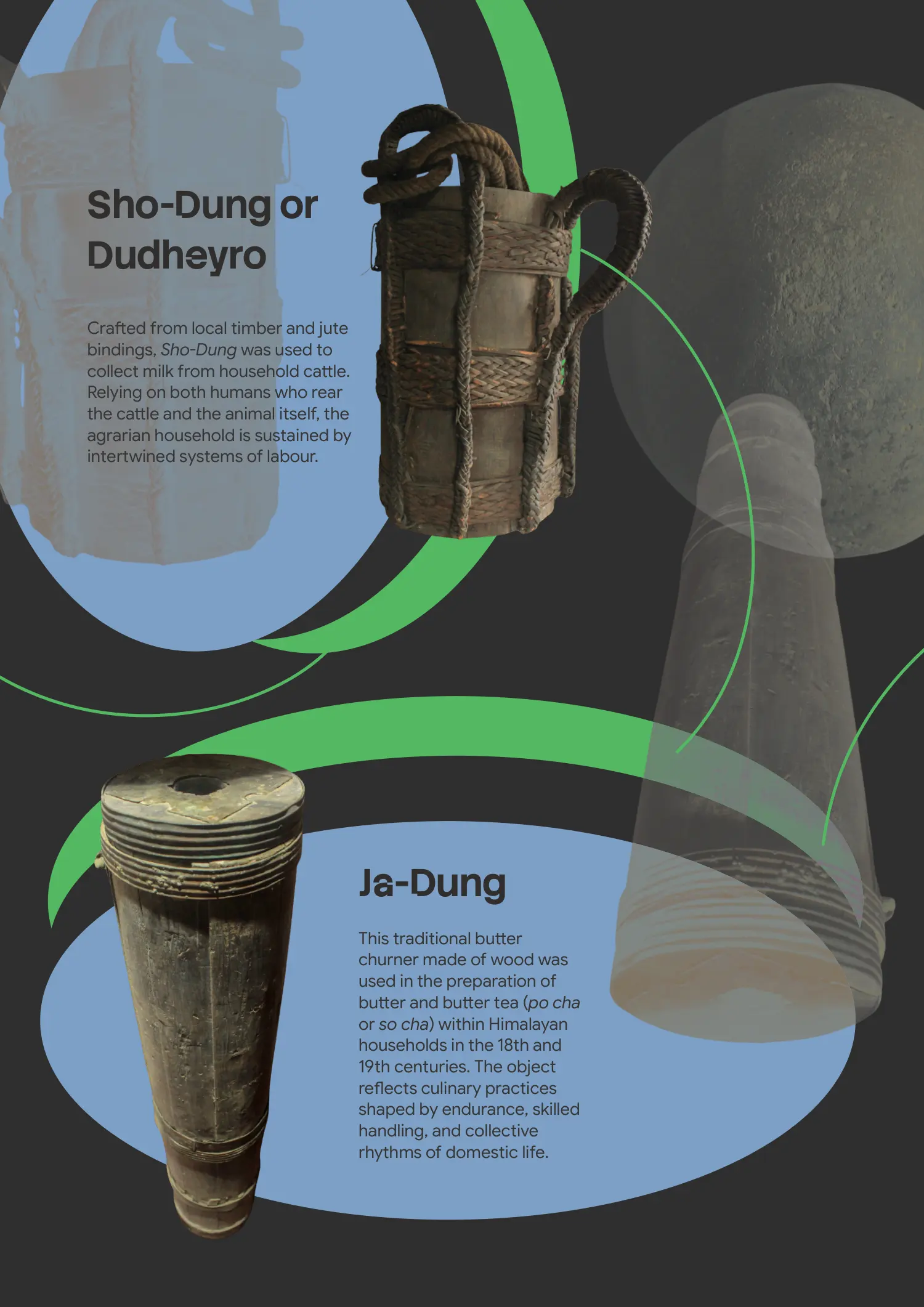
Sho-Dung or Dudheyro
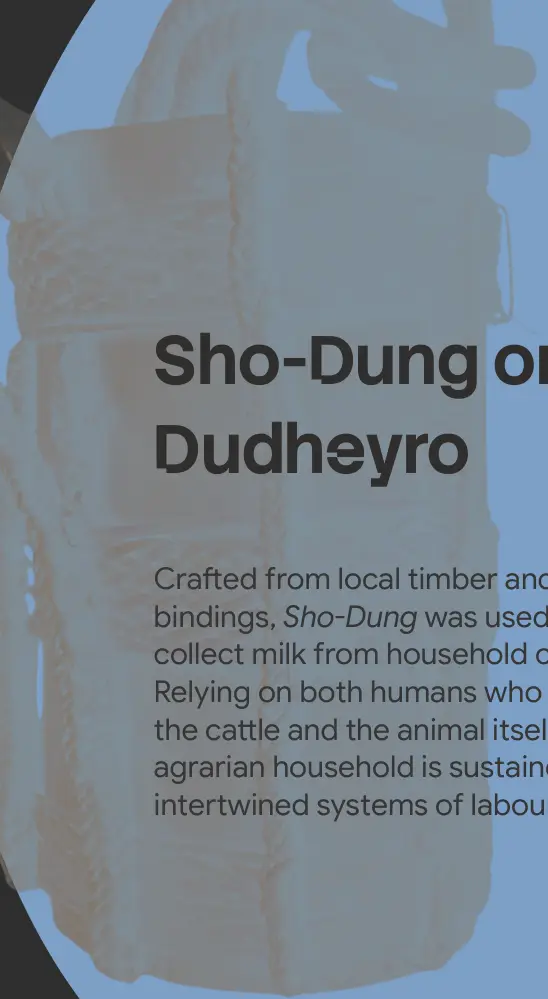
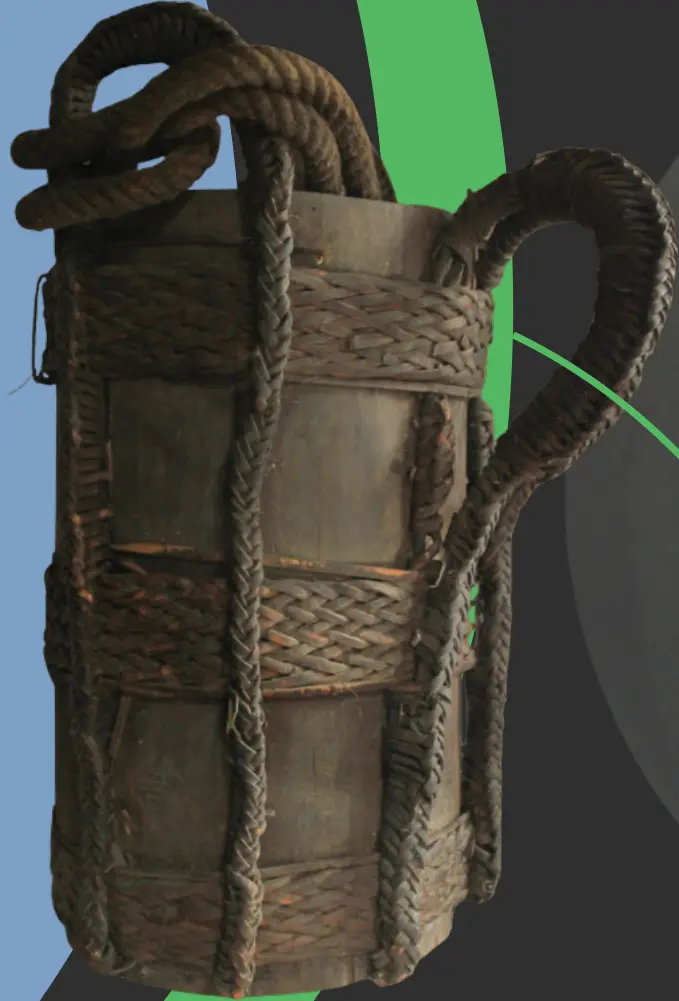
Crafted from local timber and jute bindings, Sho-Dung was used to collect milk from household cattle. Relying on both humans who rear the cattle and the animal itself, the agrarian household is sustained by intertwined systems of labour.
Ja-Dung
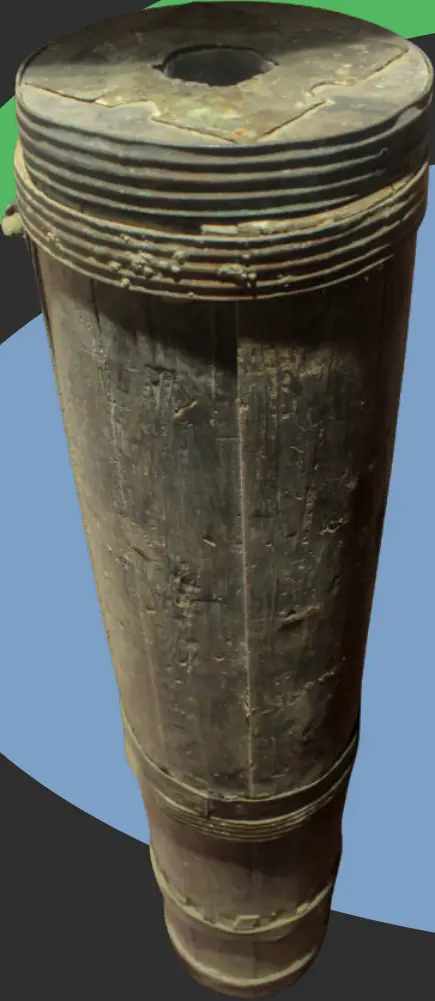
This traditional butter churner made of wood was used in the preparation of butter and butter tea (po cha or so cha) within Himalayan households in the 18th and 19th centuries. The object reflects culinary practices shaped by endurance, skilled handling, and collective rhythms of domestic life.
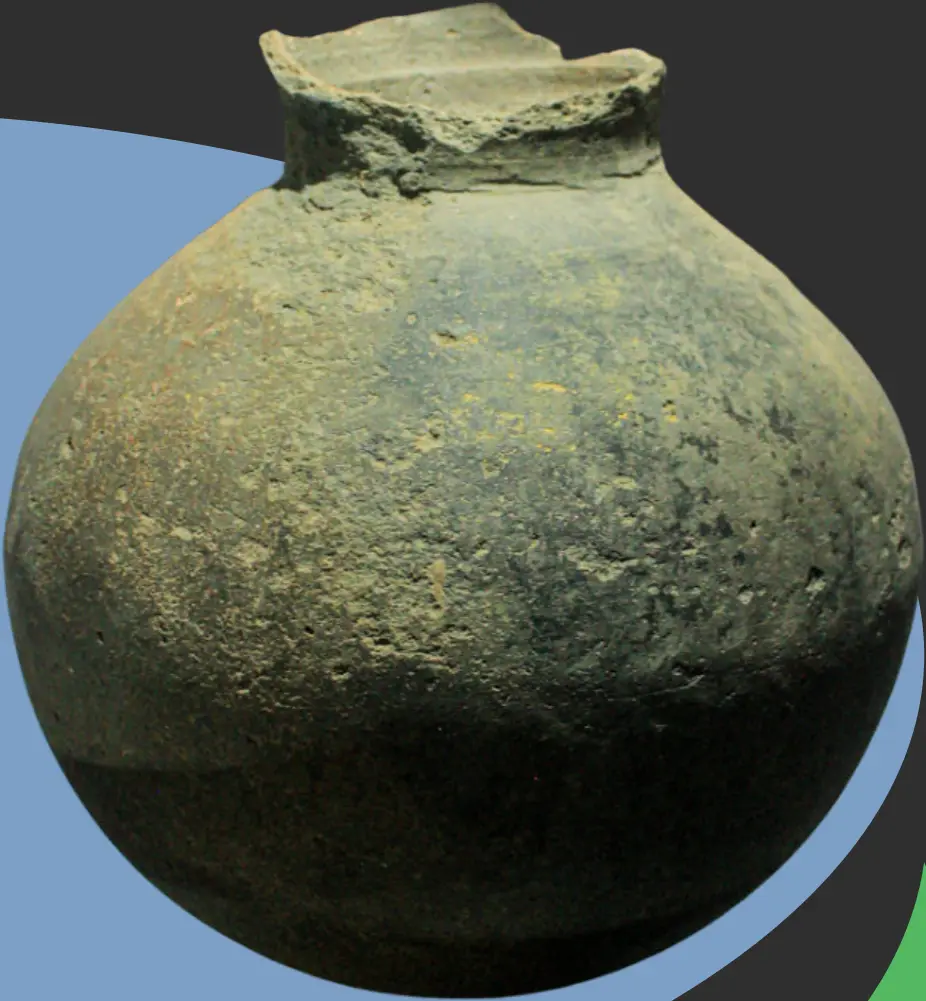
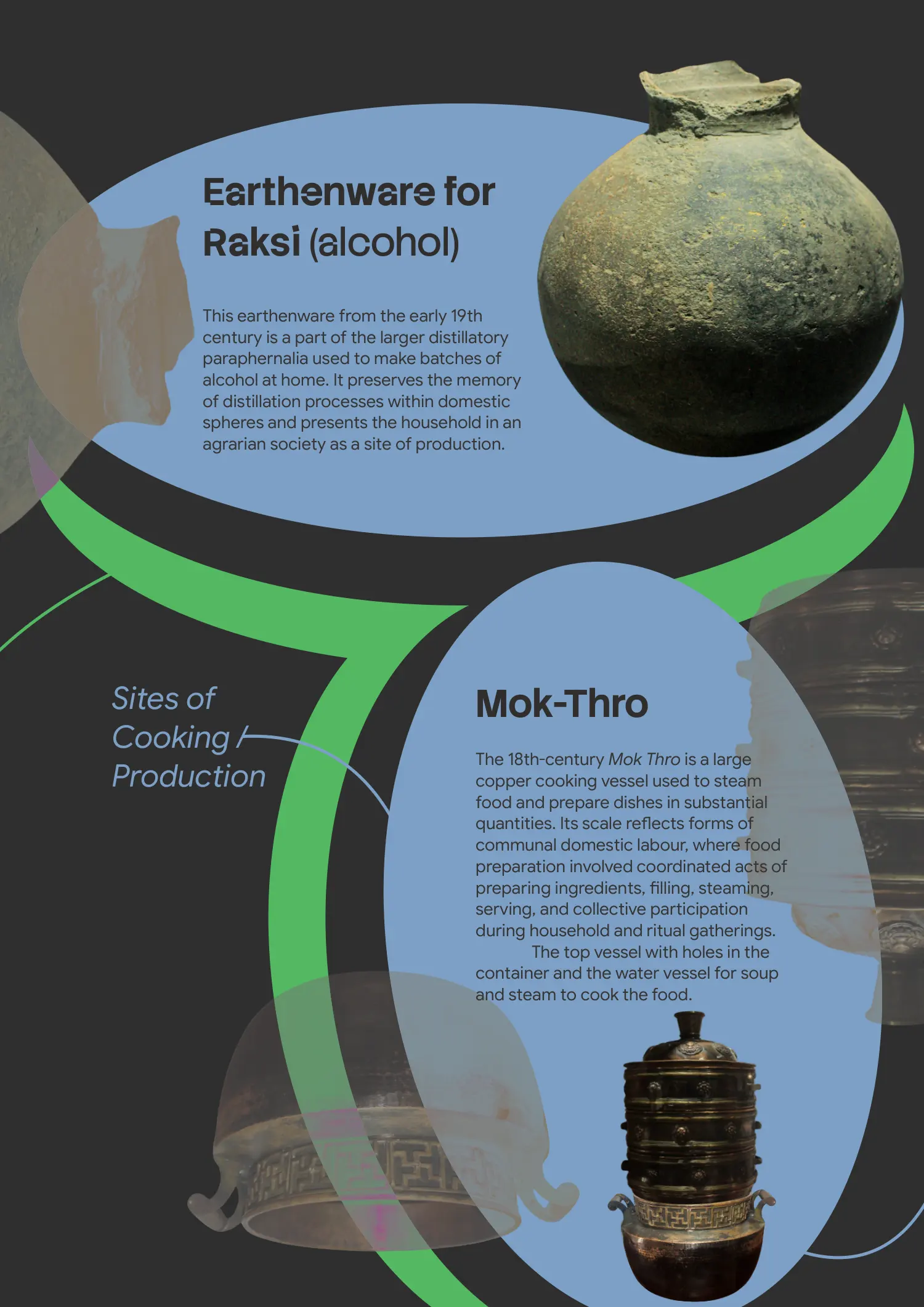
Earthenware for Raksi (alcohol)
This earthenware from the early 19th century is a part of the larger distillatory paraphernalia used to make batches of alcohol at home. It preserves the memory of distillation processes within domestic spheres and presents the household in an agrarian society as a site of production.
Mok-Thro
Sites of Cooking / Production
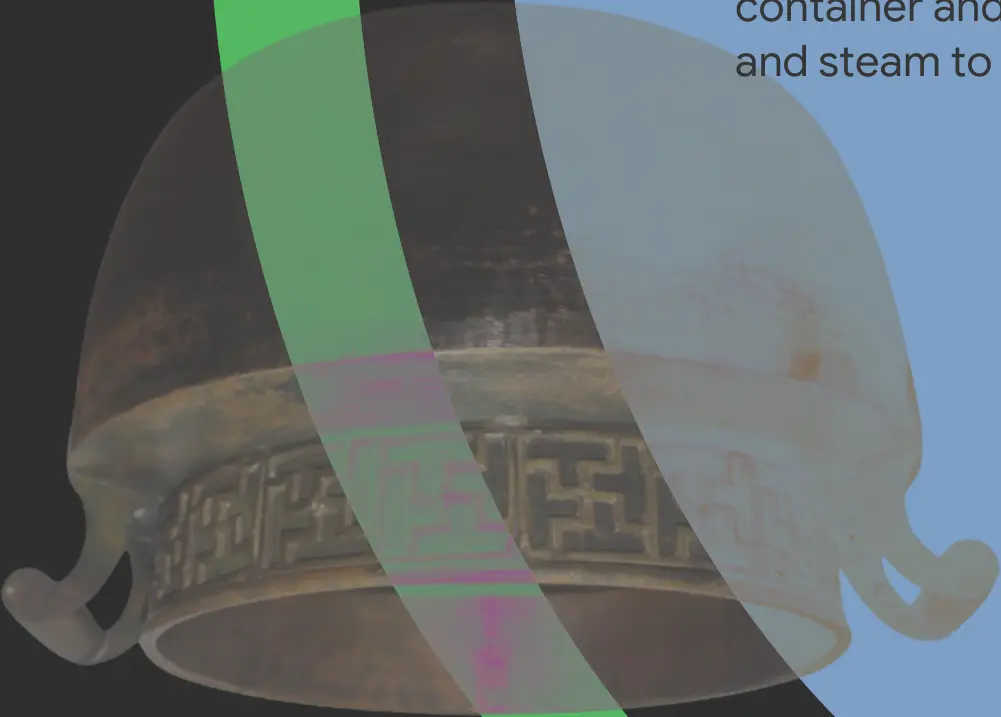
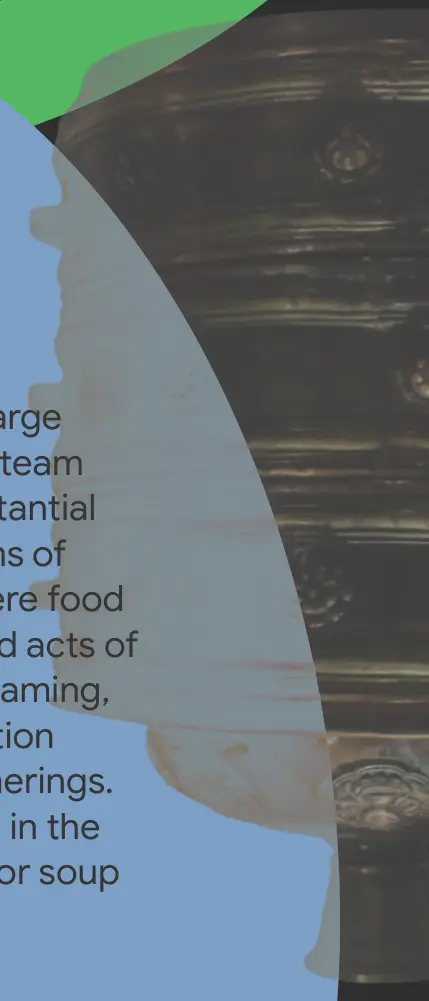
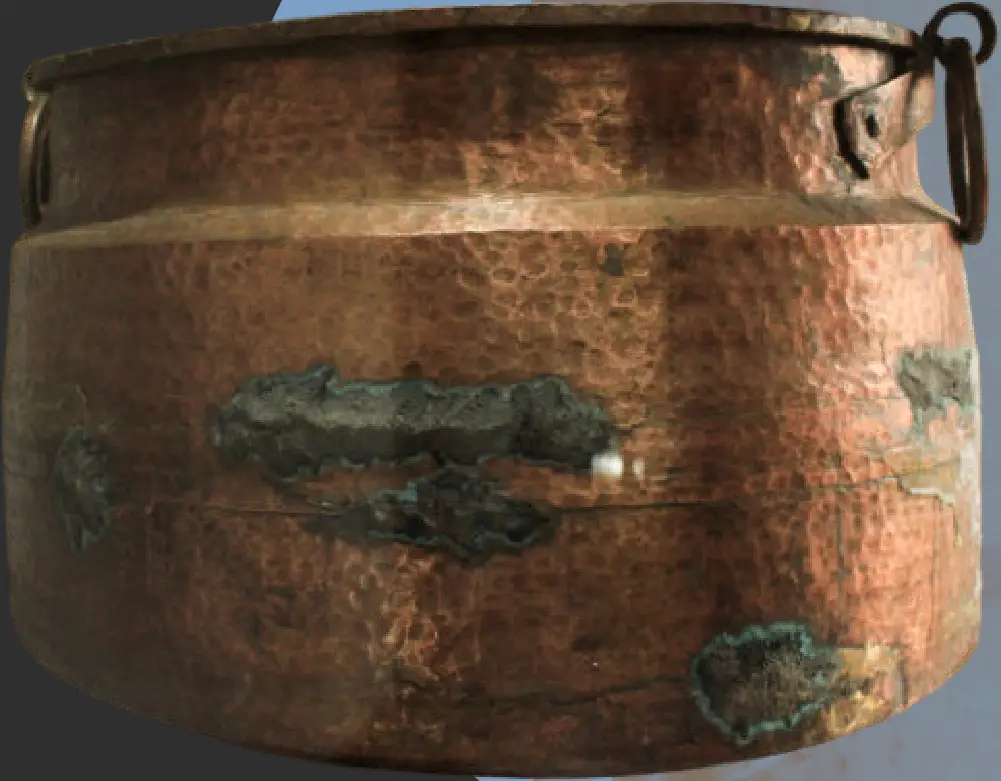
The 18th-century Mok Thro is a large copper cooking vessel used to steam food and prepare dishes in substantial quantities. Its scale reflects forms of communal domestic labour, where food preparation involved coordinated acts of preparing ingredients, filling, steaming, serving, and collective participation during household and ritual gatherings. The top vessel with holes in the container and the water vessel for soup and steam to cook the food.
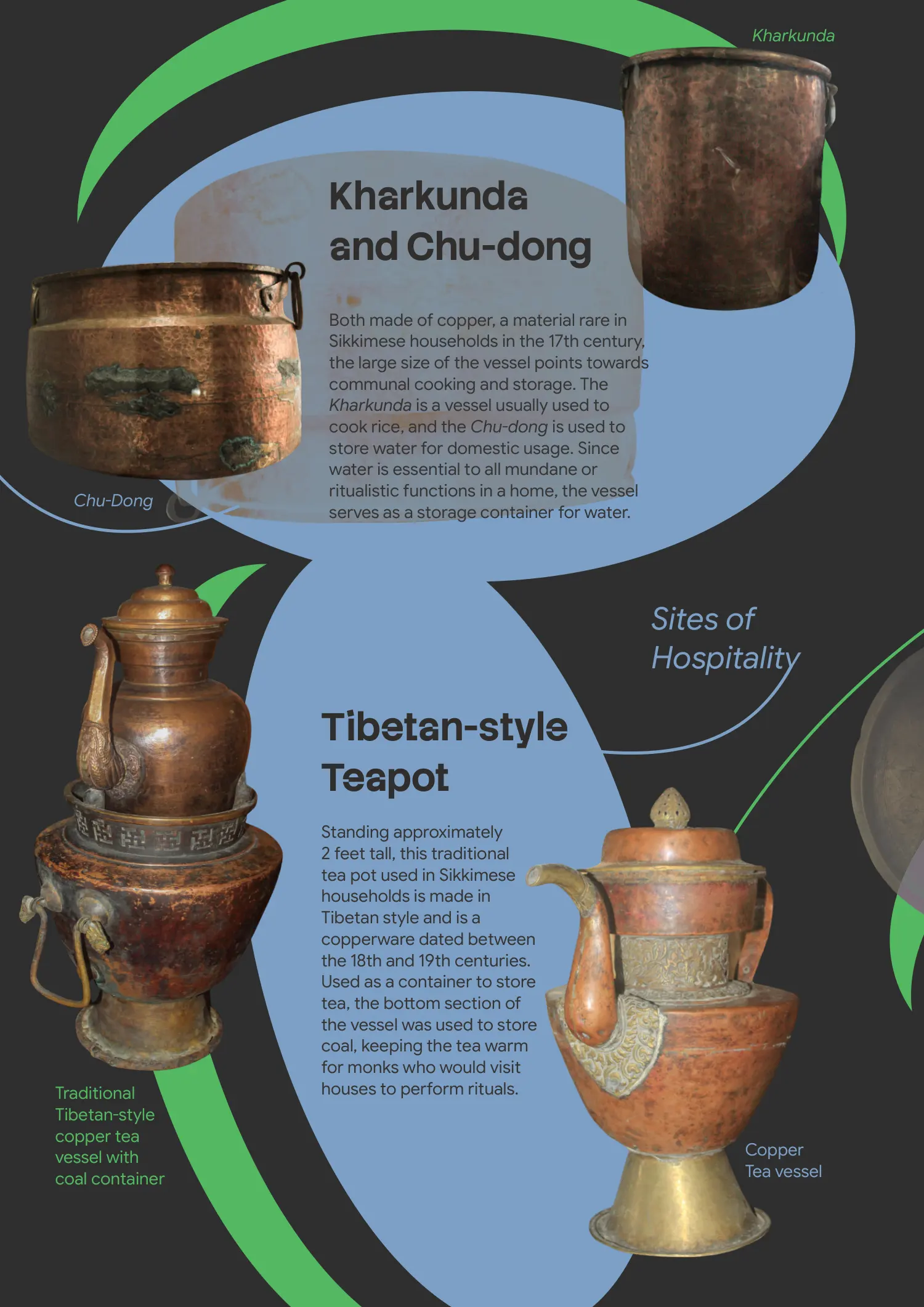
Kharkunda
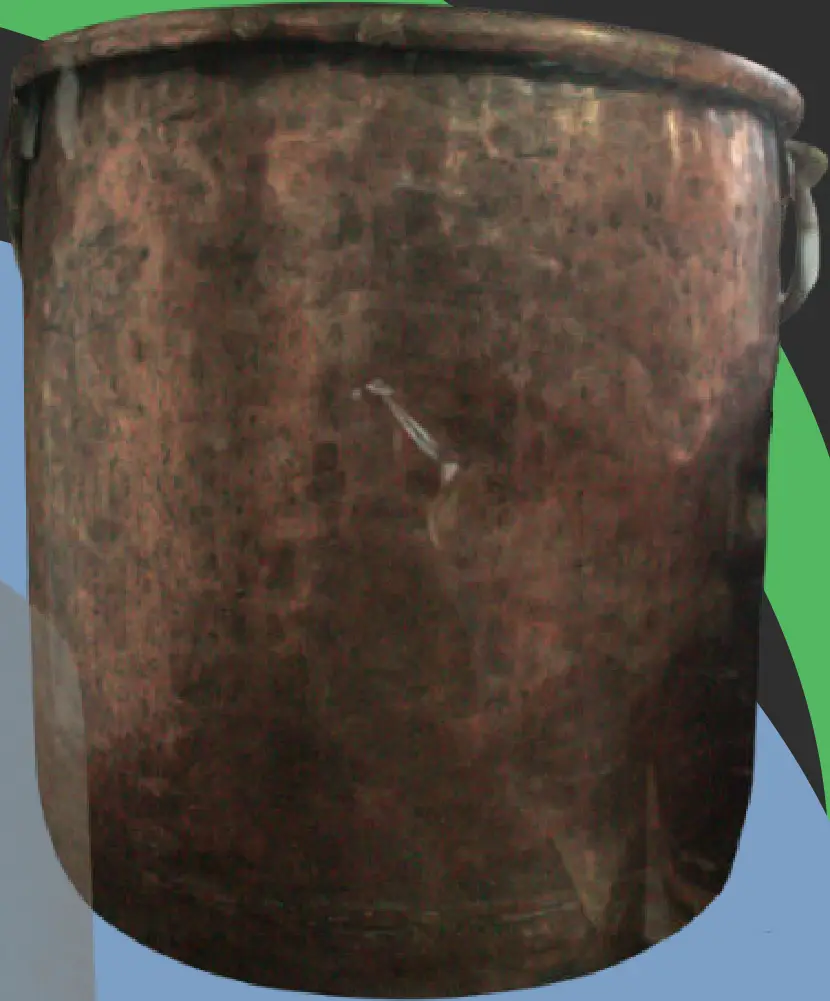
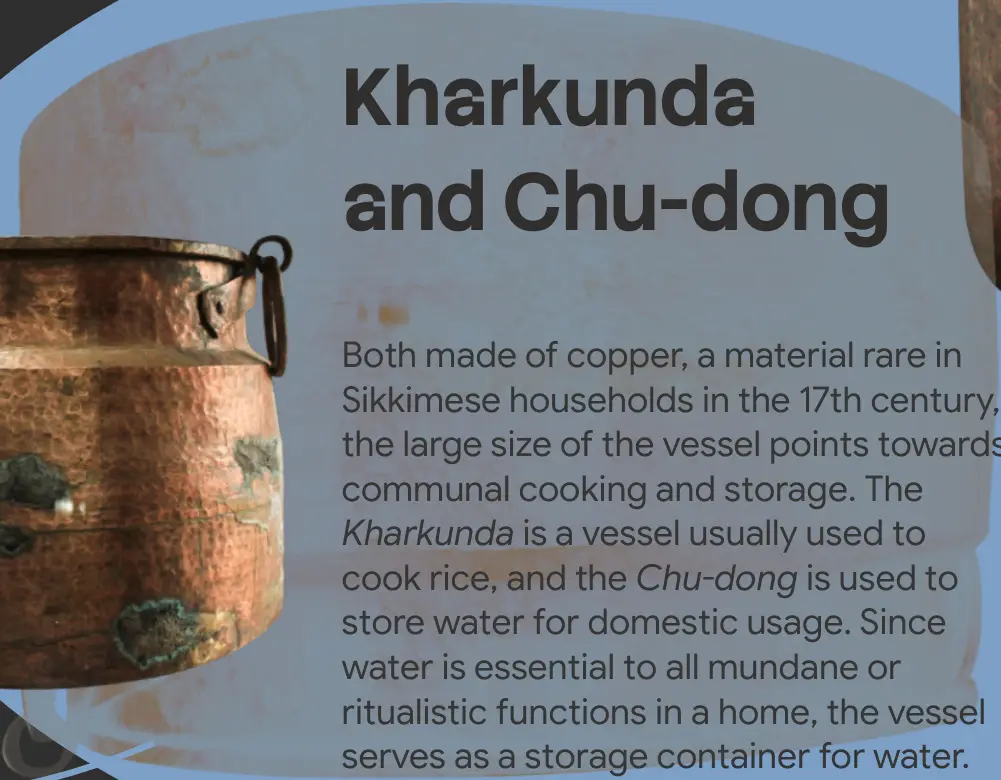
Kharkunda and Chu-dong
Chu-Dong
Both made of copper, a material rare in Sikkimese households in the 17th century, the large size of the vessel points towards communal cooking and storage. The Kharkunda is a vessel usually used to cook rice, and the Chu-dong is used to store water for domestic usage. Since water is essential to all mundane or ritualistic functions in a home, the vessel serves as a storage container for water.
Sites of Hospitality
Tibetan-style Teapot
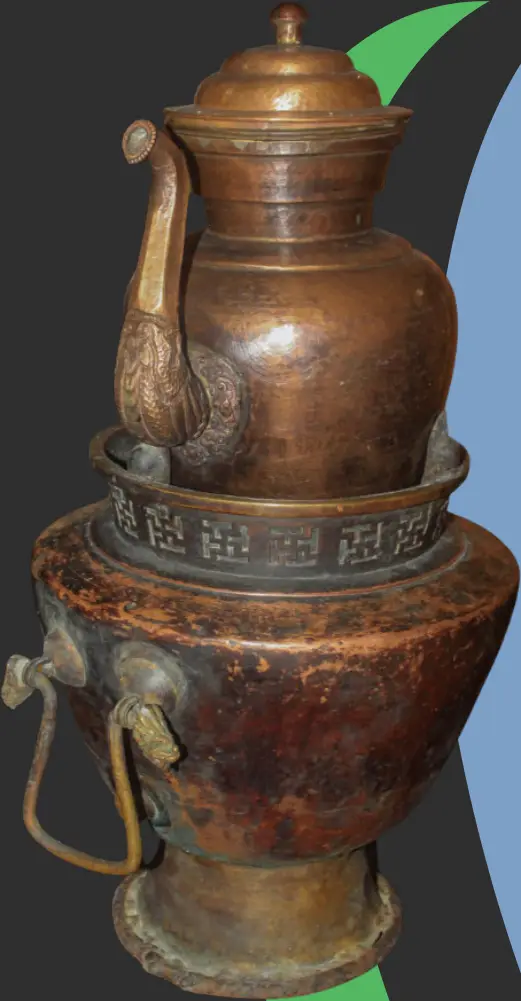
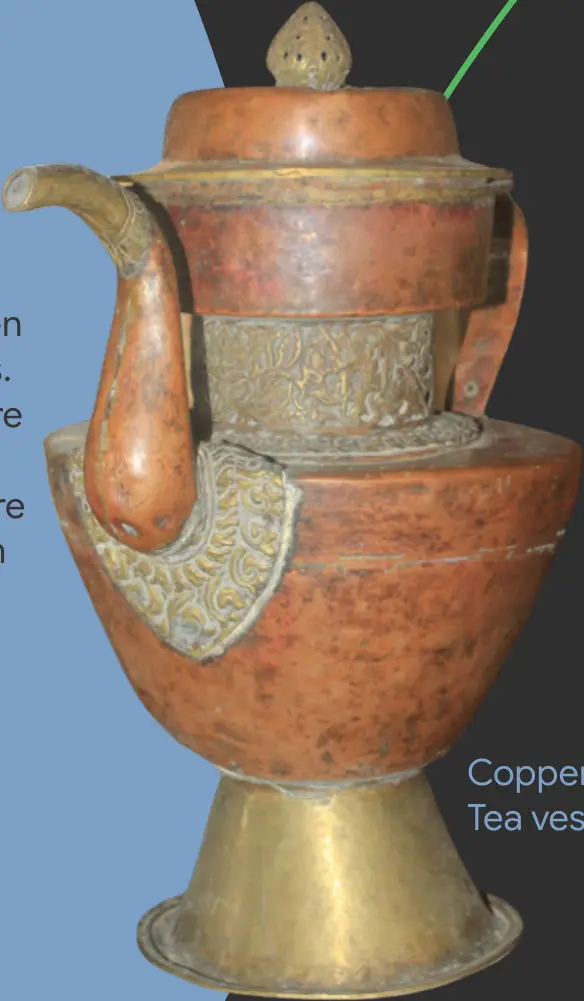
Standing approximately 2 feet tall, this traditional tea pot used in Sikkimese households is made in Tibetan style and is a copperware dated between the 18th and 19th centuries. Used as a container to store tea, the bottom section of the vessel was used to store coal, keeping the tea warm for monks who would visit houses to perform rituals.
Copper Tea vessel
Traditional Tibetan-style copper tea vessel with coal container
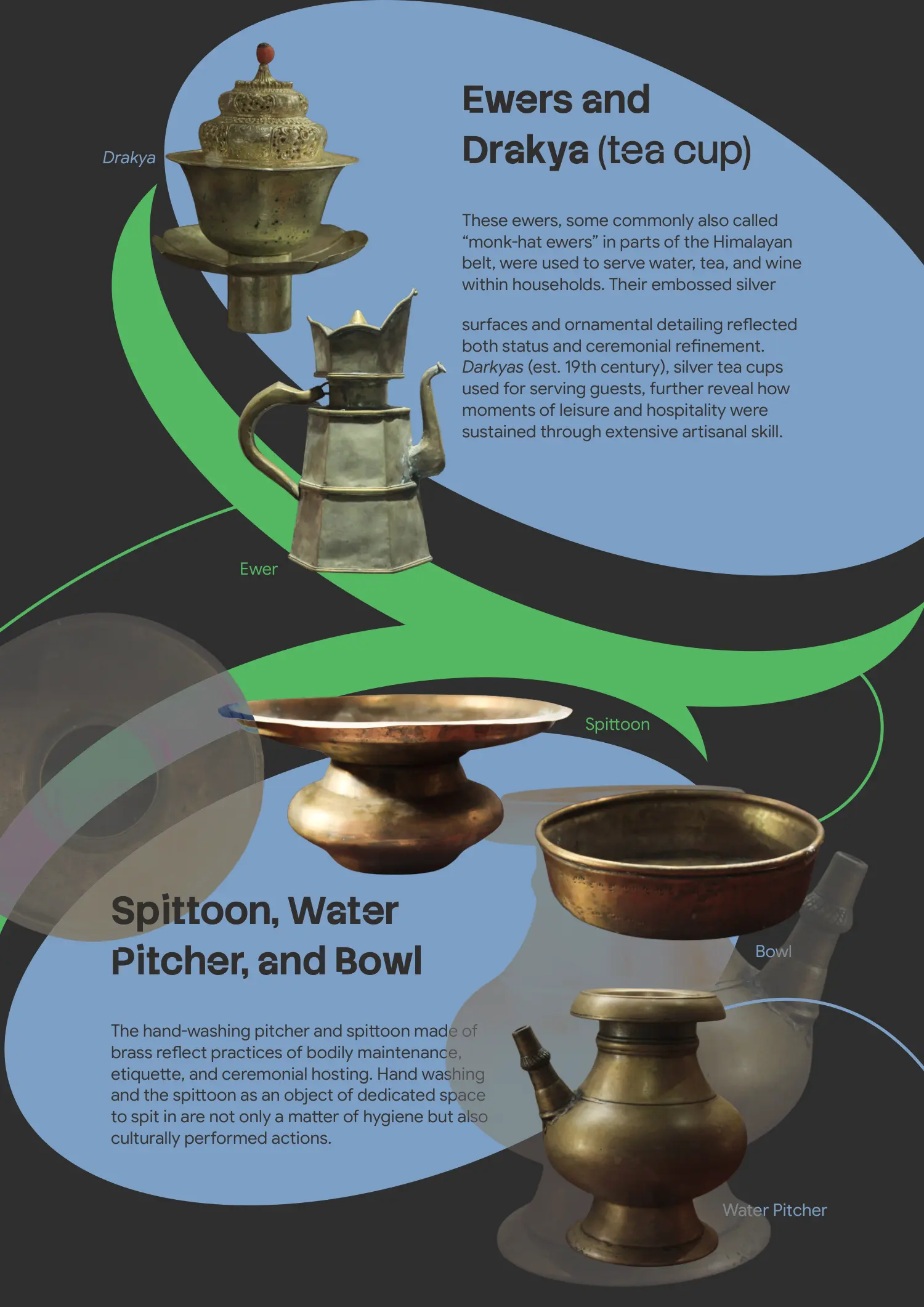
Drakya
Ewers and Drakya (tea cup)
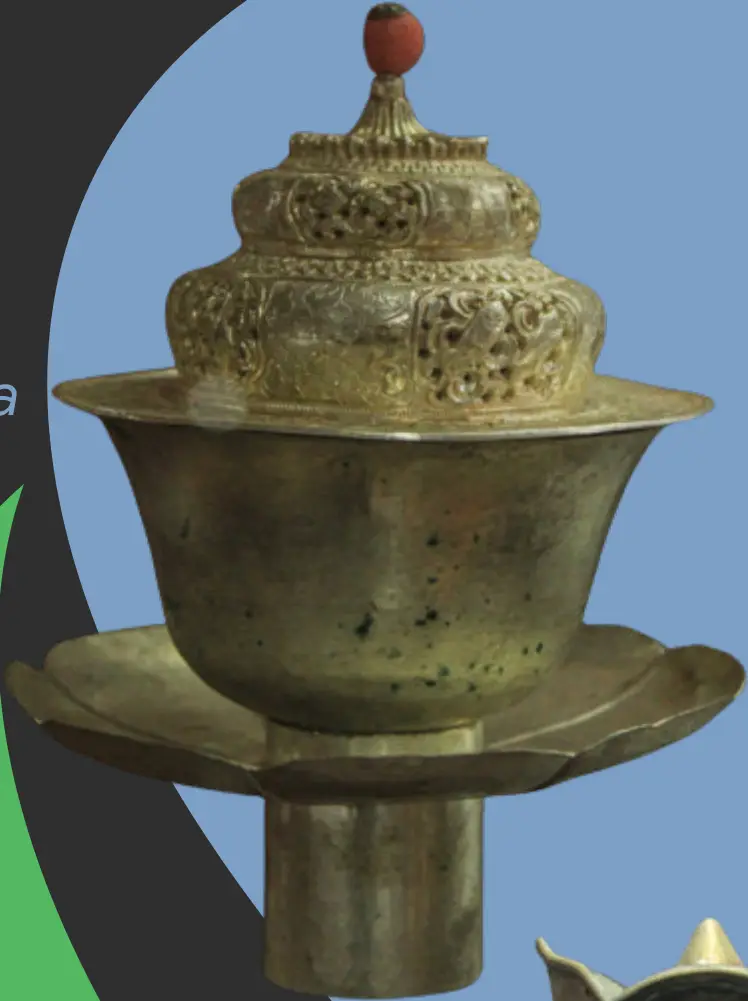
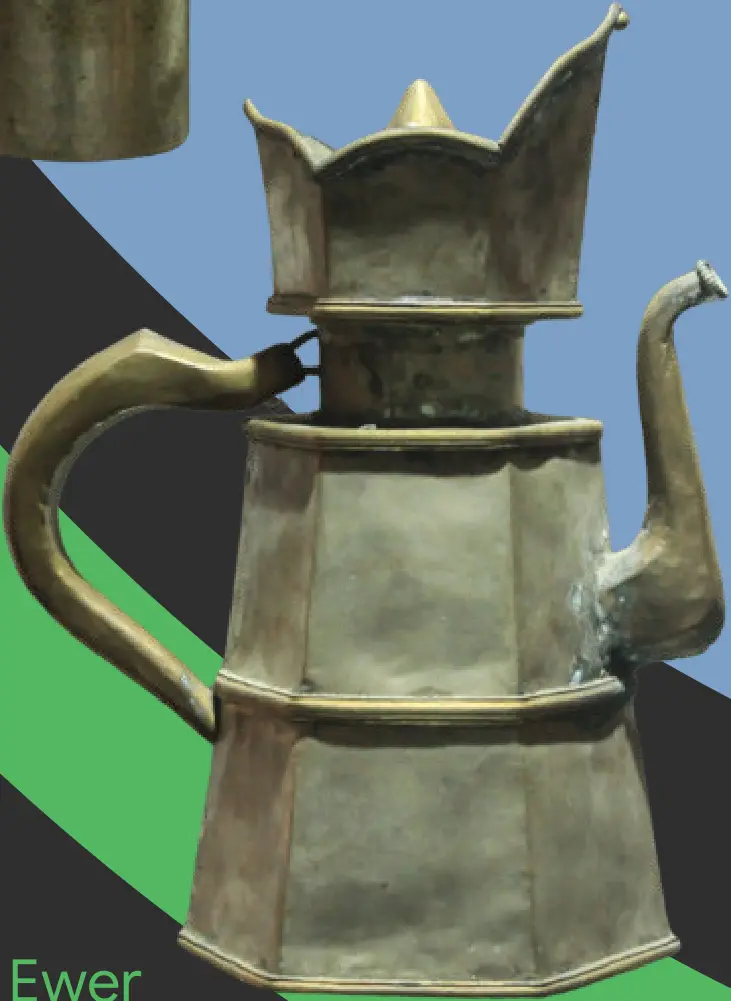
These ewers, some commonly also called “monk-hat ewers” in parts of the Himalayan belt, were used to serve water, tea, and wine within households. Their embossed silver
surfaces and ornamental detailing reflected both status and ceremonial refinement. Darkyas (est. 19th century), silver tea cups used for serving guests, further reveal how moments of leisure and hospitality were sustained through extensive artisanal skill.
Ewer
Spittoon
Bowl
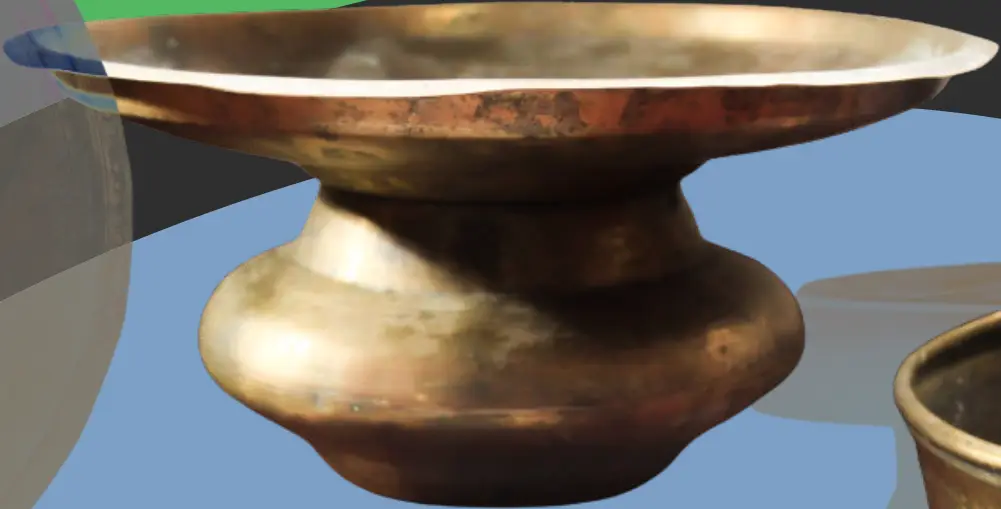
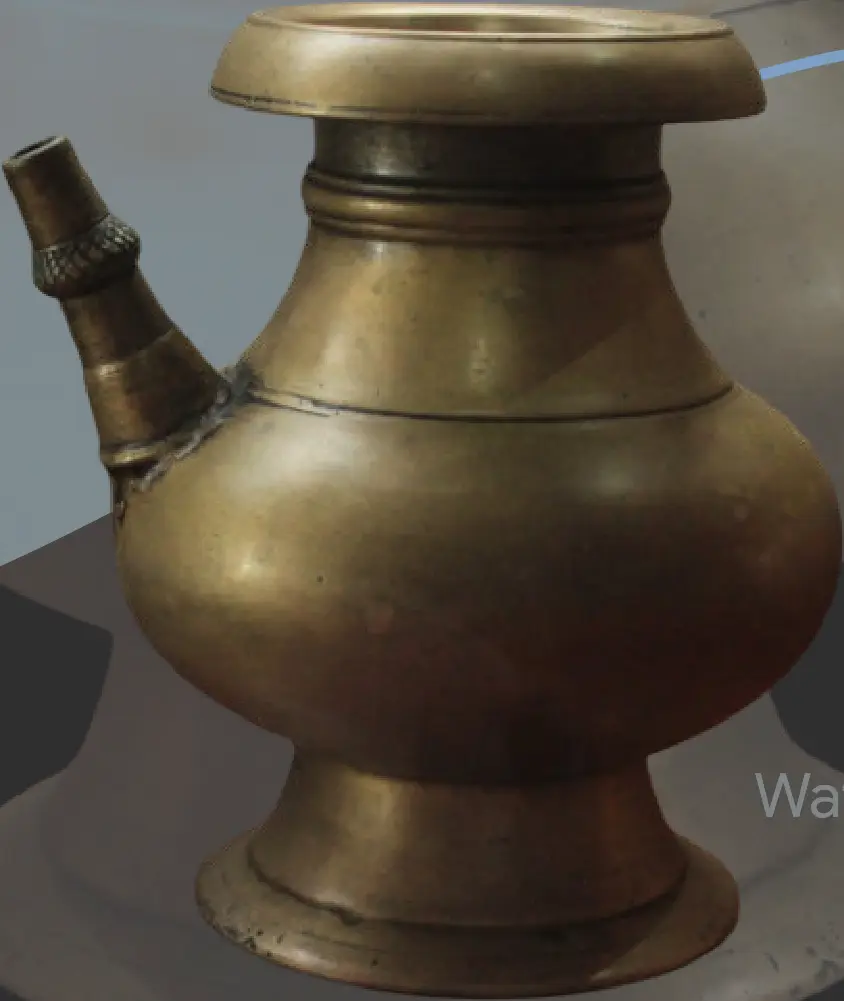
Spittoon, Water Pitcher, and Bowl
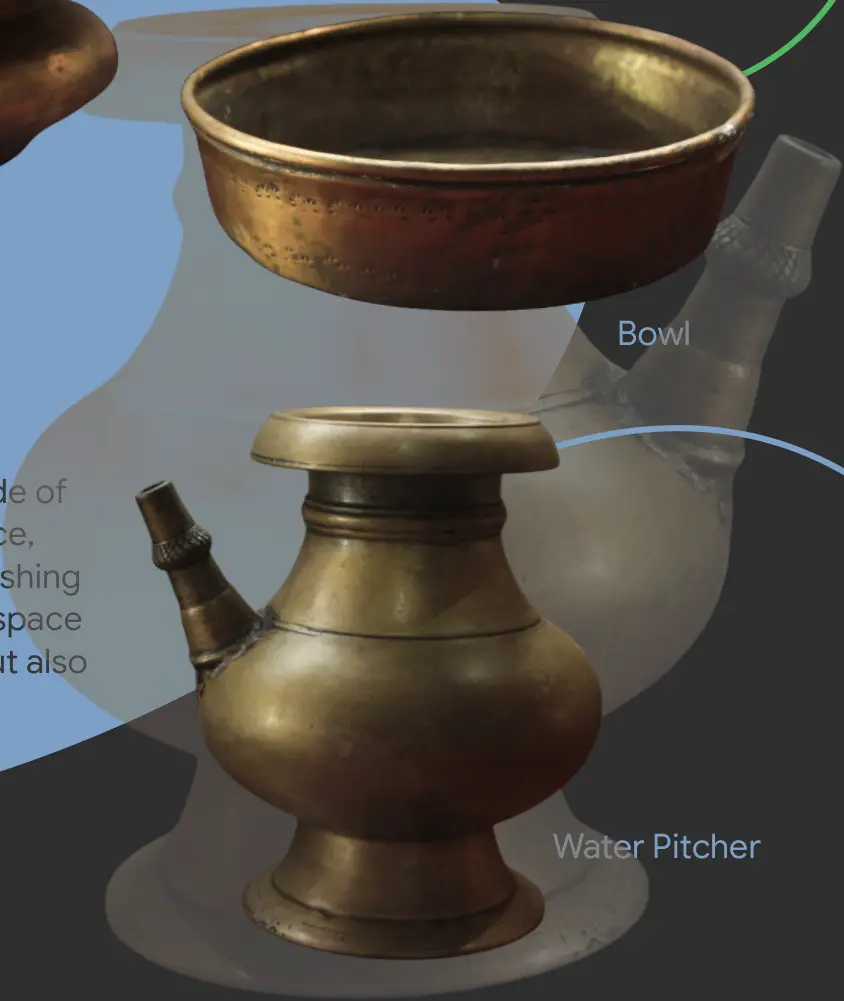
The hand-washing pitcher and spittoon made of brass reflect practices of bodily maintenance, etiquette, and ceremonial hosting. Hand washing and the spittoon as an object of dedicated space to spit in are not only a matter of hygiene but also culturally performed actions.
Water Pitcher
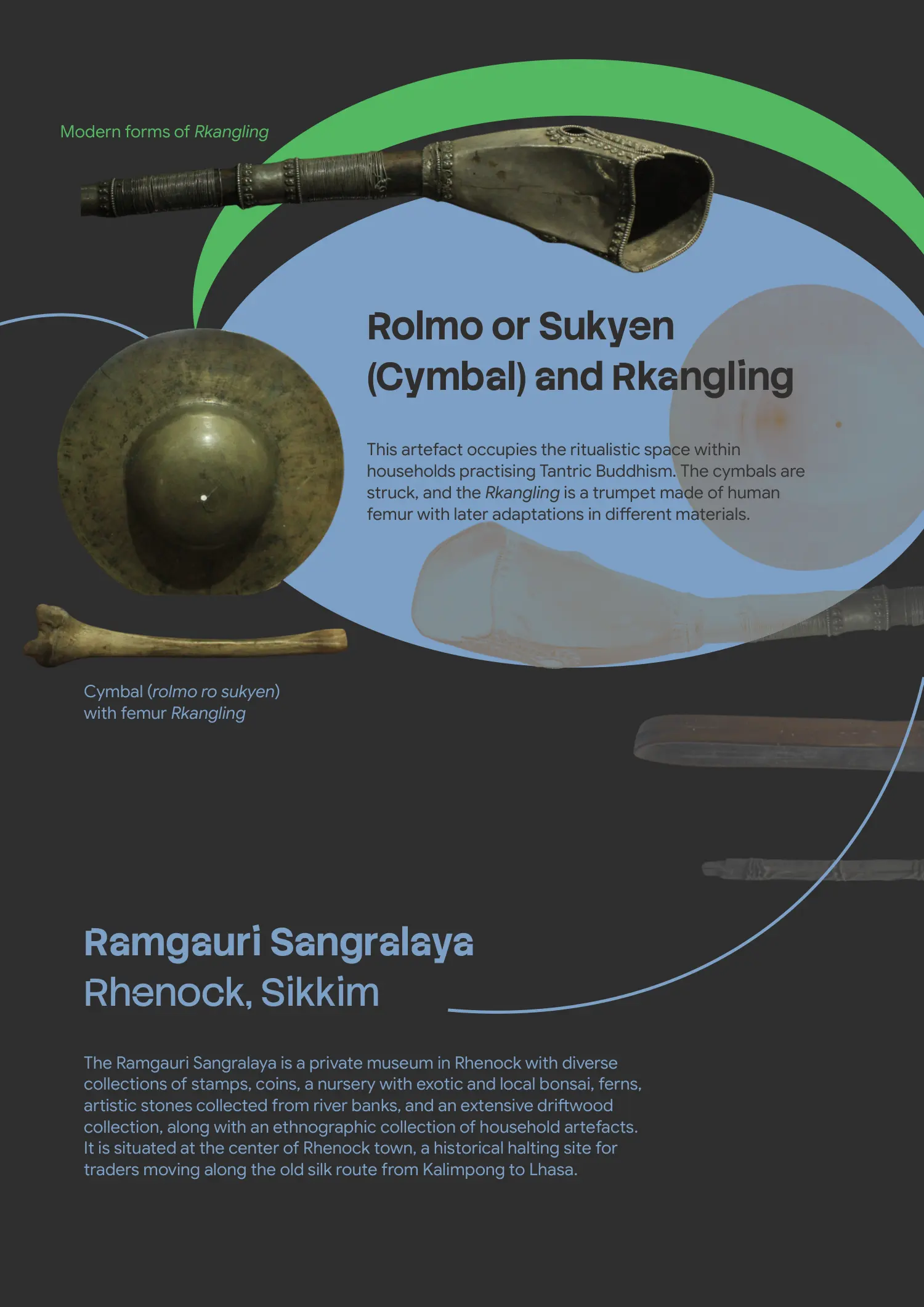
Modern forms of Rkangling
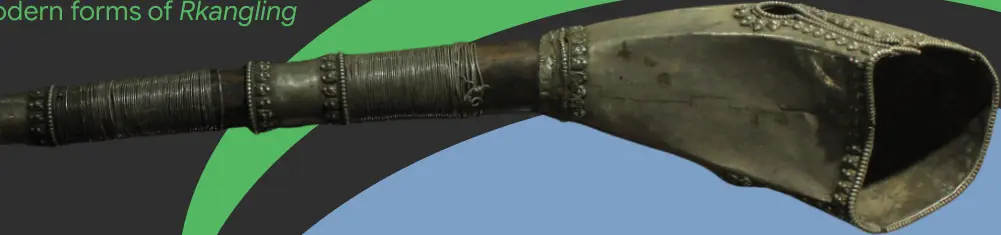
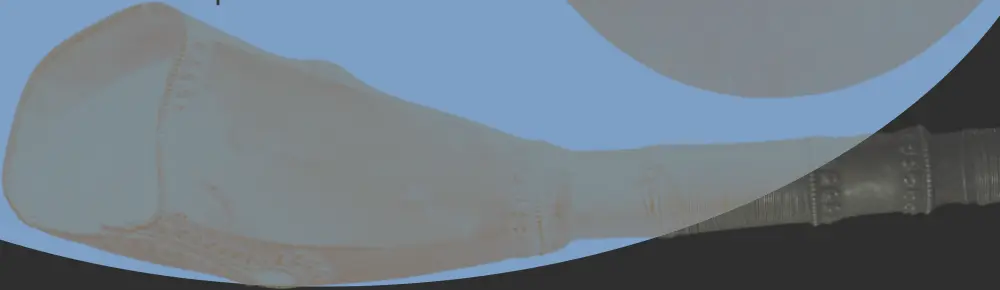
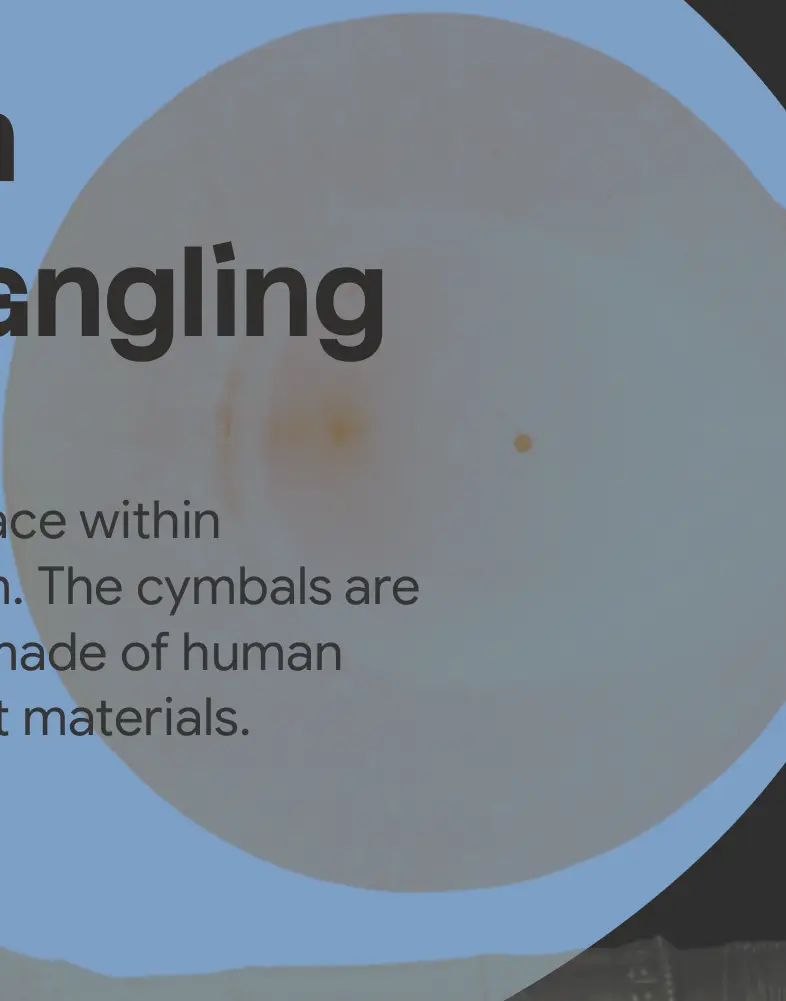
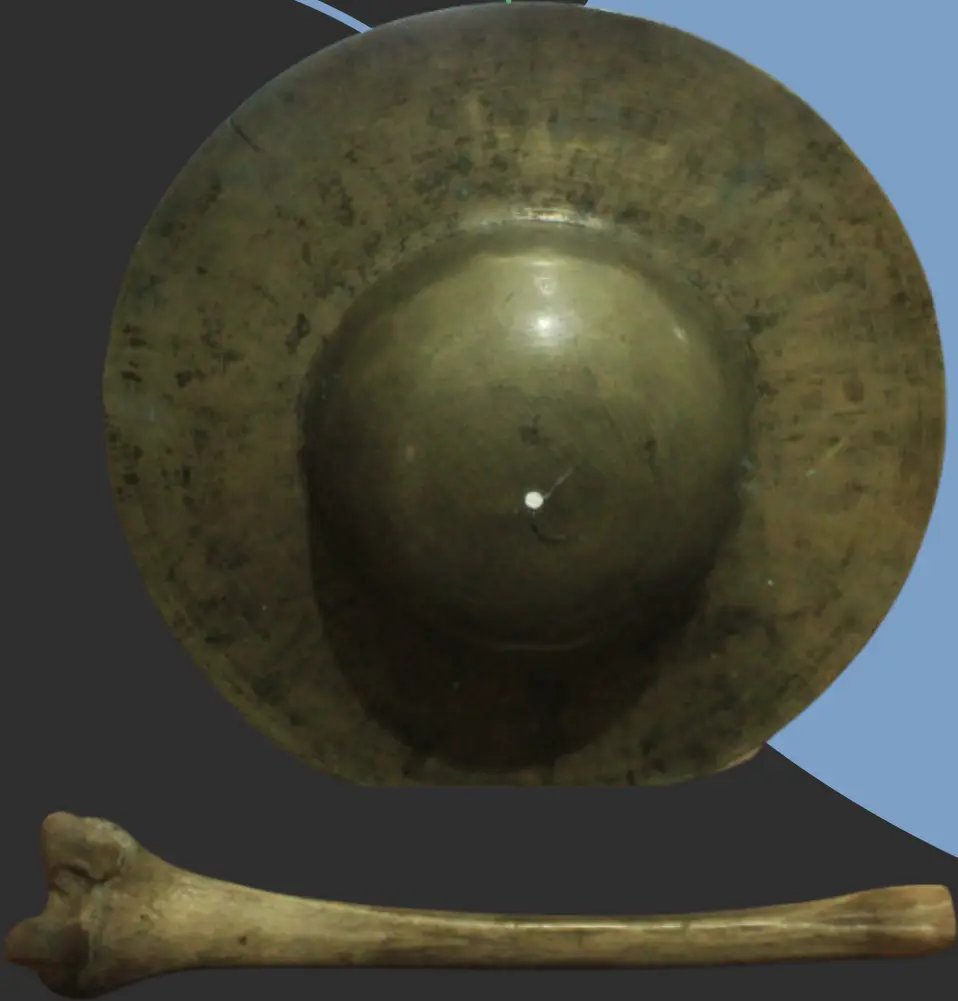
Rolmo or Sukyen (Cymbal) and Rkangling
This artefact occupies the ritualistic space within households practising Tantric Buddhism. The cymbals are struck, and the Rkangling is a trumpet made of human femur with later adaptations in different materials.
Cymbal (rolmo ro sukyen) with femur Rkangling
Ramgauri Sangralaya Rhenock, Sikkim
The Ramgauri Sangralaya is a private museum in Rhenock with diverse collections of stamps, coins, a nursery with exotic and local bonsai, ferns, artistic stones collected from river banks, and an extensive driftwood collection, along with an ethnographic collection of household artefacts. It is situated at the center of Rhenock town, a historical halting site for traders moving along the old silk route from Kalimpong to Lhasa.
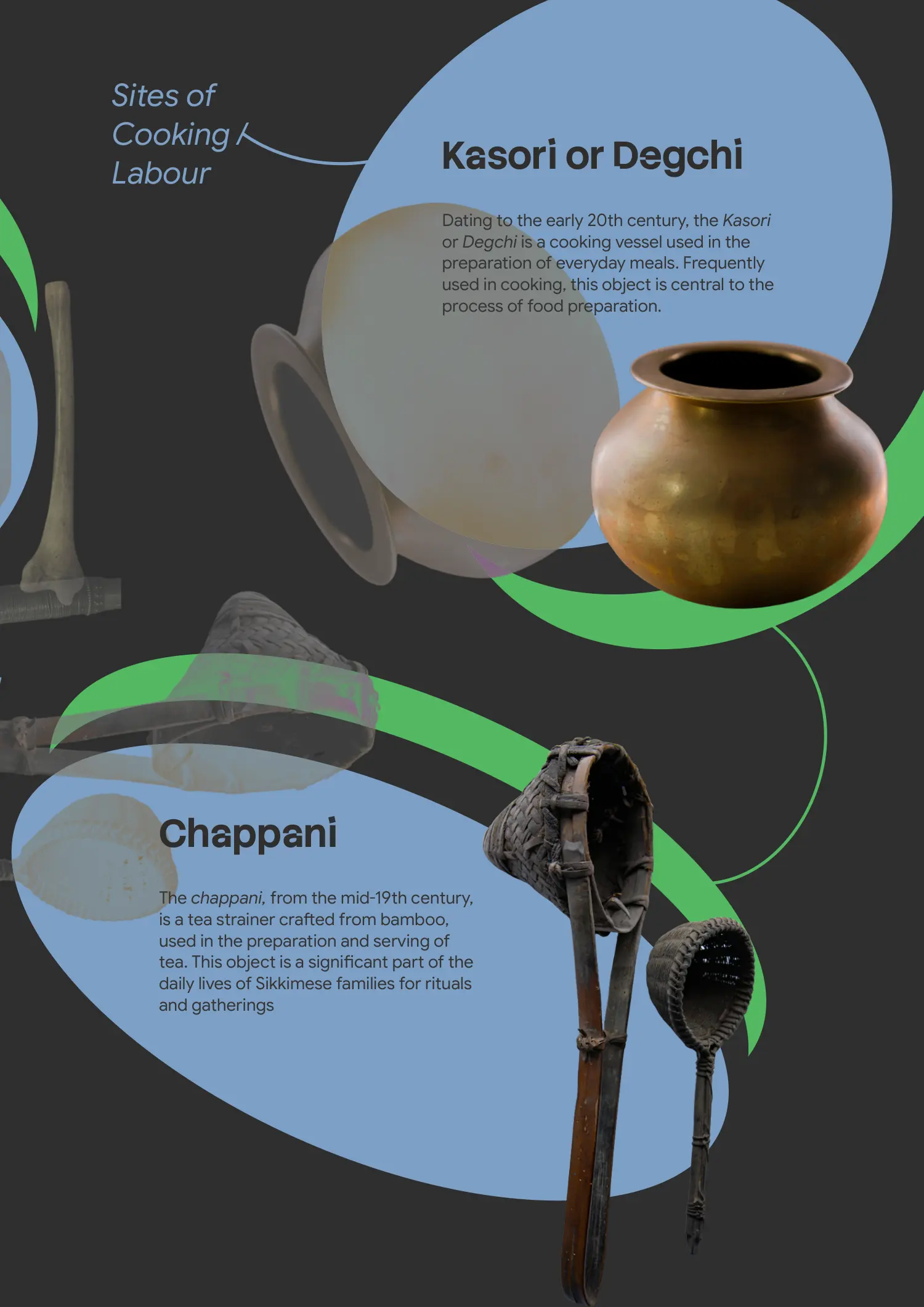
Sites of Cooking / Labour Kasori or Degchi
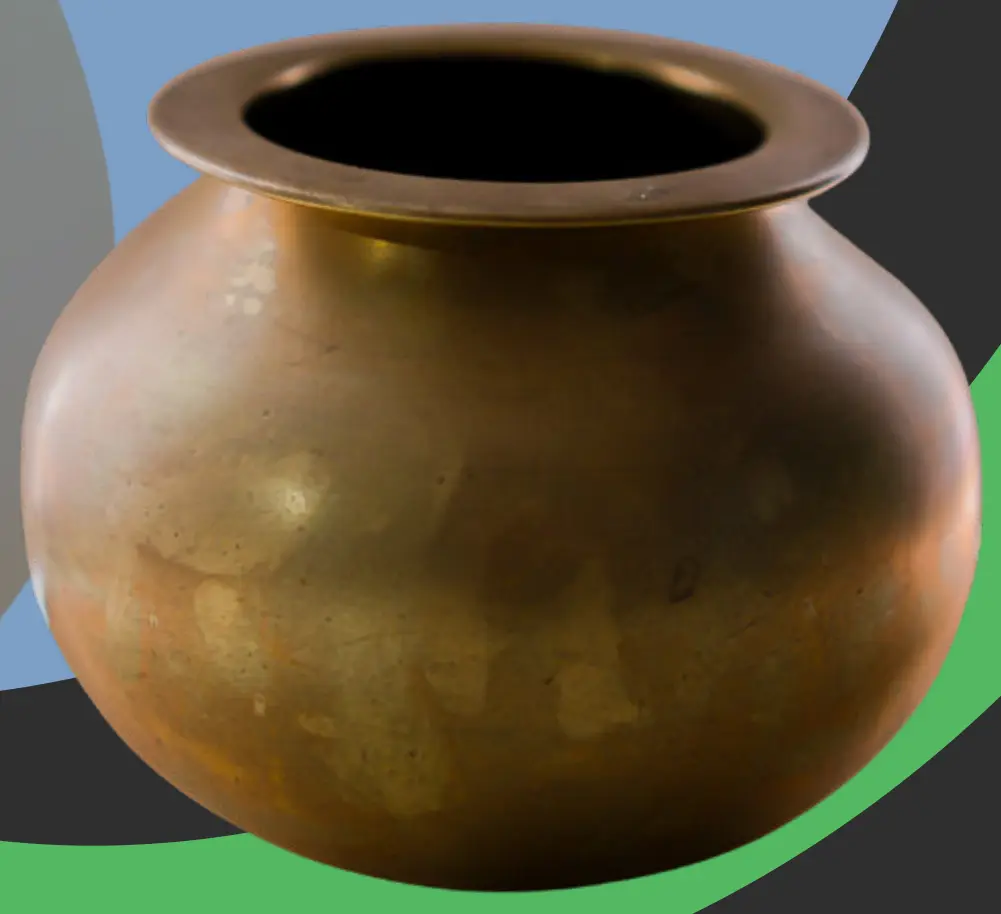
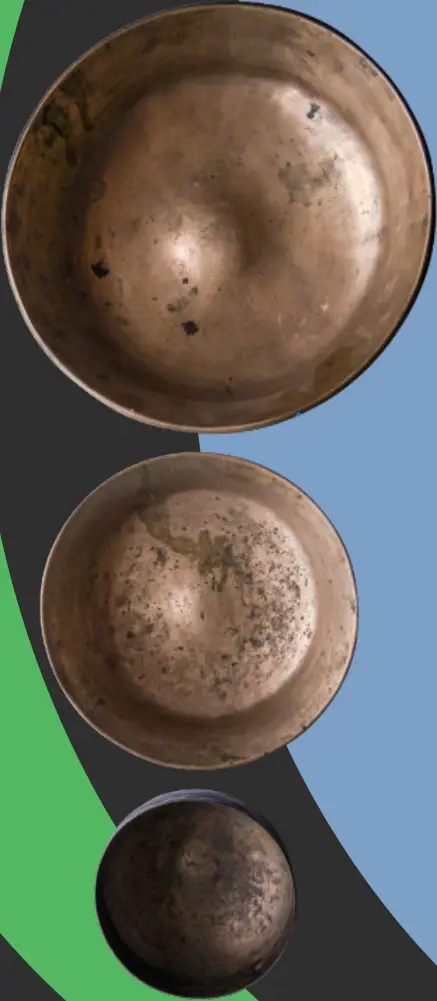
Dating to the early 20th century, the Kasori or Degchi is a cooking vessel used in the preparation of everyday meals. Frequently used in cooking, this object is central to the process of food preparation.
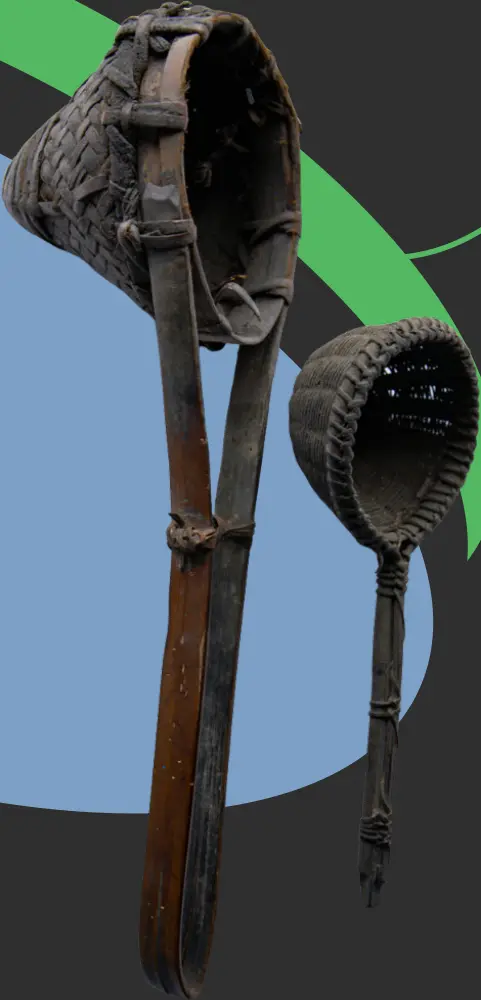
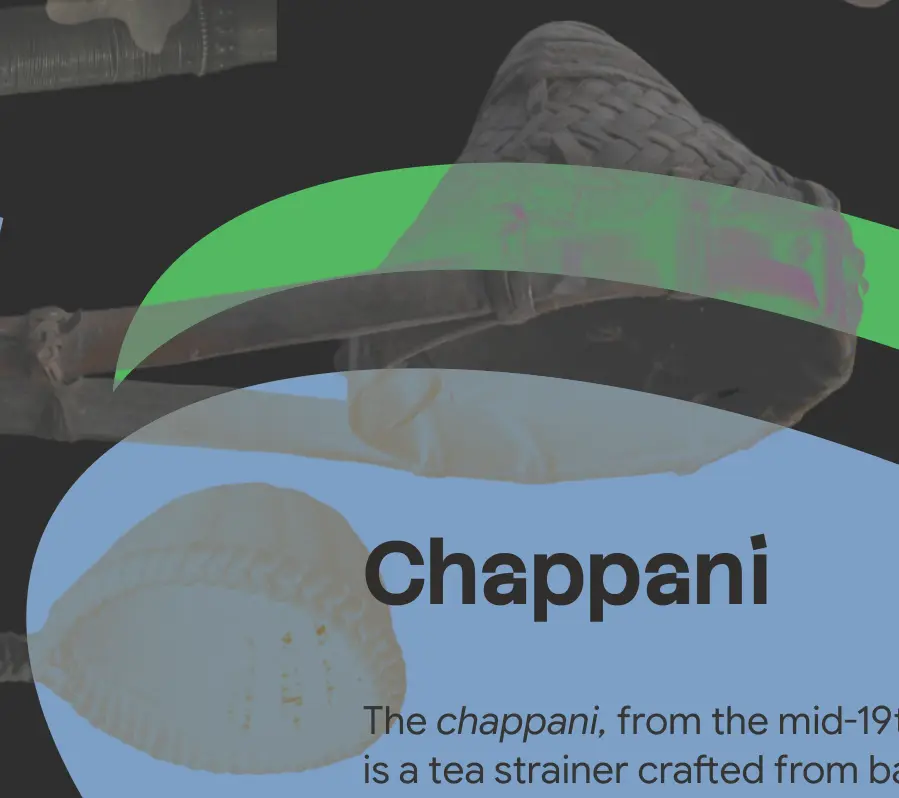
Chappani
The chappani, from the mid-19th century, is a tea strainer crafted from bamboo, used in the preparation and serving of tea. This object is a significant part of the daily lives of Sikkimese families for rituals and gatherings
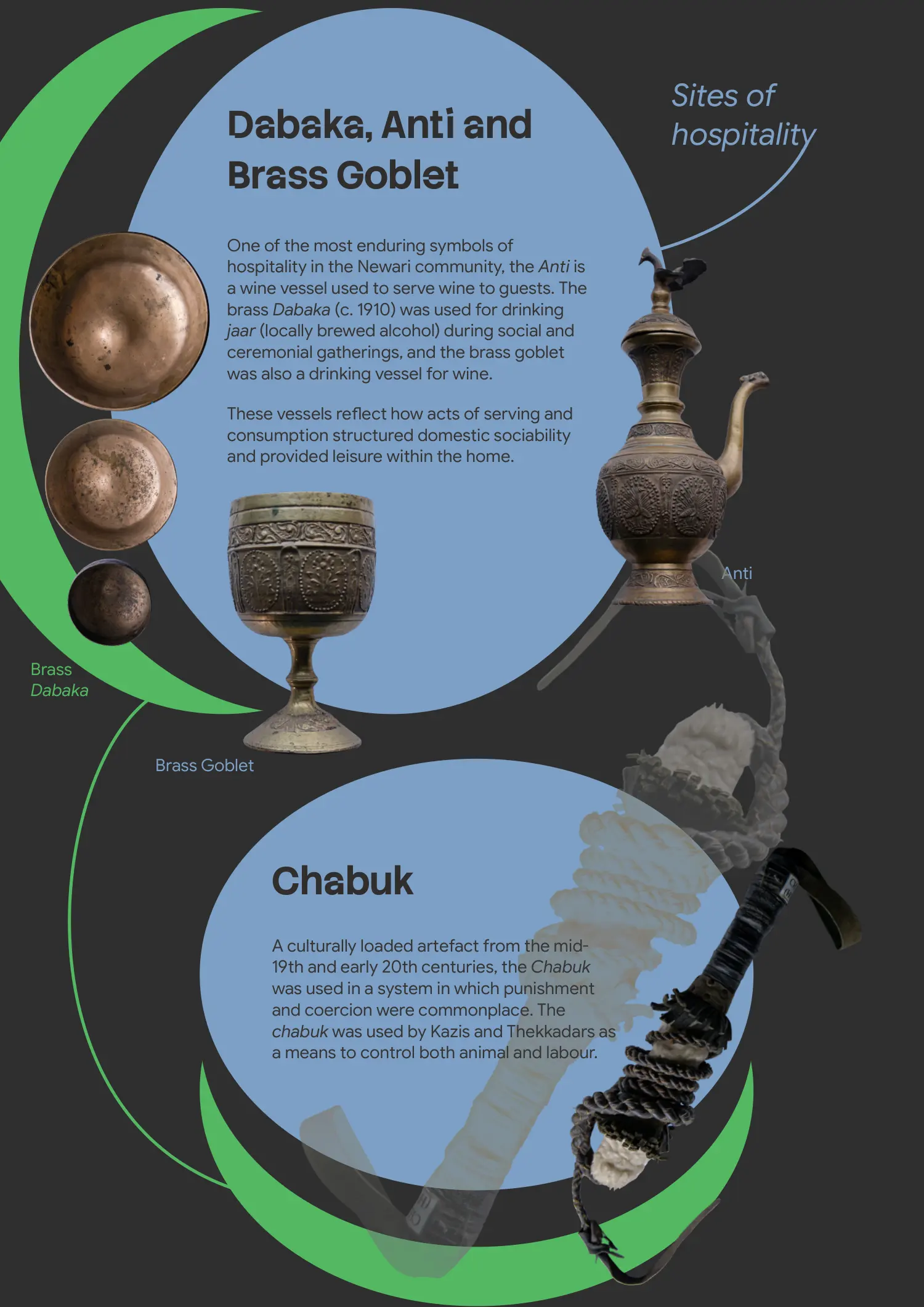
Sites of hospitality Dabaka, Anti and Brass Goblet
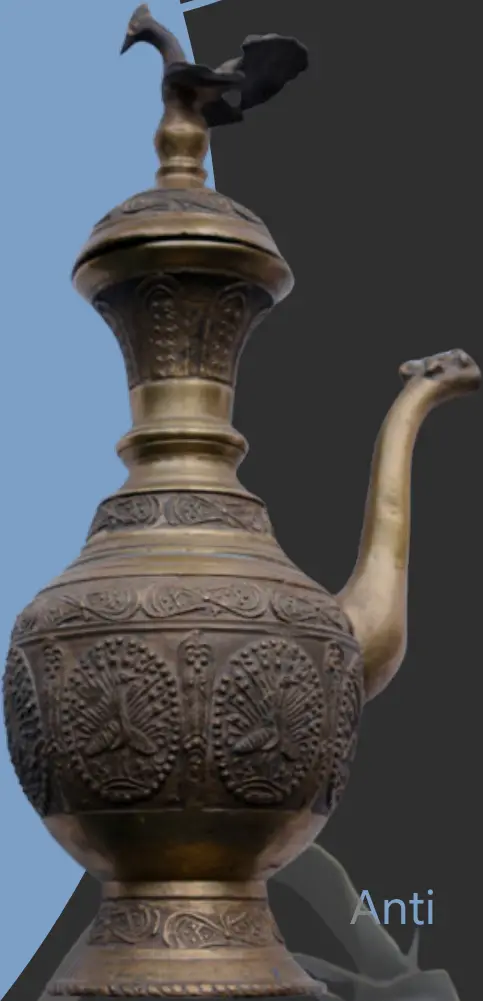
One of the most enduring symbols of hospitality in the Newari community, the Anti is a wine vessel used to serve wine to guests. The brass Dabaka (c. 1910) was used for drinking jaar (locally brewed alcohol) during social and ceremonial gatherings, and the brass goblet was also a drinking vessel for wine.
These vessels reflect how acts of serving and consumption structured domestic sociability and provided leisure within the home.
Anti
Brass Dabaka
Brass Goblet
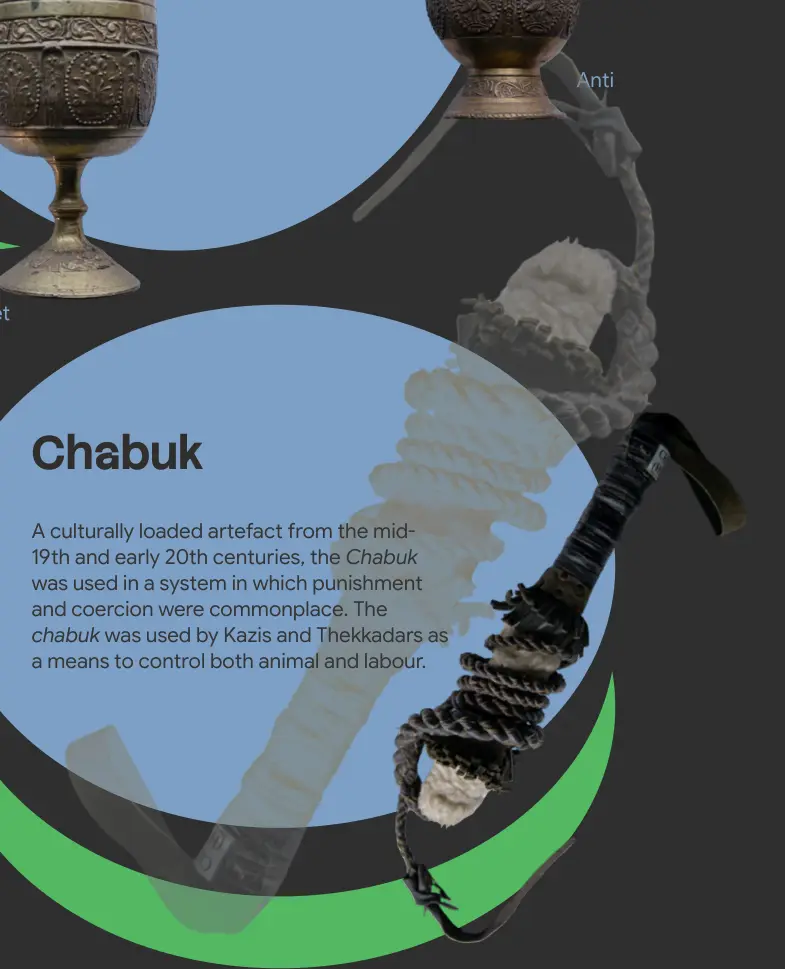
Chabuk
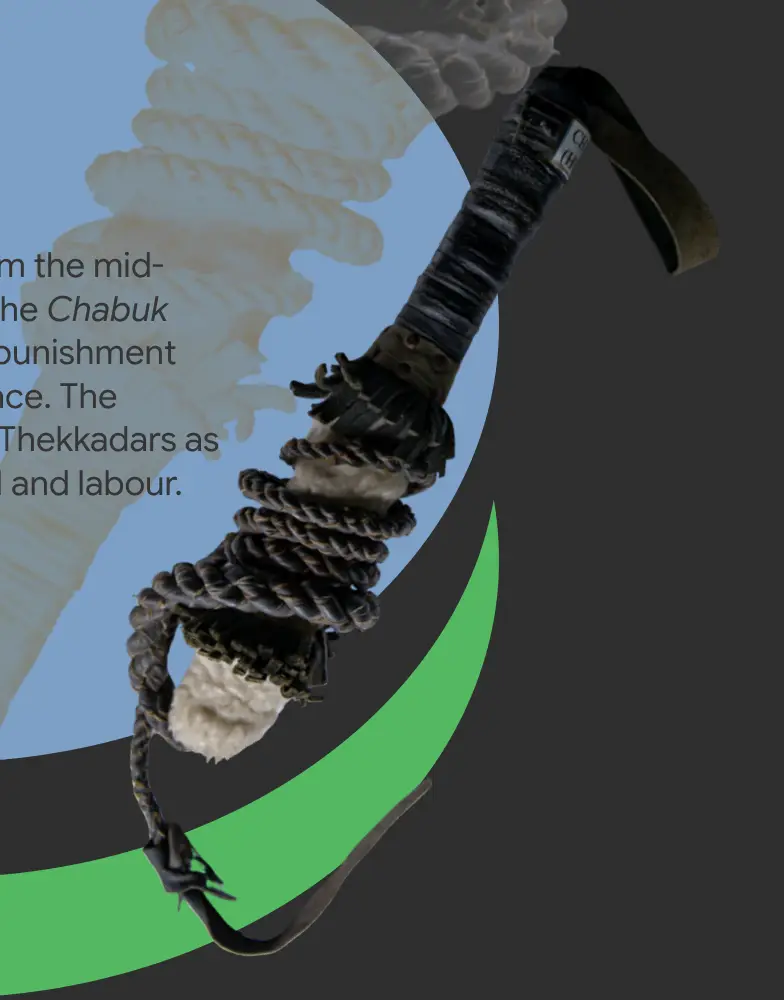
A culturally loaded artefact from the mid- 19th and early 20th centuries, the Chabuk was used in a system in which punishment and coercion were commonplace. The chabuk was used by Kazis and Thekkadars as a means to control both animal and labour.
Nepali Museum Aho, Sikkim
A community effort of the Aho Yuva Kalyan Sangh, the museum hosts collections and donations from households across Sikkim, and hosts domestic and ritual artefacts of an agrarian Sikkimese past. Though called the Nepali museum, the collection houses artefacts from across ethnicities and tribes from the Himalayan region.
Site of production
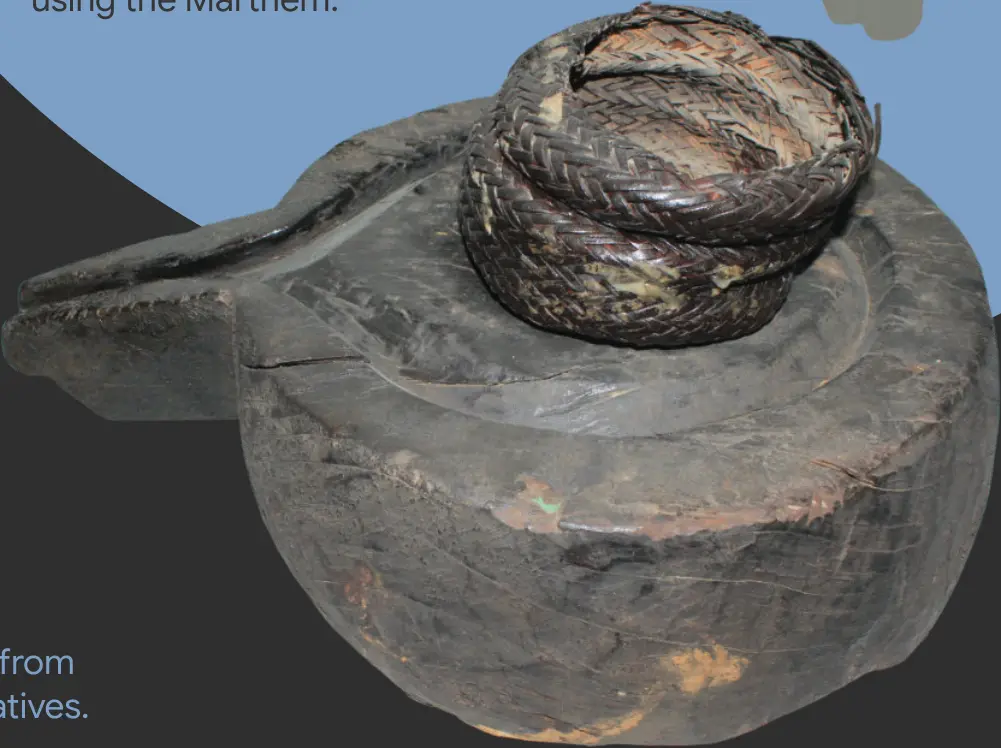
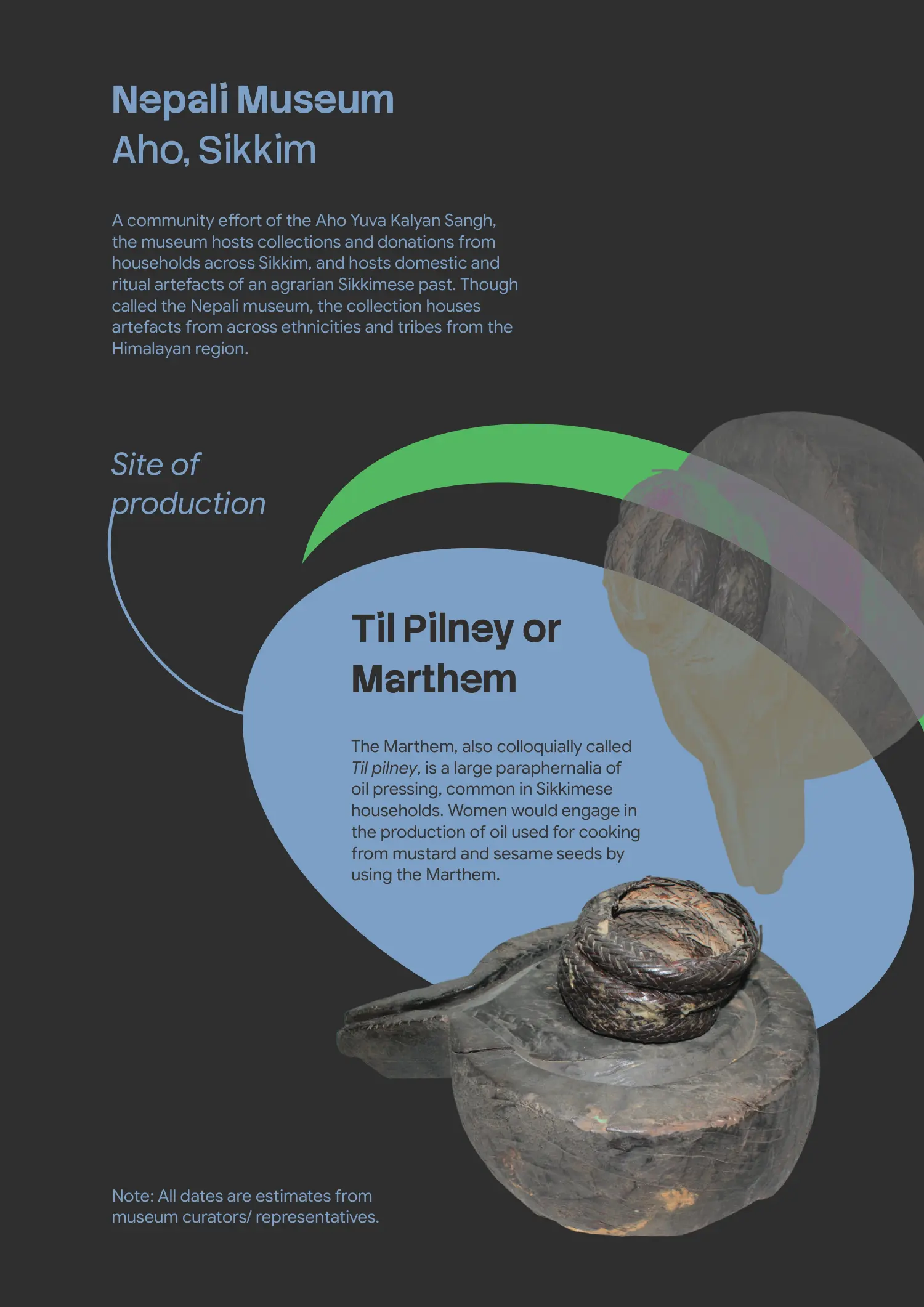
Til Pilney or Marthem
The Marthem, also colloquially called Til pilney, is a large paraphernalia of oil pressing, common in Sikkimese households. Women would engage in the production of oil used for cooking from mustard and sesame seeds by using the Marthem.
Note: All dates are estimates from museum curators/ representatives.
View original pages, photographs & credits
Originally published in Museum Mosaic 2025, published May 2026.
Part of our annual review. Descriptions reflect the publication’s reporting period.