The Constitution Museum and The Rights and Freedoms Academy
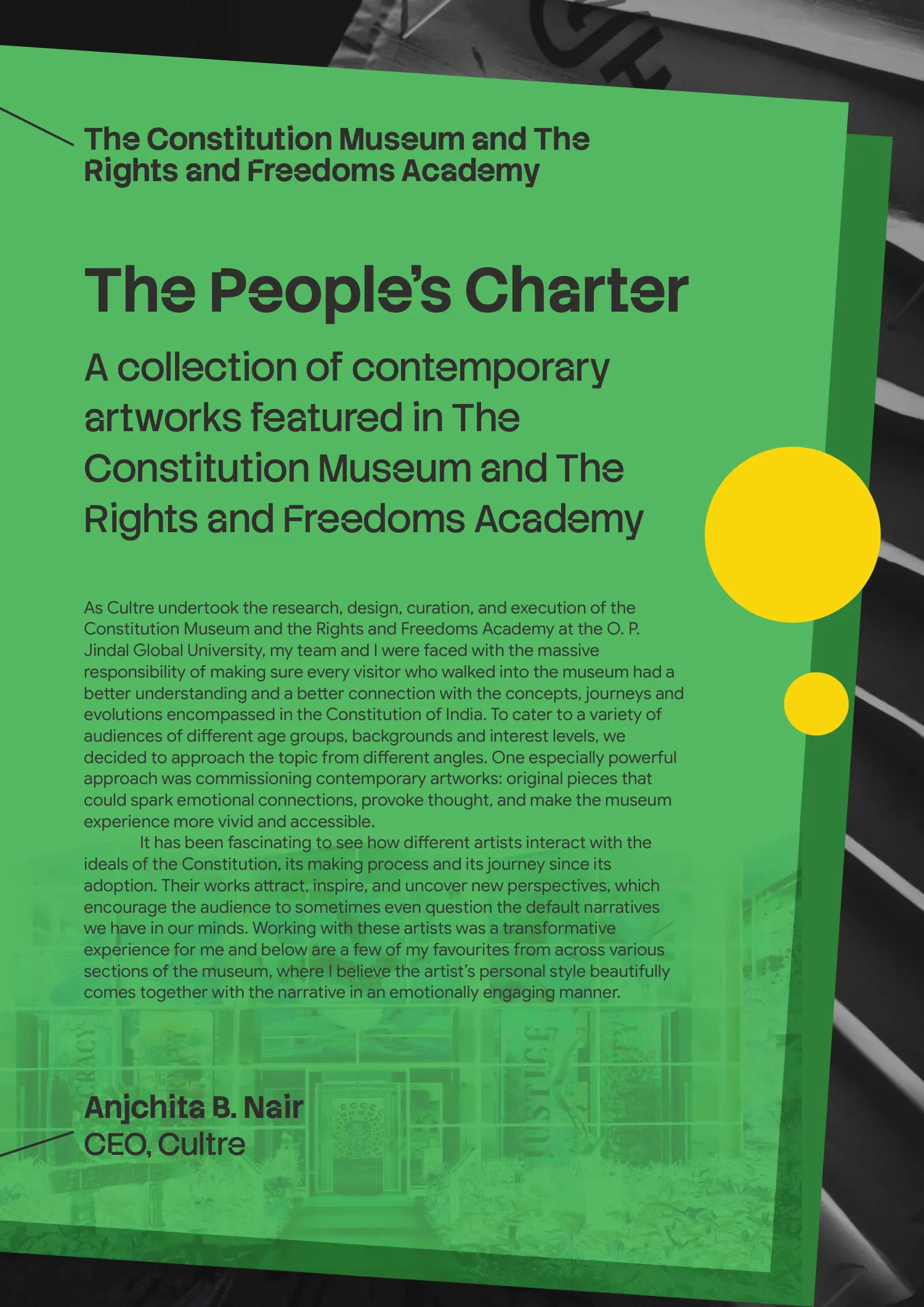
As Cultre undertook the research, design, curation, and execution of the Constitution Museum and the Rights and Freedoms Academy at the O. P. Jindal Global University, my team and I were faced with the massive responsibility of making sure every visitor who walked into the museum had a better understanding and a better connection with the concepts, journeys and evolutions encompassed in the Constitution of India. To cater to a variety of audiences of different age groups, backgrounds and interest levels, we decided to approach the topic from different angles. One especially powerful approach was commissioning contemporary artworks: original pieces that could spark emotional connections, provoke thought, and make the museum experience more vivid and accessible. It has been fascinating to see how different artists interact with the ideals of the Constitution, its making process and its journey since its adoption. Their works attract, inspire, and uncover new perspectives, which encourage the audience to sometimes even question the default narratives we have in our minds. Working with these artists was a transformative experience for me and below are a few of my favourites from across various sections of the museum, where I believe the artist’s personal style beautifully comes together with the narrative in an emotionally engaging manner.
Anjchita B. Nair CEO, Cultre
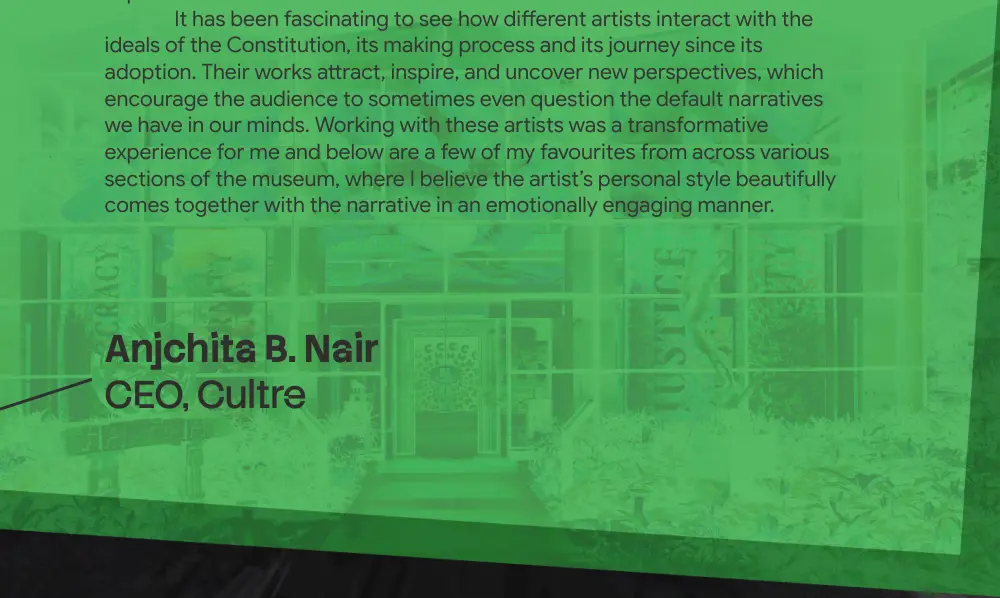
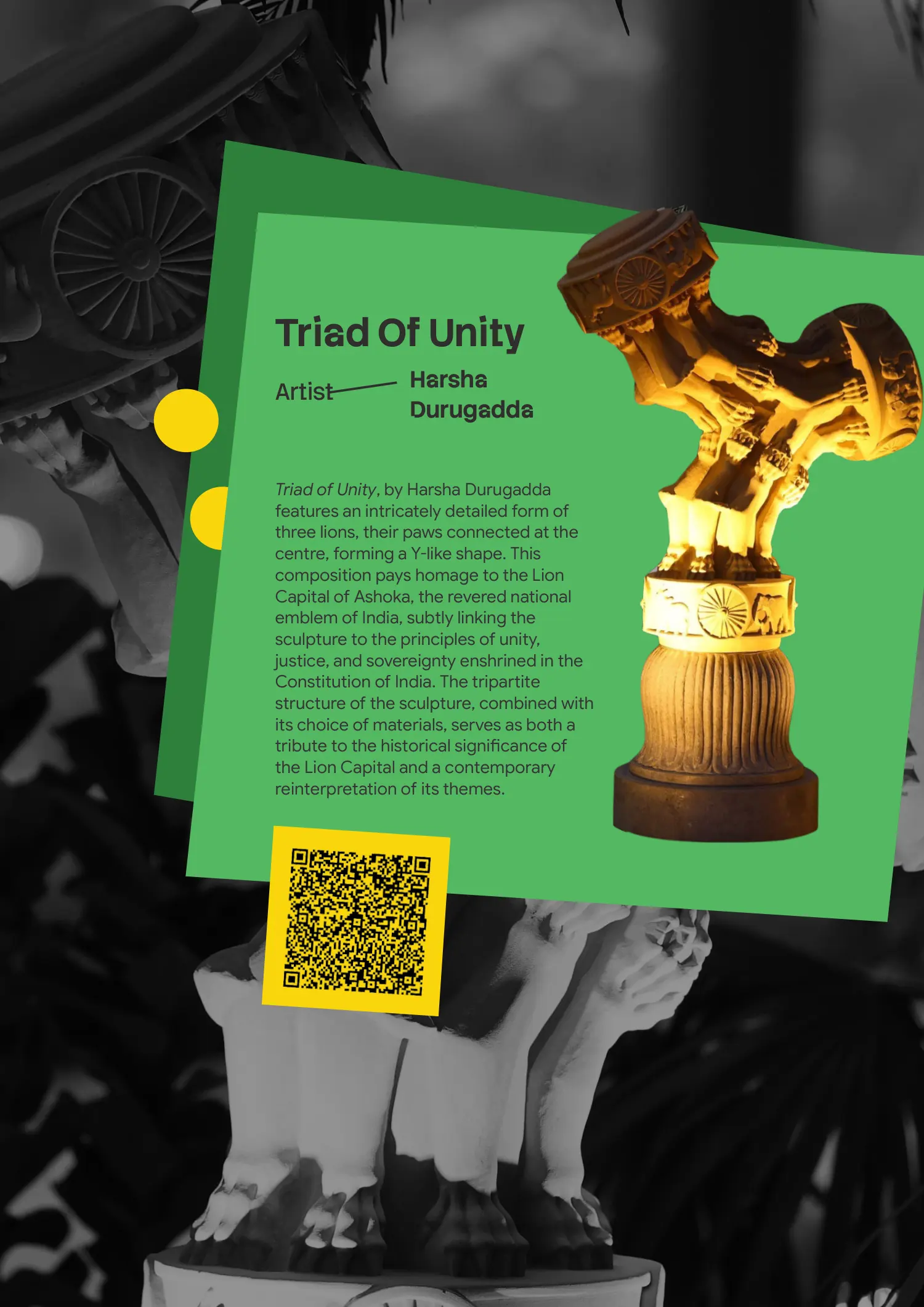
Triad Of Unity
Artist Harsha Durugadda
Triad of Unity, by Harsha Durugadda features an intricately detailed form of three lions, their paws connected at the centre, forming a Y-like shape. This composition pays homage to the Lion Capital of Ashoka, the revered national emblem of India, subtly linking the sculpture to the principles of unity, justice, and sovereignty enshrined in the Constitution of India. The tripartite structure of the sculpture, combined with its choice of materials, serves as both a tribute to the historical significance of the Lion Capital and a contemporary reinterpretation of its themes.
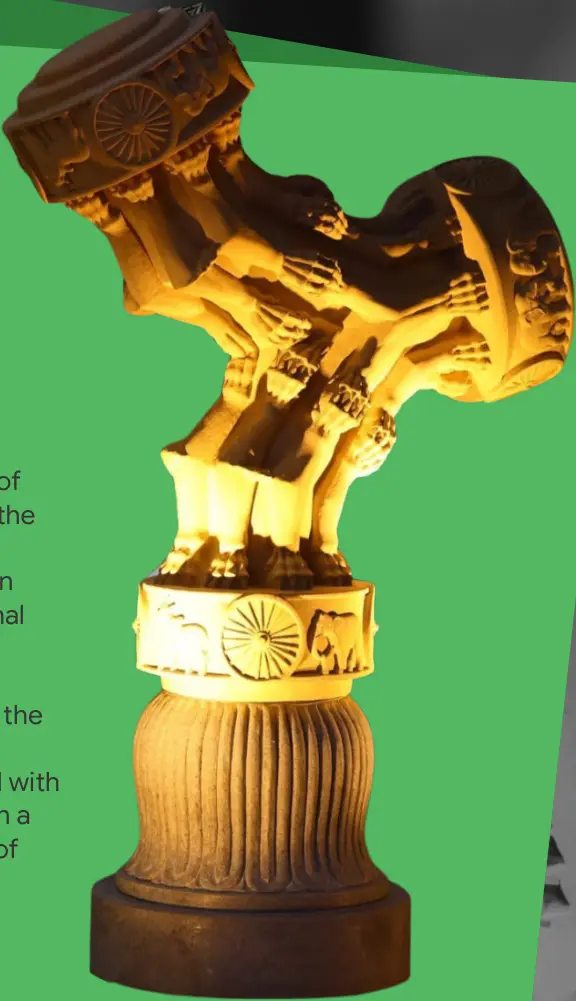
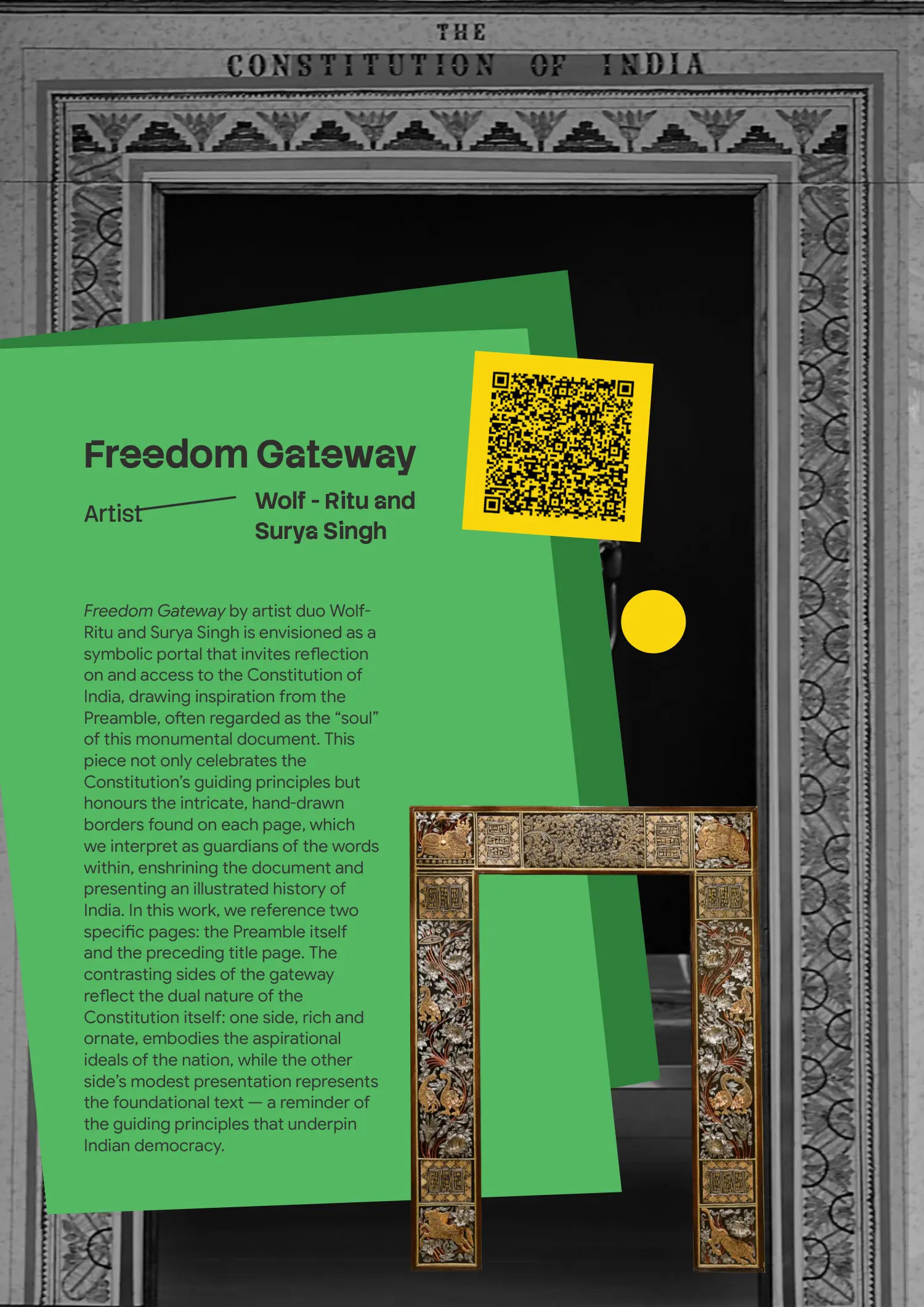
Freedom Gateway
Artist Wolf - Ritu and Surya Singh
Freedom Gateway by artist duo Wolf- Ritu and Surya Singh is envisioned as a symbolic portal that invites reflection on and access to the Constitution of India, drawing inspiration from the Preamble, often regarded as the “soul” of this monumental document. This piece not only celebrates the Constitution’s guiding principles but honours the intricate, hand-drawn borders found on each page, which we interpret as guardians of the words within, enshrining the document and presenting an illustrated history of India. In this work, we reference two specific pages: the Preamble itself and the preceding title page. The contrasting sides of the gateway reflect the dual nature of the Constitution itself: one side, rich and ornate, embodies the aspirational ideals of the nation, while the other side’s modest presentation represents the foundational text — a reminder of the guiding principles that underpin Indian democracy.
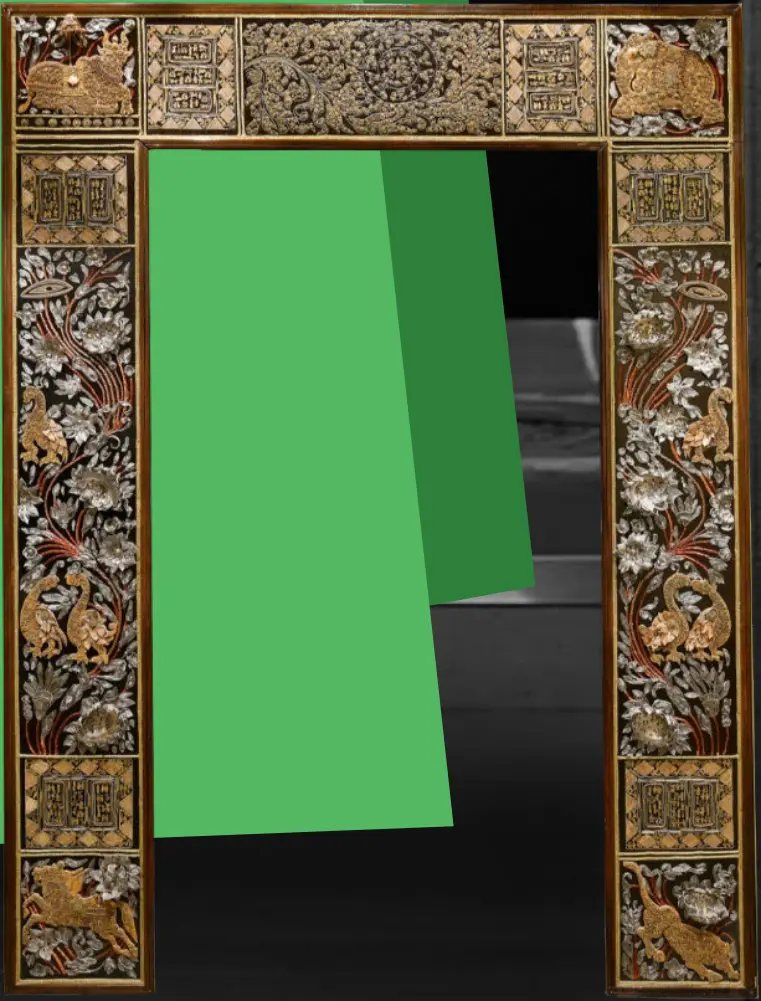
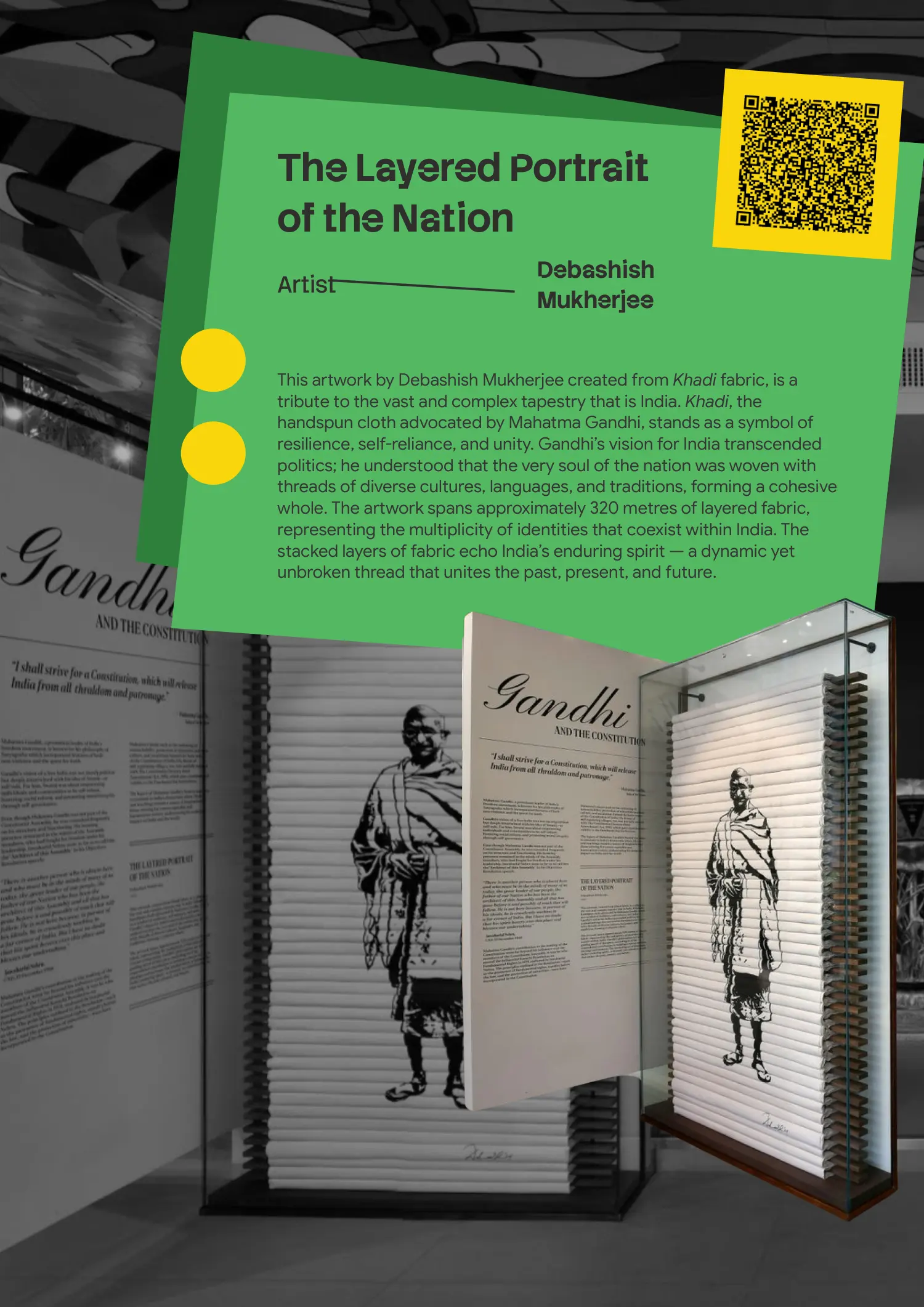
The Layered Portrait of the Nation
Artist Debashish Mukherjee
This artwork by Debashish Mukherjee created from Khadi fabric, is a tribute to the vast and complex tapestry that is India. Khadi, the handspun cloth advocated by Mahatma Gandhi, stands as a symbol of resilience, self-reliance, and unity. Gandhi’s vision for India transcended politics; he understood that the very soul of the nation was woven with threads of diverse cultures, languages, and traditions, forming a cohesive whole. The artwork spans approximately 320 metres of layered fabric, representing the multiplicity of identities that coexist within India. The stacked layers of fabric echo India’s enduring spirit — a dynamic yet unbroken thread that unites the past, present, and future.
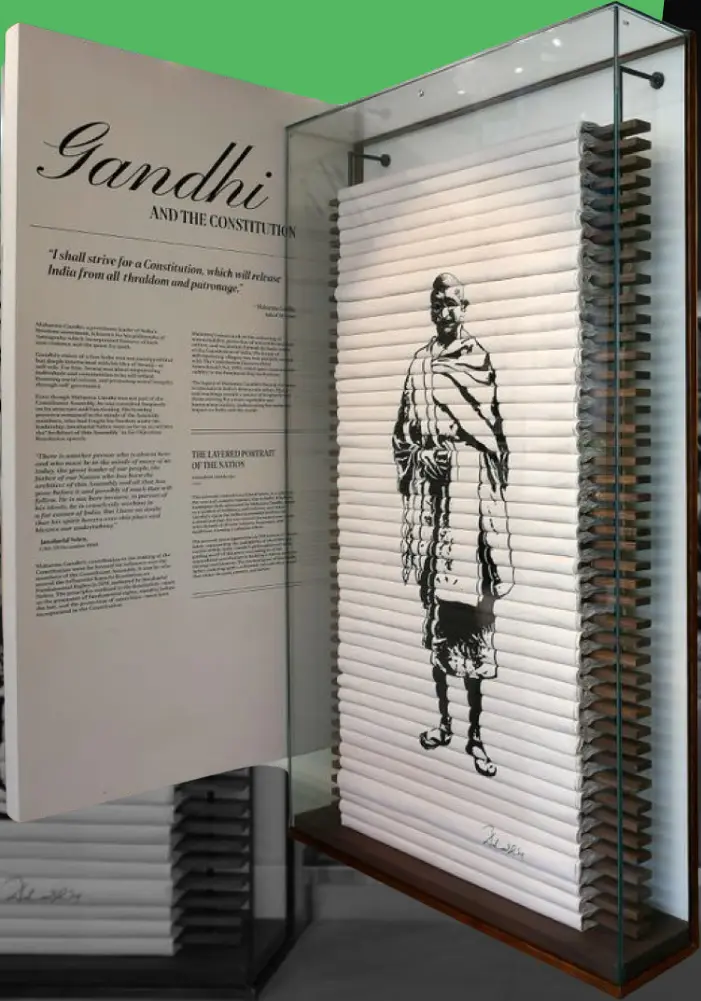
Illusion
Artist Sibdas Sengupta
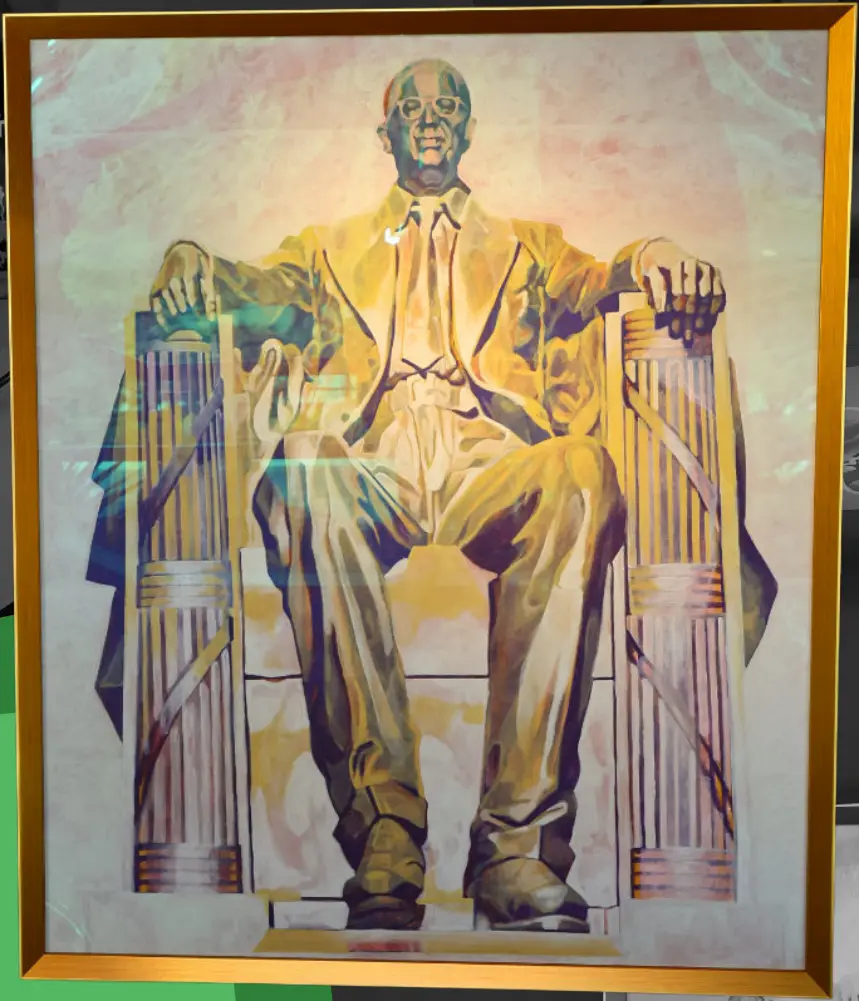
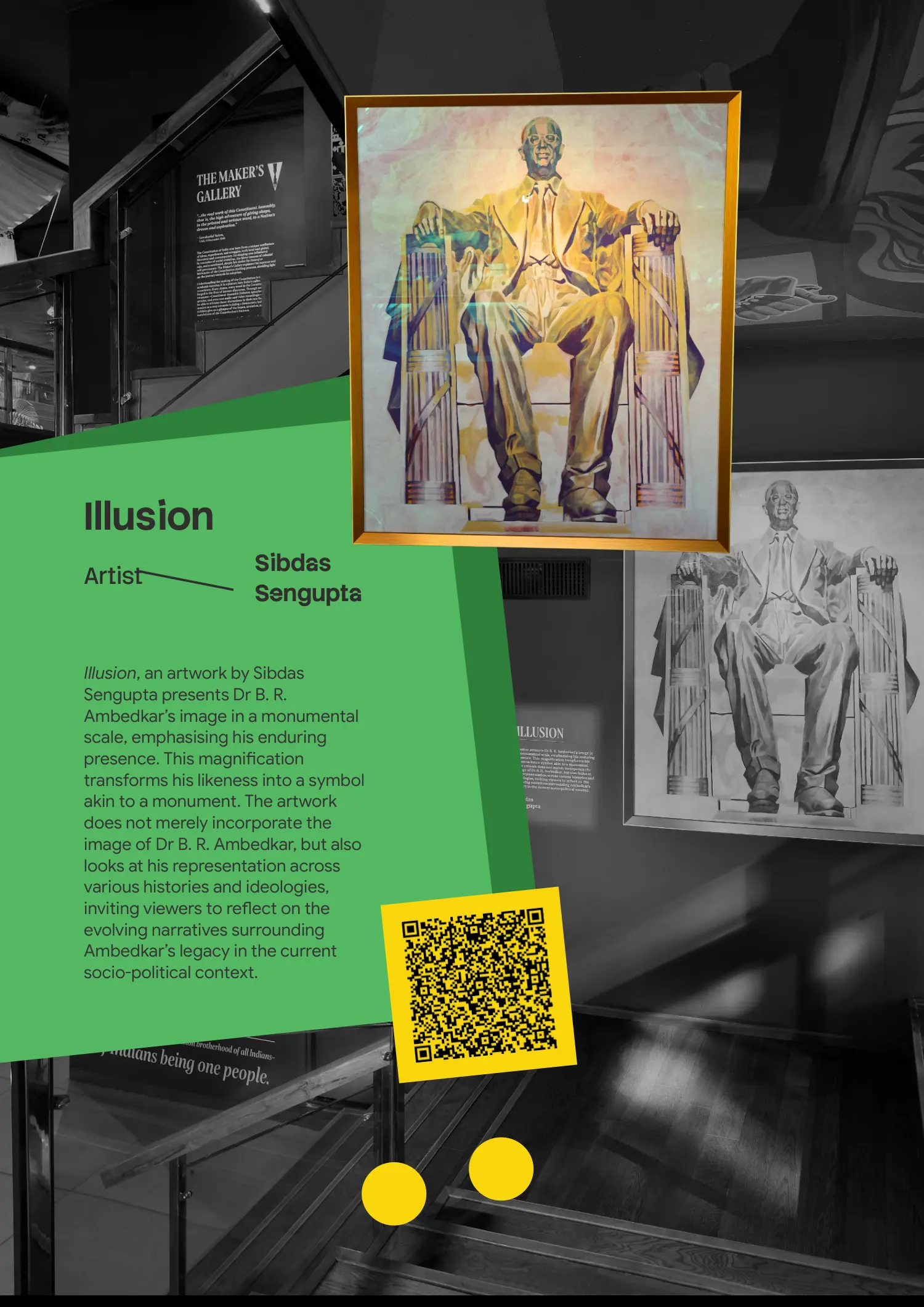
Illusion, an artwork by Sibdas Sengupta presents Dr B. R. Ambedkar’s image in a monumental scale, emphasising his enduring presence. This magnification transforms his likeness into a symbol akin to a monument. The artwork does not merely incorporate the image of Dr B. R. Ambedkar, but also looks at his representation across various histories and ideologies, inviting viewers to reflect on the evolving narratives surrounding Ambedkar’s legacy in the current socio-political context.
Visceral Paths
Artist Ravikumar Kashi
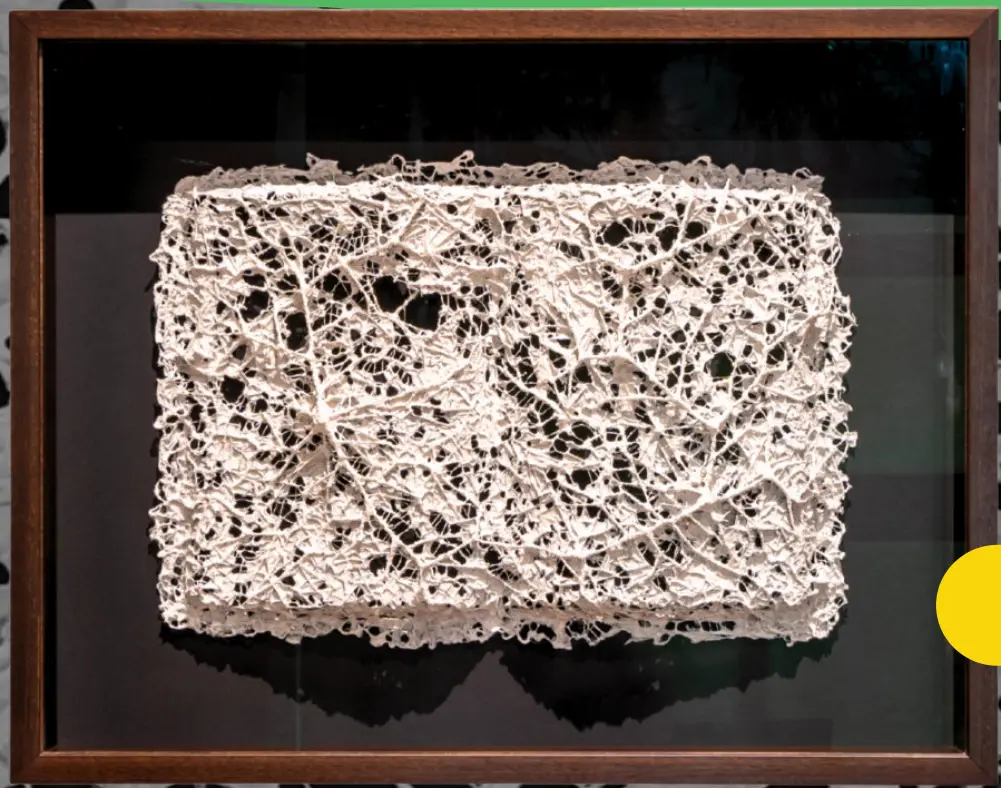
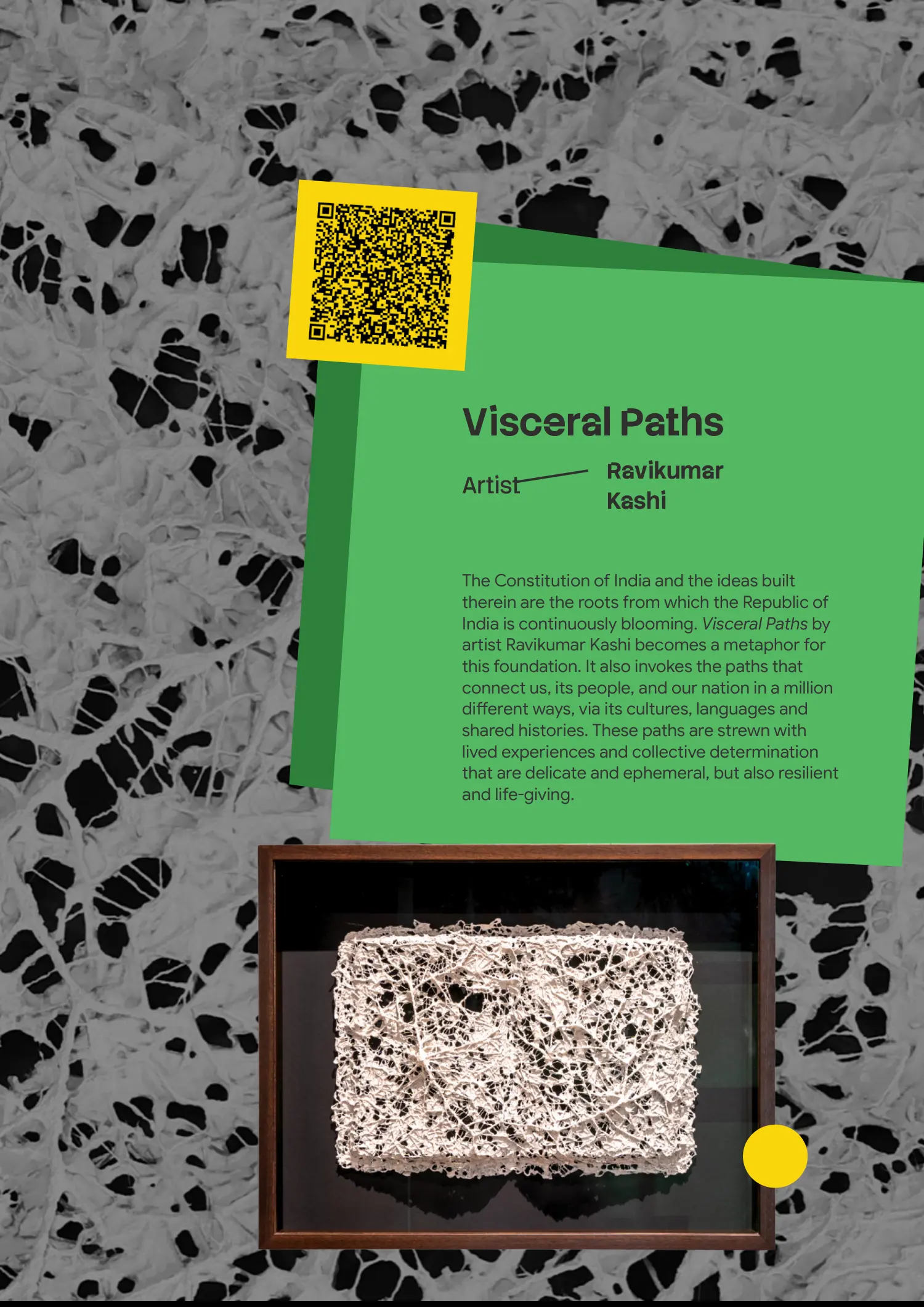
The Constitution of India and the ideas built therein are the roots from which the Republic of India is continuously blooming. Visceral Paths by artist Ravikumar Kashi becomes a metaphor for this foundation. It also invokes the paths that connect us, its people, and our nation in a million different ways, via its cultures, languages and shared histories. These paths are strewn with lived experiences and collective determination that are delicate and ephemeral, but also resilient and life-giving.
Genesis
Artist Alex Davis
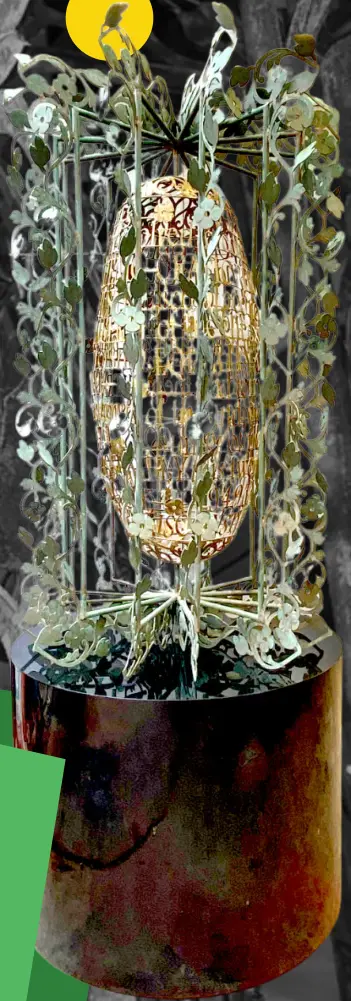
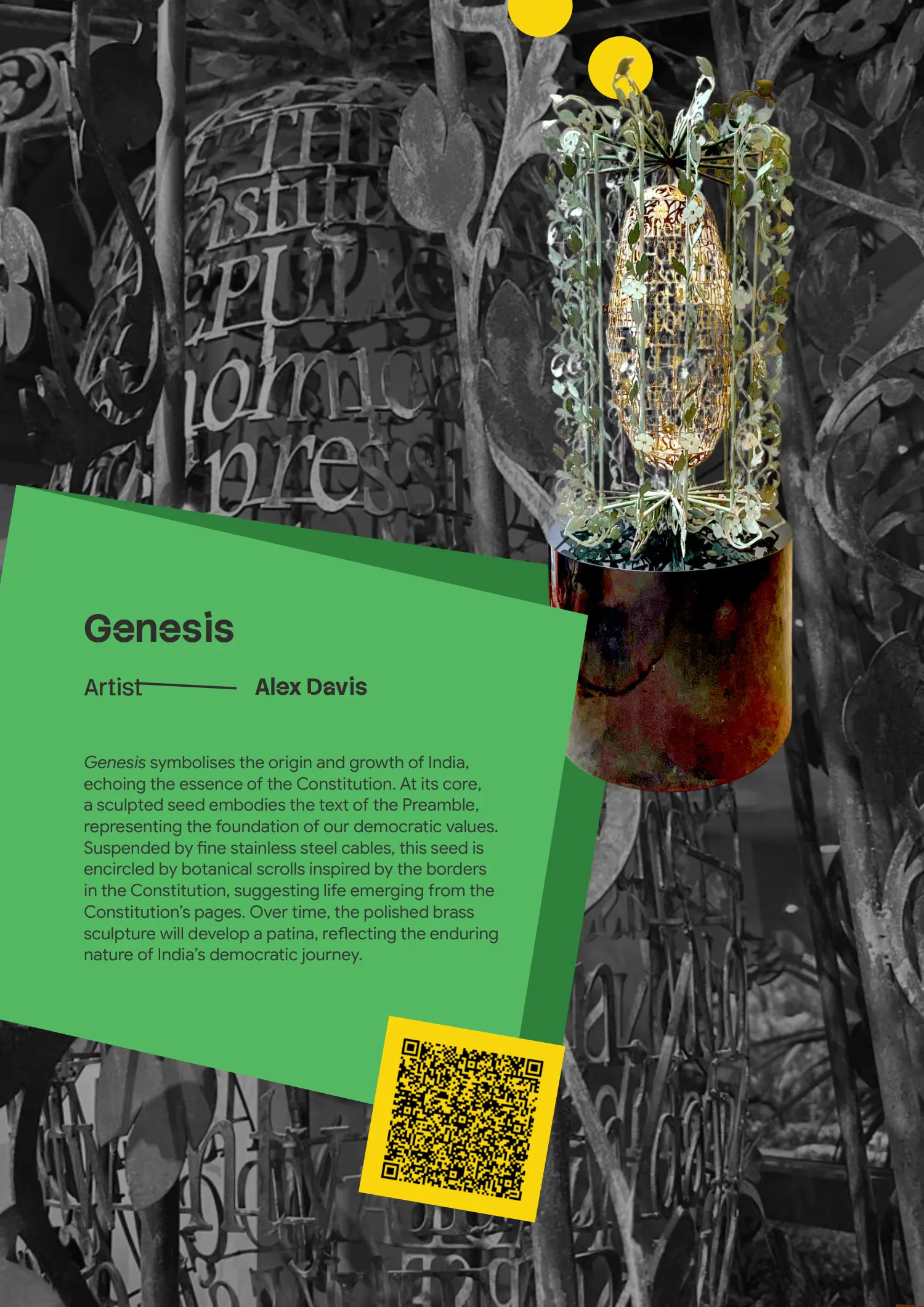
Genesis symbolises the origin and growth of India, echoing the essence of the Constitution. At its core, a sculpted seed embodies the text of the Preamble, representing the foundation of our democratic values. Suspended by fine stainless steel cables, this seed is encircled by botanical scrolls inspired by the borders in the Constitution, suggesting life emerging from the Constitution’s pages. Over time, the polished brass sculpture will develop a patina, reflecting the enduring nature of India’s democratic journey.
एकताकेहाथ (Hands of Unity)
Artist Aashti Miller
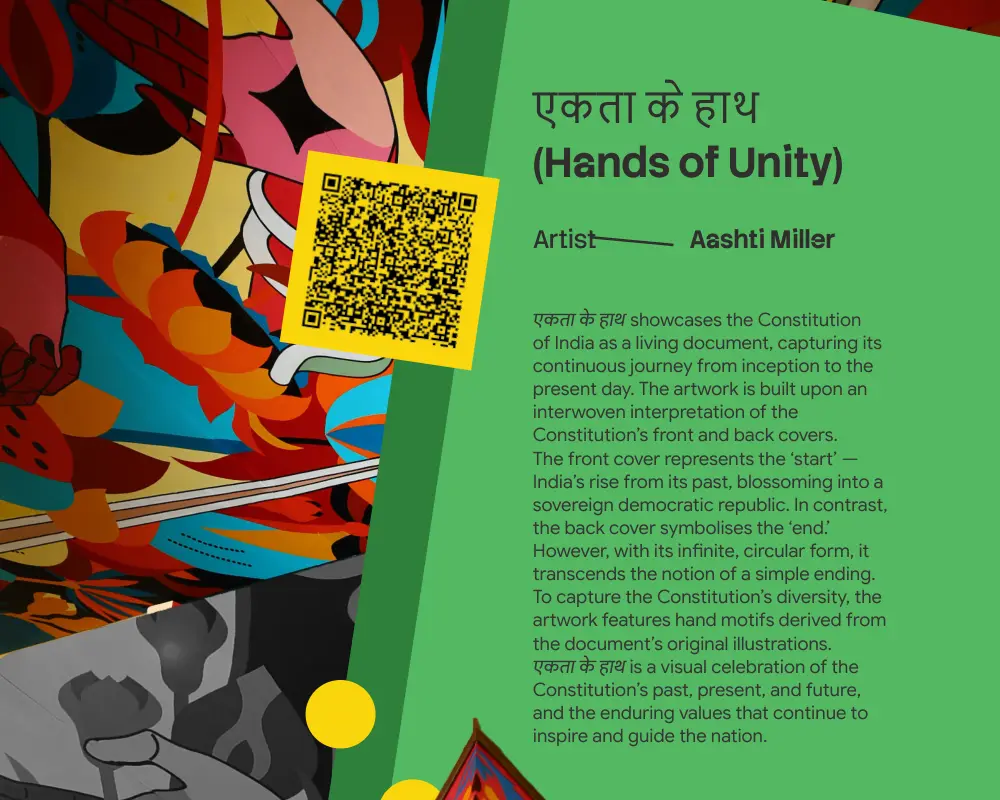
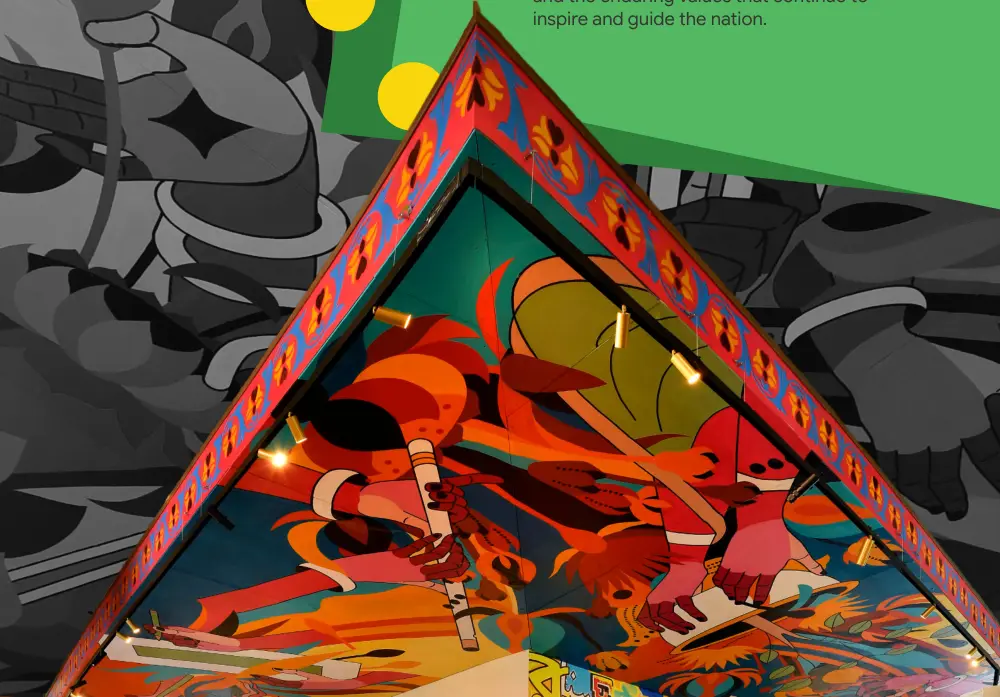
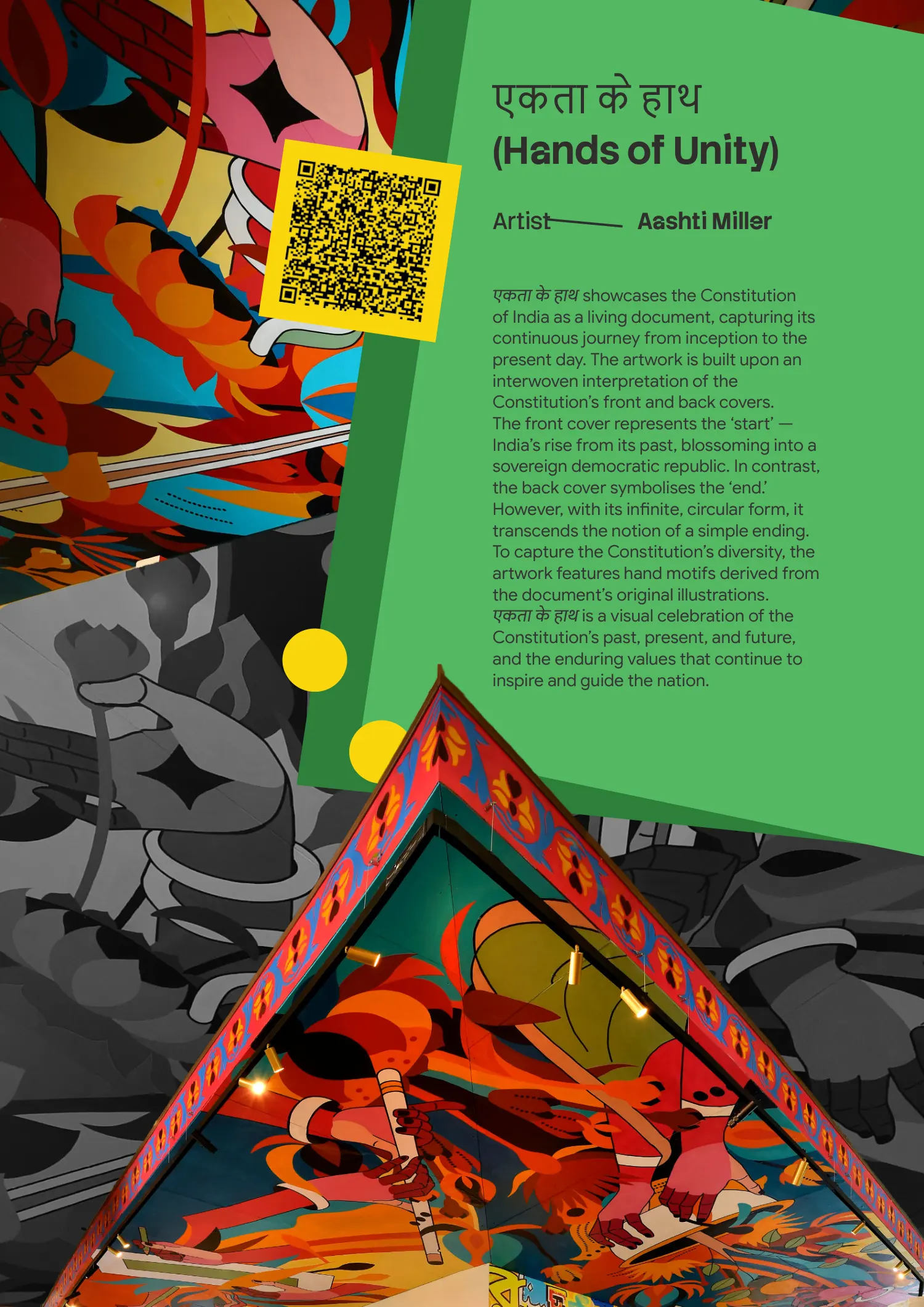
एकता के हाथshowcases the Constitution of India as a living document, capturing its continuous journey from inception to the present day. The artwork is built upon an interwoven interpretation of the Constitution’s front and back covers. The front cover represents the ‘start’ — India’s rise from its past, blossoming into a sovereign democratic republic. In contrast, the back cover symbolises the ‘end.’ However, with its infinite, circular form, it transcends the notion of a simple ending. To capture the Constitution’s diversity, the artwork features hand motifs derived from the document’s original illustrations. एकता के हाथ is a visual celebration of the Constitution’s past, present, and future, and the enduring values that continue to inspire and guide the nation.
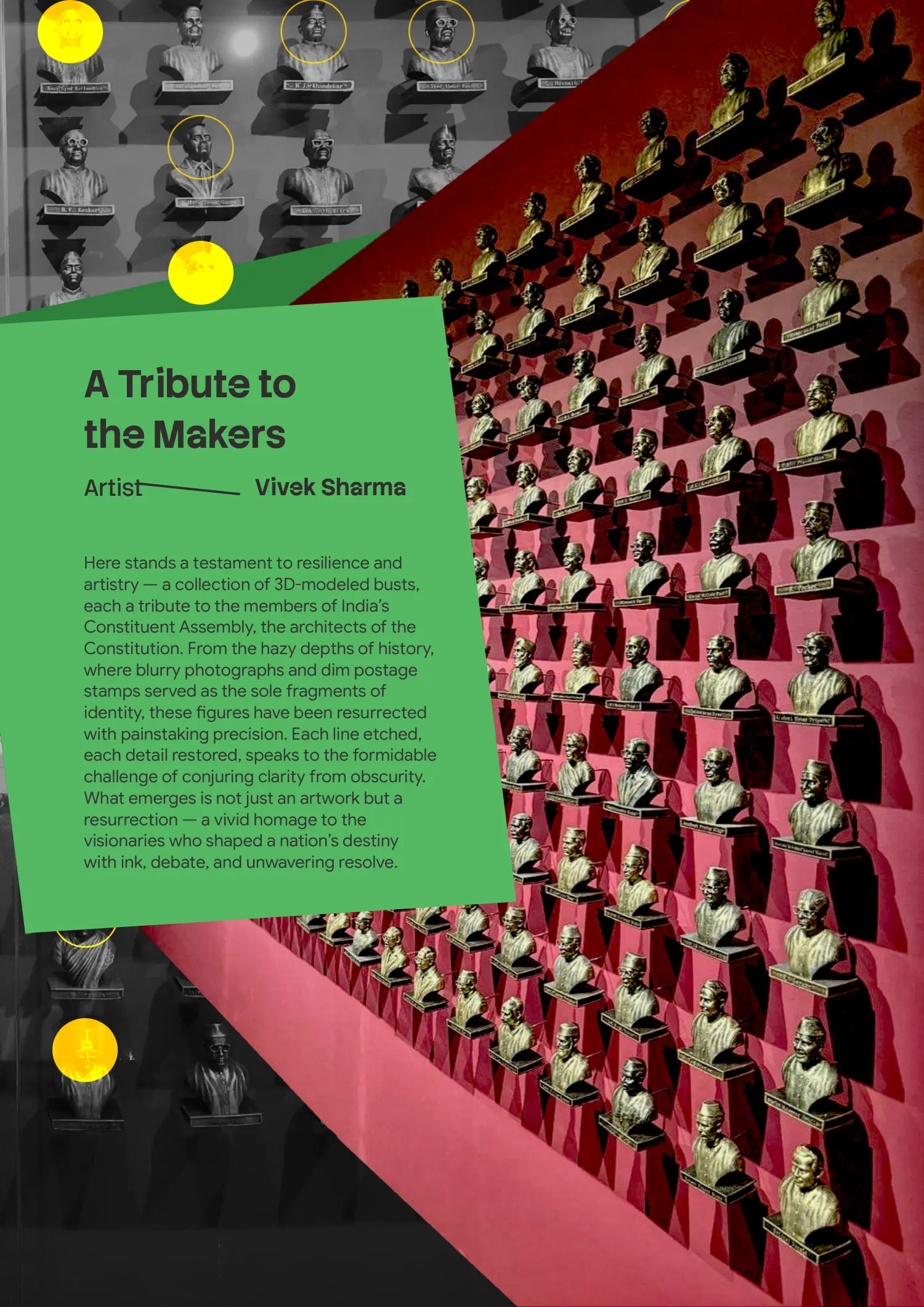
A Tribute to the Makers
Artist Vivek Sharma
Here stands a testament to resilience and artistry — a collection of 3D-modeled busts, each a tribute to the members of India’s Constituent Assembly, the architects of the Constitution. From the hazy depths of history, where blurry photographs and dim postage stamps served as the sole fragments of identity, these figures have been resurrected with painstaking precision. Each line etched, each detail restored, speaks to the formidable challenge of conjuring clarity from obscurity. What emerges is not just an artwork but a resurrection — a vivid homage to the visionaries who shaped a nation’s destiny with ink, debate, and unwavering resolve.
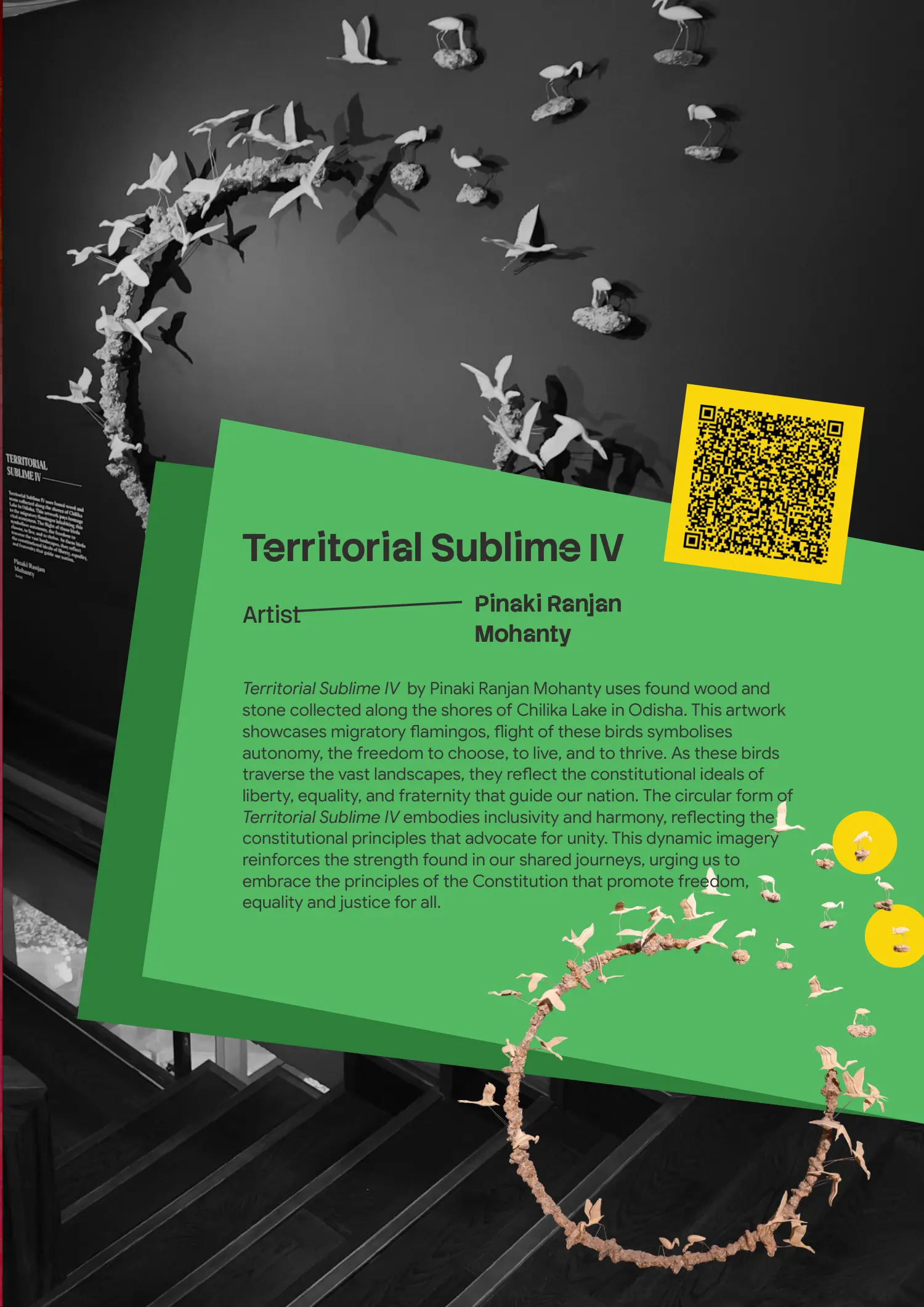
Territorial Sublime IV
Artist Pinaki Ranjan Mohanty
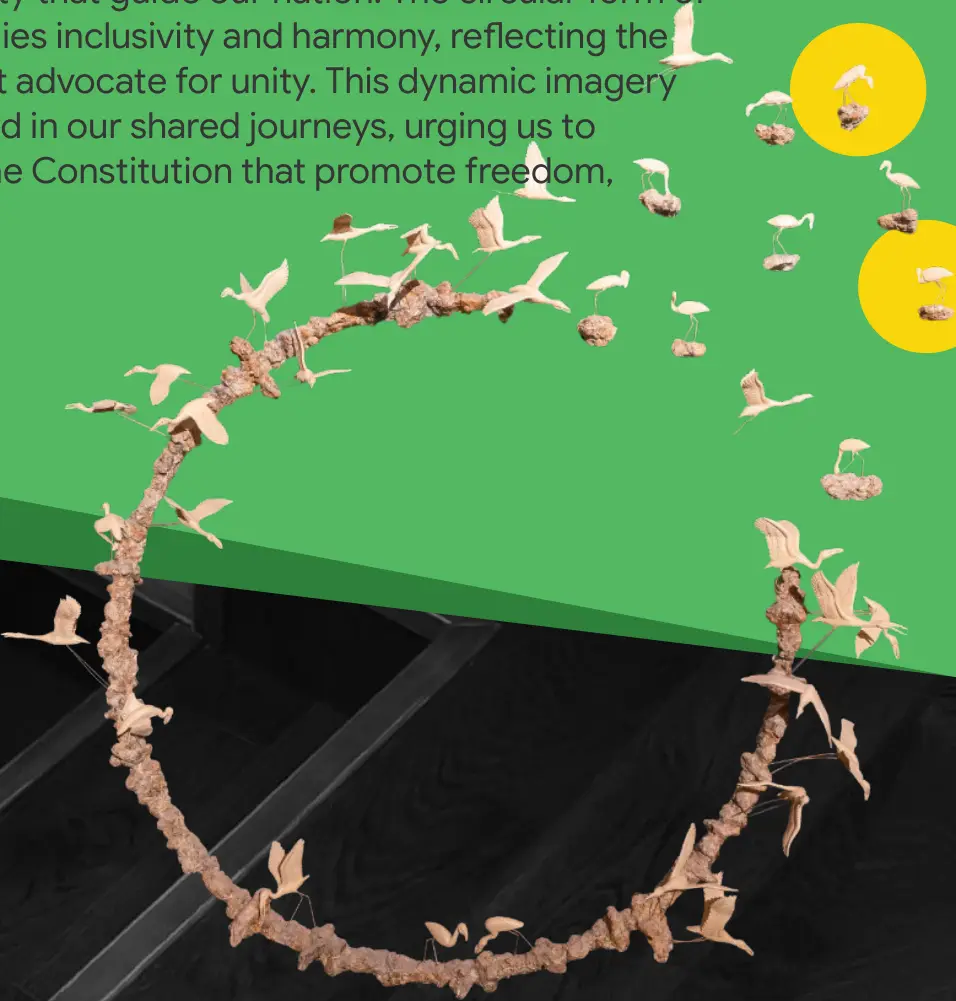
Territorial Sublime IV by Pinaki Ranjan Mohanty uses found wood and stone collected along the shores of Chilika Lake in Odisha. This artwork showcases migratory flamingos, flight of these birds symbolises autonomy, the freedom to choose, to live, and to thrive. As these birds traverse the vast landscapes, they reflect the constitutional ideals of liberty, equality, and fraternity that guide our nation. The circular form of Territorial Sublime IV embodies inclusivity and harmony, reflecting the constitutional principles that advocate for unity. This dynamic imagery reinforces the strength found in our shared journeys, urging us to embrace the principles of the Constitution that promote freedom, equality and justice for all.
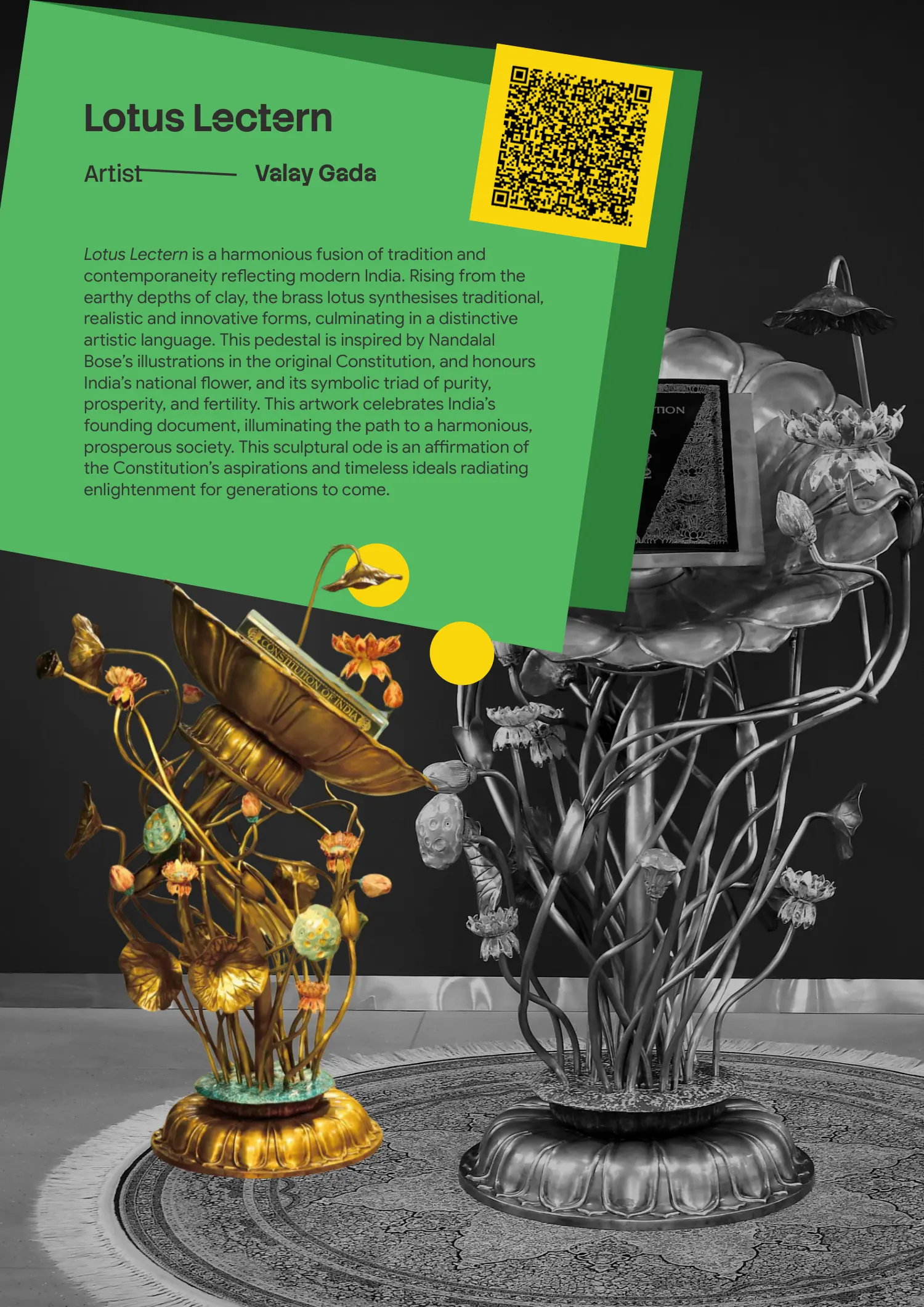
Lotus Lectern
Artist Valay Gada
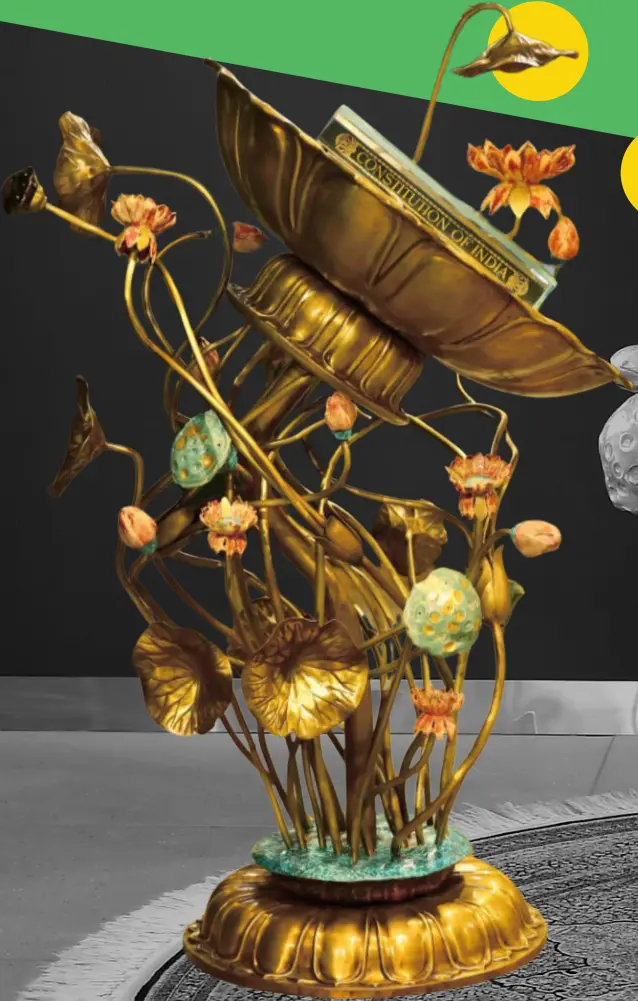
Lotus Lectern is a harmonious fusion of tradition and contemporaneity reflecting modern India. Rising from the earthy depths of clay, the brass lotus synthesises traditional, realistic and innovative forms, culminating in a distinctive artistic language. This pedestal is inspired by Nandalal Bose’s illustrations in the original Constitution, and honours India’s national flower, and its symbolic triad of purity, prosperity, and fertility. This artwork celebrates India’s founding document, illuminating the path to a harmonious, prosperous society. This sculptural ode is an affirmation of the Constitution’s aspirations and timeless ideals radiating enlightenment for generations to come.
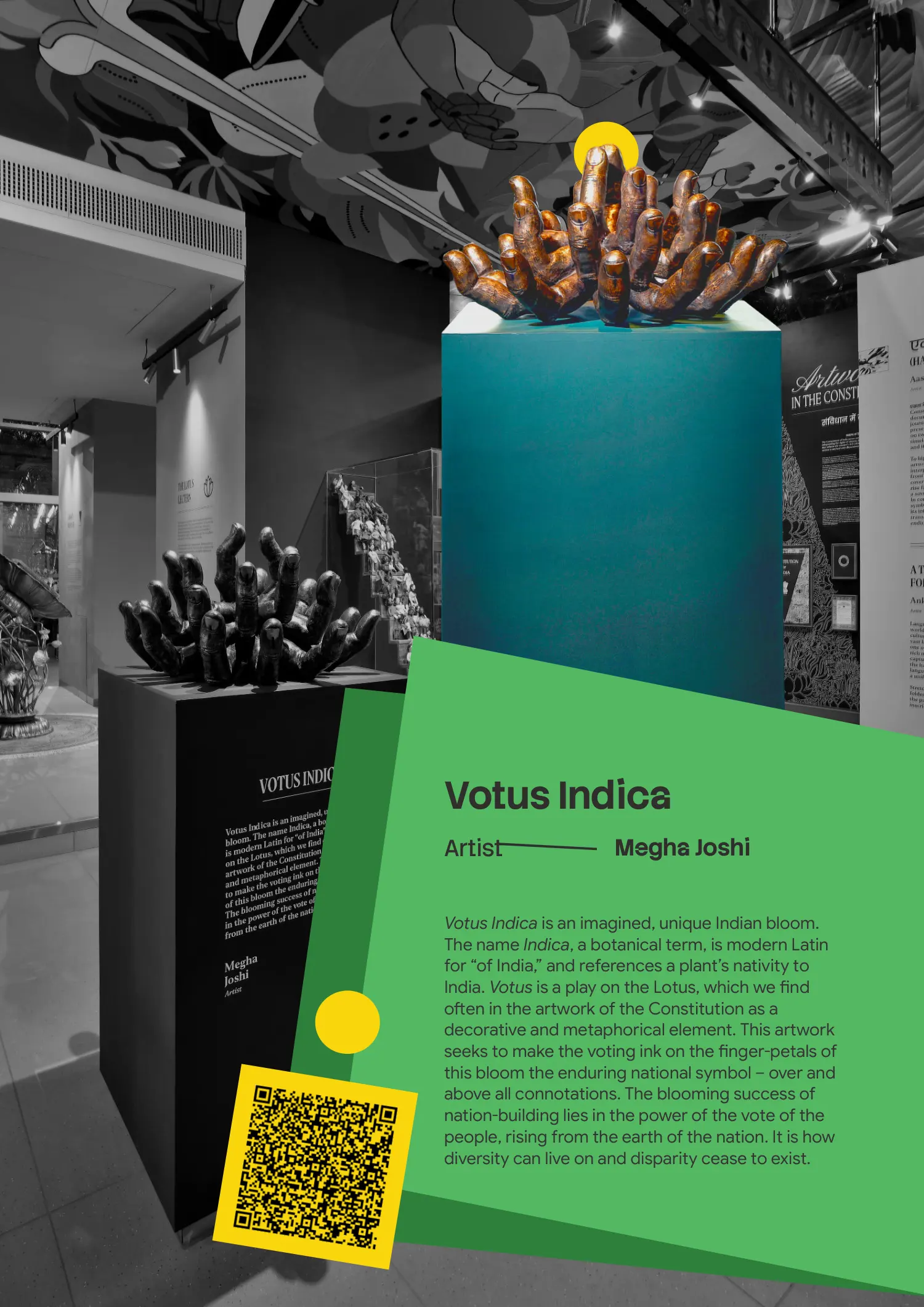
Votus Indica
Artist Megha Joshi
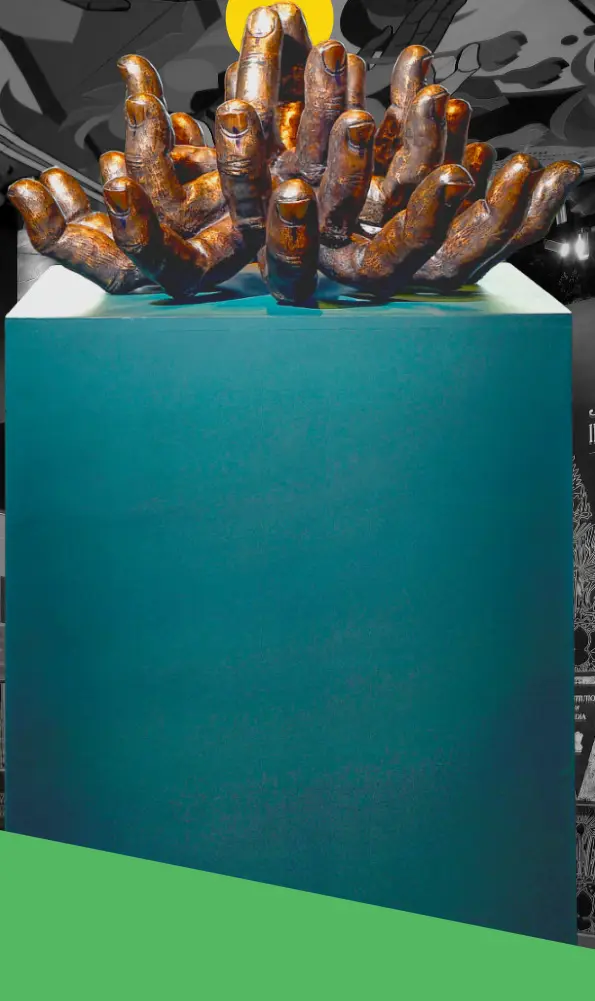
Votus Indica is an imagined, unique Indian bloom. The name Indica, a botanical term, is modern Latin for “of India,” and references a plant’s nativity to India. Votus is a play on the Lotus, which we find often in the artwork of the Constitution as a decorative and metaphorical element. This artwork seeks to make the voting ink on the finger-petals of this bloom the enduring national symbol – over and above all connotations. The blooming success of nation-building lies in the power of the vote of the people, rising from the earth of the nation. It is how diversity can live on and disparity cease to exist.
View original pages, photographs & credits
Originally published in Museum Mosaic 2025, published May 2026.
Part of our annual review. Descriptions reflect the publication’s reporting period.