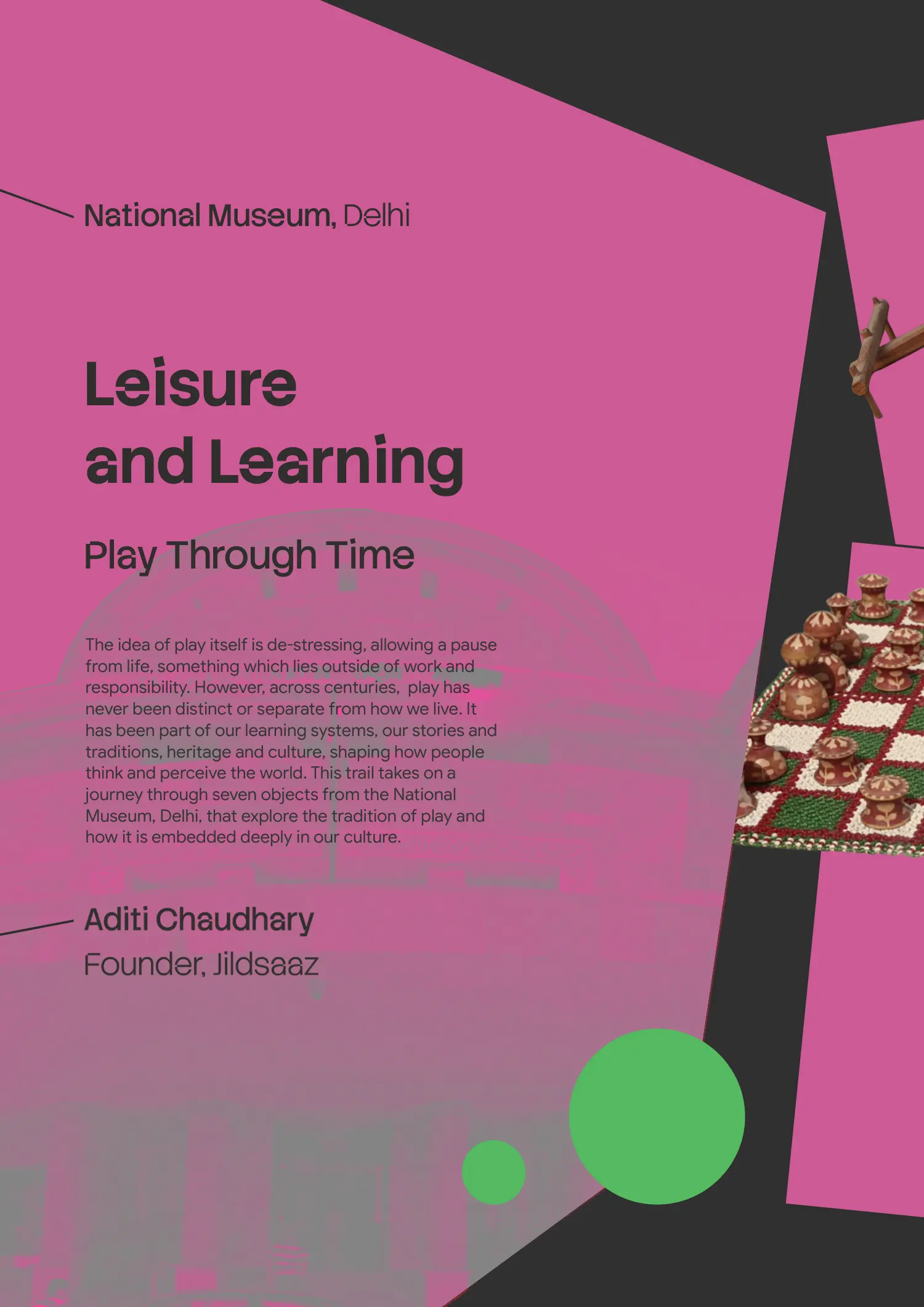
National Museum, Delhi
The idea of play itself is de-stressing, allowing a pause from life, something which lies outside of work and responsibility. However, across centuries, play has never been distinct or separate from how we live. It has been part of our learning systems, our stories and traditions, heritage and culture, shaping how people think and perceive the world. This trail takes on a journey through seven objects from the National Museum, Delhi, that explore the tradition of play and how it is embedded deeply in our culture.
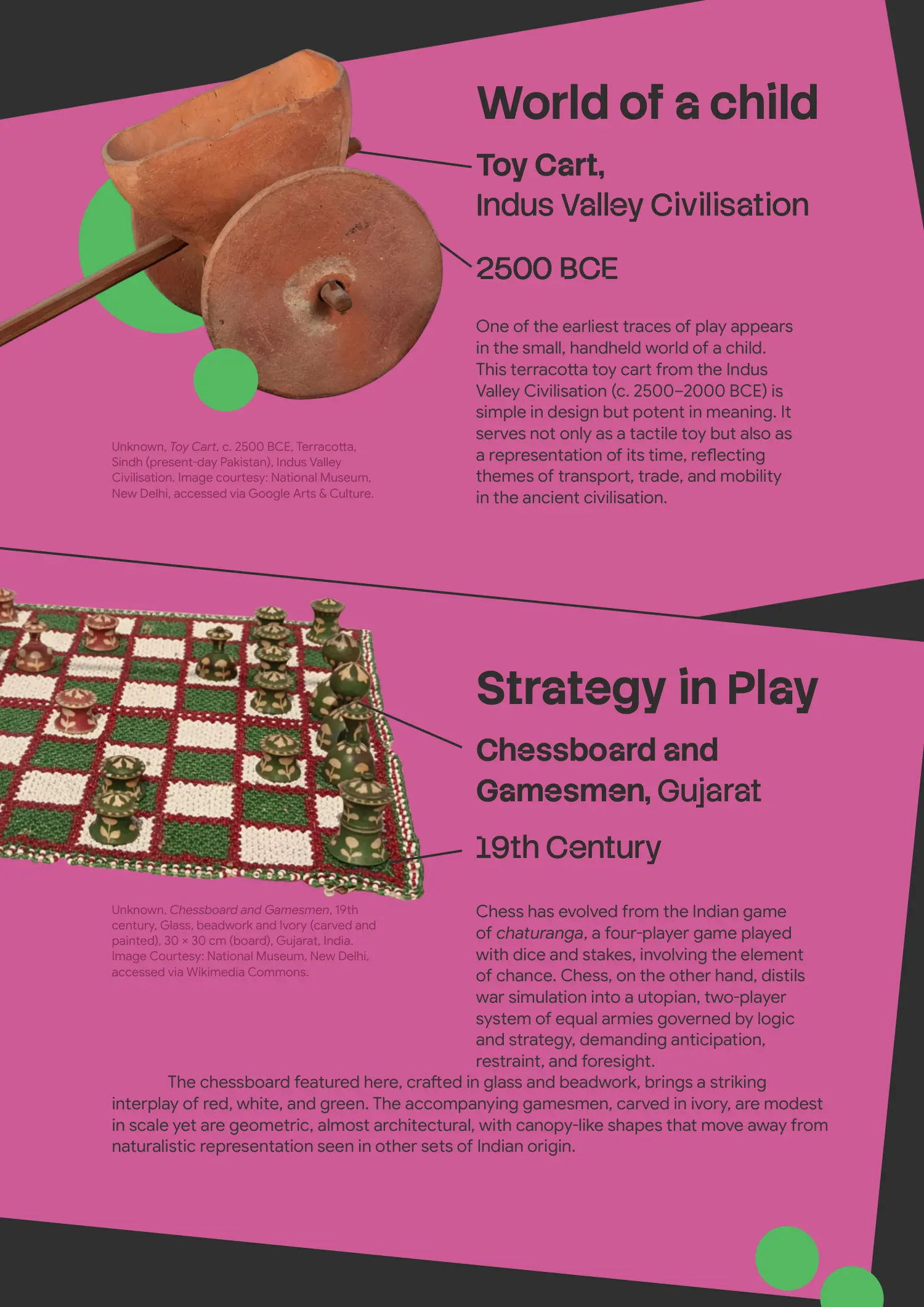
World of a child
Toy Cart, Indus Valley Civilisation
2500 BCE
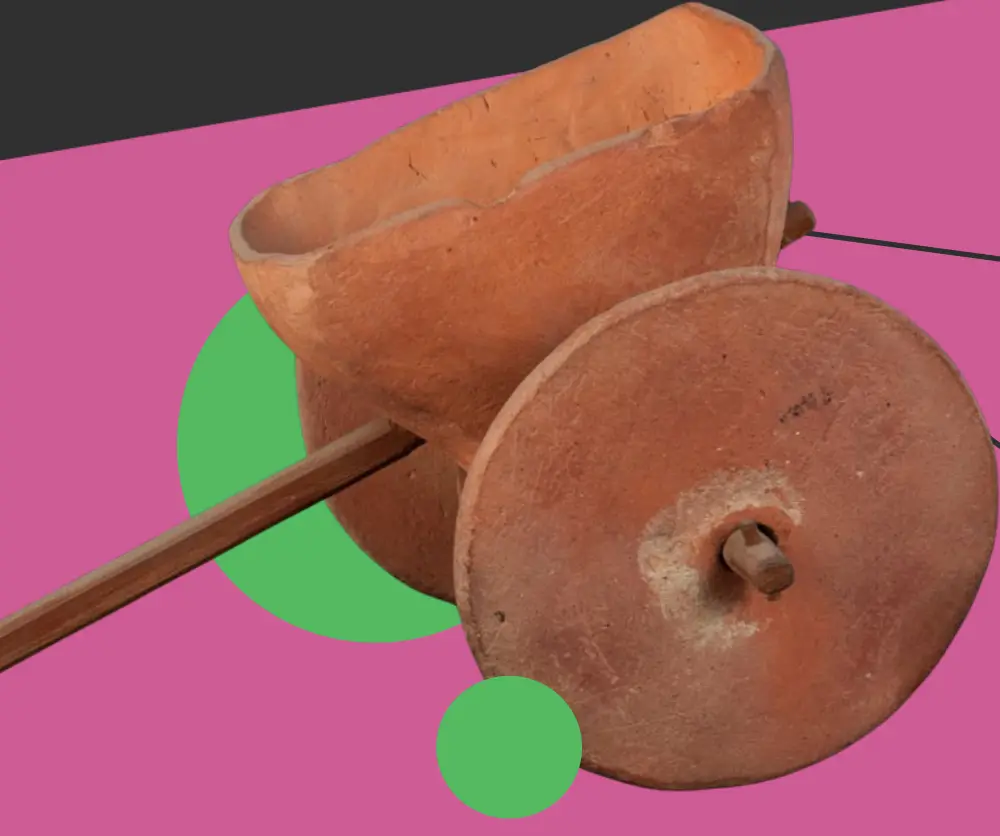
Unknown, Toy Cart, c. 2500 BCE, Terracotta, Sindh (present-day Pakistan), Indus Valley Civilisation. Image courtesy: National Museum, New Delhi, accessed via Google Arts & Culture.
One of the earliest traces of play appears in the small, handheld world of a child. This terracotta toy cart from the Indus Valley Civilisation (c. 2500–2000 BCE) is simple in design but potent in meaning. It serves not only as a tactile toy but also as a representation of its time, reflecting themes of transport, trade, and mobility in the ancient civilisation.
Strategy in Play
Chessboard and Gamesmen, Gujarat
19th Century
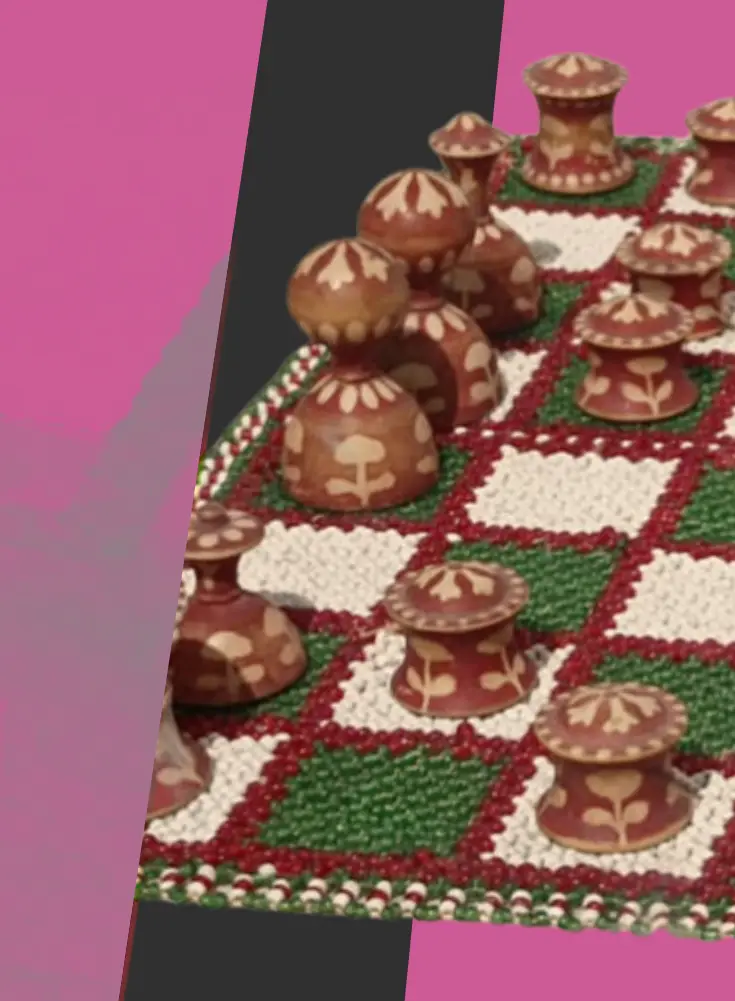
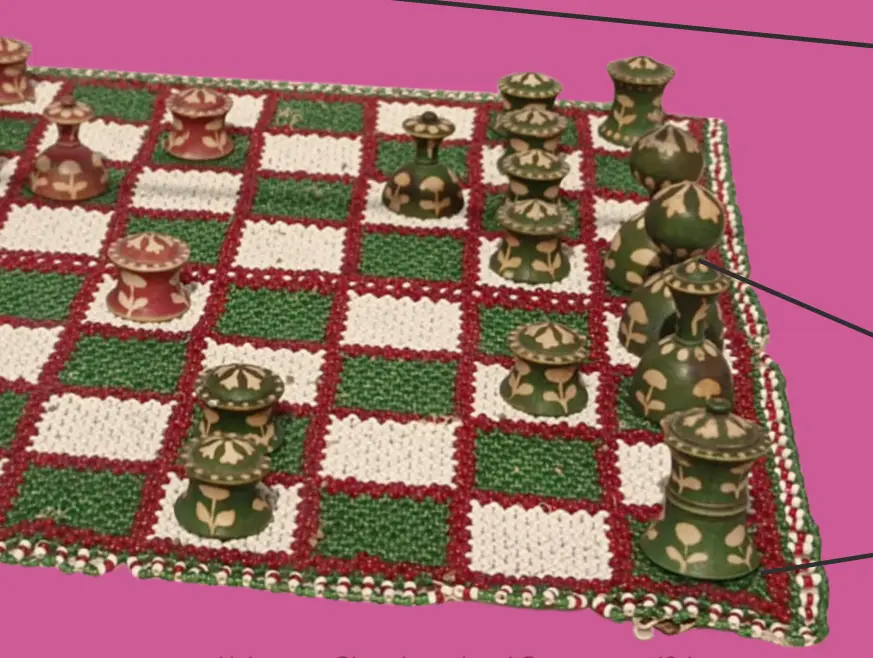
Unknown, Chessboard and Gamesmen, 19th century, Glass, beadwork and Ivory (carved and painted), 30 × 30 cm (board), Gujarat, India. Image Courtesy: National Museum, New Delhi, accessed via Wikimedia Commons.
Chess has evolved from the Indian game of chaturanga, a four-player game played with dice and stakes, involving the element of chance. Chess, on the other hand, distils war simulation into a utopian, two-player system of equal armies governed by logic and strategy, demanding anticipation, restraint, and foresight. The chessboard featured here, crafted in glass and beadwork, brings a striking interplay of red, white, and green. The accompanying gamesmen, carved in ivory, are modest in scale yet are geometric, almost architectural, with canopy-like shapes that move away from naturalistic representation seen in other sets of Indian origin.
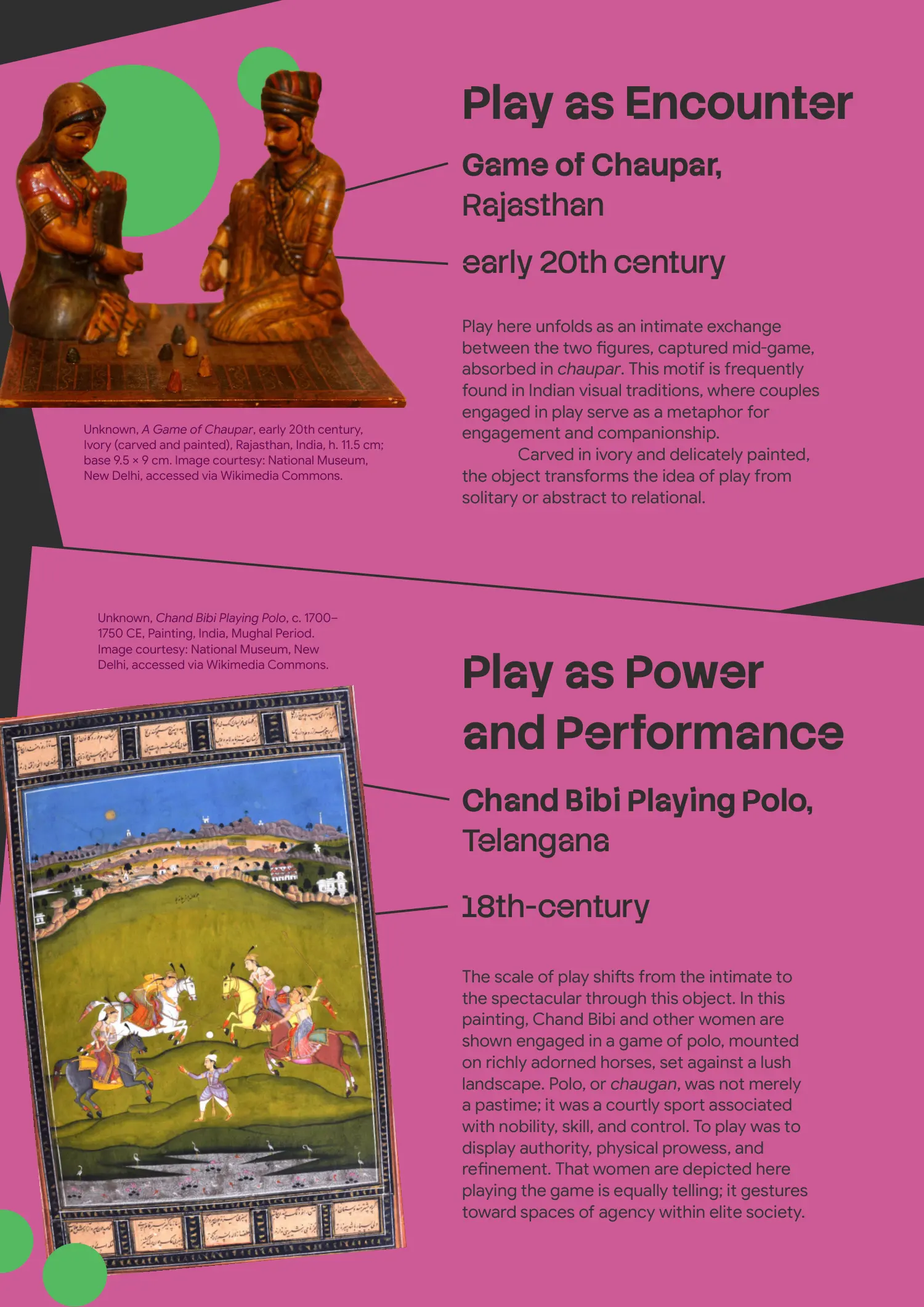
Play as Encounter
Game of Chaupar, Rajasthan
early 20th century
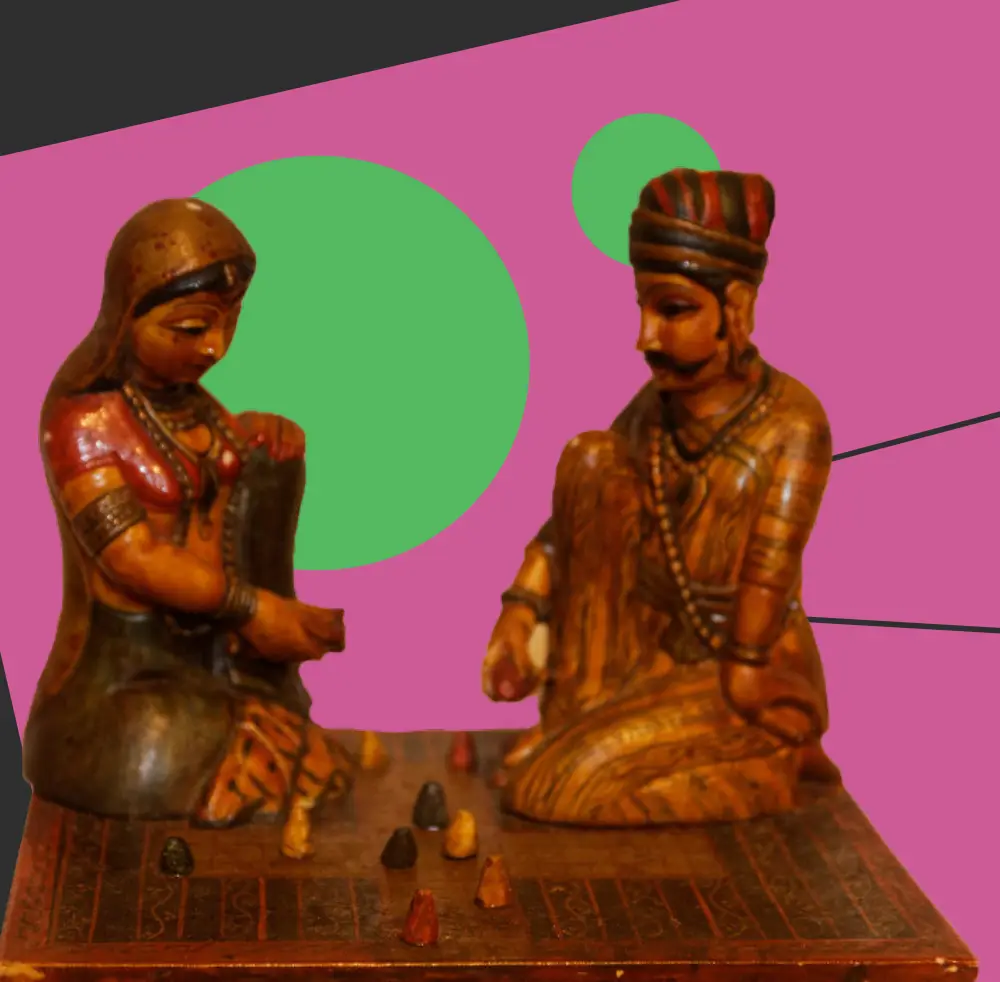
Unknown, A Game of Chaupar, early 20th century, Ivory (carved and painted), Rajasthan, India, h. 11.5 cm; base 9.5 × 9 cm. Image courtesy: National Museum, New Delhi, accessed via Wikimedia Commons.
Play here unfolds as an intimate exchange between the two figures, captured mid-game, absorbed in chaupar. This motif is frequently found in Indian visual traditions, where couples engaged in play serve as a metaphor for engagement and companionship. Carved in ivory and delicately painted, the object transforms the idea of play from solitary or abstract to relational.
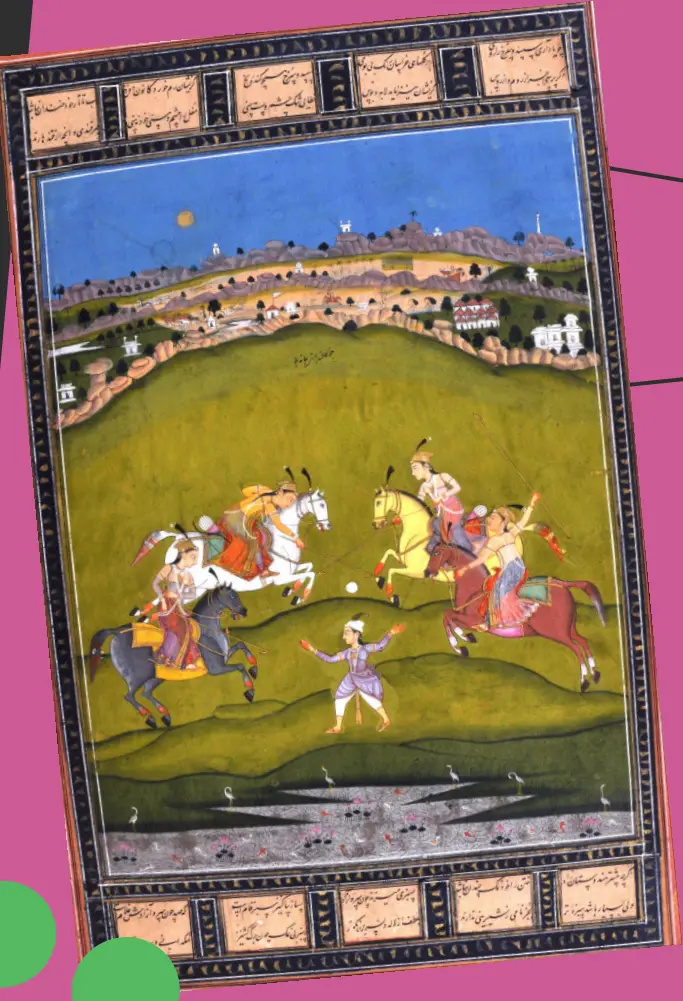
Unknown, Chand Bibi Playing Polo, c. 1700– 1750 CE, Painting, India, Mughal Period. Image courtesy: National Museum, New Delhi, accessed via Wikimedia Commons.
Play as Power and Performance
Chand Bibi Playing Polo, Telangana
18th-century
The scale of play shifts from the intimate to the spectacular through this object. In this painting, Chand Bibi and other women are shown engaged in a game of polo, mounted on richly adorned horses, set against a lush landscape. Polo, or chaugan, was not merely a pastime; it was a courtly sport associated with nobility, skill, and control. To play was to display authority, physical prowess, and refinement. That women are depicted here playing the game is equally telling; it gestures toward spaces of agency within elite society.
Playing The Game of Knowledge
Jain Gyan Chaupar, Rajasthan
18th-century
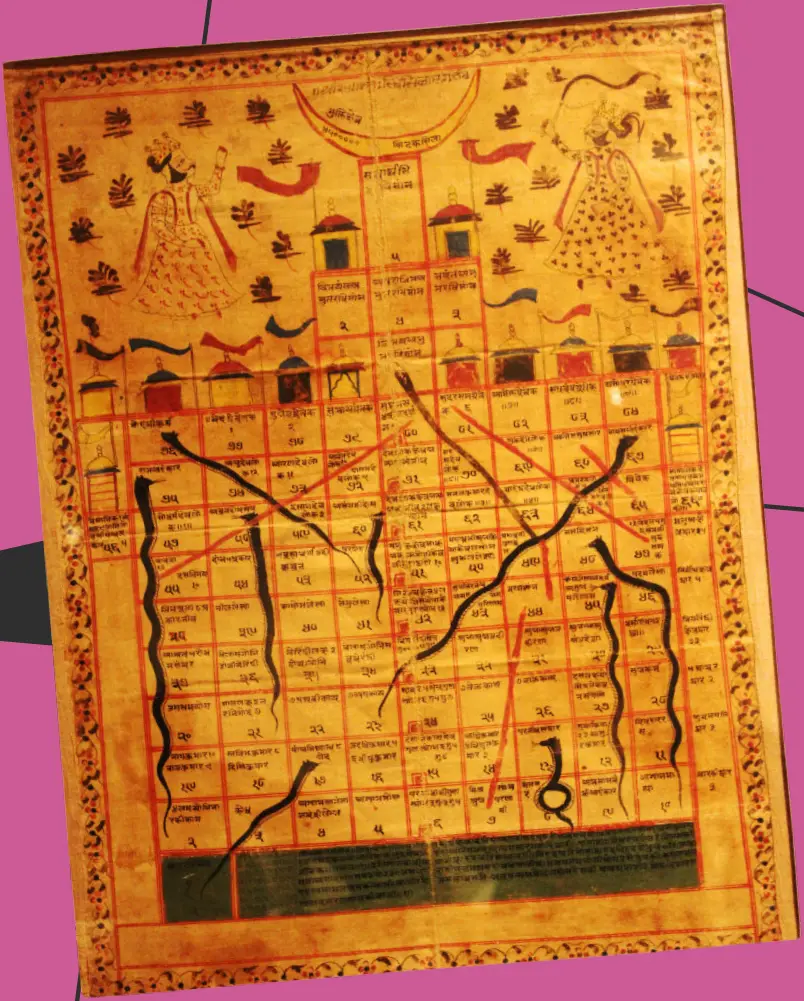
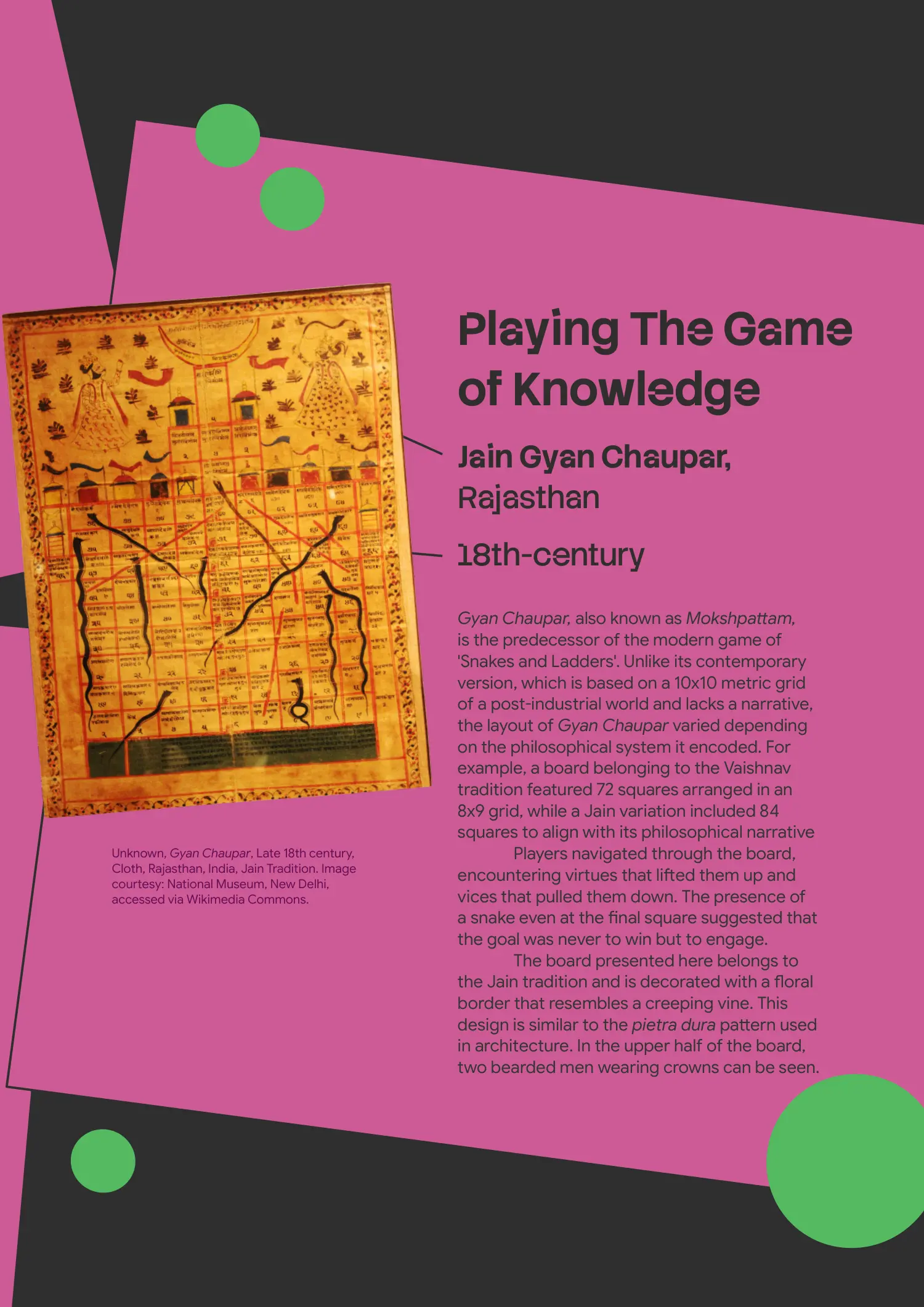
Unknown, Gyan Chaupar, Late 18th century, Cloth, Rajasthan, India, Jain Tradition. Image courtesy: National Museum, New Delhi, accessed via Wikimedia Commons.
Gyan Chaupar, also known as Mokshpattam, is the predecessor of the modern game of 'Snakes and Ladders'. Unlike its contemporary version, which is based on a 10x10 metric grid of a post-industrial world and lacks a narrative, the layout of Gyan Chaupar varied depending on the philosophical system it encoded. For example, a board belonging to the Vaishnav tradition featured 72 squares arranged in an 8x9 grid, while a Jain variation included 84 squares to align with its philosophical narrative Players navigated through the board, encountering virtues that lifted them up and vices that pulled them down. The presence of a snake even at the final square suggested that the goal was never to win but to engage. The board presented here belongs to the Jain tradition and is decorated with a floral border that resembles a creeping vine. This design is similar to the pietra dura pattern used in architecture. In the upper half of the board, two bearded men wearing crowns can be seen.
Play as Material Culture
Chaupar Set, Himachal Pradesh
19th century
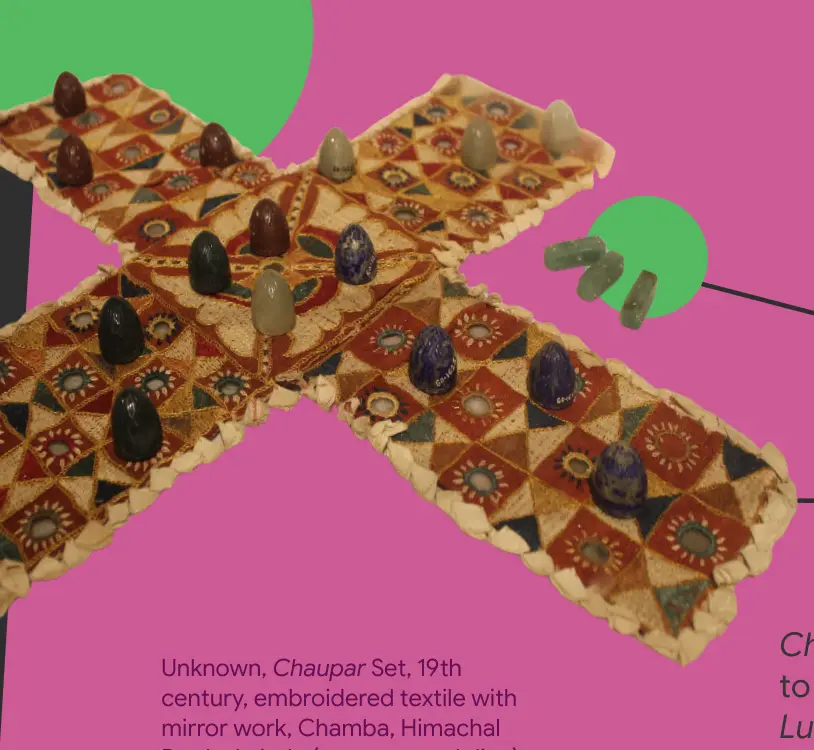
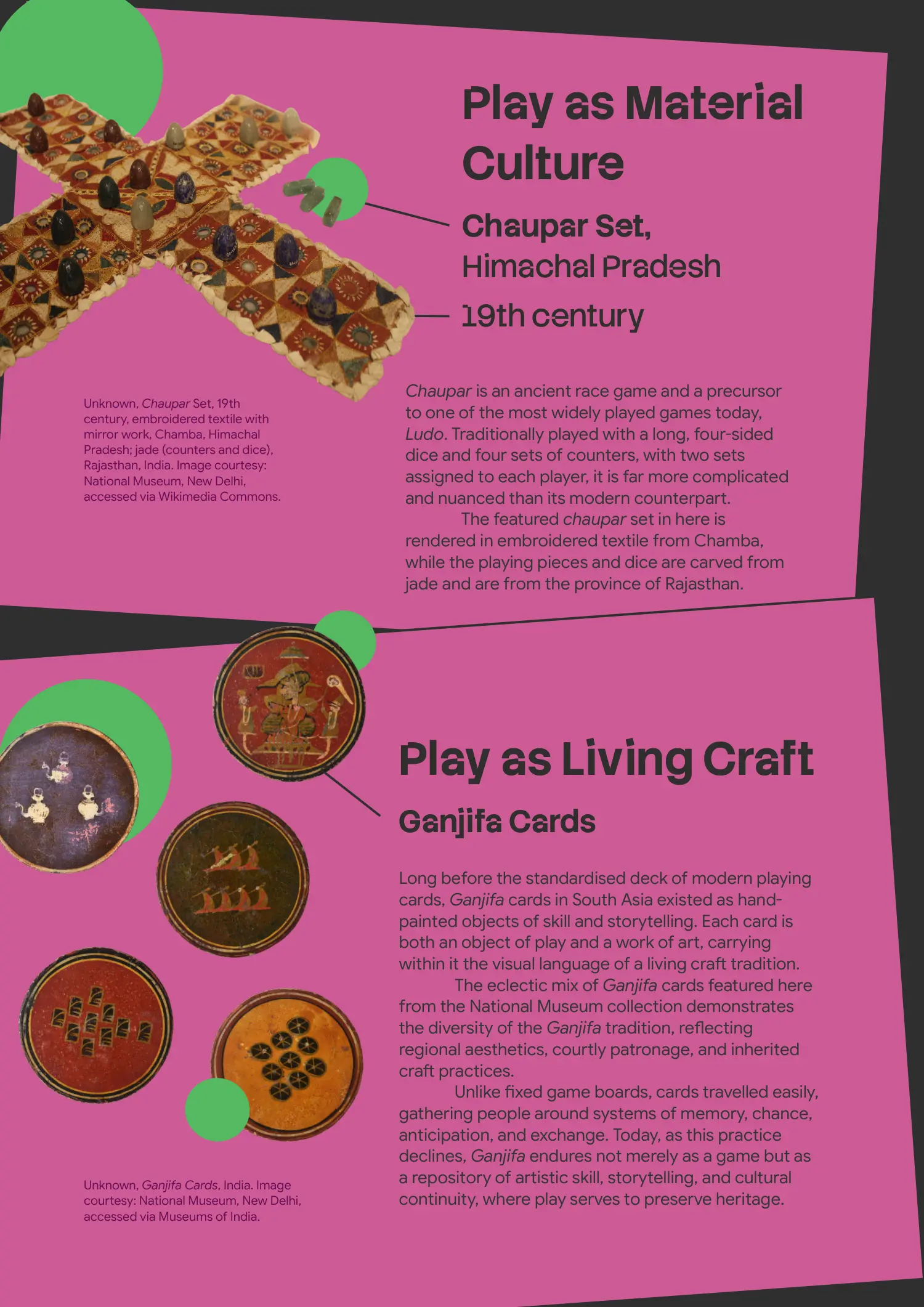
Unknown, Chaupar Set, 19th century, embroidered textile with mirror work, Chamba, Himachal Pradesh; jade (counters and dice), Rajasthan, India. Image courtesy: National Museum, New Delhi, accessed via Wikimedia Commons.
Chaupar is an ancient race game and a precursor to one of the most widely played games today, Ludo. Traditionally played with a long, four-sided dice and four sets of counters, with two sets assigned to each player, it is far more complicated and nuanced than its modern counterpart. The featured chaupar set in here is rendered in embroidered textile from Chamba, while the playing pieces and dice are carved from jade and are from the province of Rajasthan.
Play as Living Craft
Ganjifa Cards
Long before the standardised deck of modern playing cards, Ganjifa cards in South Asia existed as hand- painted objects of skill and storytelling. Each card is both an object of play and a work of art, carrying within it the visual language of a living craft tradition. The eclectic mix of Ganjifa cards featured here from the National Museum collection demonstrates the diversity of the Ganjifa tradition, reflecting regional aesthetics, courtly patronage, and inherited craft practices. Unlike fixed game boards, cards travelled easily, gathering people around systems of memory, chance, anticipation, and exchange. Today, as this practice declines, Ganjifa endures not merely as a game but as a repository of artistic skill, storytelling, and cultural continuity, where play serves to preserve heritage.
Unknown, Ganjifa Cards, India. Image courtesy: National Museum, New Delhi, accessed via Museums of India.
View original pages, photographs & credits
Originally published in Museum Mosaic 2025, published May 2026.
Part of our annual review. Descriptions reflect the publication’s reporting period.