Most histories of India's global presence focus on temples and texts, buddhists and brahmins. But the history of Indians on the move overseas is diverse, involving seaborne communities and divinities, financiers and trafficked labour, diplomats and craftsmen. And this mobility wasn’t always voluntary, pleasant or profitable for the Indians being moved. The footprints of these people are scattered across museum collections: often invisible in the literary record, can only be seen them by reading artefacts against the grain. This trail is a socially “deep” history of Indian migration, voluntary and otherwise, linking Indians to broader Afro-Eurasian currents centuries before the advent of global empire. These objects, and the people who inspired or created them, were carried by trade winds, debt, conquest, and curiosity.
Anirudh Kanisetti Historian and Author
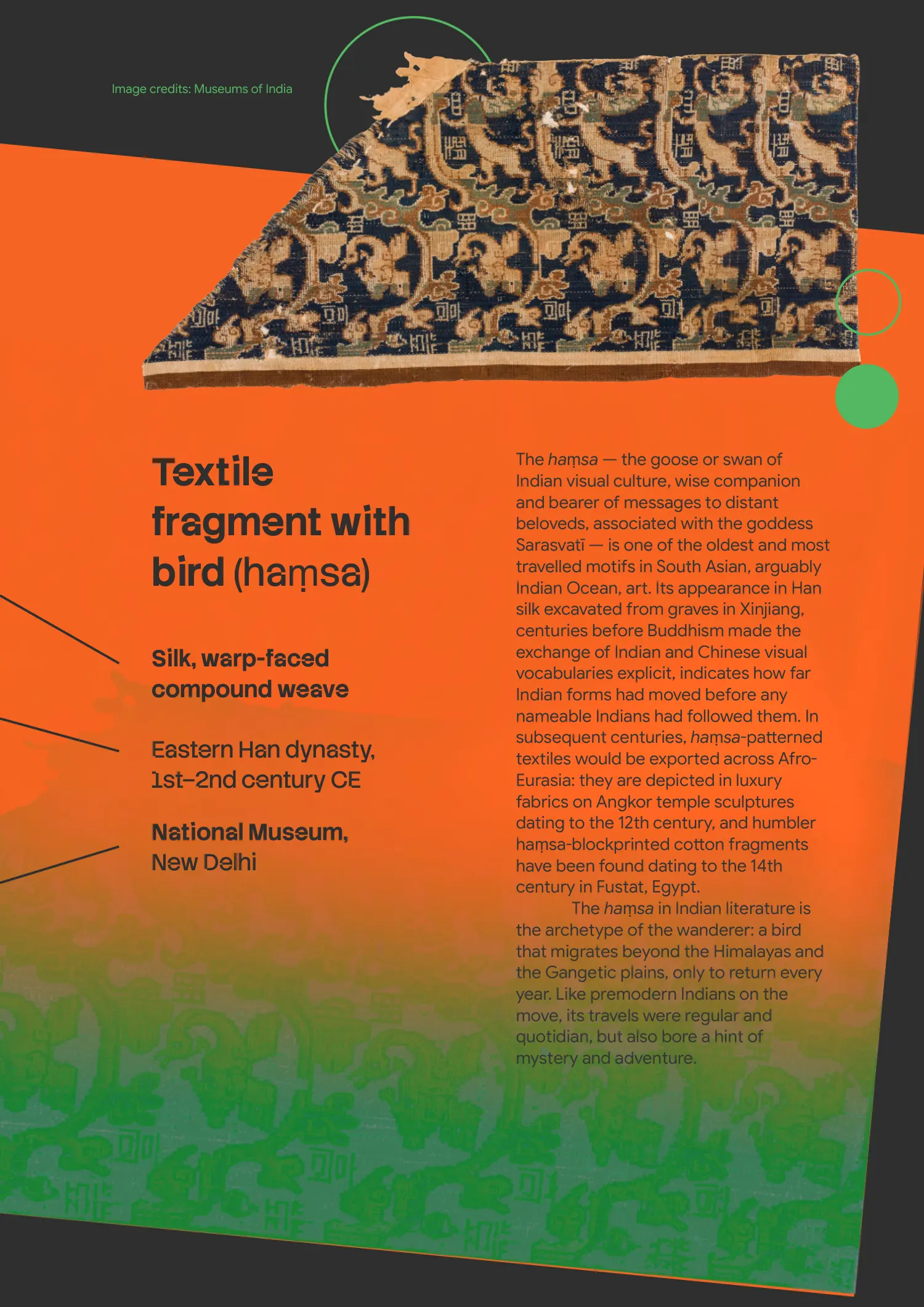
Image credits: Museums of India
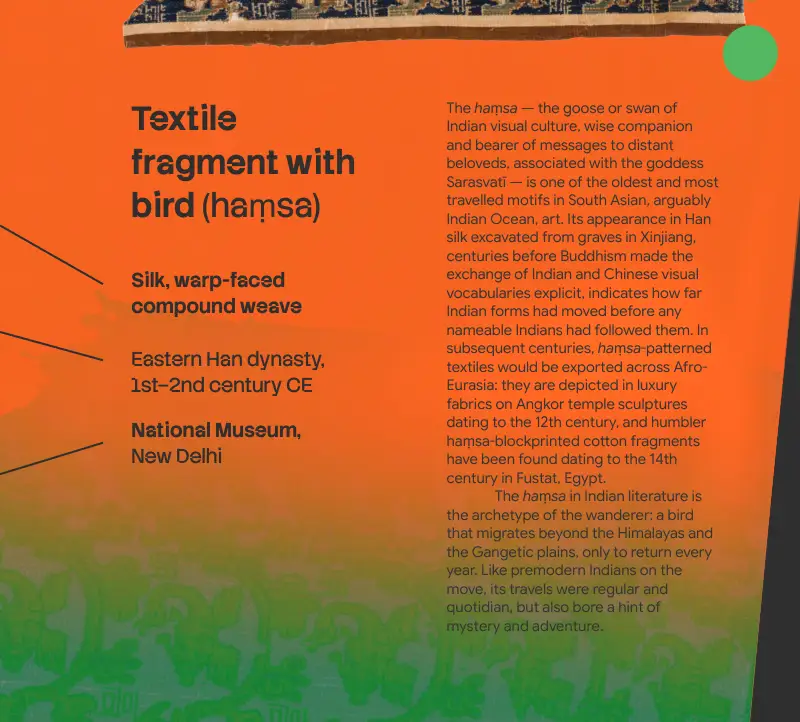
Textile fragment with bird (haṃsa)
Silk, warp-faced compound weave
Eastern Han dynasty, 1st–2nd century CE
National Museum, New Delhi
The haṃsa — the goose or swan of Indian visual culture, wise companion and bearer of messages to distant beloveds, associated with the goddess Sarasvatī — is one of the oldest and most travelled motifs in South Asian, arguably Indian Ocean, art. Its appearance in Han silk excavated from graves in Xinjiang, centuries before Buddhism made the exchange of Indian and Chinese visual vocabularies explicit, indicates how far Indian forms had moved before any nameable Indians had followed them. In subsequent centuries, haṃsa-patterned textiles would be exported across Afro- Eurasia: they are depicted in luxury fabrics on Angkor temple sculptures dating to the 12th century, and humbler haṃsa-blockprinted cotton fragments have been found dating to the 14th century in Fustat, Egypt. The haṃsa in Indian literature is the archetype of the wanderer: a bird that migrates beyond the Himalayas and the Gangetic plains, only to return every year. Like premodern Indians on the move, its travels were regular and quotidian, but also bore a hint of mystery and adventure.
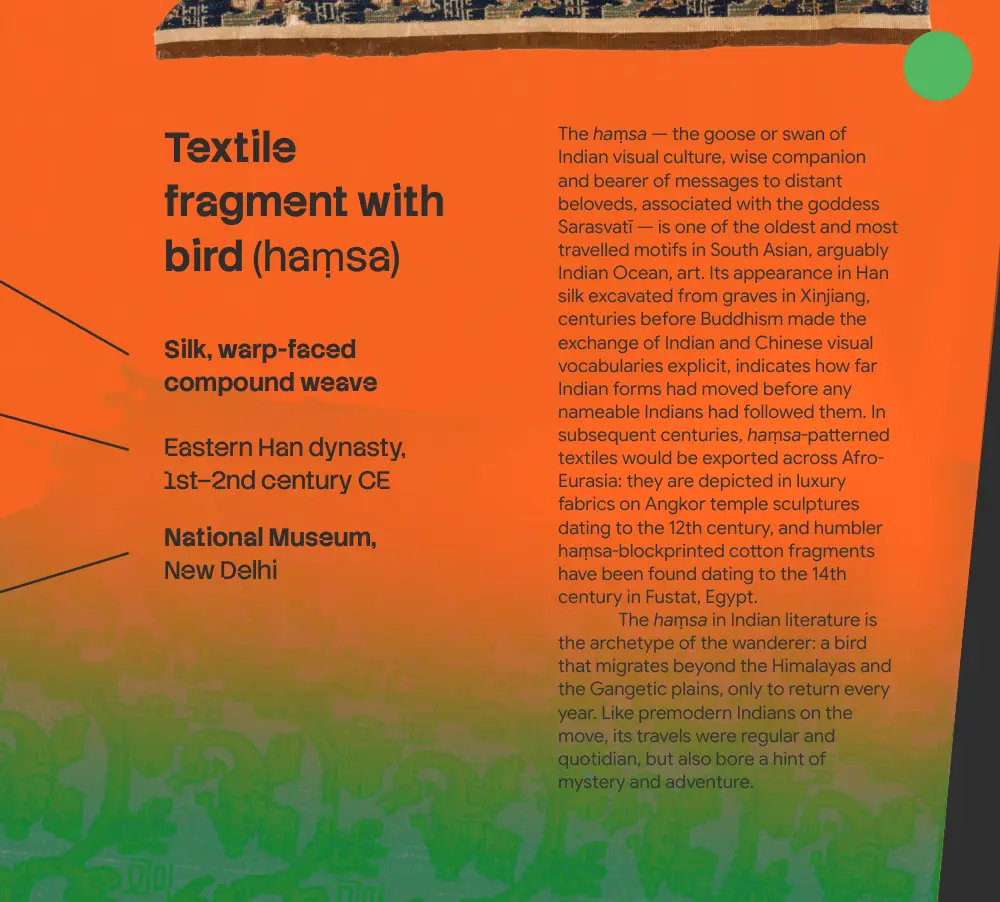
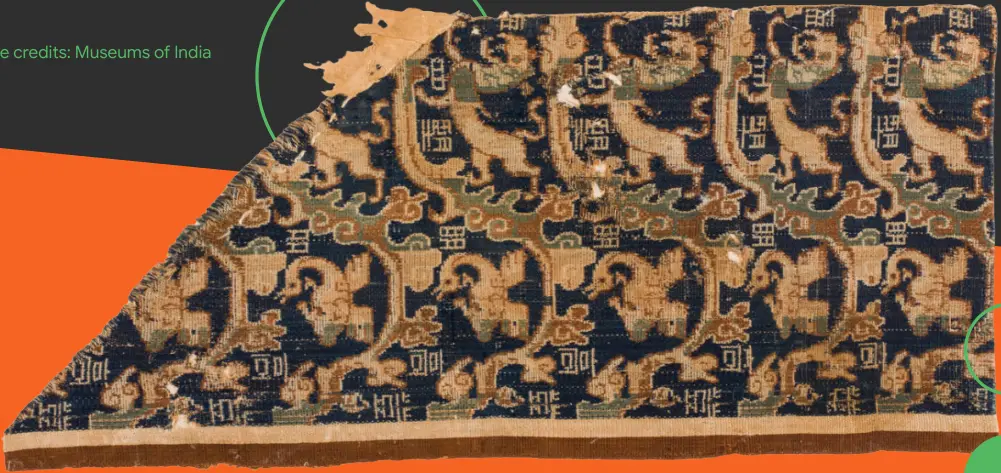
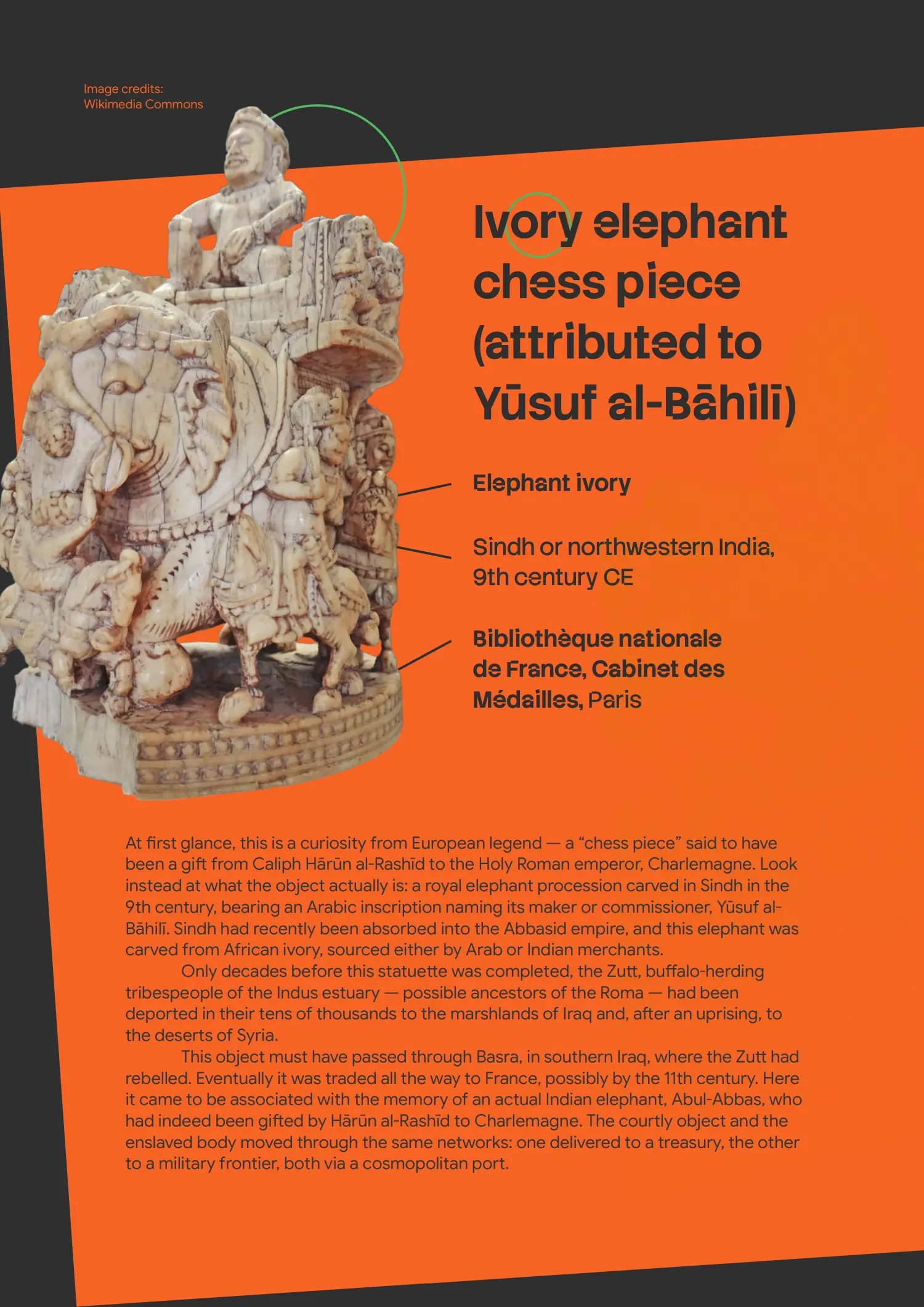
Image credits: Wikimedia Commons
Ivory elephant chess piece (attributed to Yūsuf al-Bāhilī)
Elephant ivory
Sindh or northwestern India, 9th century CE
Bibliothèque nationale de France, Cabinet des Médailles, Paris
At first glance, this is a curiosity from European legend — a “chess piece” said to have been a gift from Caliph Hārūn al-Rashīd to the Holy Roman emperor, Charlemagne. Look instead at what the object actually is: a royal elephant procession carved in Sindh in the 9th century, bearing an Arabic inscription naming its maker or commissioner, Yūsuf al- Bāhilī. Sindh had recently been absorbed into the Abbasid empire, and this elephant was carved from African ivory, sourced either by Arab or Indian merchants. Only decades before this statuette was completed, the Zutt, buffalo-herding tribespeople of the Indus estuary — possible ancestors of the Roma — had been deported in their tens of thousands to the marshlands of Iraq and, after an uprising, to the deserts of Syria. This object must have passed through Basra, in southern Iraq, where the Zutt had rebelled. Eventually it was traded all the way to France, possibly by the 11th century. Here it came to be associated with the memory of an actual Indian elephant, Abul-Abbas, who had indeed been gifted by Hārūn al-Rashīd to Charlemagne. The courtly object and the enslaved body moved through the same networks: one delivered to a treasury, the other to a military frontier, both via a cosmopolitan port.
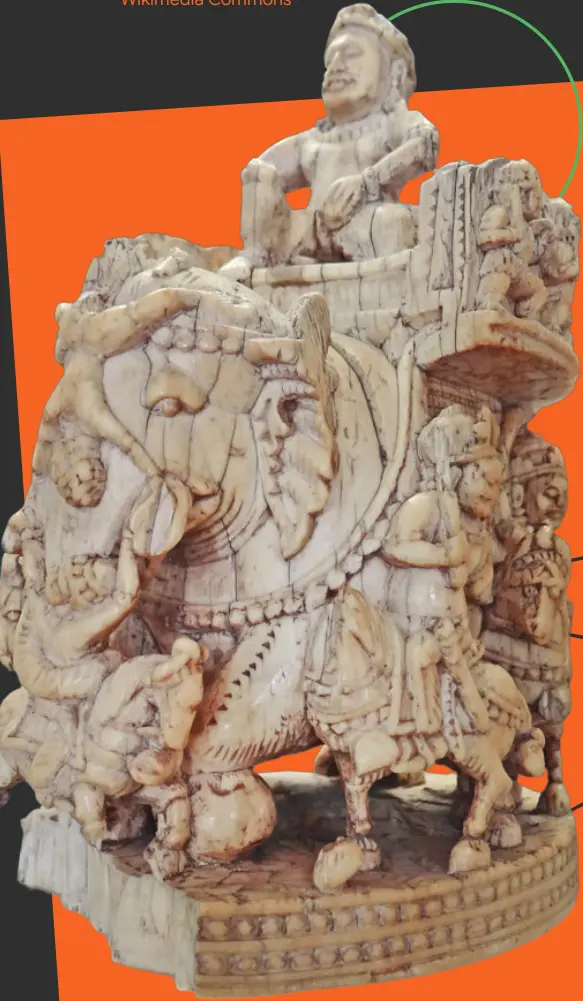
Image credits: Wikimedia Commons
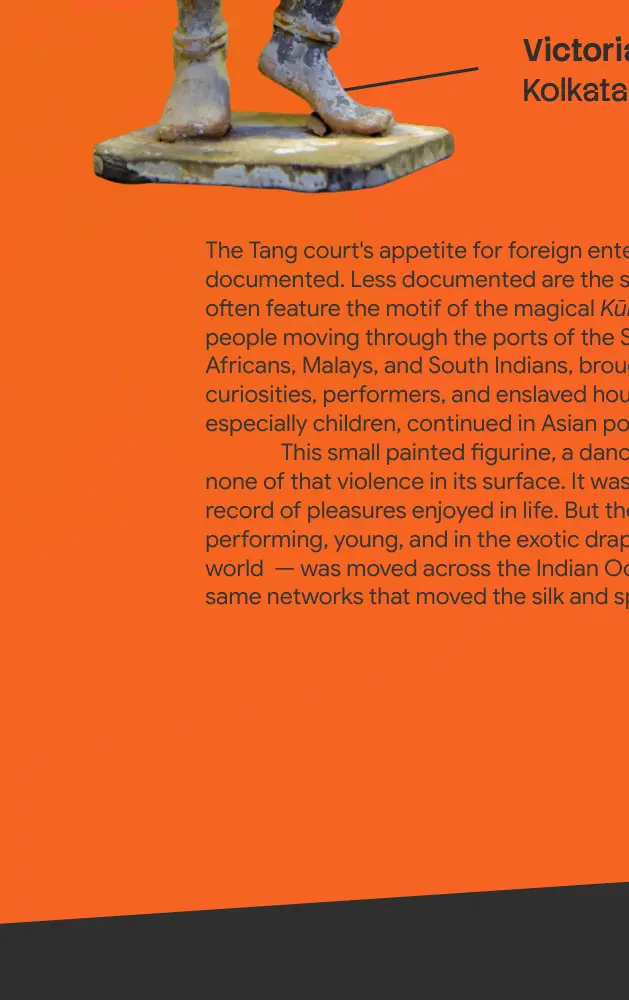
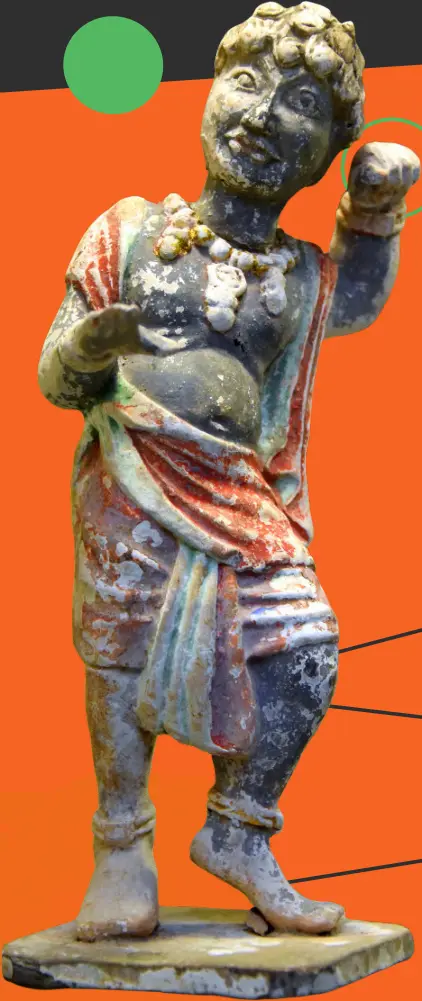
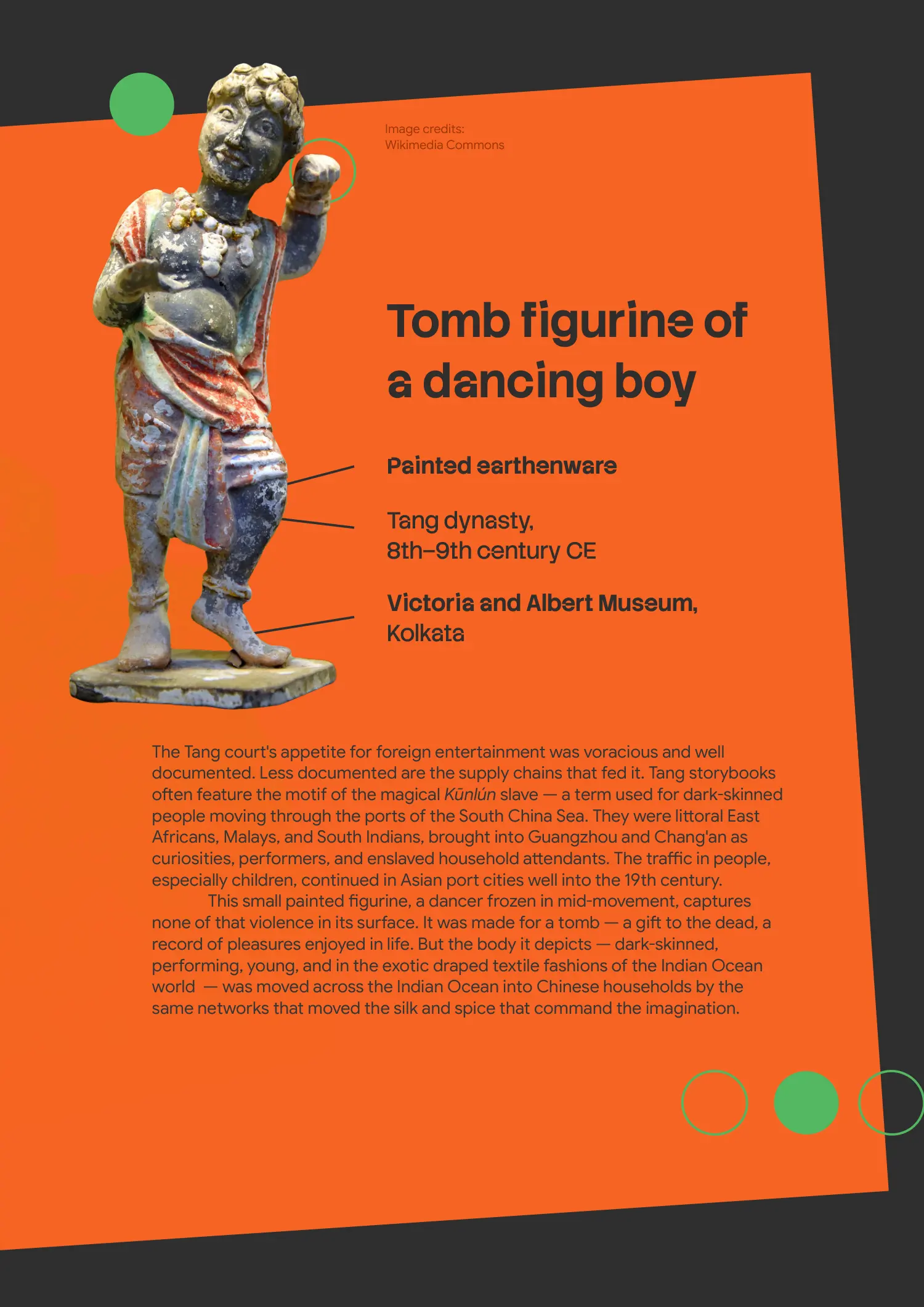
Tomb figurine of a dancing boy
Painted earthenware
Tang dynasty, 8th–9th century CE
Victoria and Albert Museum, Kolkata
The Tang court's appetite for foreign entertainment was voracious and well documented. Less documented are the supply chains that fed it. Tang storybooks often feature the motif of the magical Kūnlún slave — a term used for dark-skinned people moving through the ports of the South China Sea. They were littoral East Africans, Malays, and South Indians, brought into Guangzhou and Chang'an as curiosities, performers, and enslaved household attendants. The traffic in people, especially children, continued in Asian port cities well into the 19th century. This small painted figurine, a dancer frozen in mid-movement, captures none of that violence in its surface. It was made for a tomb — a gift to the dead, a record of pleasures enjoyed in life. But the body it depicts — dark-skinned, performing, young, and in the exotic draped textile fashions of the Indian Ocean world — was moved across the Indian Ocean into Chinese households by the same networks that moved the silk and spice that command the imagination.
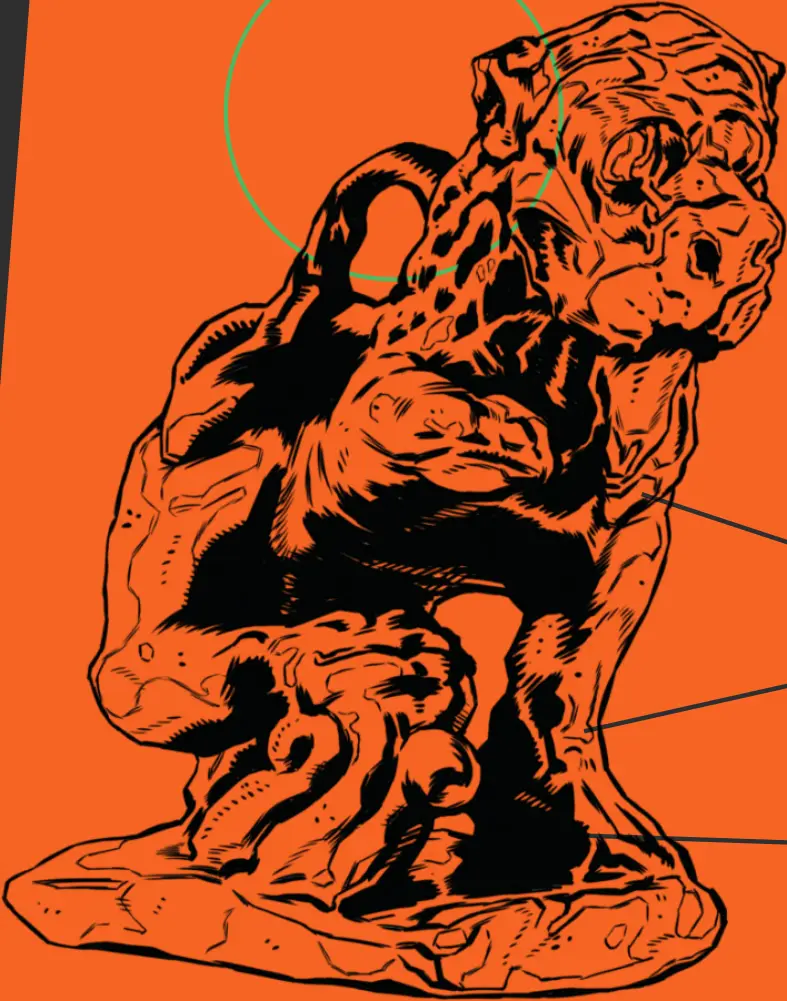
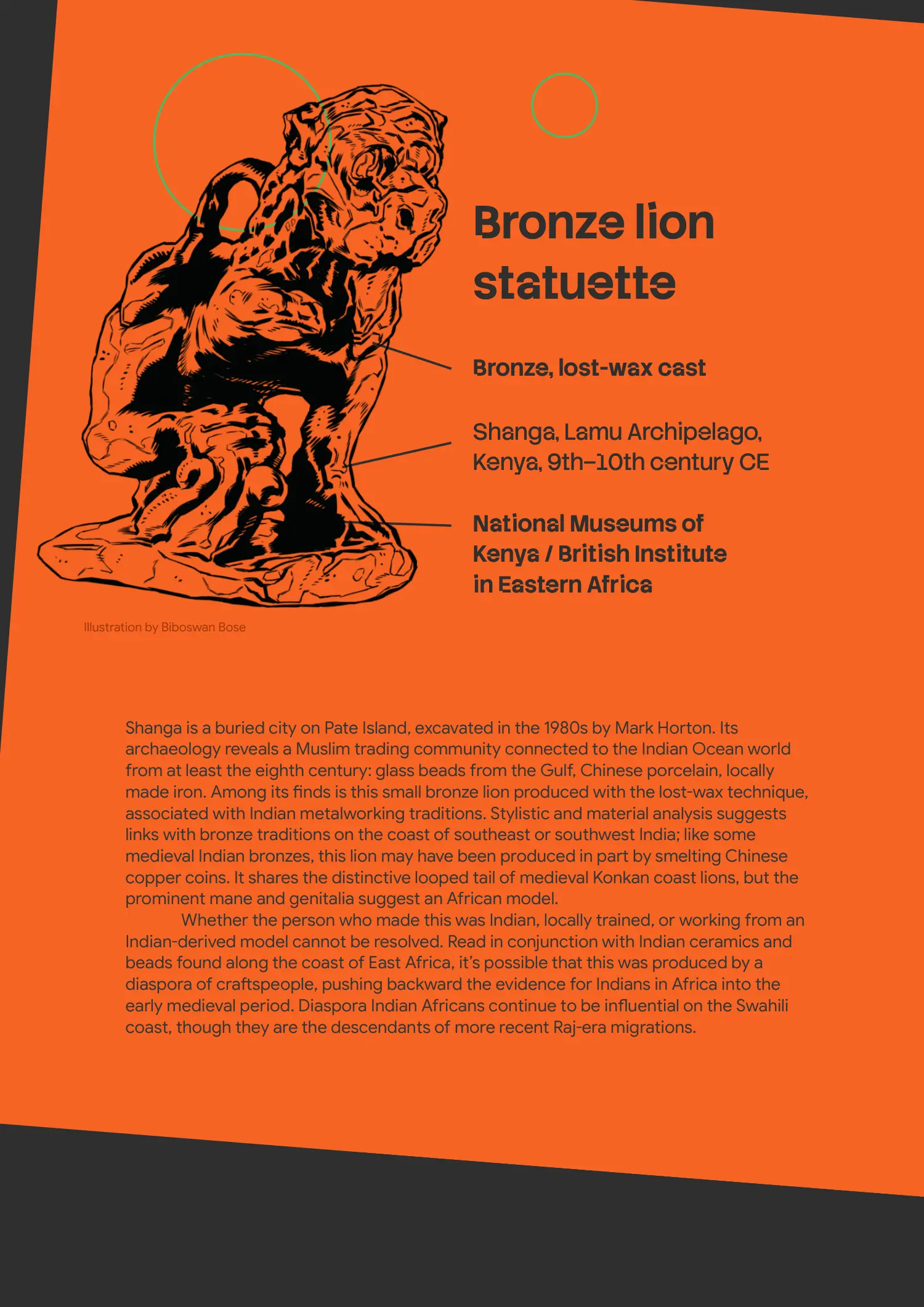
Bronze lion statuette
Bronze, lost-wax cast
Shanga, Lamu Archipelago, Kenya, 9th–10th century CE
National Museums of Kenya / British Institute in Eastern Africa
Illustration by Biboswan Bose
Shanga is a buried city on Pate Island, excavated in the 1980s by Mark Horton. Its archaeology reveals a Muslim trading community connected to the Indian Ocean world from at least the eighth century: glass beads from the Gulf, Chinese porcelain, locally made iron. Among its finds is this small bronze lion produced with the lost-wax technique, associated with Indian metalworking traditions. Stylistic and material analysis suggests links with bronze traditions on the coast of southeast or southwest India; like some medieval Indian bronzes, this lion may have been produced in part by smelting Chinese copper coins. It shares the distinctive looped tail of medieval Konkan coast lions, but the prominent mane and genitalia suggest an African model. Whether the person who made this was Indian, locally trained, or working from an Indian-derived model cannot be resolved. Read in conjunction with Indian ceramics and beads found along the coast of East Africa, it’s possible that this was produced by a diaspora of craftspeople, pushing backward the evidence for Indians in Africa into the early medieval period. Diaspora Indian Africans continue to be influential on the Swahili coast, though they are the descendants of more recent Raj-era migrations.
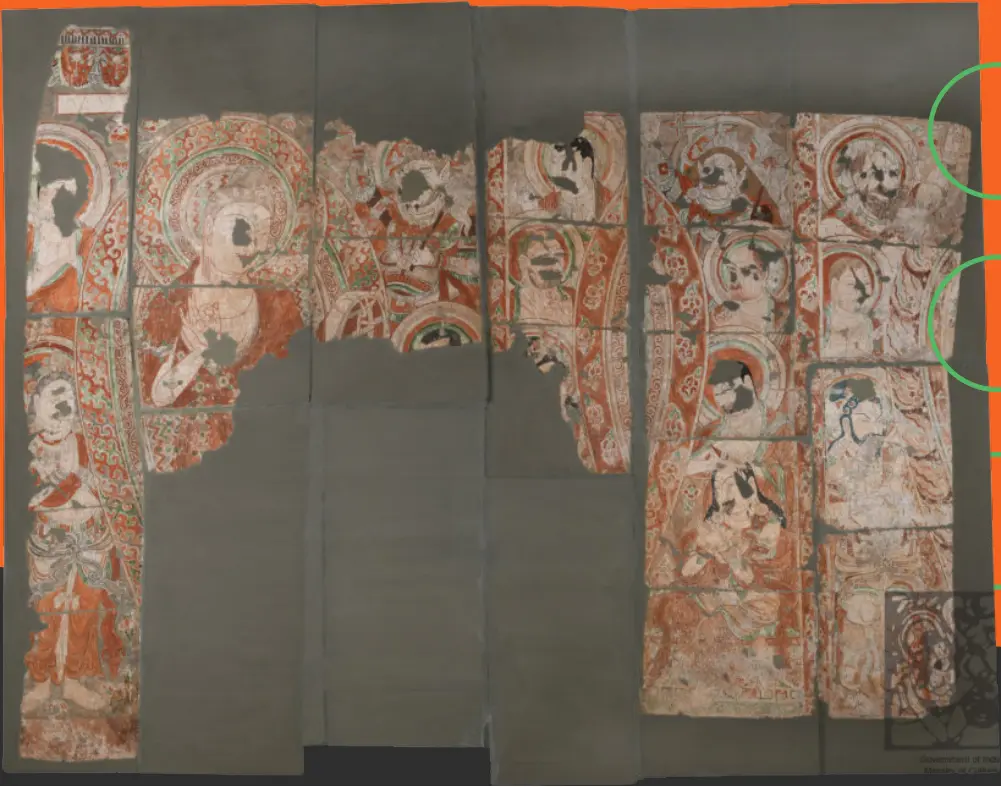
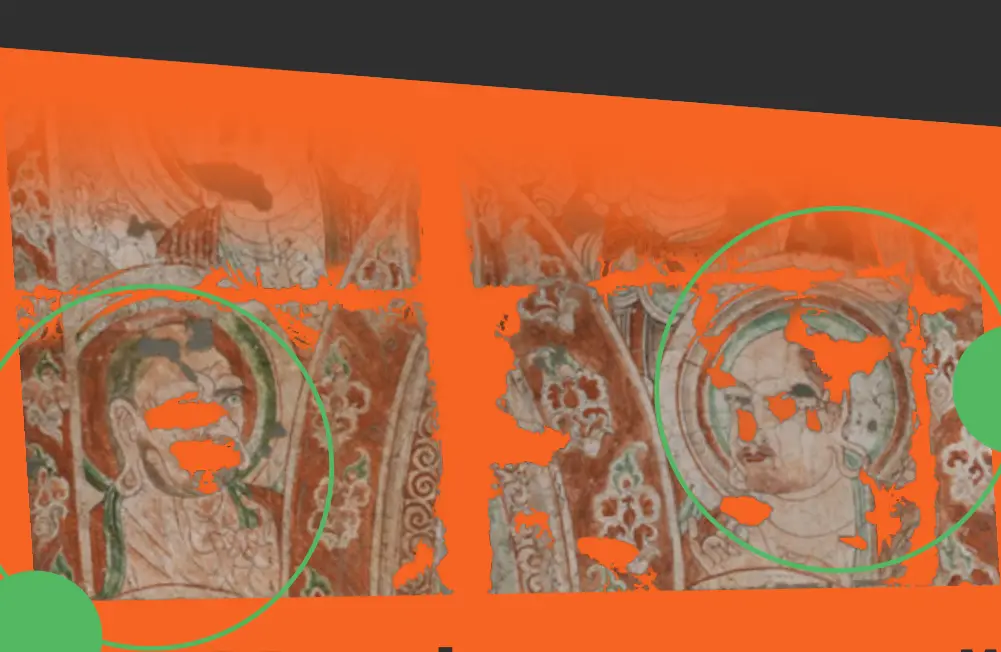
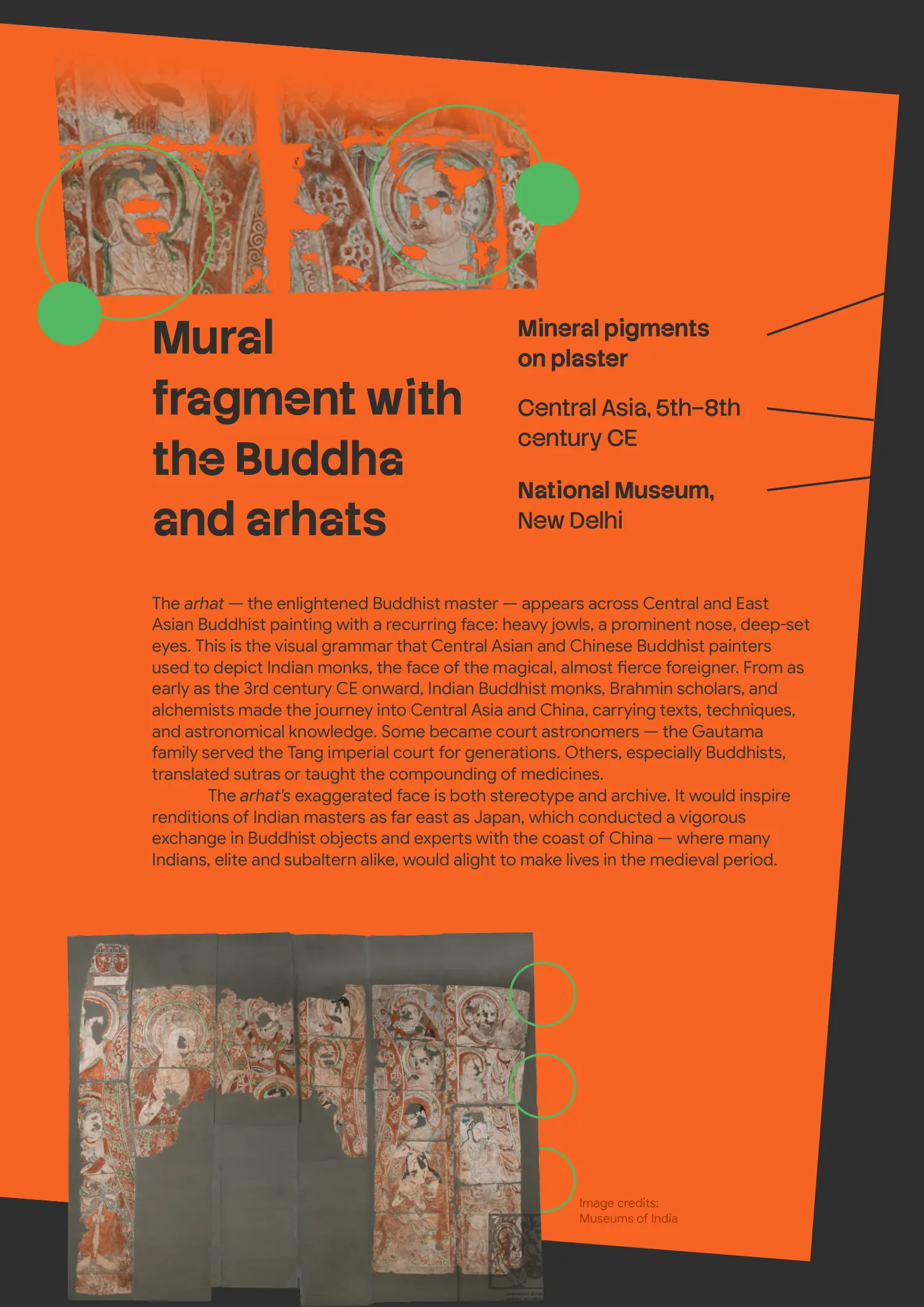
Mineral pigments on plaster
Central Asia, 5th–8th century CE
National Museum, New Delhi
Mural fragment with the Buddha and arhats
The arhat — the enlightened Buddhist master — appears across Central and East Asian Buddhist painting with a recurring face: heavy jowls, a prominent nose, deep-set eyes. This is the visual grammar that Central Asian and Chinese Buddhist painters used to depict Indian monks, the face of the magical, almost fierce foreigner. From as early as the 3rd century CE onward, Indian Buddhist monks, Brahmin scholars, and alchemists made the journey into Central Asia and China, carrying texts, techniques, and astronomical knowledge. Some became court astronomers — the Gautama family served the Tang imperial court for generations. Others, especially Buddhists, translated sutras or taught the compounding of medicines. The arhat's exaggerated face is both stereotype and archive. It would inspire renditions of Indian masters as far east as Japan, which conducted a vigorous exchange in Buddhist objects and experts with the coast of China — where many Indians, elite and subaltern alike, would alight to make lives in the medieval period.
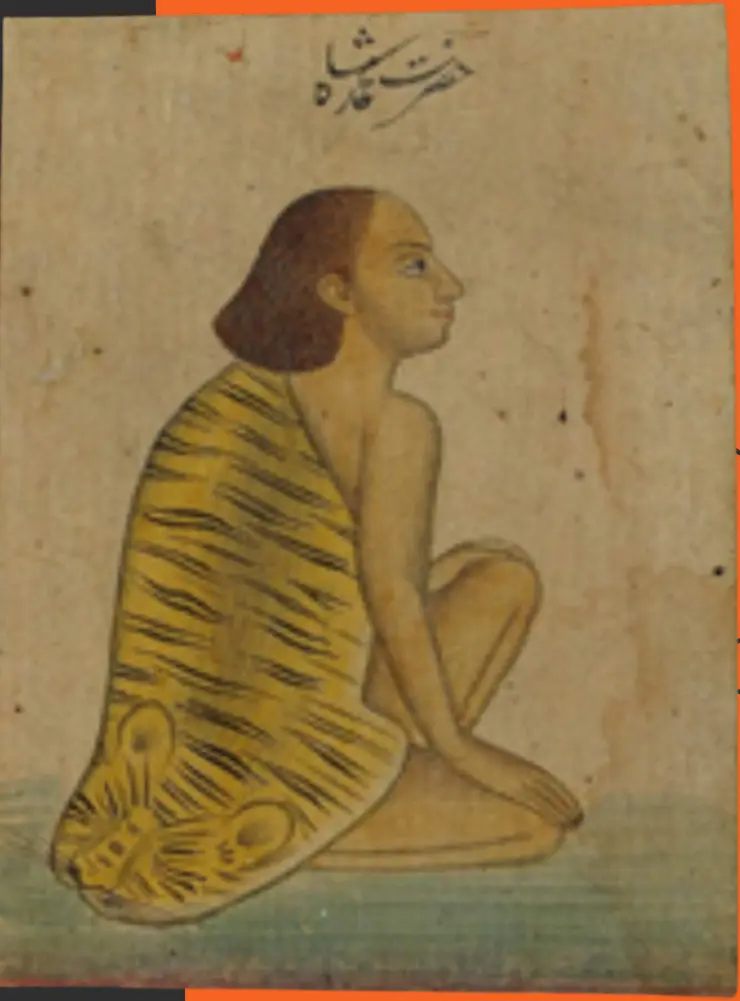
Image credits: Museums of India

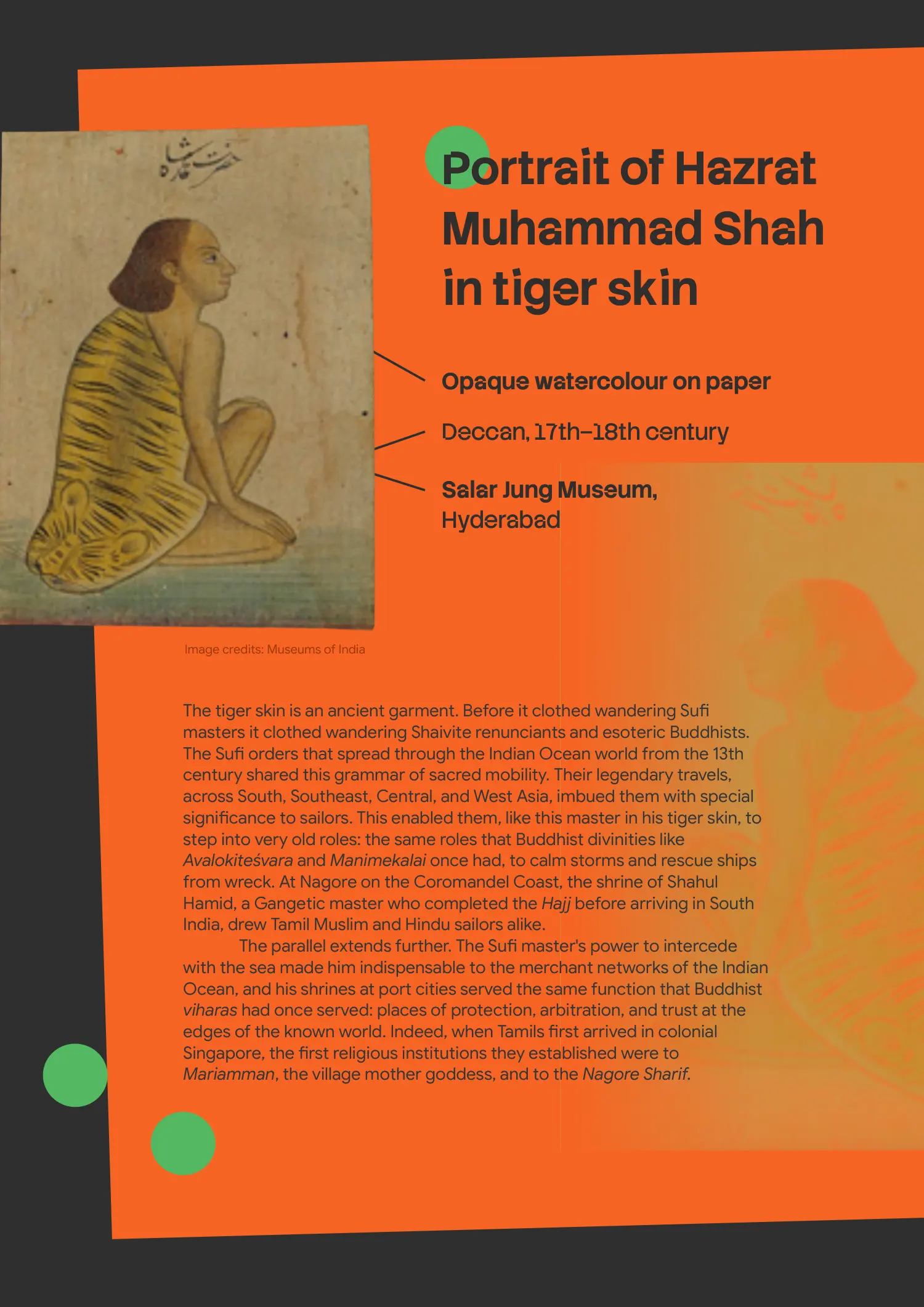
Portrait of Hazrat Muhammad Shah in tiger skin
Opaque watercolour on paper
Deccan, 17th–18th century
Salar Jung Museum, Hyderabad
Image credits: Museums of India
The tiger skin is an ancient garment. Before it clothed wandering Sufi masters it clothed wandering Shaivite renunciants and esoteric Buddhists. The Sufi orders that spread through the Indian Ocean world from the 13th century shared this grammar of sacred mobility. Their legendary travels, across South, Southeast, Central, and West Asia, imbued them with special significance to sailors. This enabled them, like this master in his tiger skin, to step into very old roles: the same roles that Buddhist divinities like Avalokiteśvara and Manimekalai once had, to calm storms and rescue ships from wreck. At Nagore on the Coromandel Coast, the shrine of Shahul Hamid, a Gangetic master who completed the Hajj before arriving in South India, drew Tamil Muslim and Hindu sailors alike. The parallel extends further. The Sufi master's power to intercede with the sea made him indispensable to the merchant networks of the Indian Ocean, and his shrines at port cities served the same function that Buddhist viharas had once served: places of protection, arbitration, and trust at the edges of the known world. Indeed, when Tamils first arrived in colonial Singapore, the first religious institutions they established were to Mariamman, the village mother goddess, and to the Nagore Sharif.
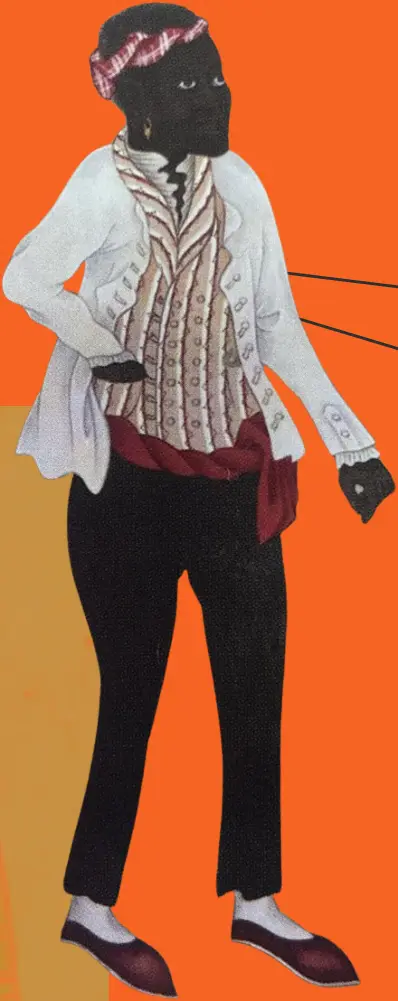
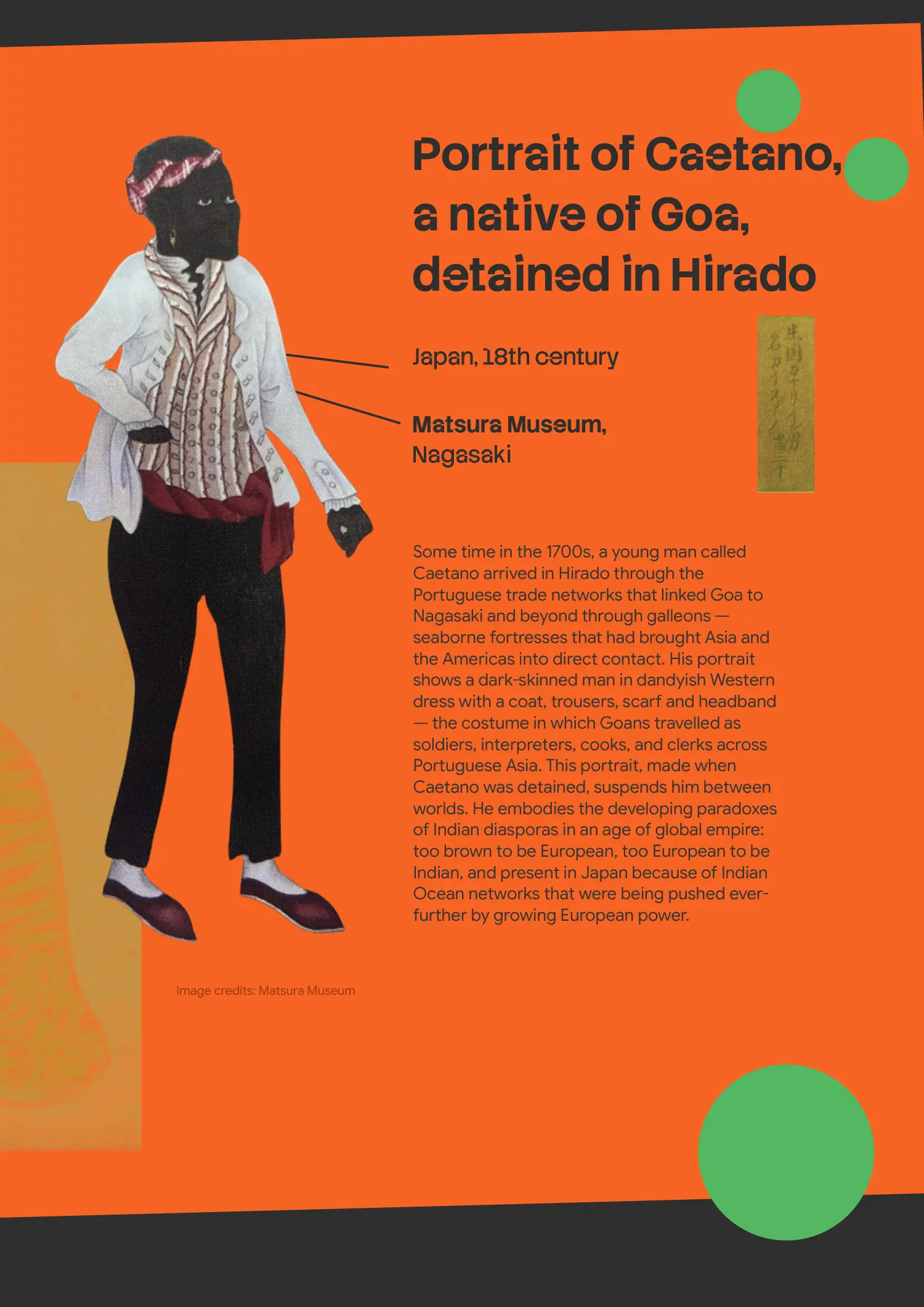
Portrait of Caetano, a native of Goa, detained in Hirado
Japan, 18th century
Matsura Museum, Nagasaki
Some time in the 1700s, a young man called Caetano arrived in Hirado through the Portuguese trade networks that linked Goa to Nagasaki and beyond through galleons — seaborne fortresses that had brought Asia and the Americas into direct contact. His portrait shows a dark-skinned man in dandyish Western dress with a coat, trousers, scarf and headband — the costume in which Goans travelled as soldiers, interpreters, cooks, and clerks across Portuguese Asia. This portrait, made when Caetano was detained, suspends him between worlds. He embodies the developing paradoxes of Indian diasporas in an age of global empire: too brown to be European, too European to be Indian, and present in Japan because of Indian Ocean networks that were being pushed ever- further by growing European power.
Image credits: Matsura Museum

View original pages, photographs & credits
Originally published in Museum Mosaic 2025, published May 2026.
Part of our annual review. Descriptions reflect the publication’s reporting period.