National Museum, New Delhi
Few creatures have carried the weight of the cultural imagination of the Indian subcontinent like the elephant. At once majestic and intimate, earthly and divine, the elephant moves across myth, ritual, warfare, folklore, and art, carrying within it a world of meanings — power, fertility, wisdom, prosperity, and sacred presence. From Airavata — the celestial mount of Indra, to Gajalakshmi, bathed by elephants bearing streams of abundance; from the auspicious white elephant of Buddhist narratives to the elephant-headed form of Ganesha, the motif recurs across centuries and traditions as a potent symbol of sovereignty and devotion. This curated trail at the National Museum, New Delhi, explores the many lives of the elephant motif through select objects from the museum’s collection, tracing its enduring presence across regions, periods, and artistic forms.
Shreya Sahay Subject Matter Expert, Tales of City
"The footprints of all creatures that walk can fit inside an elephant’s footprint."
— Mahāhatthipadopamasutta
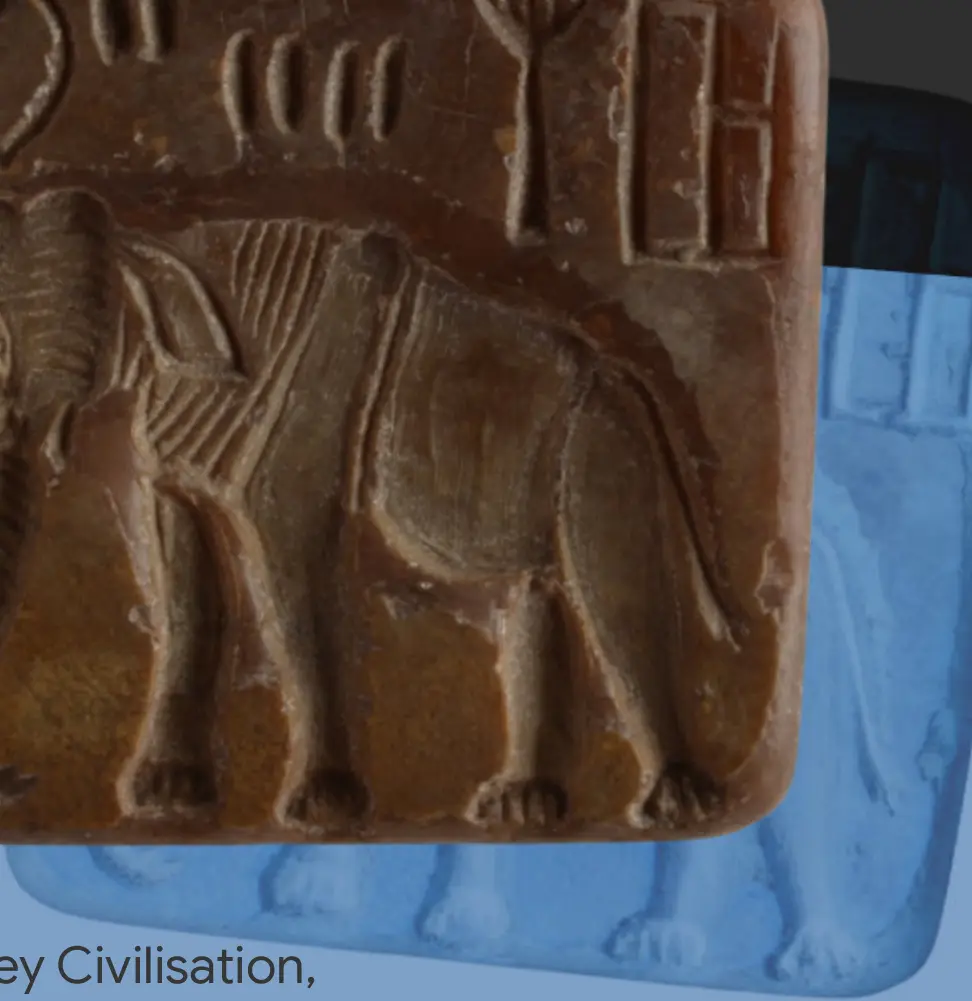
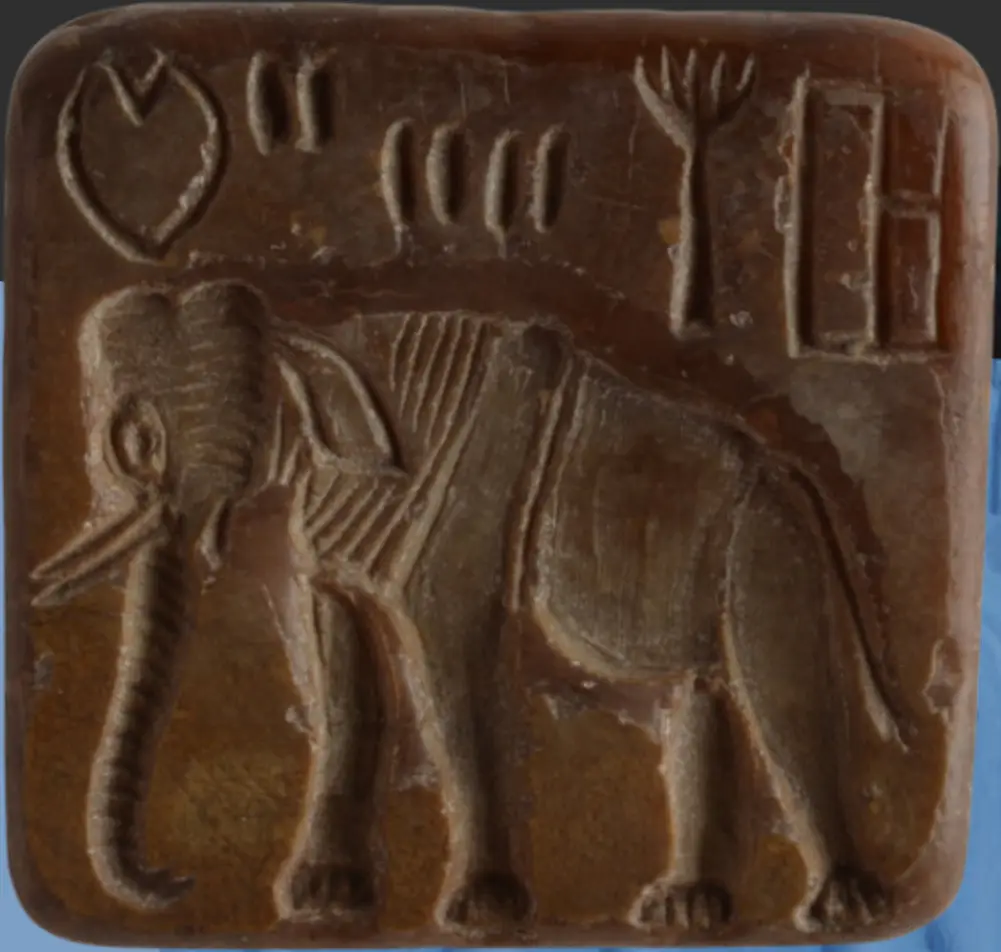
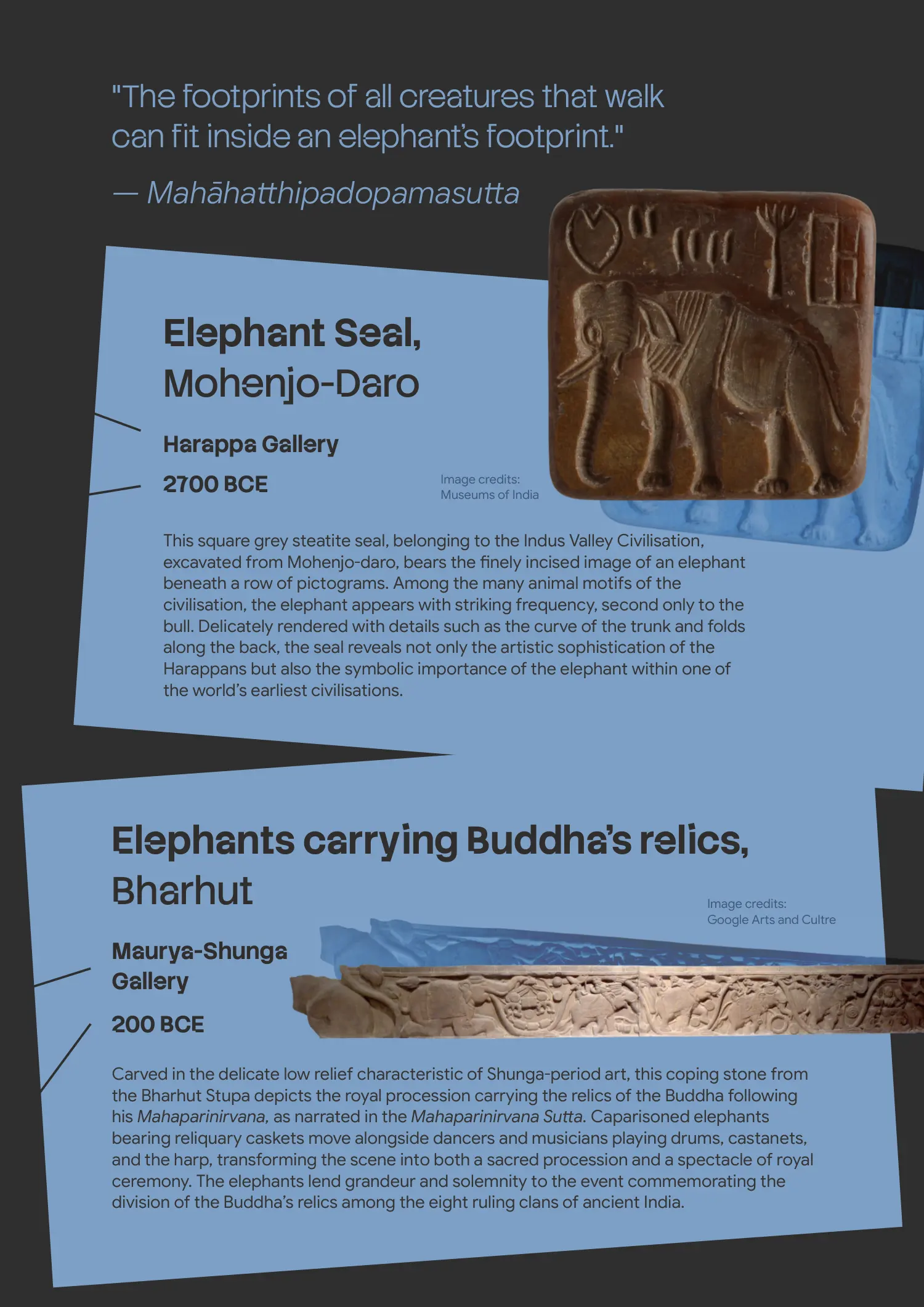
Elephant Seal, Mohenjo-Daro
Harappa Gallery
2700 BCE
Image credits: Museums of India
This square grey steatite seal, belonging to the Indus Valley Civilisation, excavated from Mohenjo-daro, bears the finely incised image of an elephant beneath a row of pictograms. Among the many animal motifs of the civilisation, the elephant appears with striking frequency, second only to the bull. Delicately rendered with details such as the curve of the trunk and folds along the back, the seal reveals not only the artistic sophistication of the Harappans but also the symbolic importance of the elephant within one of the world’s earliest civilisations.
Elephants carrying Buddha’s relics, Bharhut
Image credits: Google Arts and Cultre
Maurya-Shunga Gallery
200 BCE
Carved in the delicate low relief characteristic of Shunga-period art, this coping stone from the Bharhut Stupa depicts the royal procession carrying the relics of the Buddha following his Mahaparinirvana, as narrated in the Mahaparinirvana Sutta. Caparisoned elephants bearing reliquary caskets move alongside dancers and musicians playing drums, castanets, and the harp, transforming the scene into both a sacred procession and a spectacle of royal ceremony. The elephants lend grandeur and solemnity to the event commemorating the division of the Buddha’s relics among the eight ruling clans of ancient India.
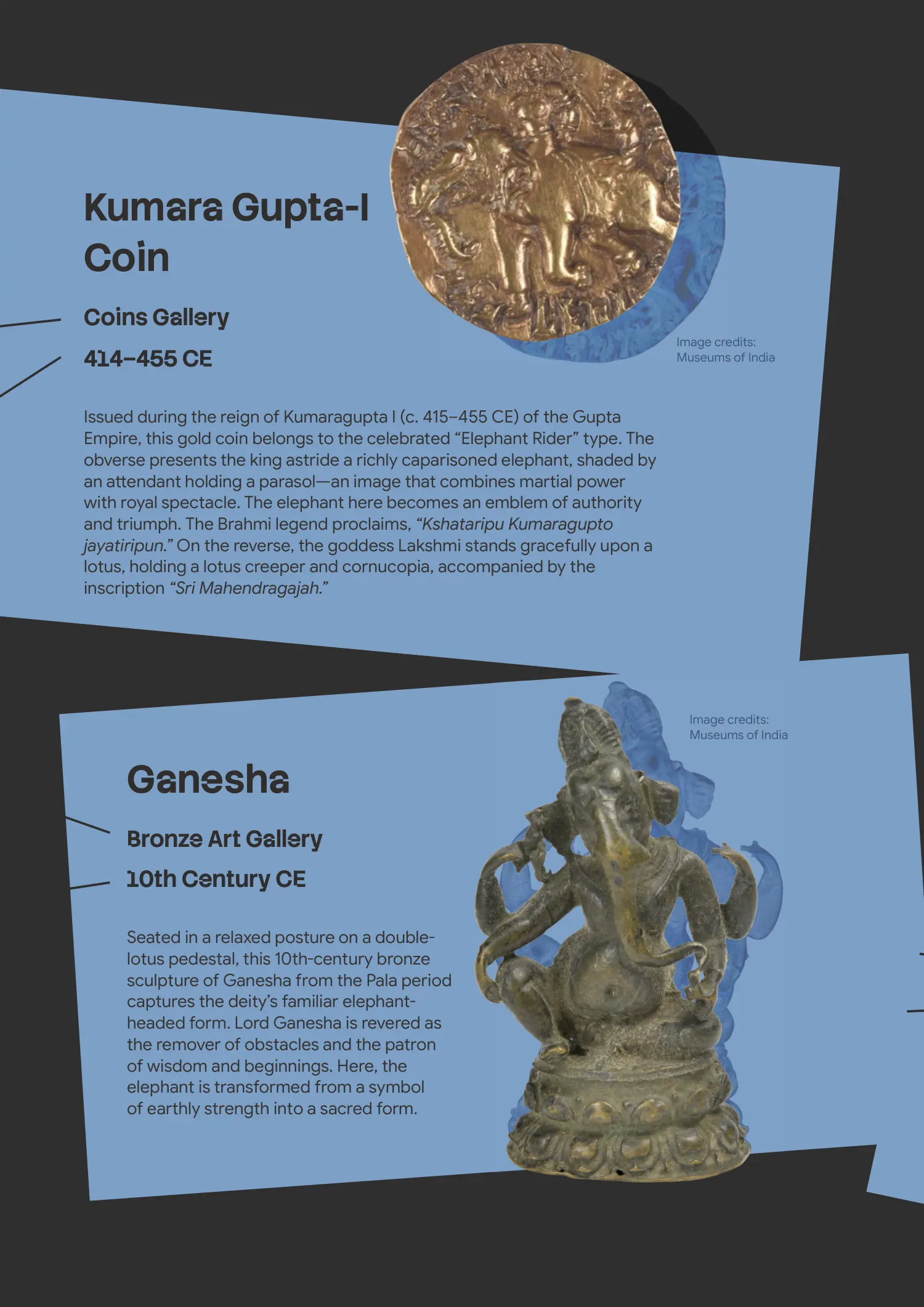
Kumara Gupta-I Coin
Coins Gallery
Image credits: Museums of India
414–455 CE
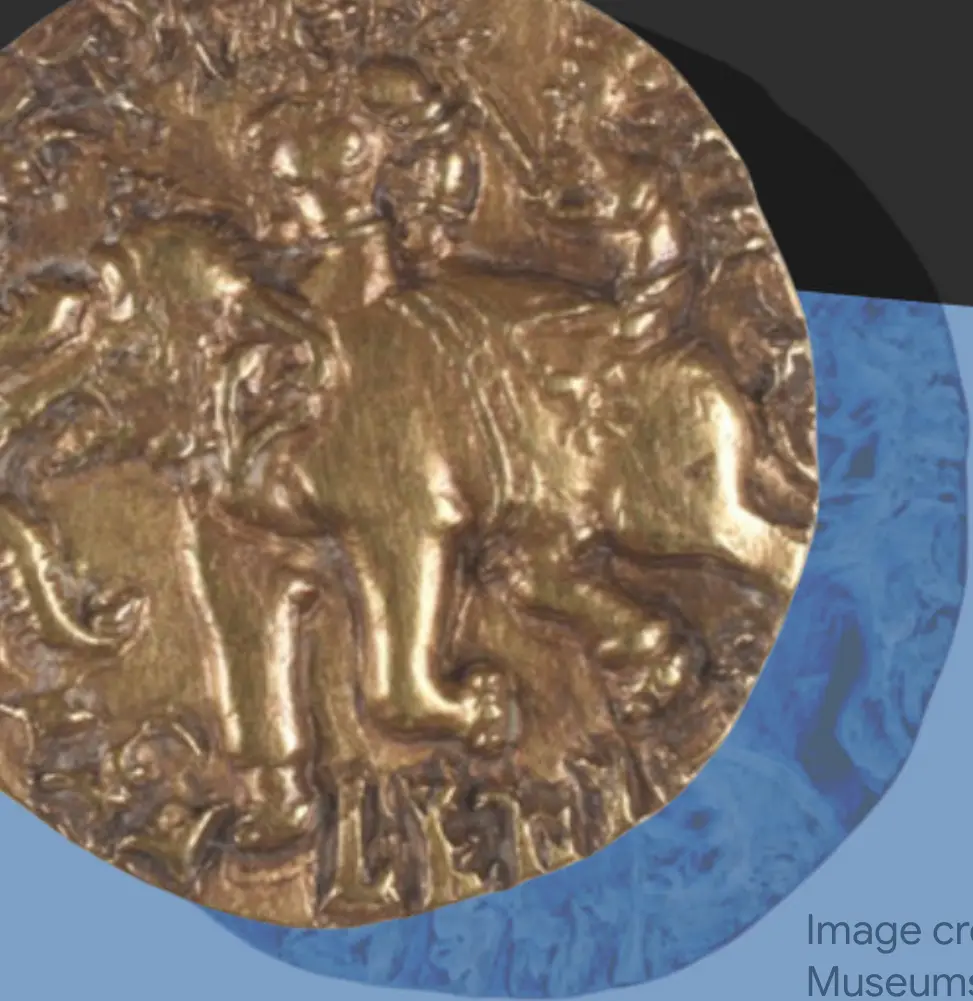
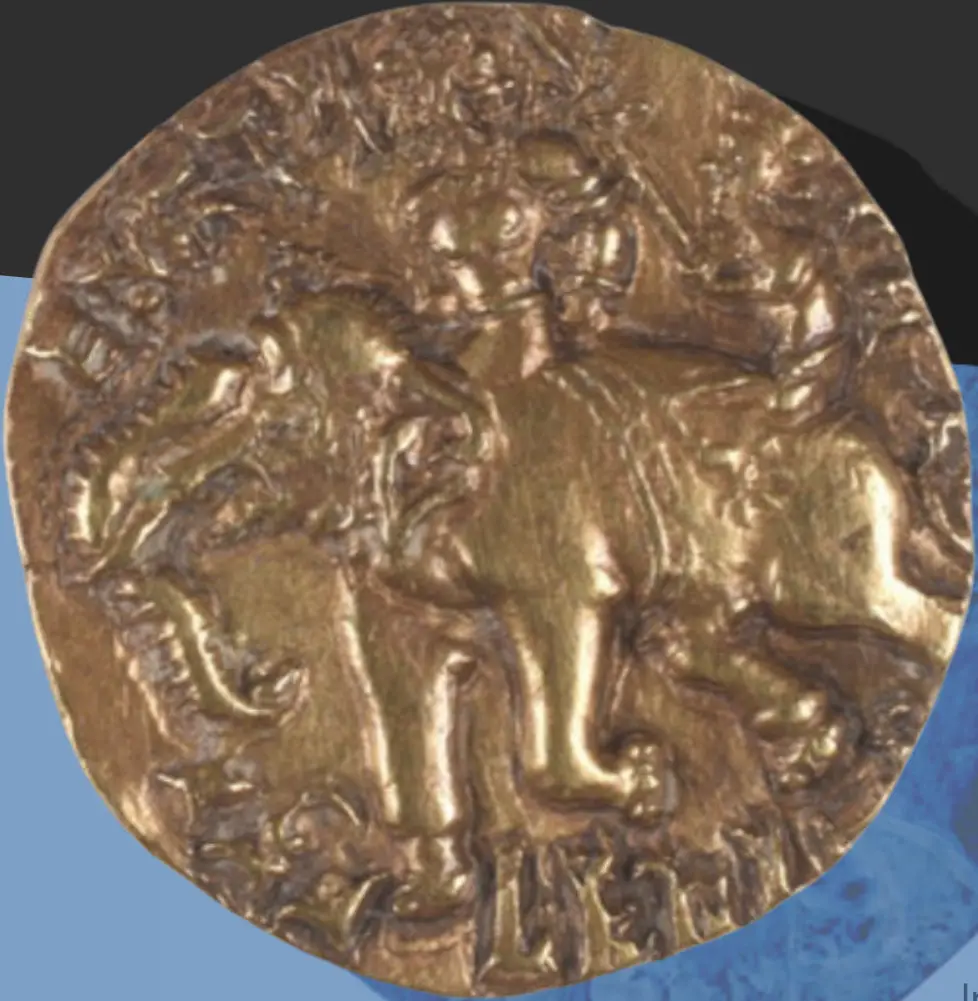
Issued during the reign of Kumaragupta I (c. 415–455 CE) of the Gupta Empire, this gold coin belongs to the celebrated “Elephant Rider” type. The obverse presents the king astride a richly caparisoned elephant, shaded by an attendant holding a parasol—an image that combines martial power with royal spectacle. The elephant here becomes an emblem of authority and triumph. The Brahmi legend proclaims, “Kshataripu Kumaragupto jayatiripun.” On the reverse, the goddess Lakshmi stands gracefully upon a lotus, holding a lotus creeper and cornucopia, accompanied by the inscription “Sri Mahendragajah.”
Image credits: Museums of India
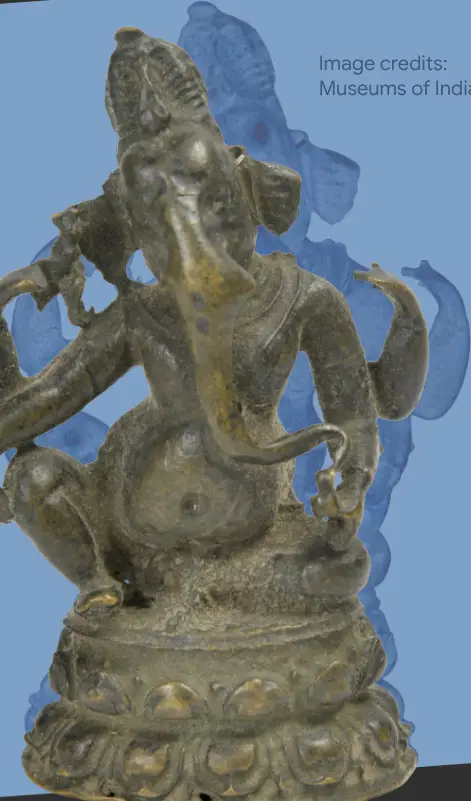
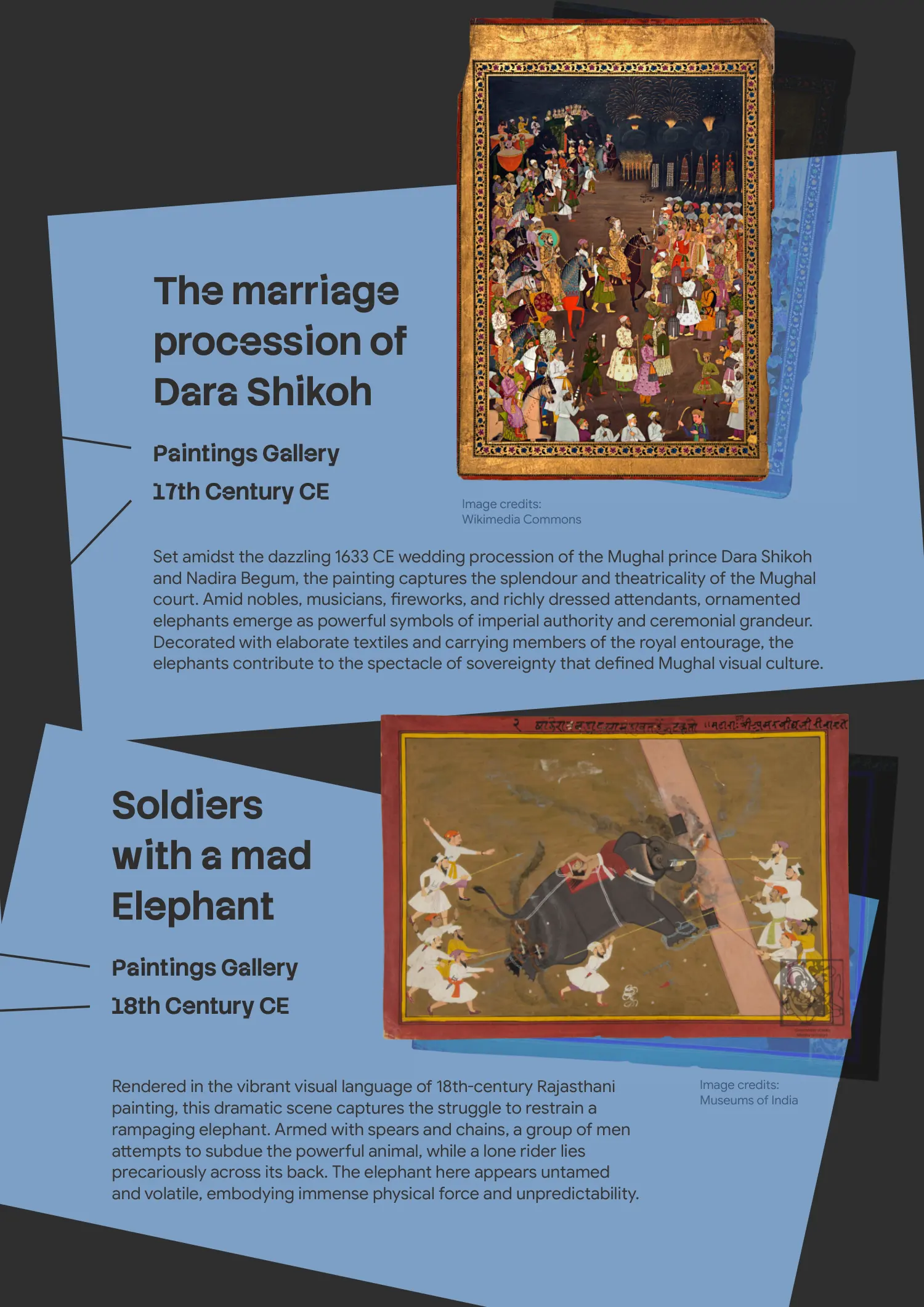
Ganesha
Bronze Art Gallery
10th Century CE
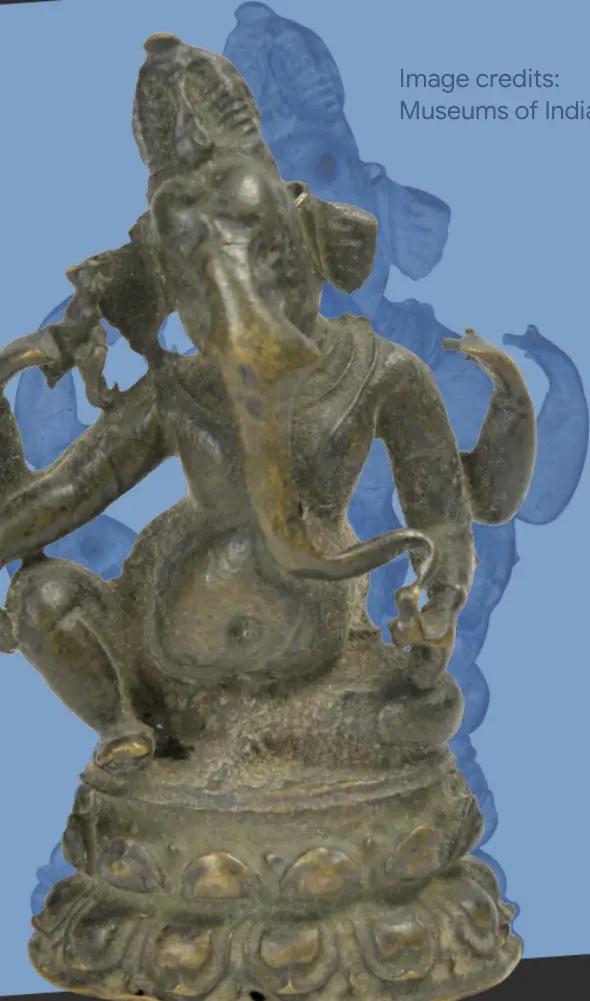
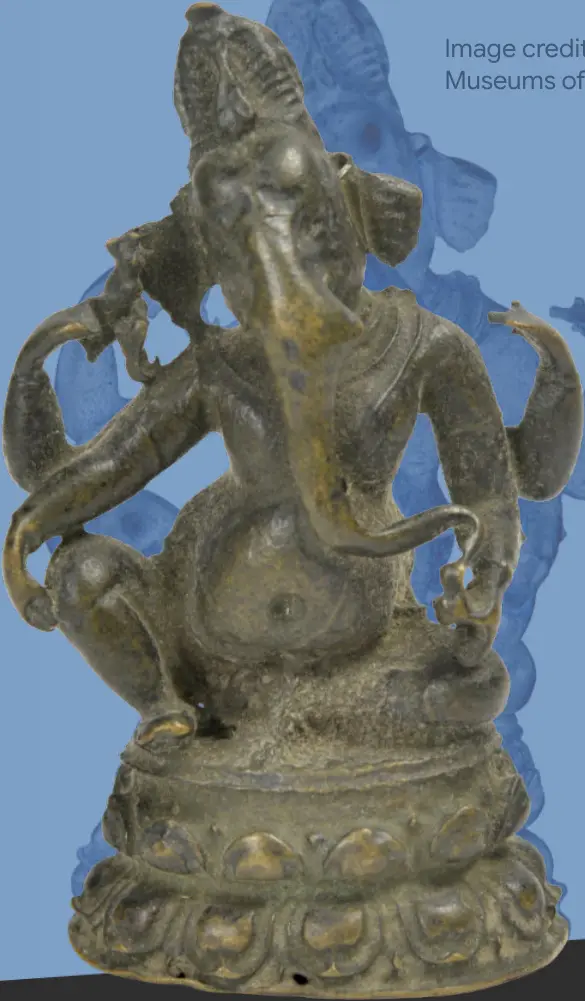
Seated in a relaxed posture on a double- lotus pedestal, this 10th-century bronze sculpture of Ganesha from the Pala period captures the deity’s familiar elephant- headed form. Lord Ganesha is revered as the remover of obstacles and the patron of wisdom and beginnings. Here, the elephant is transformed from a symbol of earthly strength into a sacred form.
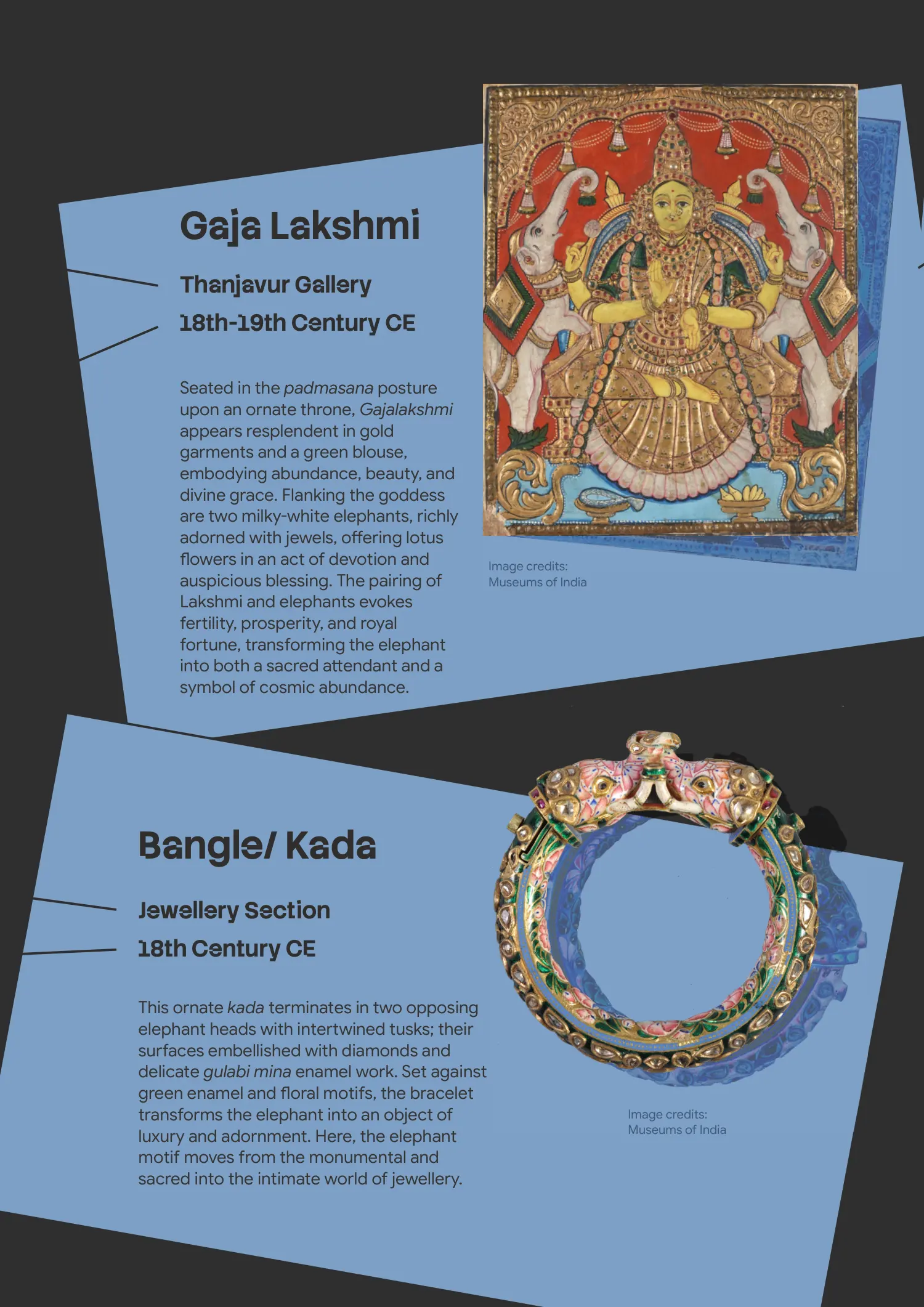
The marriage procession of Dara Shikoh
Paintings Gallery
17th Century CE
Image credits: Wikimedia Commons
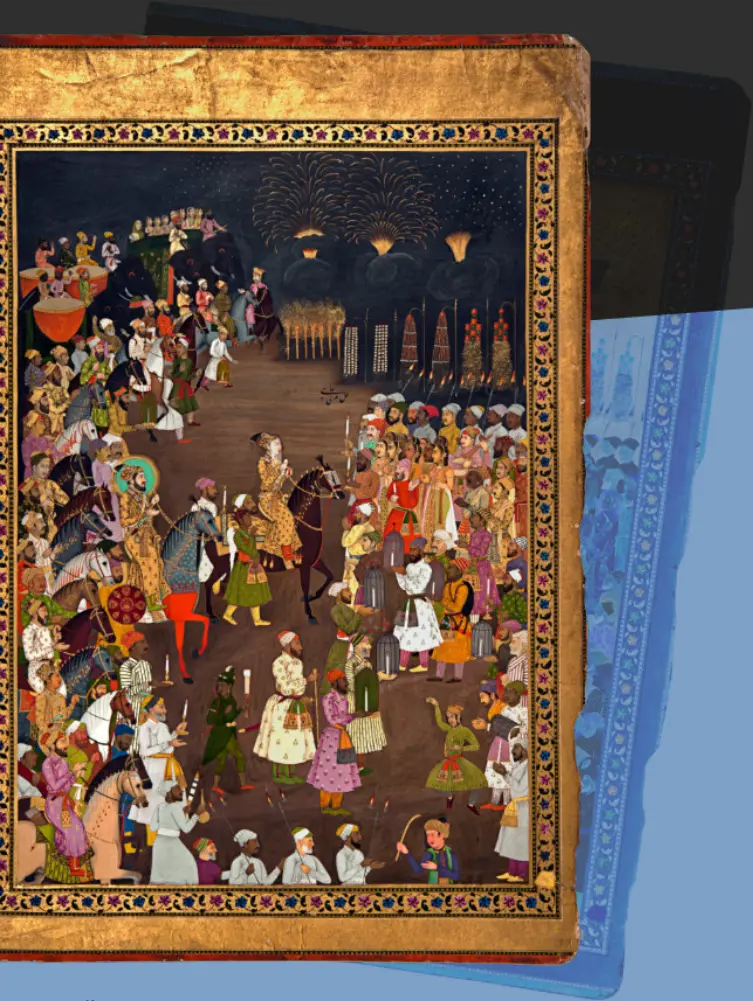
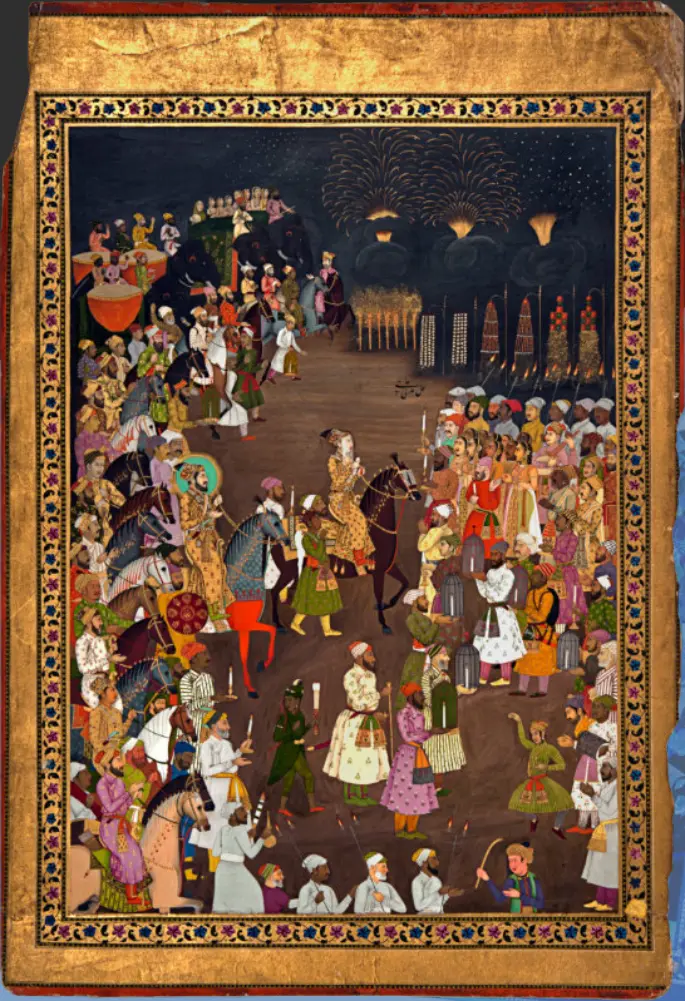
Set amidst the dazzling 1633 CE wedding procession of the Mughal prince Dara Shikoh and Nadira Begum, the painting captures the splendour and theatricality of the Mughal court. Amid nobles, musicians, fireworks, and richly dressed attendants, ornamented elephants emerge as powerful symbols of imperial authority and ceremonial grandeur. Decorated with elaborate textiles and carrying members of the royal entourage, the elephants contribute to the spectacle of sovereignty that defined Mughal visual culture.
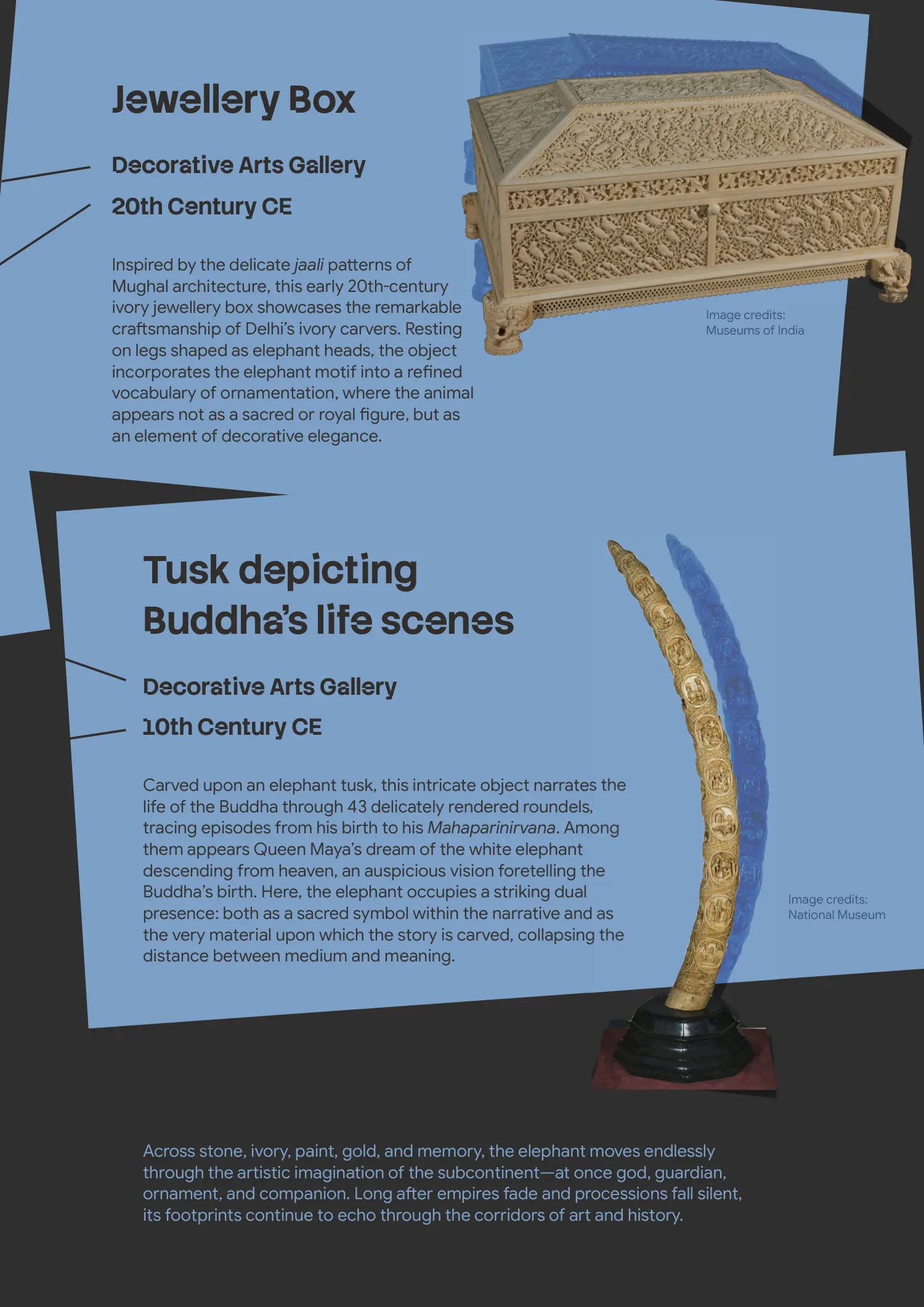
Soldiers with a mad Elephant
Paintings Gallery
18th Century CE
Image credits: Museums of India
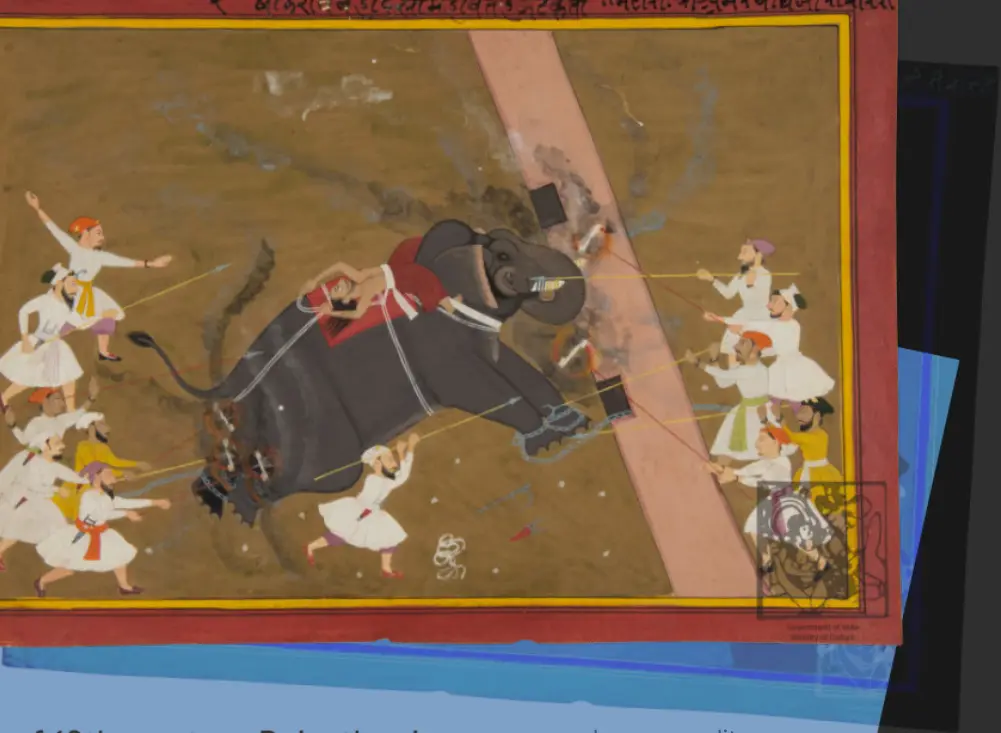
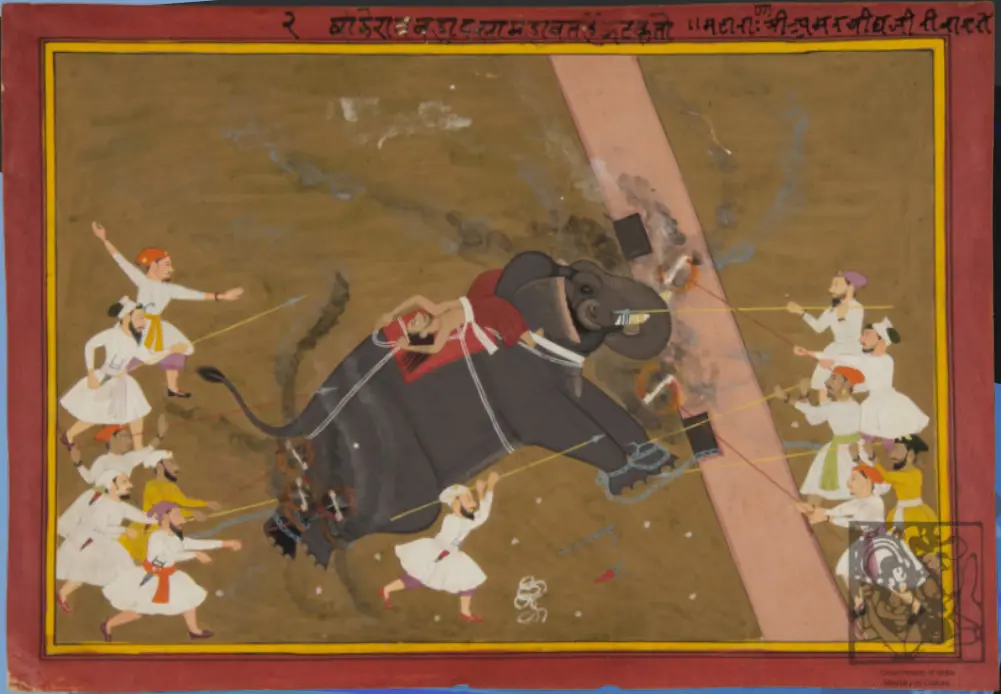
Rendered in the vibrant visual language of 18th-century Rajasthani painting, this dramatic scene captures the struggle to restrain a rampaging elephant. Armed with spears and chains, a group of men attempts to subdue the powerful animal, while a lone rider lies precariously across its back. The elephant here appears untamed and volatile, embodying immense physical force and unpredictability.
Gaja Lakshmi
Thanjavur Gallery
18th-19th Century CE
Image credits: Museums of India
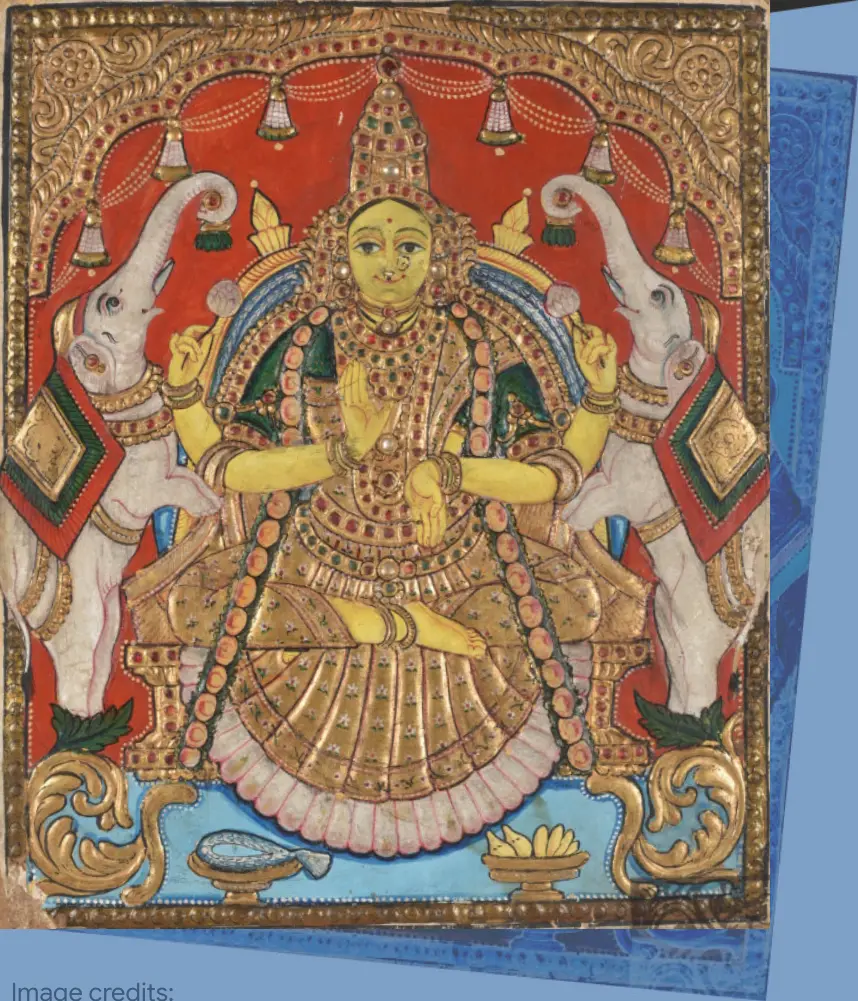
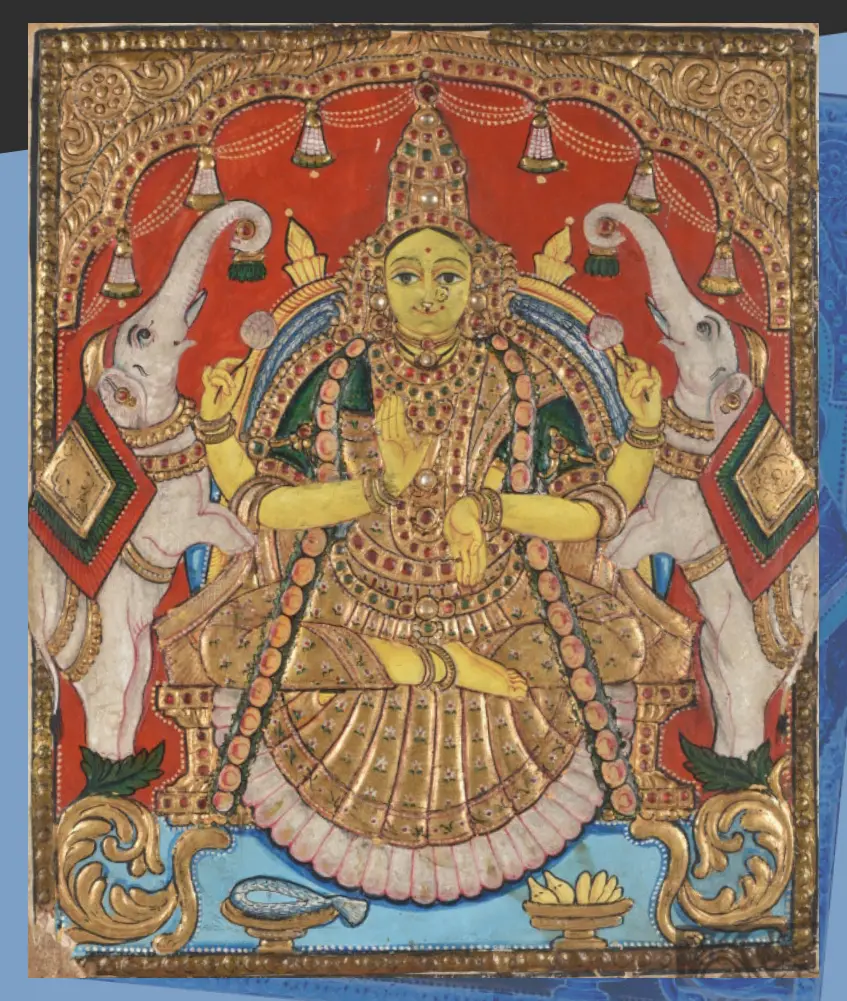
Seated in the padmasana posture upon an ornate throne, Gajalakshmi appears resplendent in gold garments and a green blouse, embodying abundance, beauty, and divine grace. Flanking the goddess are two milky-white elephants, richly adorned with jewels, offering lotus flowers in an act of devotion and auspicious blessing. The pairing of Lakshmi and elephants evokes fertility, prosperity, and royal fortune, transforming the elephant into both a sacred attendant and a symbol of cosmic abundance.
Bangle/ Kada
Jewellery Section
18th Century CE
Image credits: Museums of India
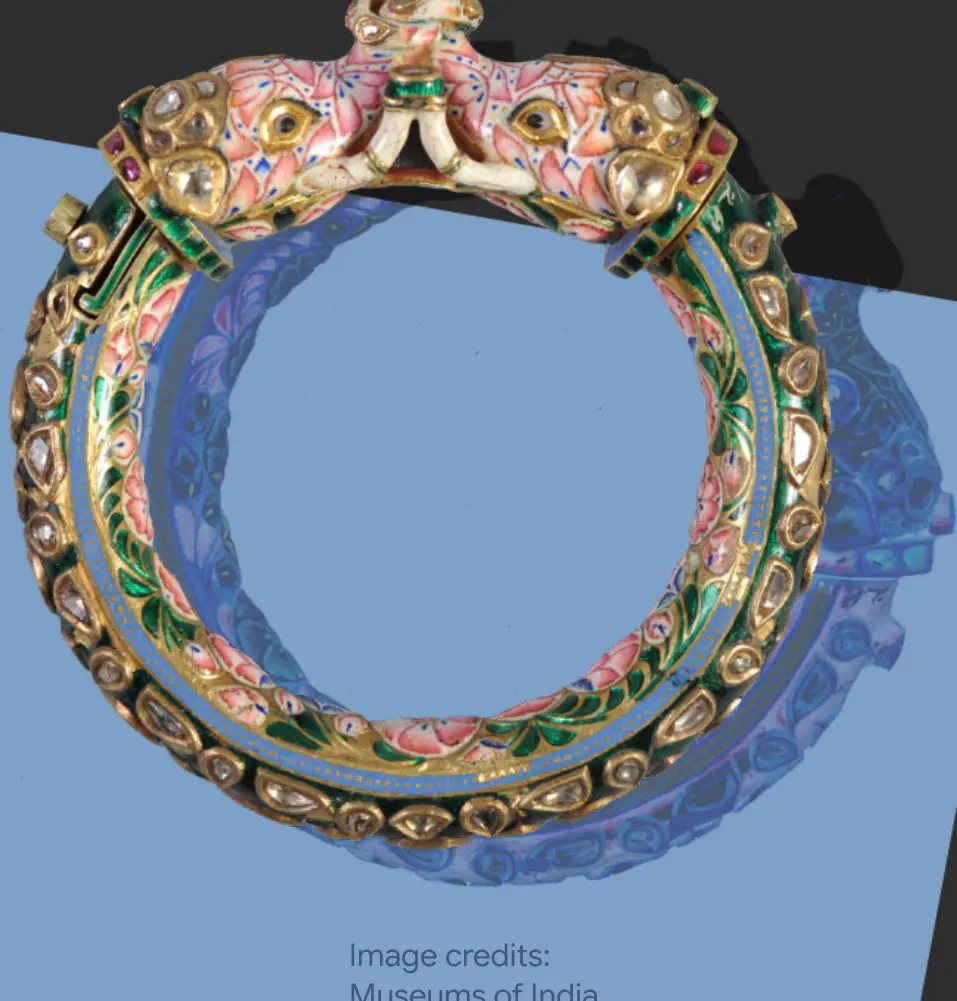
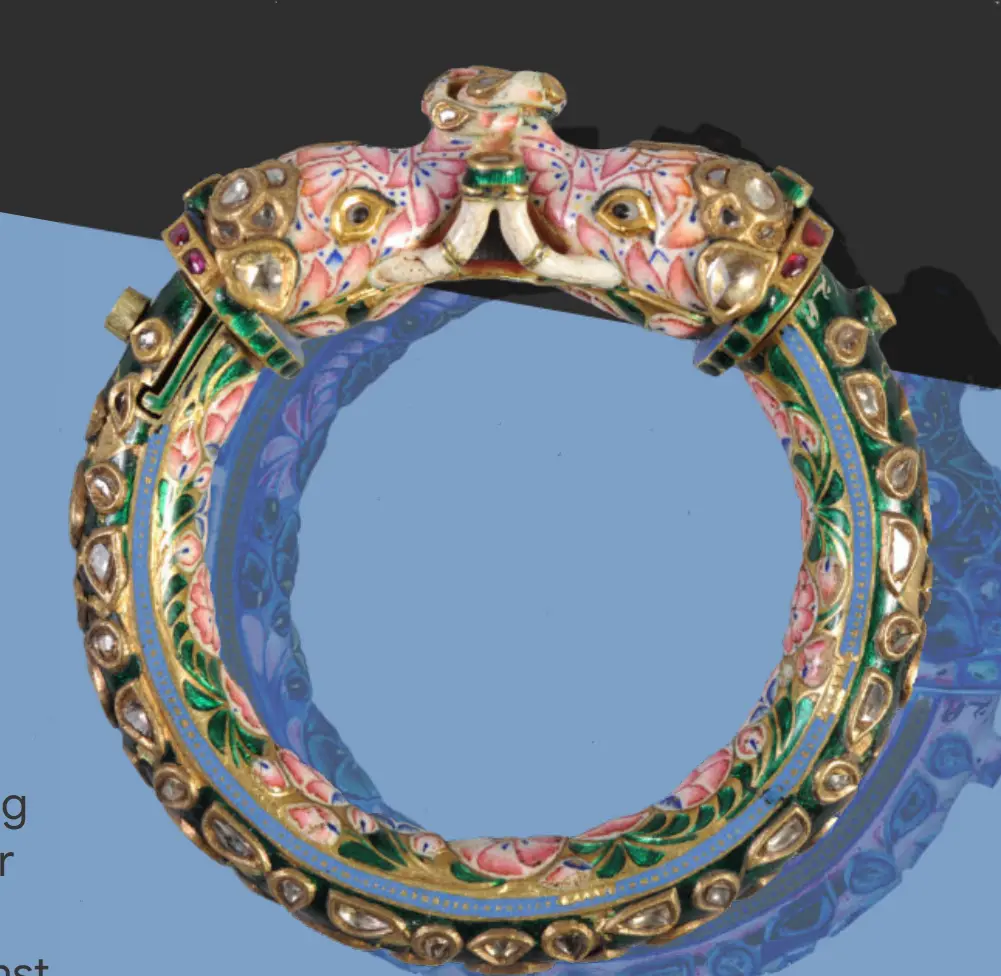
This ornate kada terminates in two opposing elephant heads with intertwined tusks; their surfaces embellished with diamonds and delicate gulabi mina enamel work. Set against green enamel and floral motifs, the bracelet transforms the elephant into an object of luxury and adornment. Here, the elephant motif moves from the monumental and sacred into the intimate world of jewellery.
Jewellery Box
Decorative Arts Gallery
20th Century CE
Image credits: Museums of India
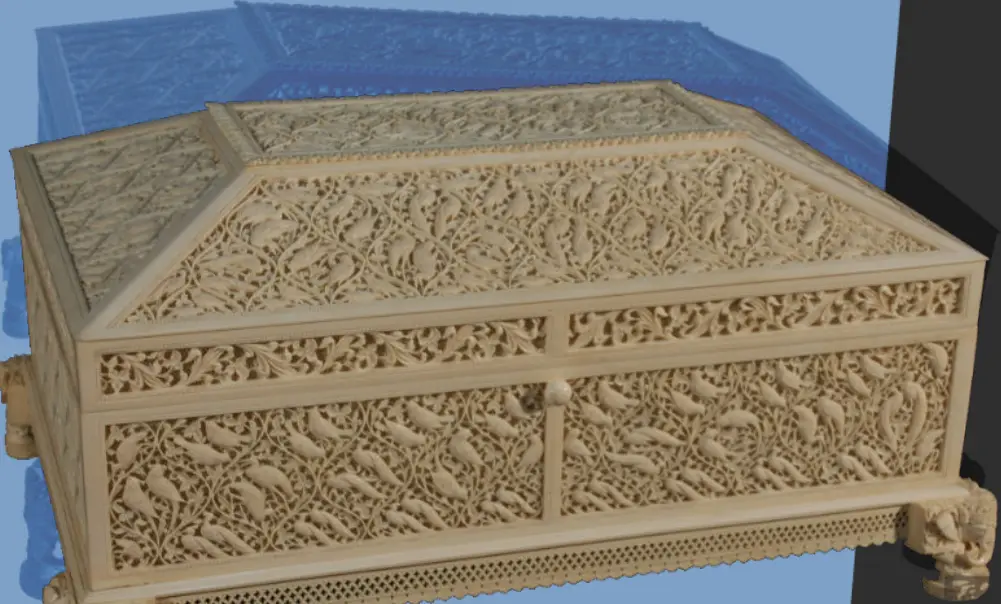
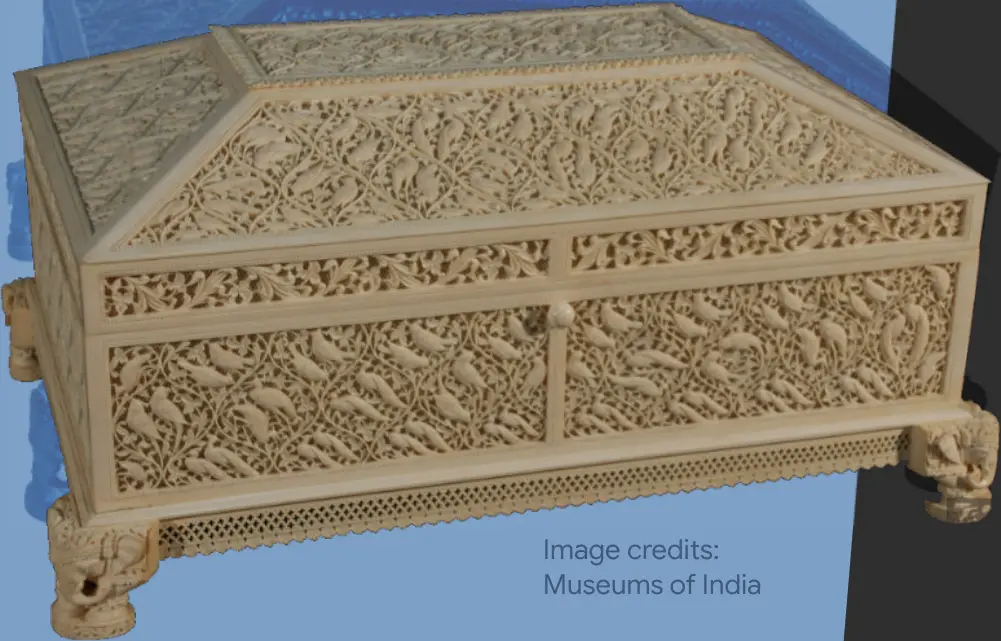
Inspired by the delicate jaali patterns of Mughal architecture, this early 20th-century ivory jewellery box showcases the remarkable craftsmanship of Delhi’s ivory carvers. Resting on legs shaped as elephant heads, the object incorporates the elephant motif into a refined vocabulary of ornamentation, where the animal appears not as a sacred or royal figure, but as an element of decorative elegance.
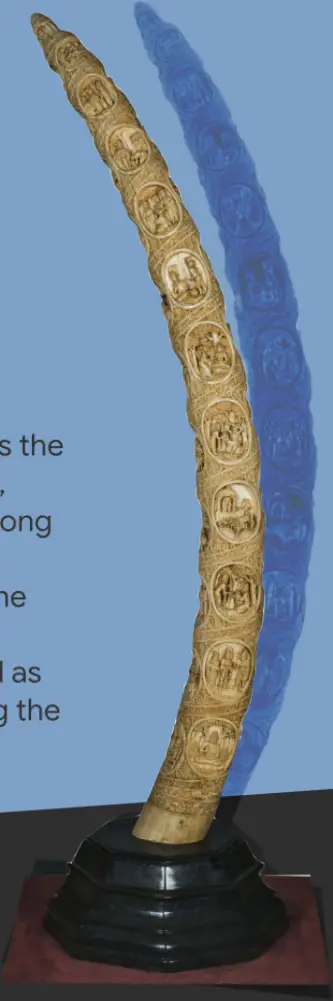
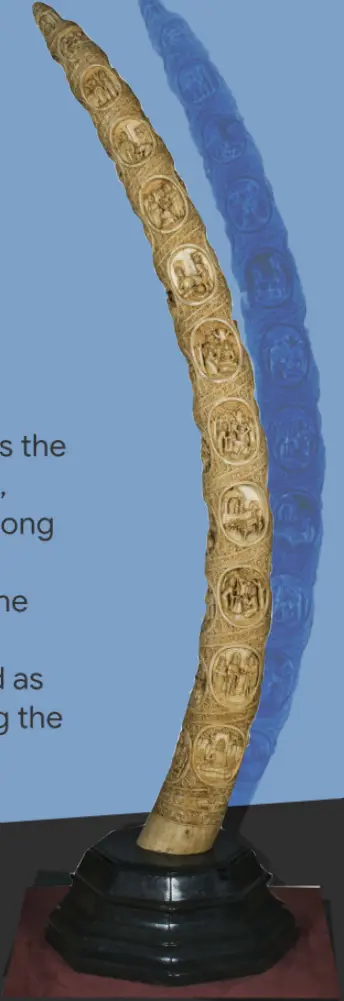
Tusk depicting Buddha’s life scenes
Decorative Arts Gallery
10th Century CE
Image credits: National Museum
Carved upon an elephant tusk, this intricate object narrates the life of the Buddha through 43 delicately rendered roundels, tracing episodes from his birth to his Mahaparinirvana. Among them appears Queen Maya’s dream of the white elephant descending from heaven, an auspicious vision foretelling the Buddha’s birth. Here, the elephant occupies a striking dual presence: both as a sacred symbol within the narrative and as the very material upon which the story is carved, collapsing the distance between medium and meaning.
Across stone, ivory, paint, gold, and memory, the elephant moves endlessly through the artistic imagination of the subcontinent—at once god, guardian, ornament, and companion. Long after empires fade and processions fall silent, its footprints continue to echo through the corridors of art and history.
View original pages, photographs & credits
Originally published in Museum Mosaic 2025, published May 2026.
Part of our annual review. Descriptions reflect the publication’s reporting period.