DakshinaChitra: The Living Museum Tamil Nadu
India’s rich tapestry of fabrics was all the rage for centuries, even millennia, before the Pradas and Versaces of the world came to be. Charred remains of cotton cloth, dated back to 2500-2000 BCE, have been found at Rakhigarhi, Haryana. Pliny the Elder, in his Natural History (77 CE), also grumbled about India, China, and Arabia draining Rome of 100 million sestertii each year — roughly $40 million USD today — spent on luxuries, including the finest Indian textiles. In southern India, textile hubs like Machilipatnam, Srikalahasti, and Chirala dyed, spun, and wove wonders that were in high global demand. British colonisation is remembered for decimating these vibrant industries and their global dominance through the 18th and 19th centuries. In pockets, however, these highly specialised skills and the artisans who practise them continue to live on. DakshinaChitra captures and preserves these living traditions amongst many others in folk, craft, and architecture to foster dialogue for future generations
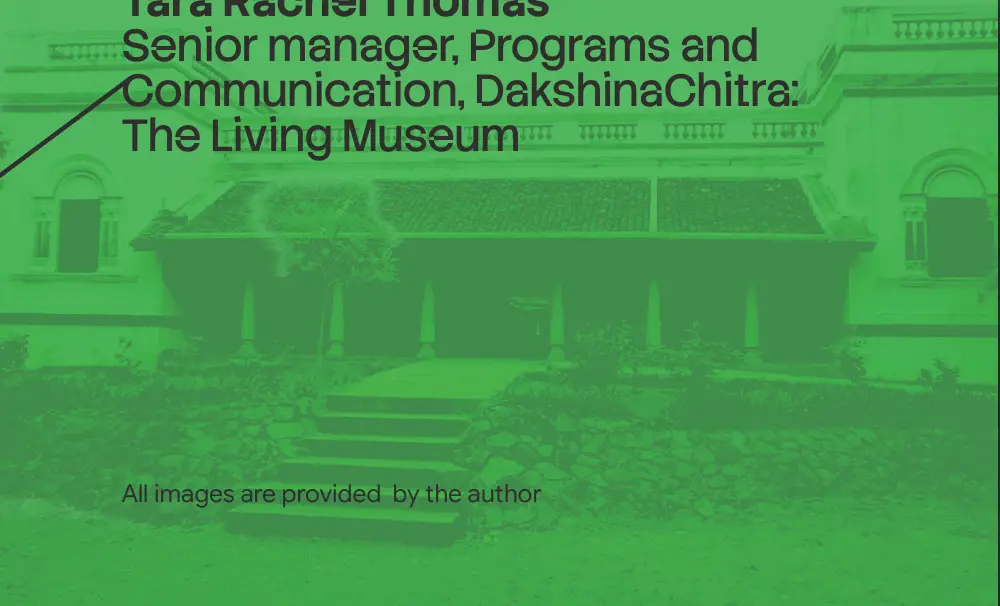
Tara Rachel Thomas Senior manager, Programs and Communication, DakshinaChitra: The Living Museum
All images are provided by the author
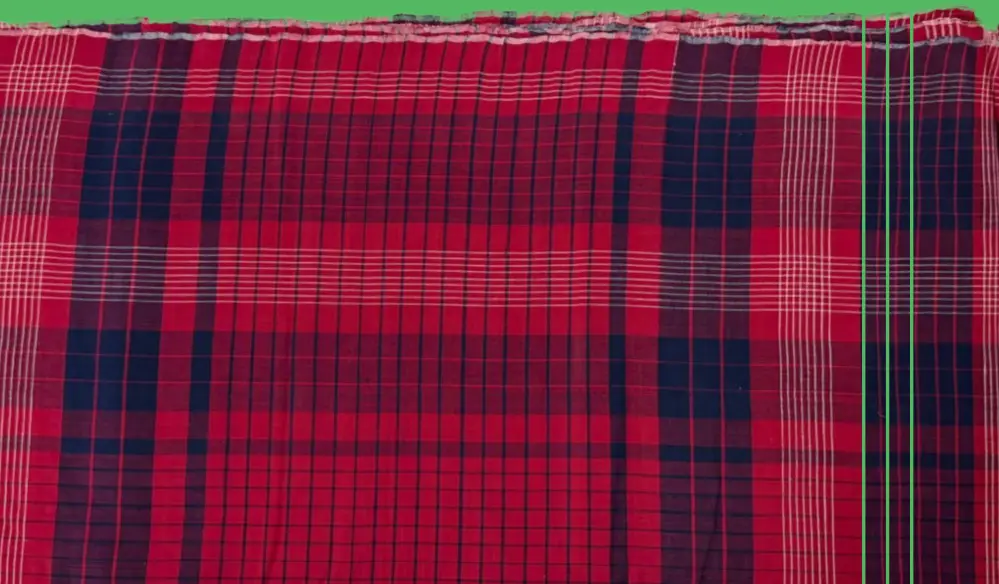
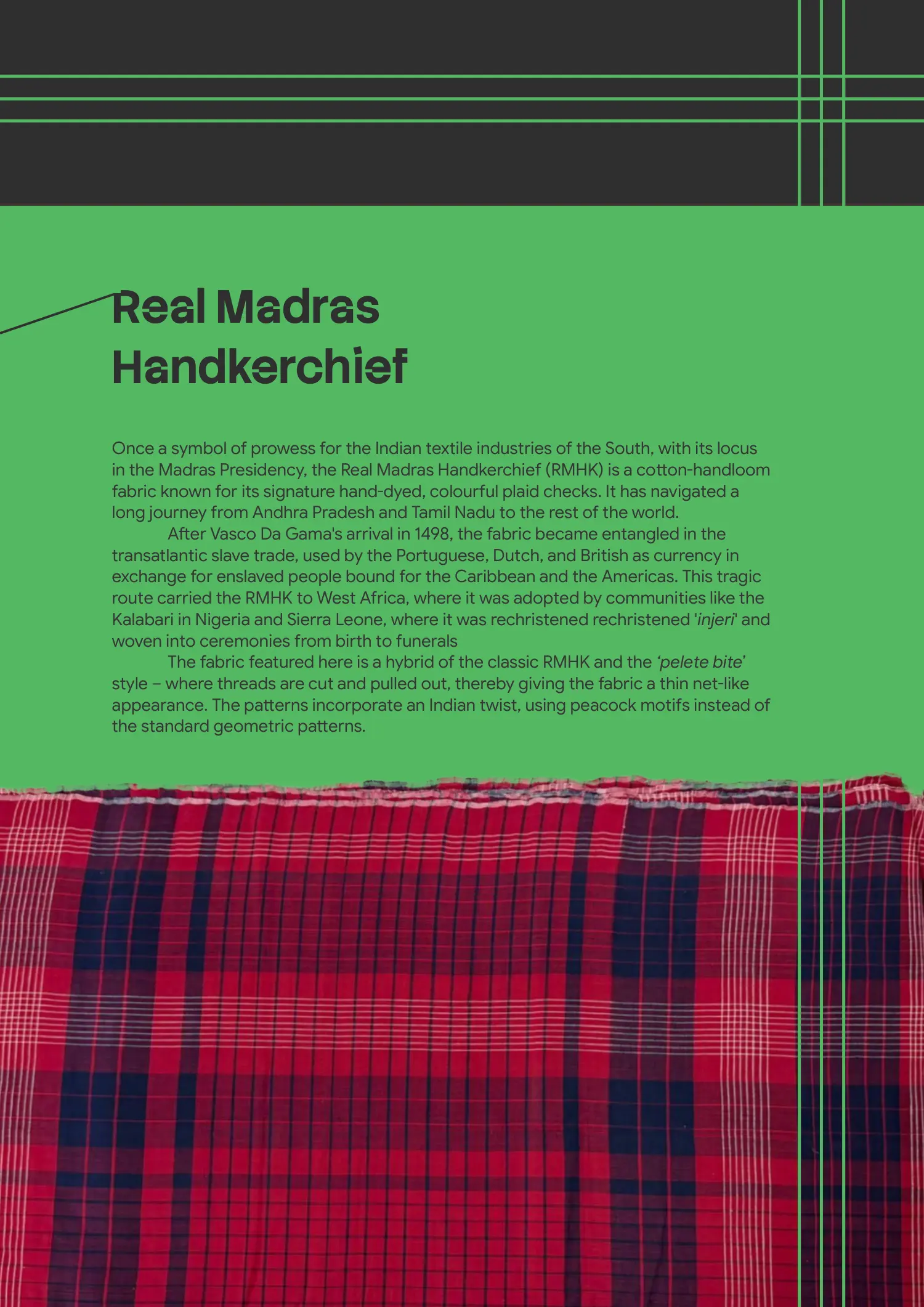
Real Madras Handkerchief
Once a symbol of prowess for the Indian textile industries of the South, with its locus in the Madras Presidency, the Real Madras Handkerchief (RMHK) is a cotton-handloom fabric known for its signature hand-dyed, colourful plaid checks. It has navigated a long journey from Andhra Pradesh and Tamil Nadu to the rest of the world. After Vasco Da Gama's arrival in 1498, the fabric became entangled in the transatlantic slave trade, used by the Portuguese, Dutch, and British as currency in exchange for enslaved people bound for the Caribbean and the Americas. This tragic route carried the RMHK to West Africa, where it was adopted by communities like the Kalabari in Nigeria and Sierra Leone, where it was rechristened rechristened 'injeri' and woven into ceremonies from birth to funerals The fabric featured here is a hybrid of the classic RMHK and the ‘pelete bite’ style – where threads are cut and pulled out, thereby giving the fabric a thin net-like appearance. The patterns incorporate an Indian twist, using peacock motifs instead of the standard geometric patterns.
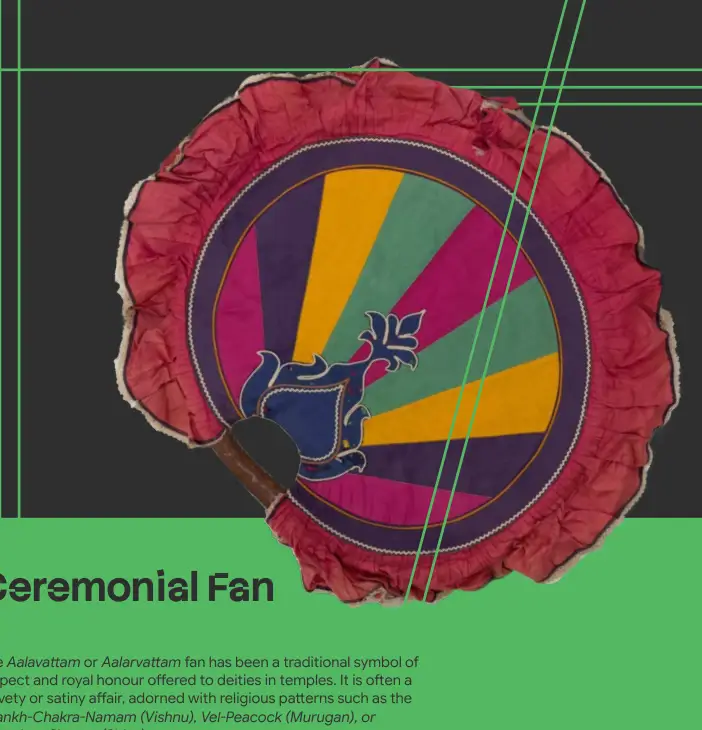
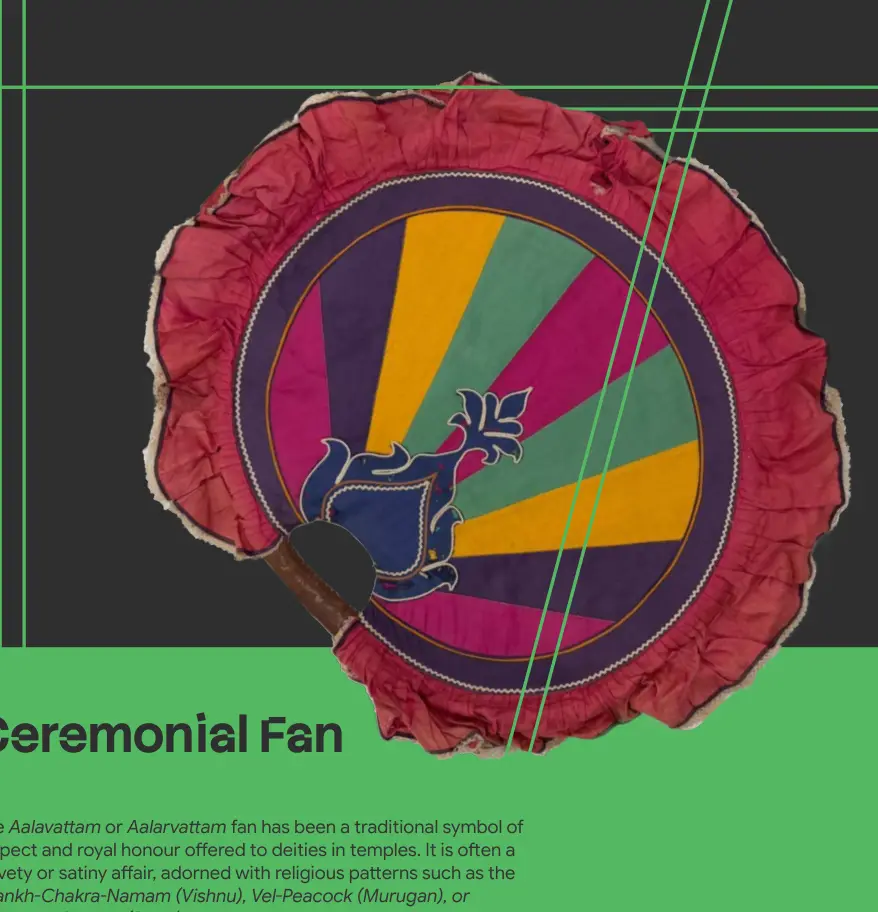
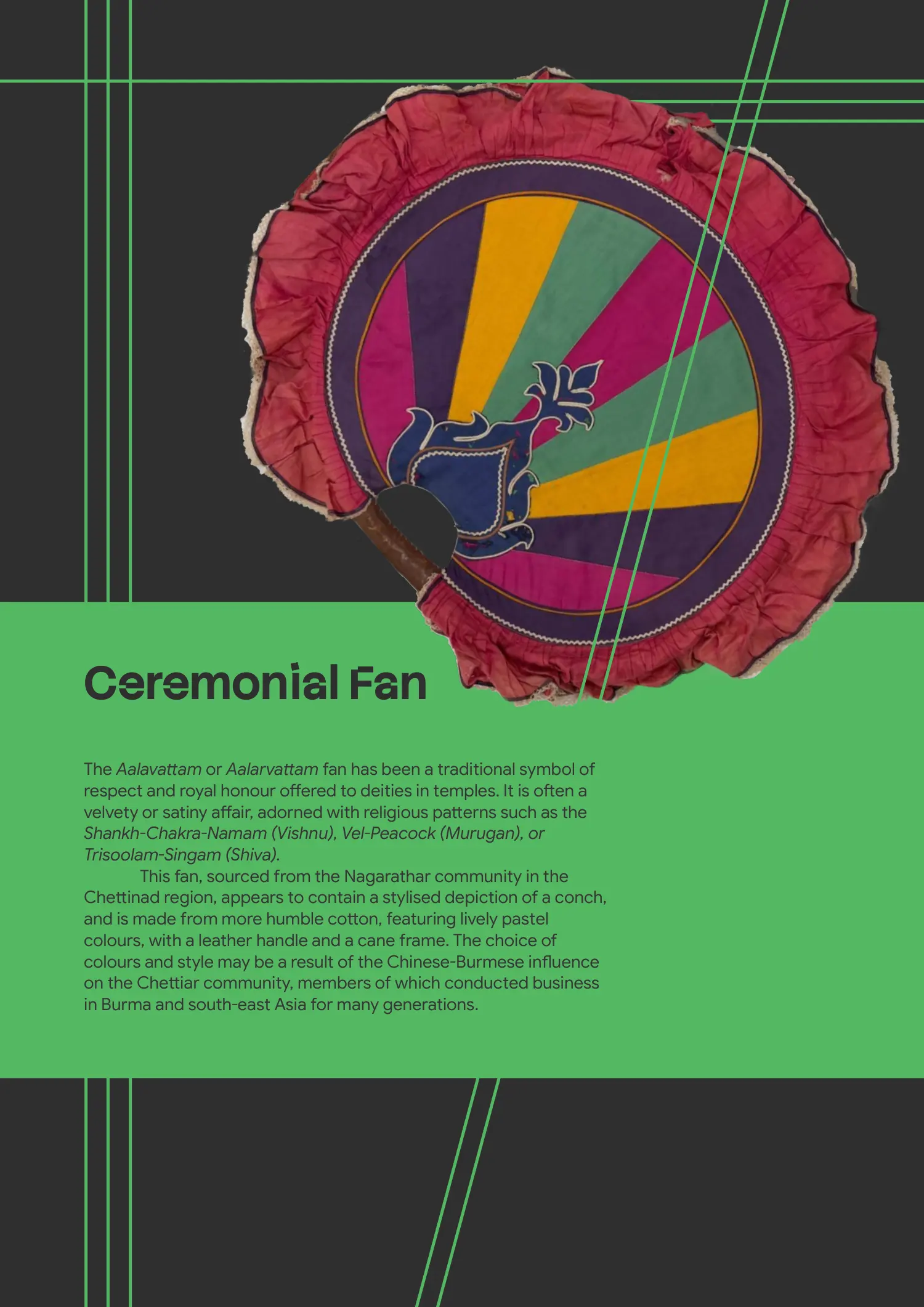
Ceremonial Fan
The Aalavattam or Aalarvattam fan has been a traditional symbol of respect and royal honour offered to deities in temples. It is often a velvety or satiny affair, adorned with religious patterns such as the Shankh-Chakra-Namam (Vishnu), Vel-Peacock (Murugan), or Trisoolam-Singam (Shiva). This fan, sourced from the Nagarathar community in the Chettinad region, appears to contain a stylised depiction of a conch, and is made from more humble cotton, featuring lively pastel colours, with a leather handle and a cane frame. The choice of colours and style may be a result of the Chinese-Burmese influence on the Chettiar community, members of which conducted business in Burma and south-east Asia for many generations.
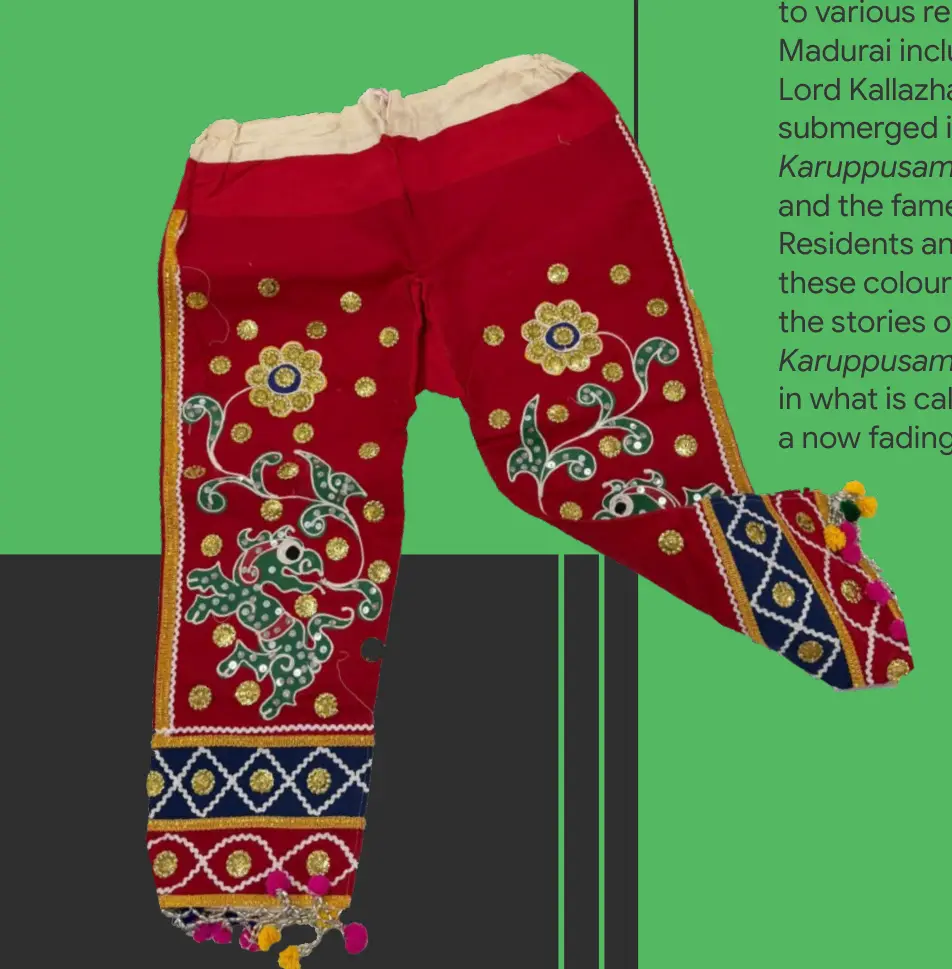
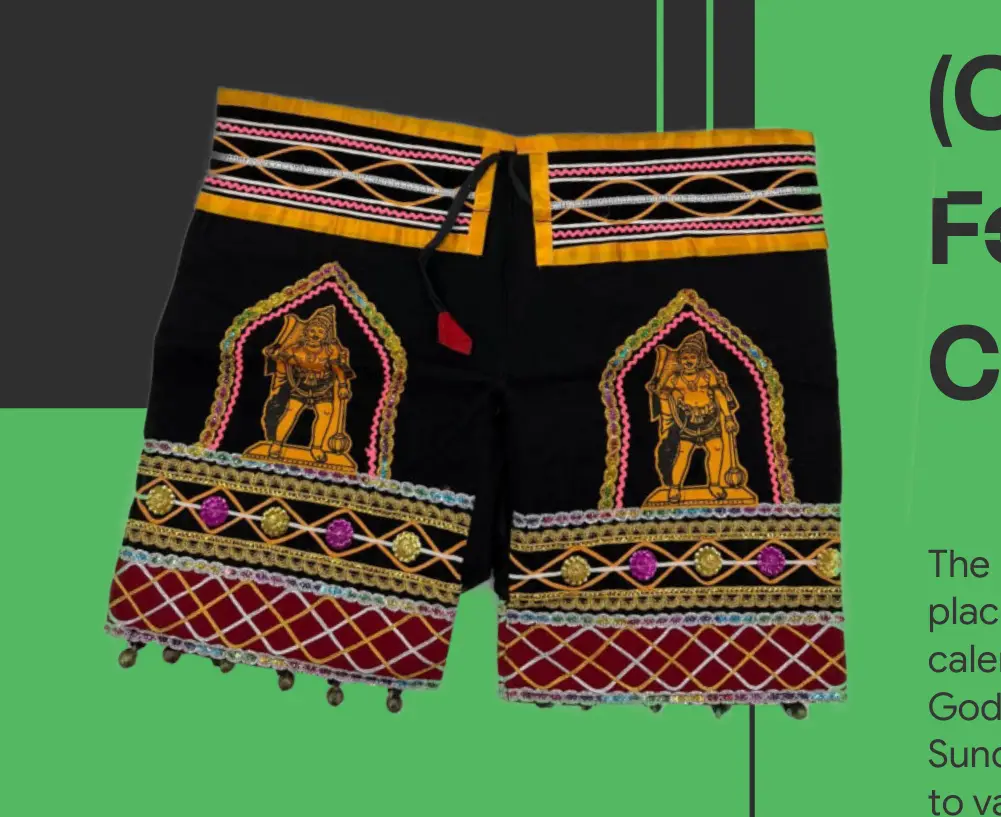
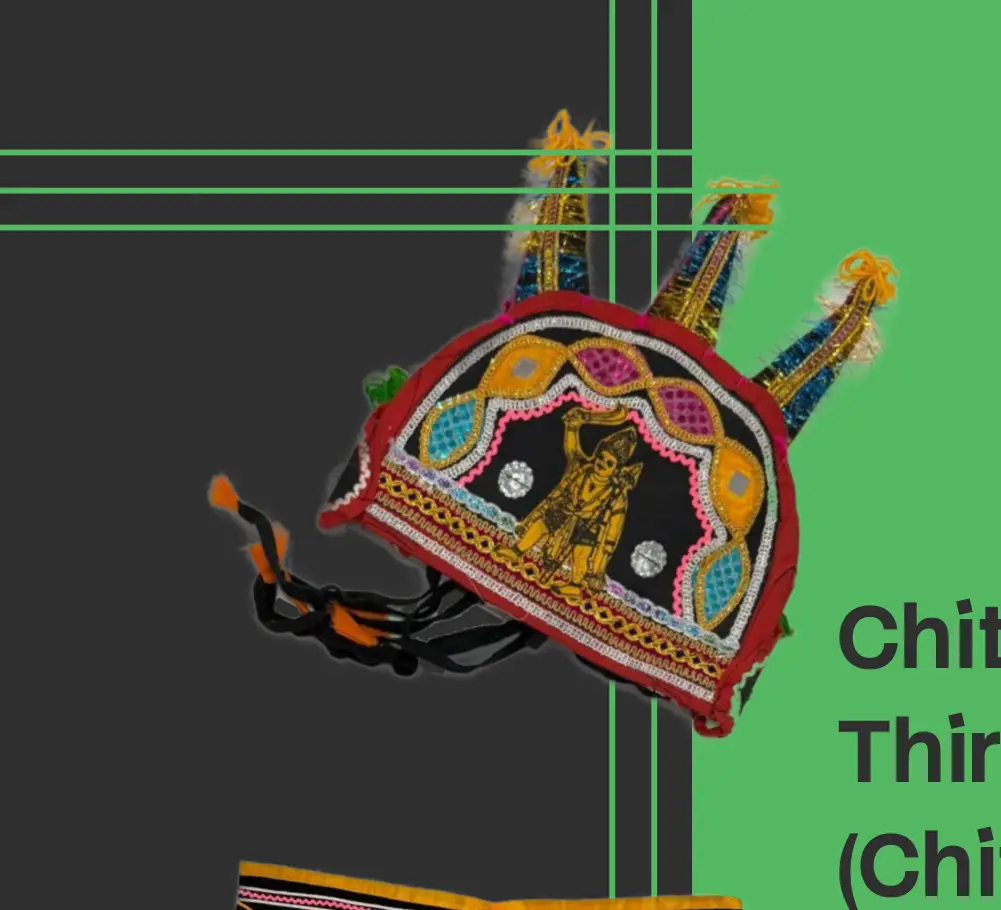
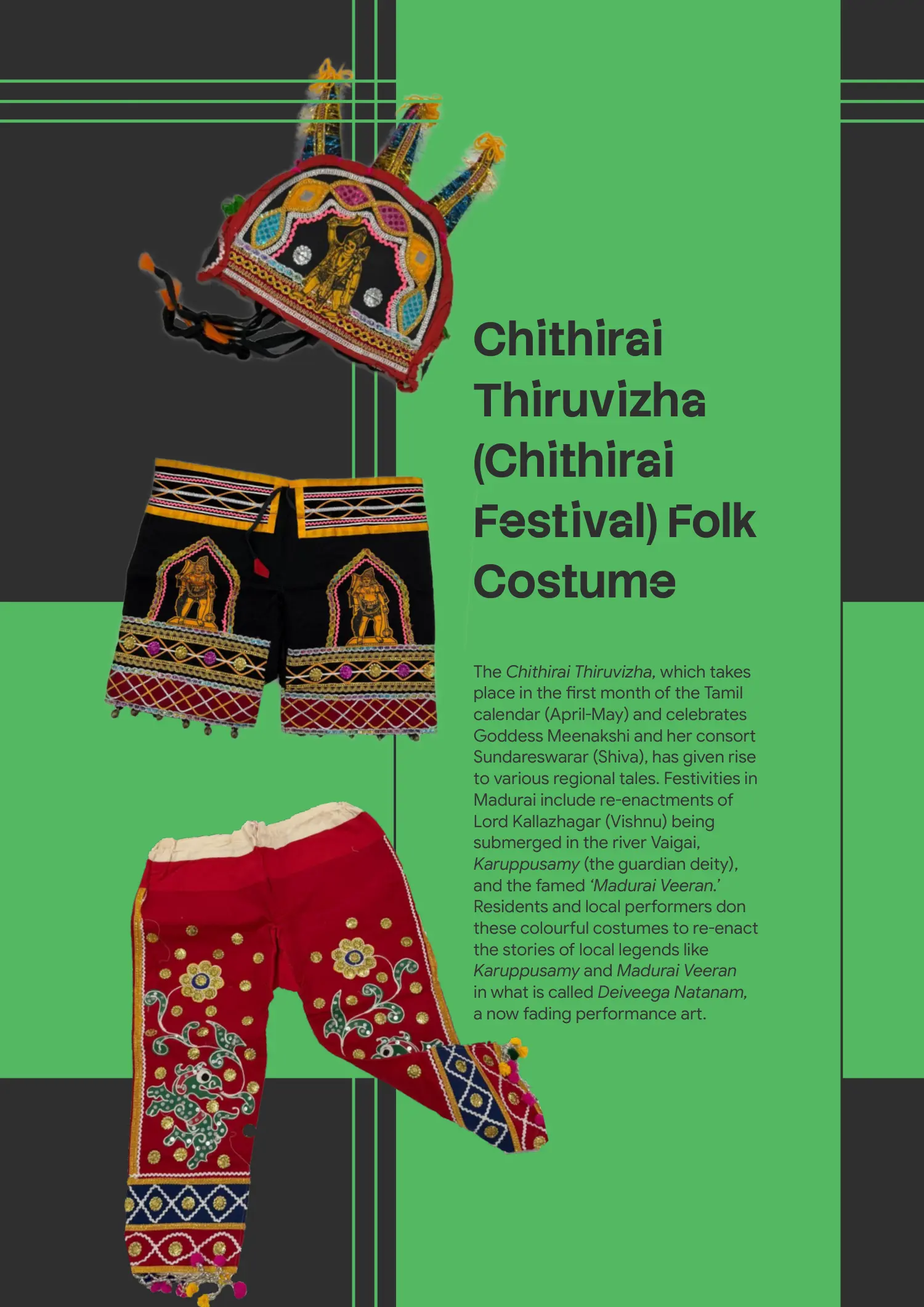
Chithirai Thiruvizha (Chithirai Festival) Folk Costume
The Chithirai Thiruvizha, which takes place in the first month of the Tamil calendar (April-May) and celebrates Goddess Meenakshi and her consort Sundareswarar (Shiva), has given rise to various regional tales. Festivities in Madurai include re-enactments of Lord Kallazhagar (Vishnu) being submerged in the river Vaigai, Karuppusamy (the guardian deity), and the famed ‘Madurai Veeran.’ Residents and local performers don these colourful costumes to re-enact the stories of local legends like Karuppusamy and Madurai Veeran in what is called Deiveega Natanam, a now fading performance art.

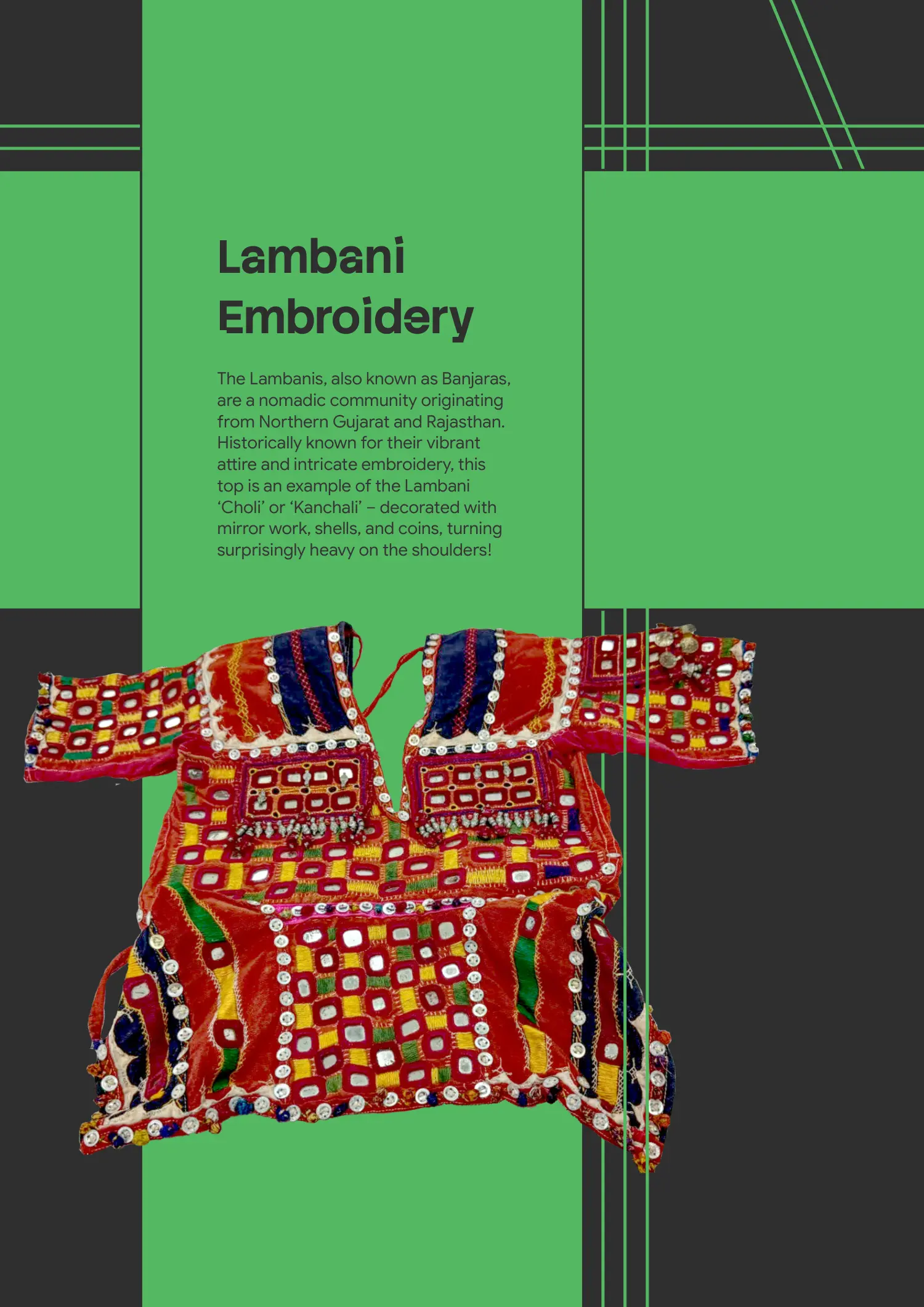
Lambani Embroidery
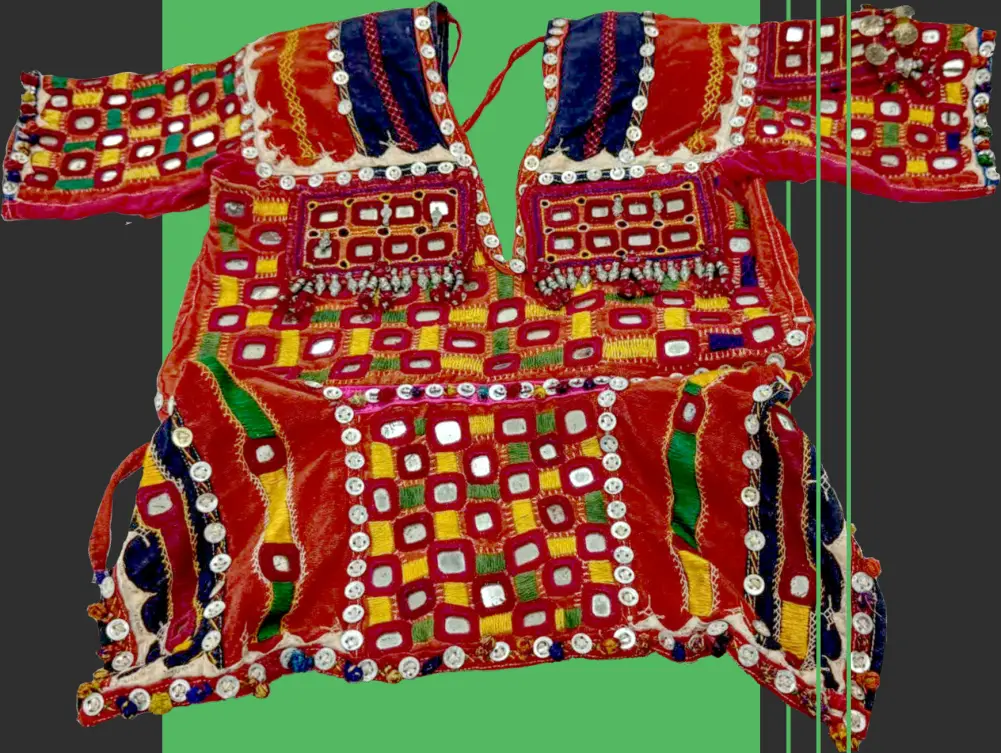
The Lambanis, also known as Banjaras, are a nomadic community originating from Northern Gujarat and Rajasthan. Historically known for their vibrant attire and intricate embroidery, this top is an example of the Lambani ‘Choli’ or ‘Kanchali’ – decorated with mirror work, shells, and coins, turning surprisingly heavy on the shoulders!
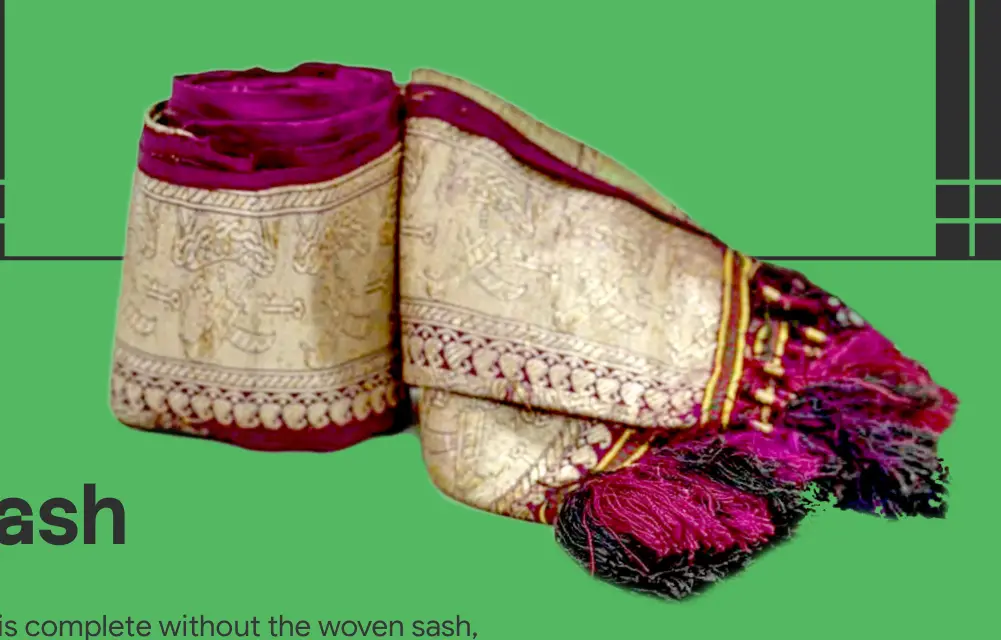
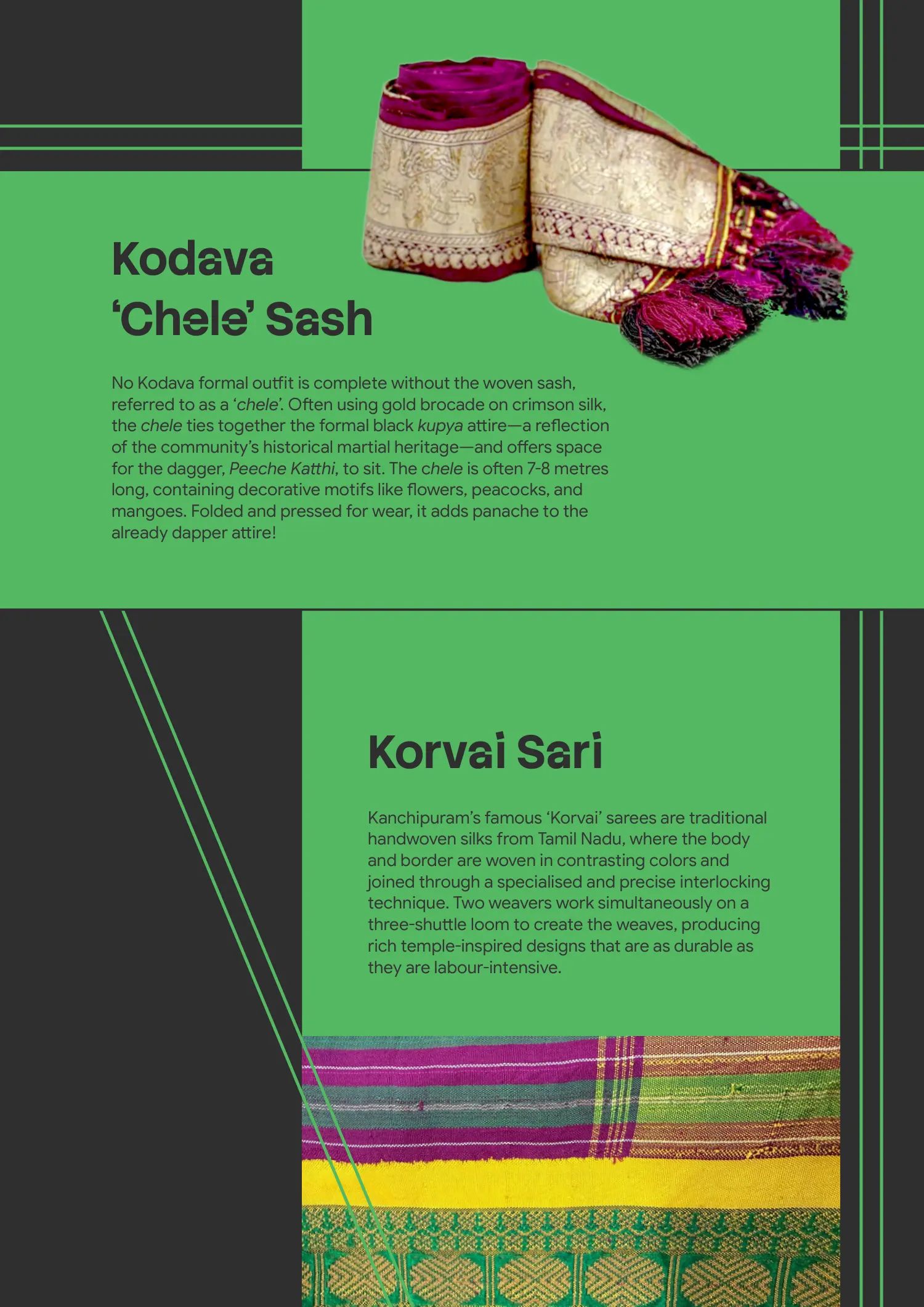
Kodava ‘Chele’ Sash
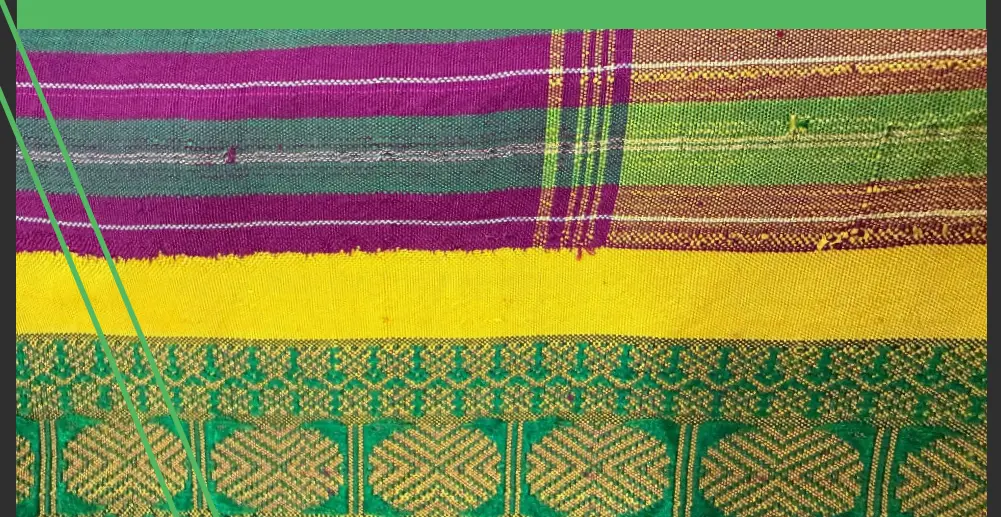
No Kodava formal outfit is complete without the woven sash, referred to as a ‘chele’. Often using gold brocade on crimson silk, the chele ties together the formal black kupya attire—a reflection of the community’s historical martial heritage—and offers space for the dagger, Peeche Katthi, to sit. The chele is often 7-8 metres long, containing decorative motifs like flowers, peacocks, and mangoes. Folded and pressed for wear, it adds panache to the already dapper attire!
Korvai Sari
Kanchipuram’s famous ‘Korvai’ sarees are traditional handwoven silks from Tamil Nadu, where the body and border are woven in contrasting colors and joined through a specialised and precise interlocking technique. Two weavers work simultaneously on a three-shuttle loom to create the weaves, producing rich temple-inspired designs that are as durable as they are labour-intensive.
View original pages, photographs & credits
Originally published in Museum Mosaic 2025, published May 2026.
Part of our annual review. Descriptions reflect the publication’s reporting period.